The short answer
The basebroth and noodles
Everything elsea protein, greens and aromatics
Toppings are not decoration. Each one is doing a specific job — richness, freshness, crunch or aroma — and knowing which is which tells you what a bowl will taste like before it arrives.
A bowl of ramen arrives looking arranged rather than assembled, and the things on top are the part most people cannot name. They are worth naming, because they are what separates one bowl from another once the broth has been chosen.
01 — The structureEvery bowl is built in three layers
Broth goes in first. Noodles go in second. Toppings are arranged on the surface last, deliberately, in their own areas rather than stirred through — which is why a bowl looks composed when it reaches you.
That arrangement is practical, not decorative. Keeping the toppings separate means you can take them in the order you want: a mouthful of noodles, then a mouthful with pork, then one with something green. Stir everything in at the start and the bowl becomes one flavour for its whole length.
We covered the first layer in our guide to the five broths. This one is about the third.
What each one is actually doing
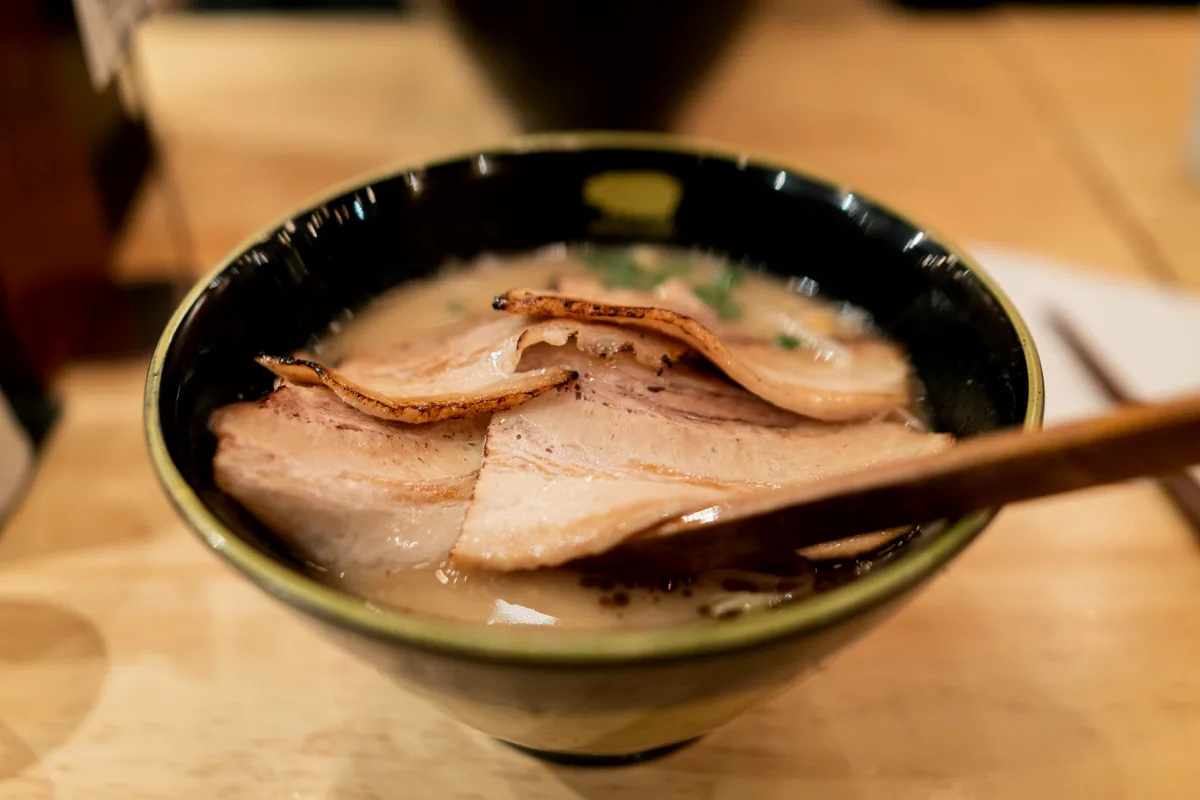
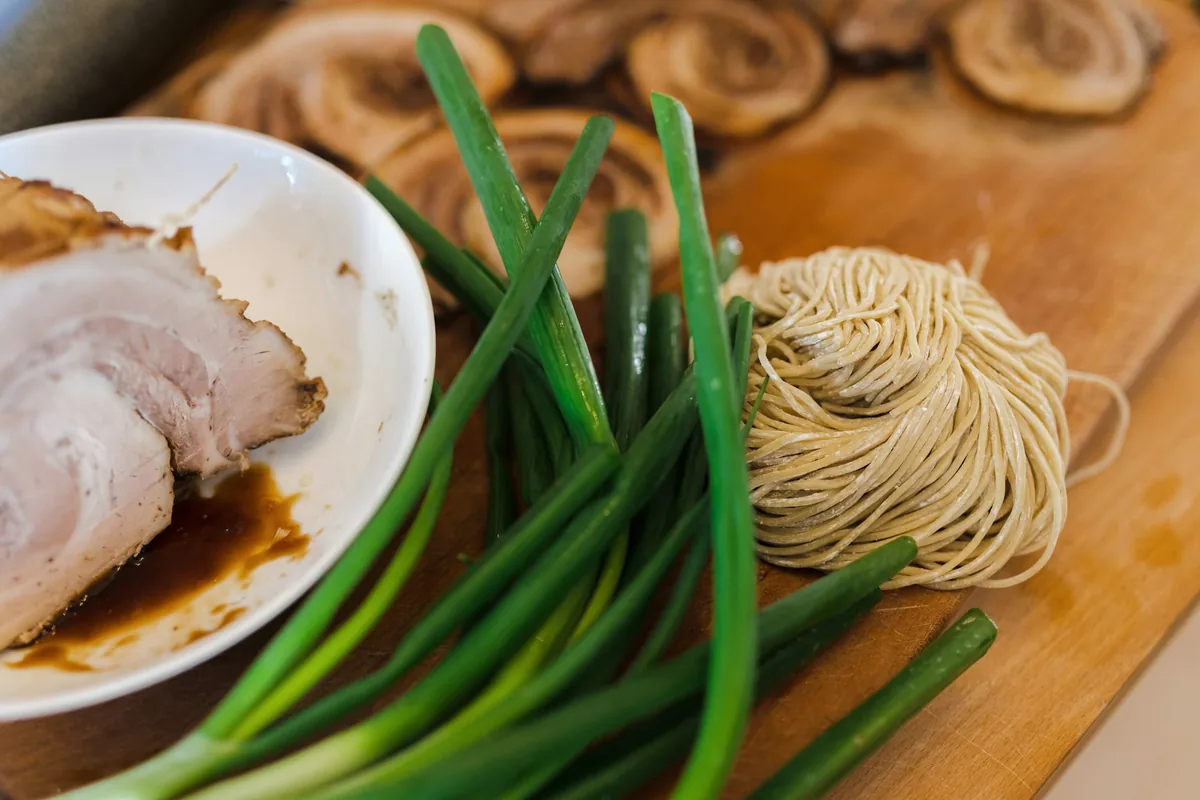
Braised pork belly
Called chashu, this is pork belly simmered slowly in a soy-based liquid until it is soft enough to give under a chopstick. Ours is braised in shoyu, which is where its colour comes from.
It is the richest thing in the bowl and the reason a ramen feels like a full meal. Two slices is a normal serving; the fat renders into the broth as you eat, so the last few mouthfuls taste different from the first.
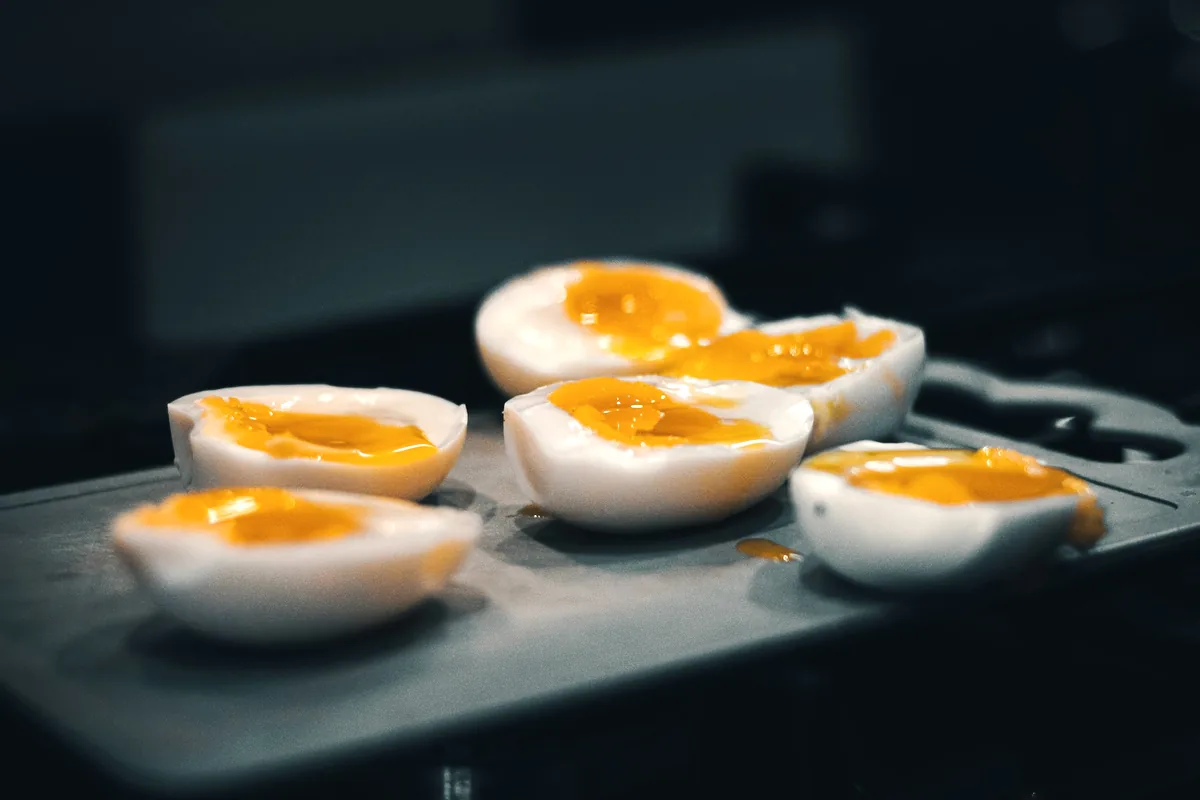
The marinated soft egg
Boiled for a few minutes only, then peeled and left to sit in a soy marinade. The white takes on colour and salt from the marinade; the yolk stays soft in the middle. It is usually served halved so you can see that it has been done properly.
Its job is to soften the broth. Break the yolk into a spoonful and the whole mouthful turns rounder and less salty. Some people eat it first and some save it for last; both are defensible.
Bean sprouts
Barely cooked, so they keep their snap. They are the crunch in a bowl that is otherwise all soft textures, and they cut the richness of a pork broth more effectively than anything else on the list.
Green onion and green chive
Sliced raw and scattered over the top at the last moment. This is the aromatic layer — the sharpness you get in the first second of a mouthful, before the broth arrives. Chive is the milder of the two and tends to appear in lighter bowls.
Bok choy and spring mix
Greens do two things: they add bulk without adding richness, and they give the bowl somewhere to go between mouthfuls of pork. Bok choy holds its texture in hot broth; softer leaves wilt into it almost immediately, which is the point of using them.
Corn and red onion
Corn is a sweetness that plays against salt, and it is a northern Japanese habit rather than a universal one. Red onion is the sharper counterpart — thin, raw and bracing, used where a broth needs cutting through.
Sesame seed and black garlic oil
Both are finishing touches, added for aroma rather than substance. Sesame is nutty and mild. Black garlic oil — garlic cooked until it turns dark and bitter-sweet, then blended into oil — is far stronger, and a small amount changes the character of a whole bowl.
Toppings at a glance
| Topping | What it is | Its job in the bowl |
|---|---|---|
| Braised pork belly | Pork simmered in a soy-based liquid | Richness and substance |
| Marinated soft egg | Soft boiled, steeped in soy | Rounds off the salt |
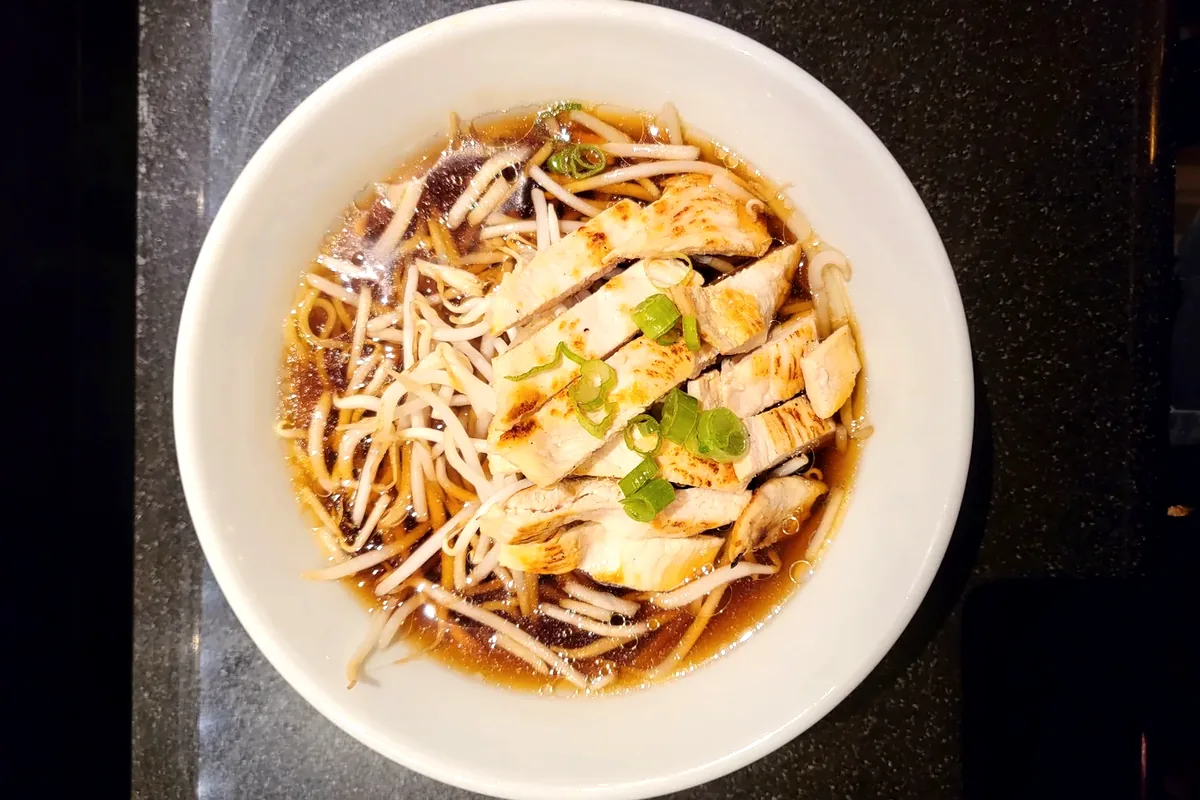
| Broiled chicken breast | Grilled and sliced | A leaner protein |
| Bean sprouts | Barely cooked | Crunch |
| Green onion, chive | Sliced raw | Aroma and sharpness |
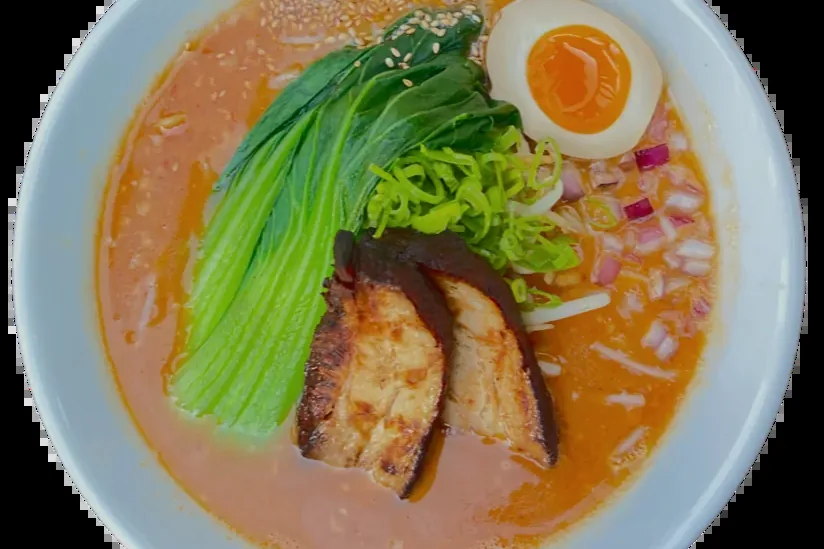
| Bok choy, spring mix | Leafy greens | Bulk without weight |
| Corn | Sweet kernels | Sweetness against salt |
| Red onion | Thin, raw | Cuts a heavy broth |
| Sesame seed | Toasted seed | Nutty aroma |
| Black garlic oil | Darkened garlic in oil | Depth, in small amounts |
Good to know
Eat the noodles before you work through the toppings. Noodles keep softening the whole time they sit in hot broth, and they are noticeably past their best after about ten minutes. Nothing else in the bowl is on a clock.
How the toppings change across our bowls
Each of our ramen is listed with its own set, and comparing them is the quickest way to see what the toppings are for.
Tonkotsu pairs a rich pork broth with braised pork belly, green onion, bean sprouts, a half marinated soft egg and sesame. That is the classic arrangement: one rich element, one crunchy, one sharp, one that softens the salt.
Spicy Miso keeps the pork belly and adds bok choy and red onion on top of the bean sprouts and green onion. More greens, more sharpness — both of which a spicier, heavier broth needs.
Shoyu is the leanest. A clear shoyu broth with bean sprouts, green onion and broiled chicken breast instead of pork, which makes it the lightest bowl on the list.
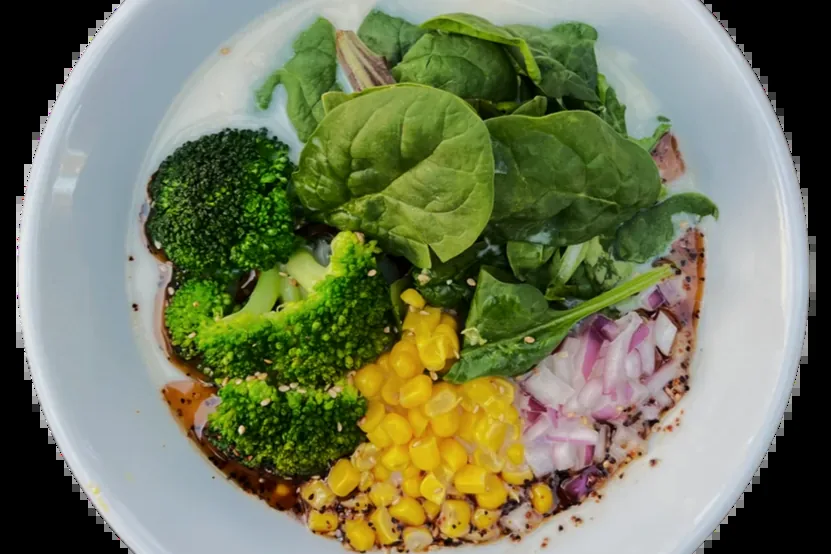
The menu also lists a Creamy Vegan bowl on a vegetable broth — broccoli, red onion, corn, green chive, spring mix, sesame and black garlic oil, with no pork or egg. If you follow a strict vegan diet, confirm the details with the restaurant before ordering rather than relying on a dish name.
Reading a ramen listing before you order
- Find the protein. Pork belly means a heavier bowl; chicken breast means a lighter one.
- Look for the egg. Its presence tells you the bowl is built to be rich enough to need softening.
- Count the greens. More greens usually signals a broth strong enough to need them.
- Watch for oils. Black garlic oil or chilli oil will be the loudest thing in the bowl.
- Ignore sesame. It is on almost everything and tells you nothing.
Frequently asked questions
What is the egg in ramen called?
Ajitama, or ajitsuke tamago — literally a seasoned egg. Soft boiled, then marinated in a soy-based liquid until the white takes on colour.
What is the pork in ramen called?
Chashu. It is usually pork belly, rolled or flat, braised slowly in a soy-based liquid rather than roasted.
Should I stir the toppings into the broth?
Not at the start. They are arranged separately so you can vary each mouthful. Stirring everything in flattens the bowl into a single flavour.
Can I order extra toppings?
Ask when you order — what can be added varies. Our side orders list is short, so it is worth checking rather than assuming.
Do ramen toppings contain allergens?
Soy, sesame and egg all appear routinely, and broths vary. If you have an allergy, tell the restaurant directly rather than working it out from a topping list.
The short version
Broth, noodles, then a protein, something green, something crunchy and something aromatic. Once you can see those roles, a topping list stops being a list of words and starts telling you what the bowl will taste like.
Ours are made to order in Chino Hills. Compare the five on the ramen section of the menu, or read how they differ by broth rather than topping.