The short answer
A basic rollone filling, rice, seaweed
What it is fortasting the thing itself
Fifteen rolls sit in a plain list under the specialty section. They are the only place on the menu where a single ingredient has nowhere to hide.
Every sushi menu has a short, unglamorous list somewhere below the specialty rolls. No sauces in the descriptions, no names, often no descriptions at all. Most people’s eyes slide straight past it.
01 — What they areOne thing, plus rice and seaweed
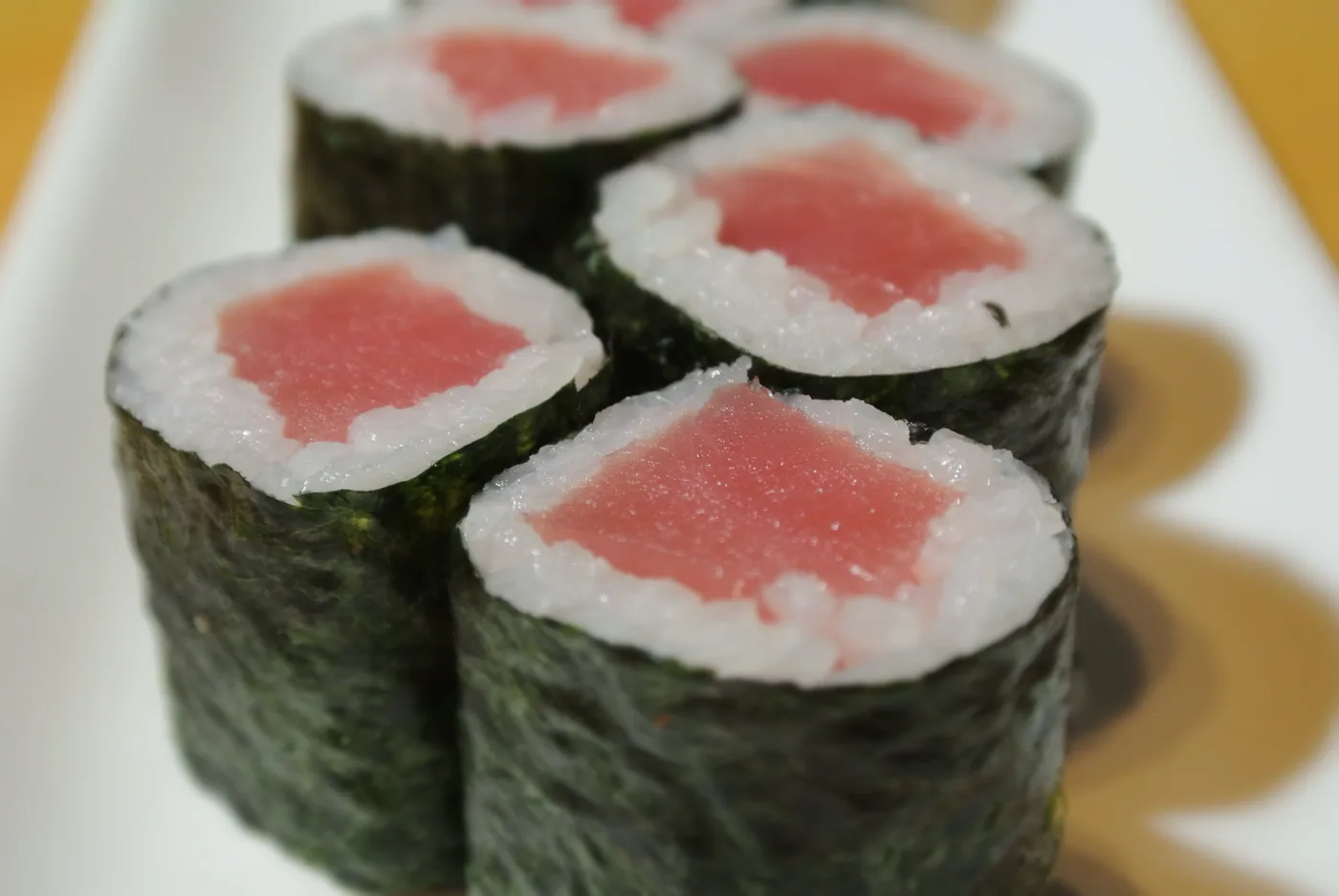
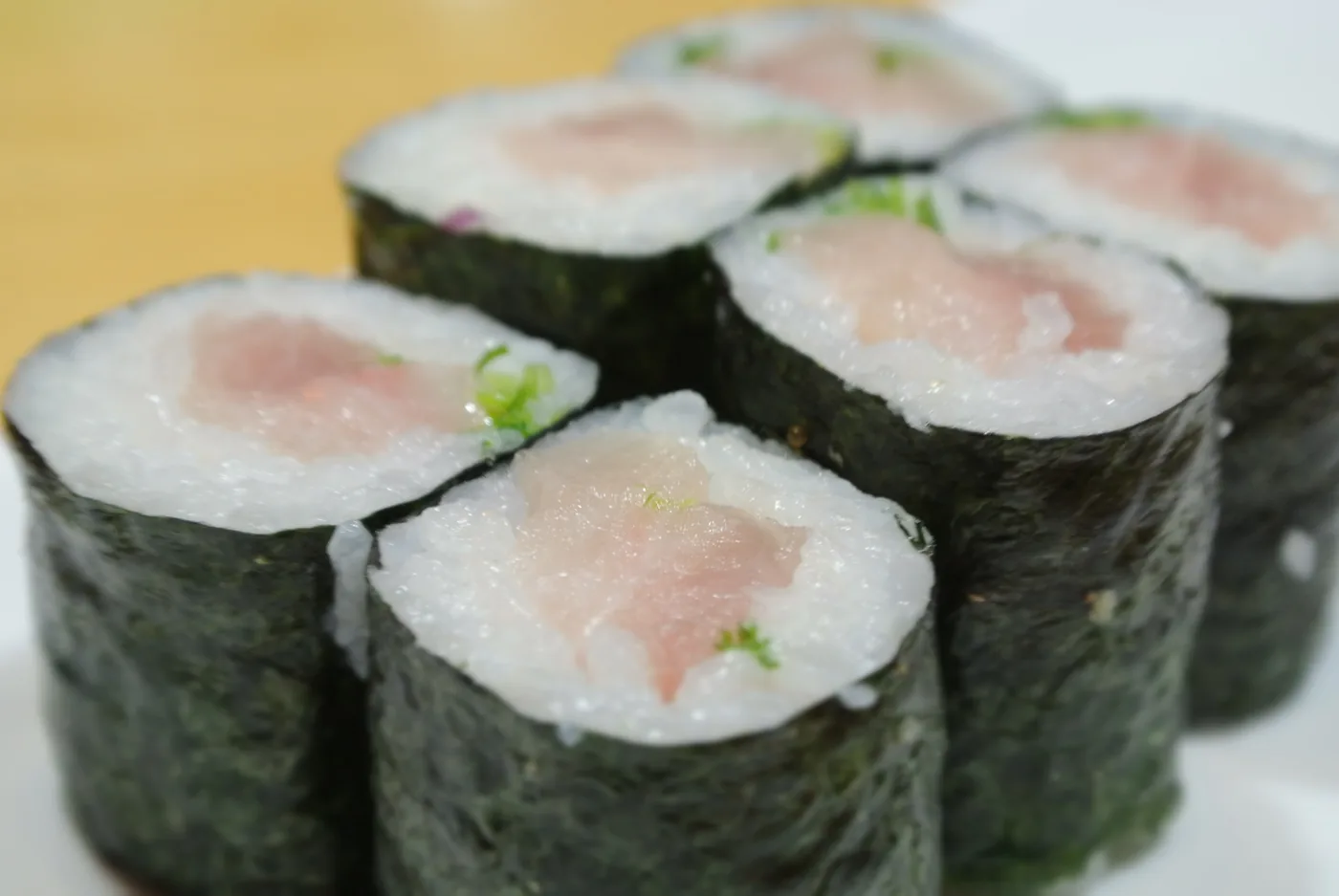
A basic roll is exactly what the name suggests: a single filling, sushi rice, and a sheet of nori. Nothing on top, no sauce, no second ingredient arguing with the first.
Our list runs to fifteen. Tuna, salmon, yellowtail, albacore and scallop each appear plain and again in a spicy version. Then eel, salmon skin, California, avocado and vegetable.
That is the whole section, and the absence of description is the point rather than an oversight. A Tuna Roll is tuna. There is nothing else to say about it, which is unusual and rather useful on a menu where everything else needs a sentence.
Why order one when there are seventy specialty rolls
Three genuine reasons, and none of them is thrift.
You can actually taste the fish. A specialty roll has five or six components plus a sauce, and a slice of yellowtail inside it is contributing maybe a fifth of what you register. In a basic roll it is contributing nearly all of it. If you have never worked out whether you prefer tuna to yellowtail, this is the only place on the menu where the question can be answered.
It resets your palate. Eat three specialty rolls in a row and everything starts tasting of eel sauce and spicy mayonnaise. A plain roll in between clears the deck, in the same way ginger does at a smaller scale.
It tells you about the kitchen. This is the honest one. With no sauce and no toppings, a basic roll is rice, nori and one ingredient — and rice is very hard to hide. Whether it is seasoned properly, at the right temperature, packed firmly enough to hold and loosely enough to fall apart in the mouth: all of that is exposed. There is more on why in the part that makes it sushi.
02 — Plain or spicyFive fish, two ways each
The structure of the list is worth noticing, because it is the closest thing to a controlled experiment a menu offers.
| Fish | Plain | Spicy |
|---|---|---|
| Tuna | Sliced, clean, firm | Chopped in a creamy dressing |
| Salmon | Rich and soft | Richer again |
| Yellowtail | Clean with a mineral edge | Dressed, but keeps its character |
| Albacore | The mildest of the five | Mostly dressing |
| Scallop | Sweet and very soft | Sweet and creamy |
Order the same fish both ways on one plate and the difference is unmistakable — and it is not really about heat. The spicy version is chopped rather than sliced and bound in a dressing, which changes the texture completely. That is the actual variable, as covered in what spicy means on a Japanese menu.
If you only try one pairing, make it albacore. Plain albacore is delicate to the point of being easy to miss; spicy albacore is almost entirely the dressing. The gap between them is the widest on the list.
The ones that are not fish
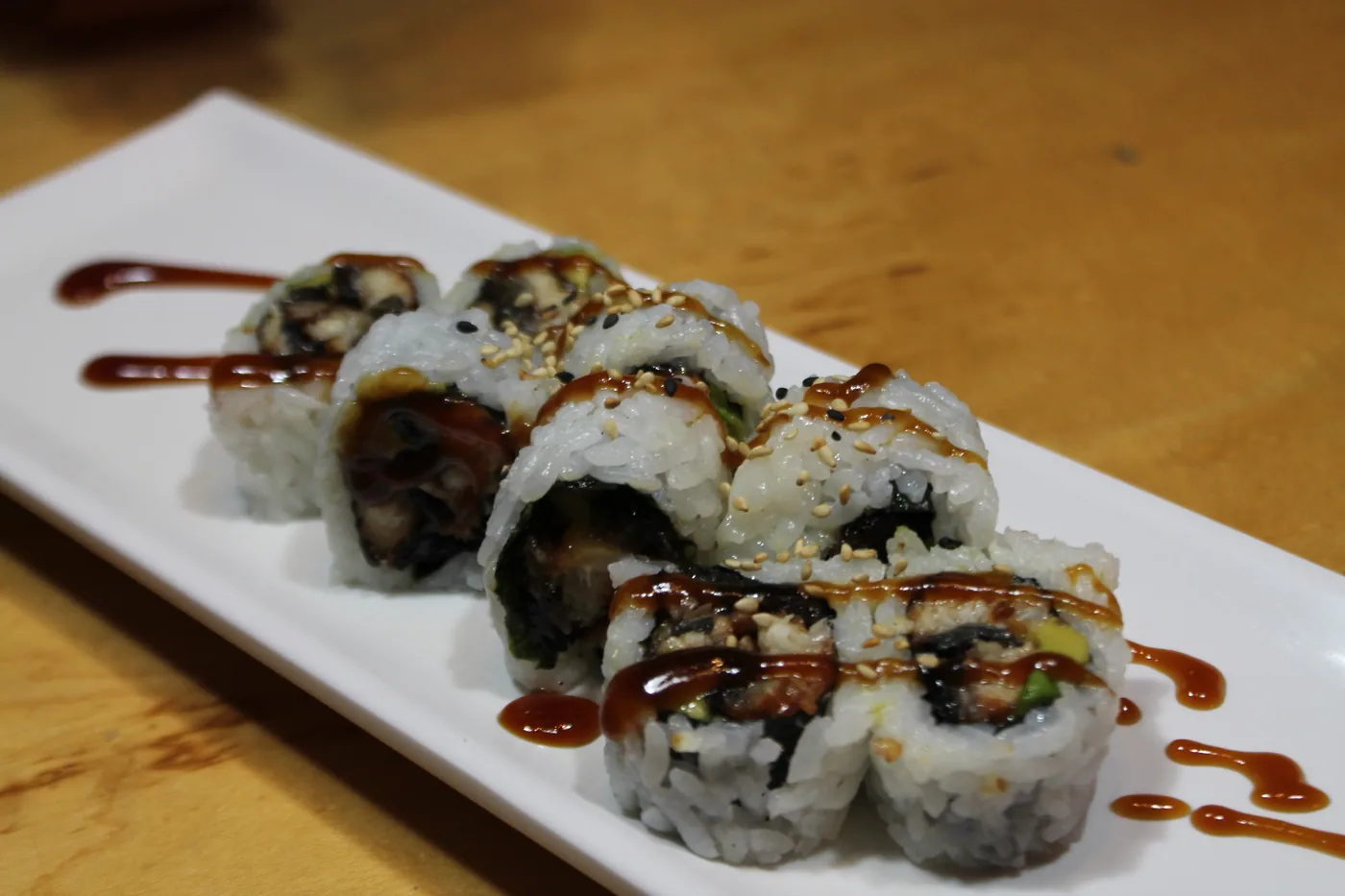
Four entries on the list have no raw fish in them at all, and they do different jobs.
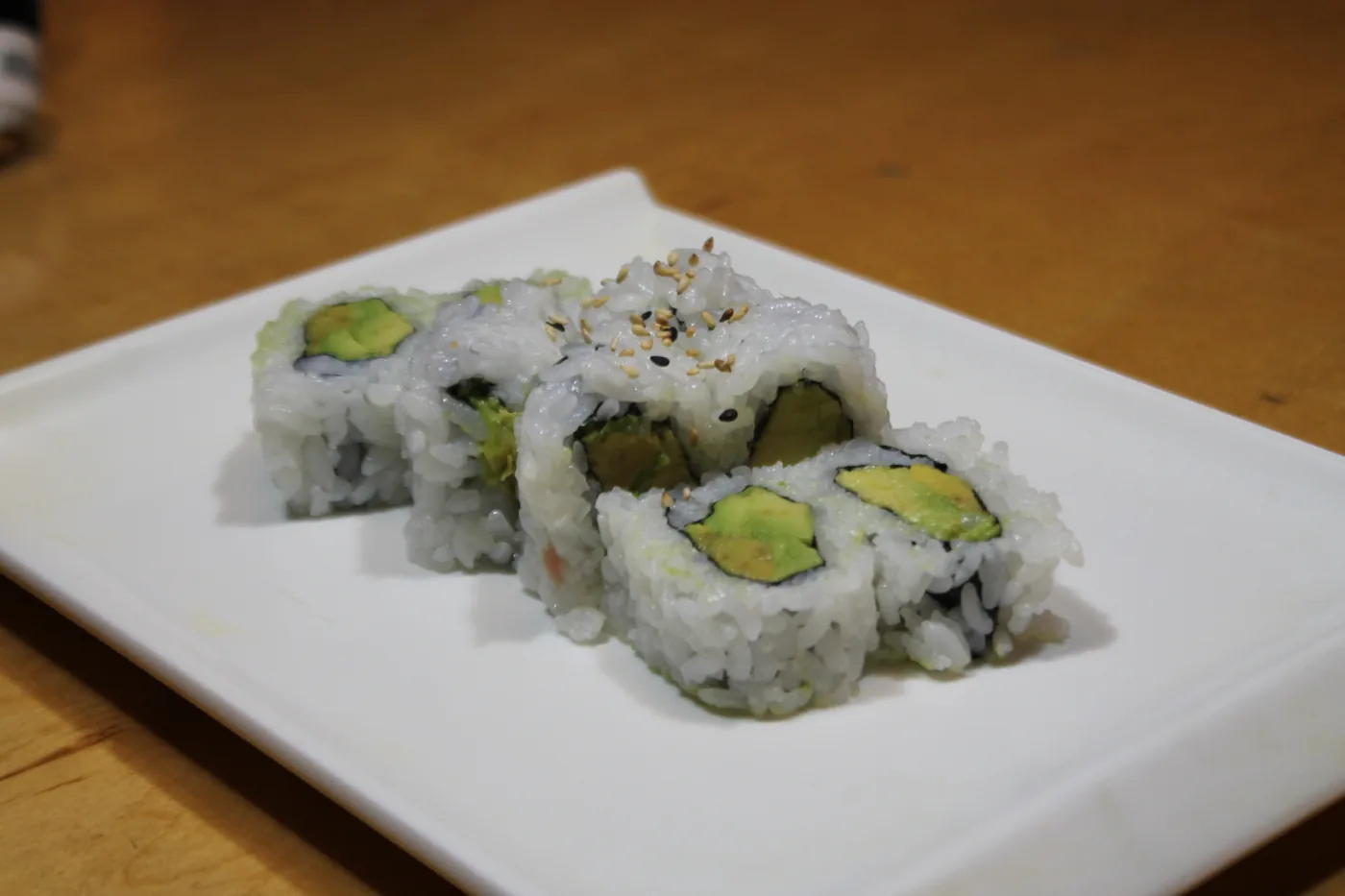
- Avocado Roll. The mildest thing on the entire menu. Genuinely useful for a cautious eater, and a good first roll for a child.
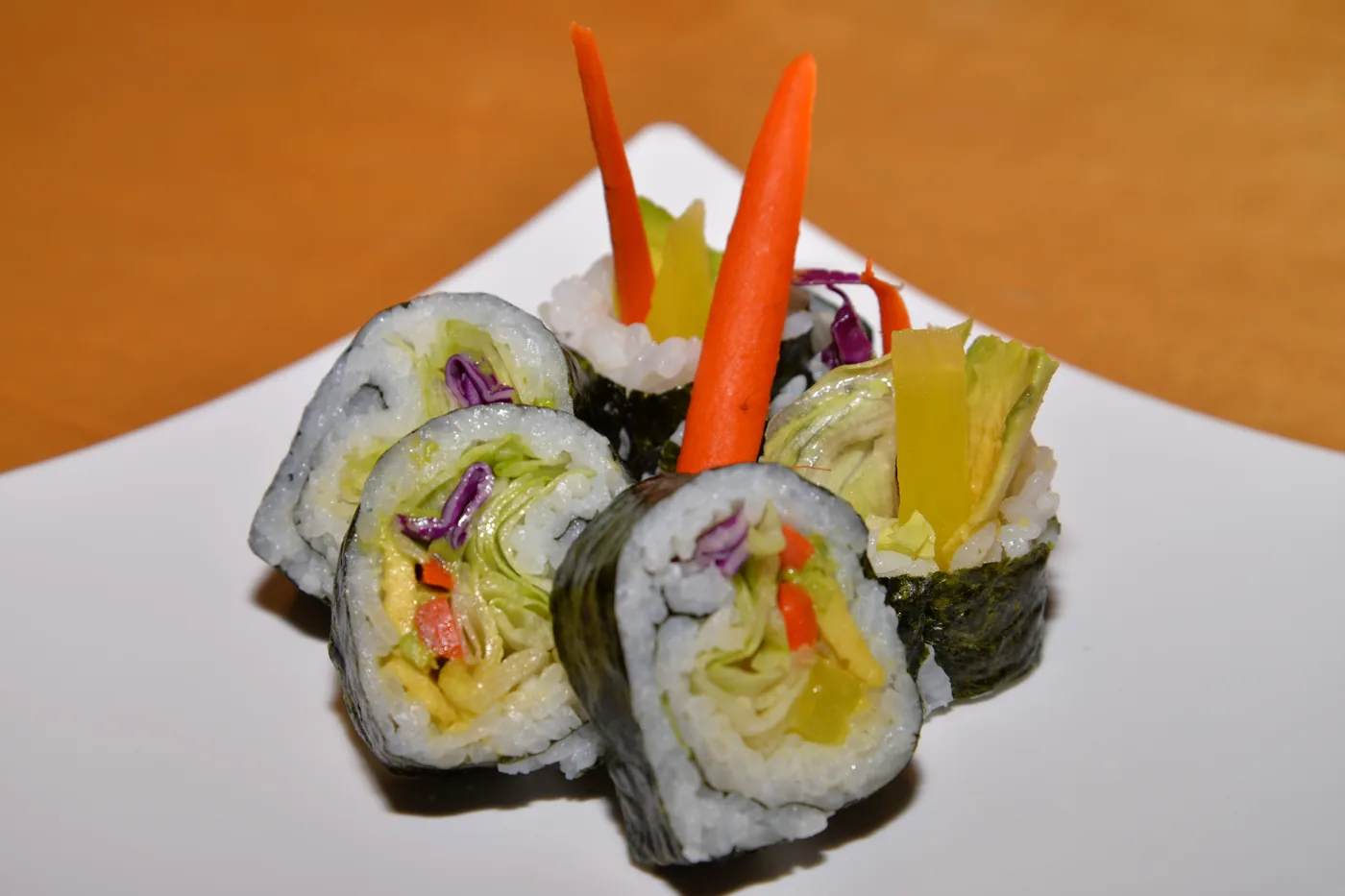
- Vegetable Roll. More going on than the avocado roll, and the obvious starting point if you are eating vegetarian — though it is always worth asking what is in it.
- California Roll. Crab, avocado and cucumber. The most familiar roll in America and the base underneath a large part of the specialty list.
- Salmon Skin Roll. Crisped skin rather than flesh, and the most surprising item in the section — more in the collar and the skin.
The avocado roll in particular is underrated as an ordering tool. When one person at the table is unsure about the whole idea, it gives them something on the plate that is unambiguously fine.
Not instead of specialty rolls. Alongside.
The mistake would be to read all this as an argument for ordering only basic rolls. It is not. Specialty rolls are enjoyable and the fried, sauced, topped ones are enjoyable for reasons a plain tuna roll cannot supply.
The argument is for putting one or two plain rolls on a plate that is otherwise busy. A table with a fried roll, a baked roll and a topped roll is three rich things in a row, and a tuna roll sitting beside them changes how all three taste.
A reasonable shape for two people: one specialty roll each, one basic roll to share, and something cold. That gives you variety, a reset, and a reference point — and it is a far better plate than three specialty rolls.
How to eat a plain roll
With less than you would put on anything else.
- Very little soy. There is no sauce competing with it, so soy will simply take over. Touch one corner, not the whole piece — see soy sauce explained.
- Try one piece with nothing at all. This is the only roll on the menu where that is worth doing, and it is the point of ordering it.
- Wasabi sparingly, if at all. A trace on the fish, not stirred into the dish.
- Eat it early. Nori goes soft against rice, and a plain roll has nothing else to distract from that.
- Do not save it for last. After a fried roll you will not taste it.
Good to know
A short name is not an ingredient list. A basic roll still contains rice seasoned with vinegar and sugar, and nori, and the fish rolls are raw unless the description says otherwise. If you are avoiding something specific, ask about the roll rather than assuming a plain name means plain contents — see allergens on a Japanese menu.
Frequently asked questions
What is a basic sushi roll?
A roll with a single filling, rice and nori — no sauces, no toppings and no second ingredient.
Are basic rolls worth ordering?
They are the only place you can taste a single fish clearly, and they reset your palate between richer rolls. Order one alongside a specialty roll rather than instead of it.
What is the difference between a tuna roll and a spicy tuna roll?
Mostly texture. A tuna roll has sliced tuna; a spicy tuna roll has chopped tuna folded into a creamy dressing. The heat is mild either way.
Which basic roll is best for a beginner?
The avocado roll if you want nothing challenging, or the California roll if you want something with more going on. Neither contains raw fish.
Do basic rolls have raw fish?
The fish ones generally do. Avocado, vegetable, California, eel and salmon skin do not — see sushi without raw fish.
The short version
The basic roll list is fifteen rolls with one filling each, and it is the only part of the menu where you can taste a single ingredient or judge the rice. Five fish appear plain and spicy, which makes the pairing the most instructive order available.
Put one on a plate that is otherwise busy, go easy on the soy, and try a piece with nothing on it at all.