The short answer
Tonkotsuwhat the broth is made from
Shoyu, misowhat it is seasoned with
The two are not alternatives. They describe different layers of the same bowl, which is why a menu can offer both without contradicting itself.
Ramen menus read like a list of competing options: tonkotsu, shoyu, miso, pick one. They are not actually parallel choices, and once you see why, a ramen list becomes much easier to read.
01 — Two layers, not oneThe base and the seasoning
A bowl of ramen broth is built in two stages, and the words on a menu can come from either one.
The base is the liquid itself — what was simmered to make it. Pork bones give tonkotsu. Chicken, or a mixture, or vegetables, give something else. This stage takes hours and it decides the body of the broth: how thick it is, how much it coats the mouth.
The seasoning is a concentrated paste or liquid, called tare, placed in the bottom of the bowl before the broth goes in. It carries almost all the salt and much of the flavour. Soy-based tare gives shoyu ramen; fermented soybean paste gives miso ramen; a salt-based one gives shio.
So “tonkotsu” answers what the broth is made of, and “miso” answers what it is seasoned with. A bowl can easily be both — and on our menu, one is.
Why tonkotsu is opaque
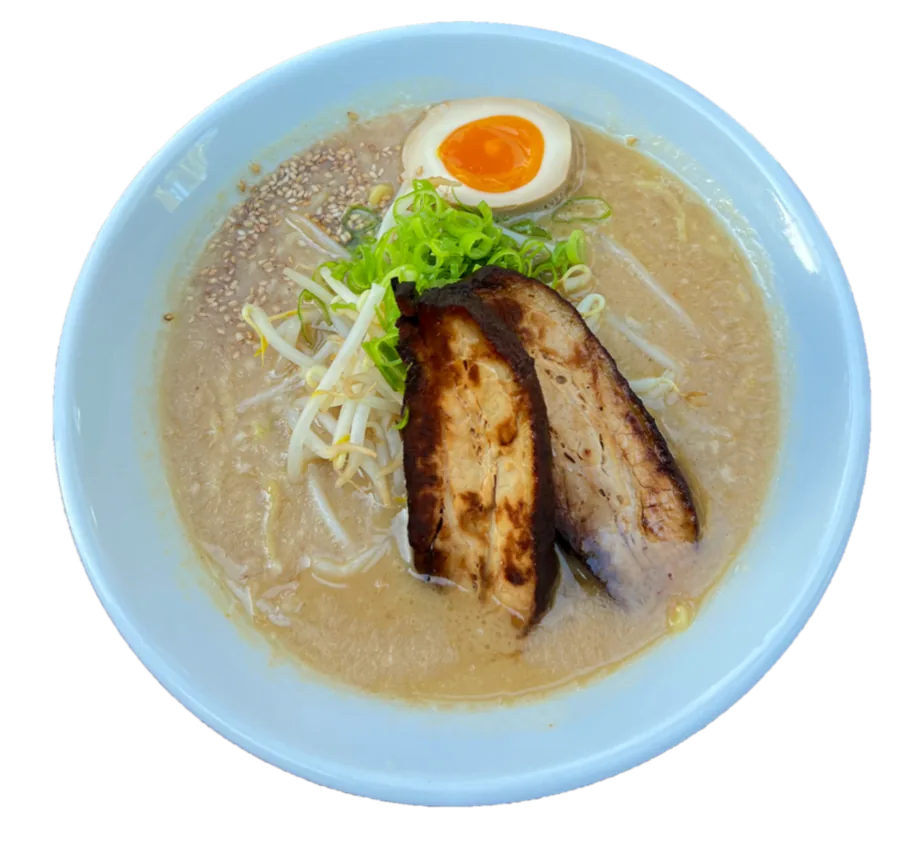
The cloudiness is the most recognisable thing about tonkotsu and it is not a shortcut or a thickener. It is what a hard boil does over a long time.
A gentle simmer produces a clear stock, because fat rises and can be skimmed and the solids stay intact. A rolling boil does the opposite: it breaks collagen down into gelatin, drives marrow out of the bones, and beats the released fat into the liquid so it cannot separate again. The result is an emulsion — fat suspended in water rather than floating on it.
That is why tonkotsu coats a spoon and why it feels heavy in a way that a clear broth does not, even at the same salt level. You are drinking something with fat distributed all the way through it.
It is also why tonkotsu is the bowl people describe as the most filling. Nothing about the portion is larger; the liquid itself is denser.
02 — The bowls on our listFive, and they are genuinely different
| Bowl | What the menu lists |
|---|---|
| Tonkotsu | Rich pork broth, shoyu braised pork belly, green onion, bean sprouts, half marinated soft egg, sesame seed |
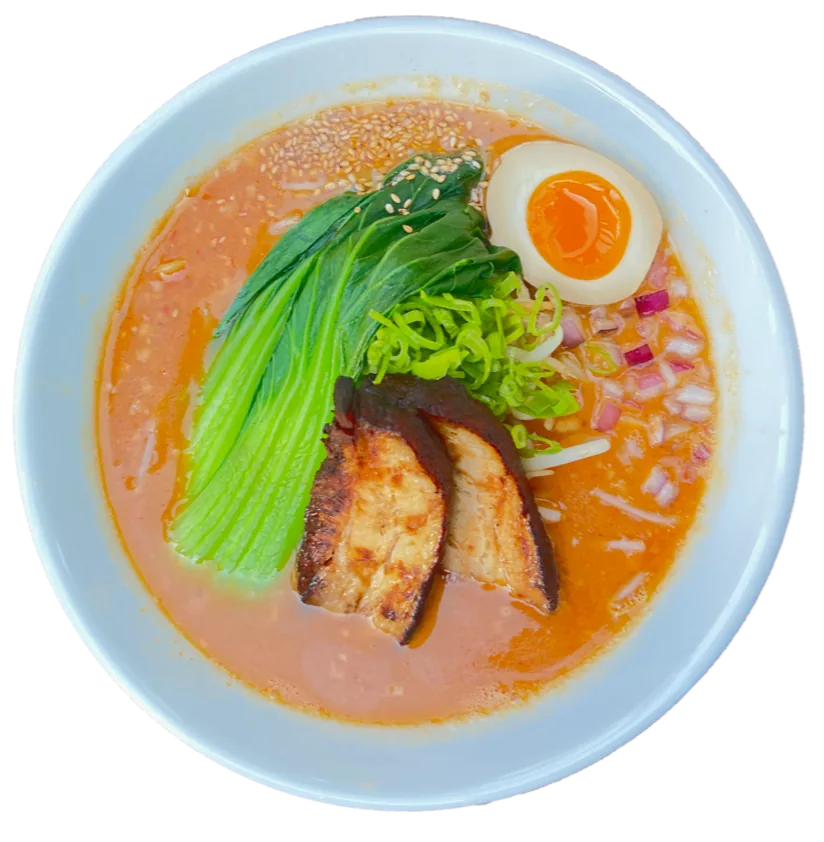
| Spicy Miso | Rich pork spicy miso broth, shoyu braised pork belly, green onion, bok choy, bean sprouts, red onion, sesame seed |
| Shoyu | Shoyu broth, bean sprouts, green onion, broiled chicken breast |
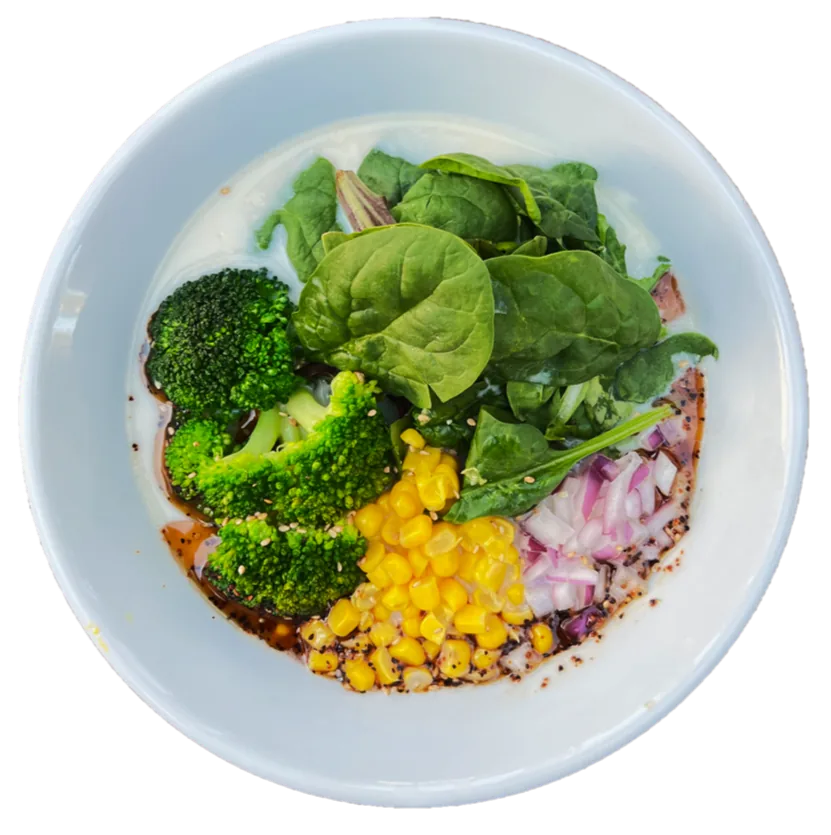
| Creamy Vegan | Rich creamy vegetable broth, broccoli, red onion, corn, green chive, spring mix, sesame seed, black garlic oil |
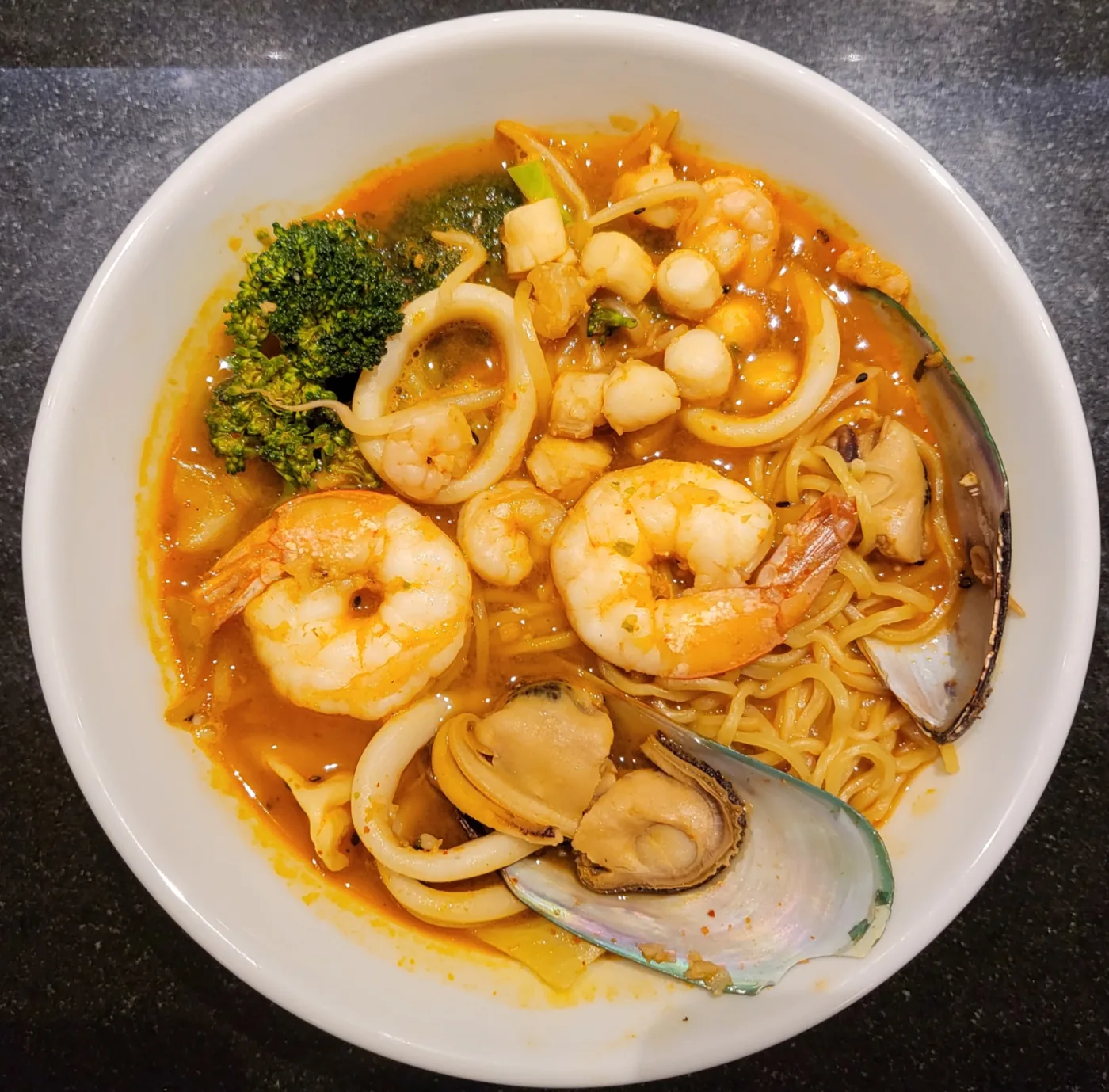
| Spicy Seafood | No description listed on the menu |
Look at the Spicy Miso line and you can see both layers named at once: a pork broth seasoned with miso. Base and tare, in the same phrase. That is the clearest illustration of the point on the whole menu.
The Shoyu bowl goes the other way. It names only the seasoning, and the topping is broiled chicken breast rather than braised pork — a lighter bowl in every respect.
Choosing between them
- You want the full, heavy bowl. Tonkotsu. It is the richest thing on the ramen list and the one that eats like a whole meal on its own.
- You want depth without the weight. Shoyu. Clearer, lighter, and the chicken keeps it from becoming filling.
- You want it to taste of more. Spicy Miso. Fermented paste brings savouriness that a plain broth cannot, and the heat builds rather than arriving all at once.
- You want vegetables. The Creamy Vegan bowl, which is built on a vegetable broth with black garlic oil.
If it is your first bowl here, shoyu is the easier introduction and tonkotsu is the more memorable one. The toppings are a separate decision, covered in what’s in a bowl of ramen.
Please ask rather than assume
Broth is where hidden ingredients live. Both of our pork bowls carry braised pork, shoyu contains soy and normally wheat, and a miso tare is a soy product. Our vegetable-broth bowl is listed on the menu as Creamy Vegan ramen with a vegetable broth, but if you are following a strict vegan or vegetarian diet, or avoiding soy, gluten or shellfish, please ask us about that specific bowl rather than relying on the name — see vegetarian and vegan at a Japanese restaurant.
The oil layer, and why it is there
There is a third component people rarely notice: a flavoured oil, floated on the surface at the end.
It does two jobs. Aromatic compounds dissolve into fat rather than water, so the oil carries smell in a way the broth cannot — and smell is most of what you register in the first seconds. It also insulates. A film of oil across the top slows heat loss noticeably, which is why a bowl of ramen stays hot far longer than an equivalent bowl of clear soup.
Our Creamy Vegan bowl names its oil directly: black garlic oil, made by cooking garlic in oil until it darkens completely. It is one of the strongest aromas in the whole ramen section, and it is doing a lot of the work in a bowl with no meat in it.
Why udon broth is a different animal
Both arrive as noodles in liquid, so the two get filed together. They come from opposite directions.
Ramen broth is built to be assertive. It is long-cooked, heavily seasoned, often fatty, and it is the point of the dish — the noodles are riding in it.
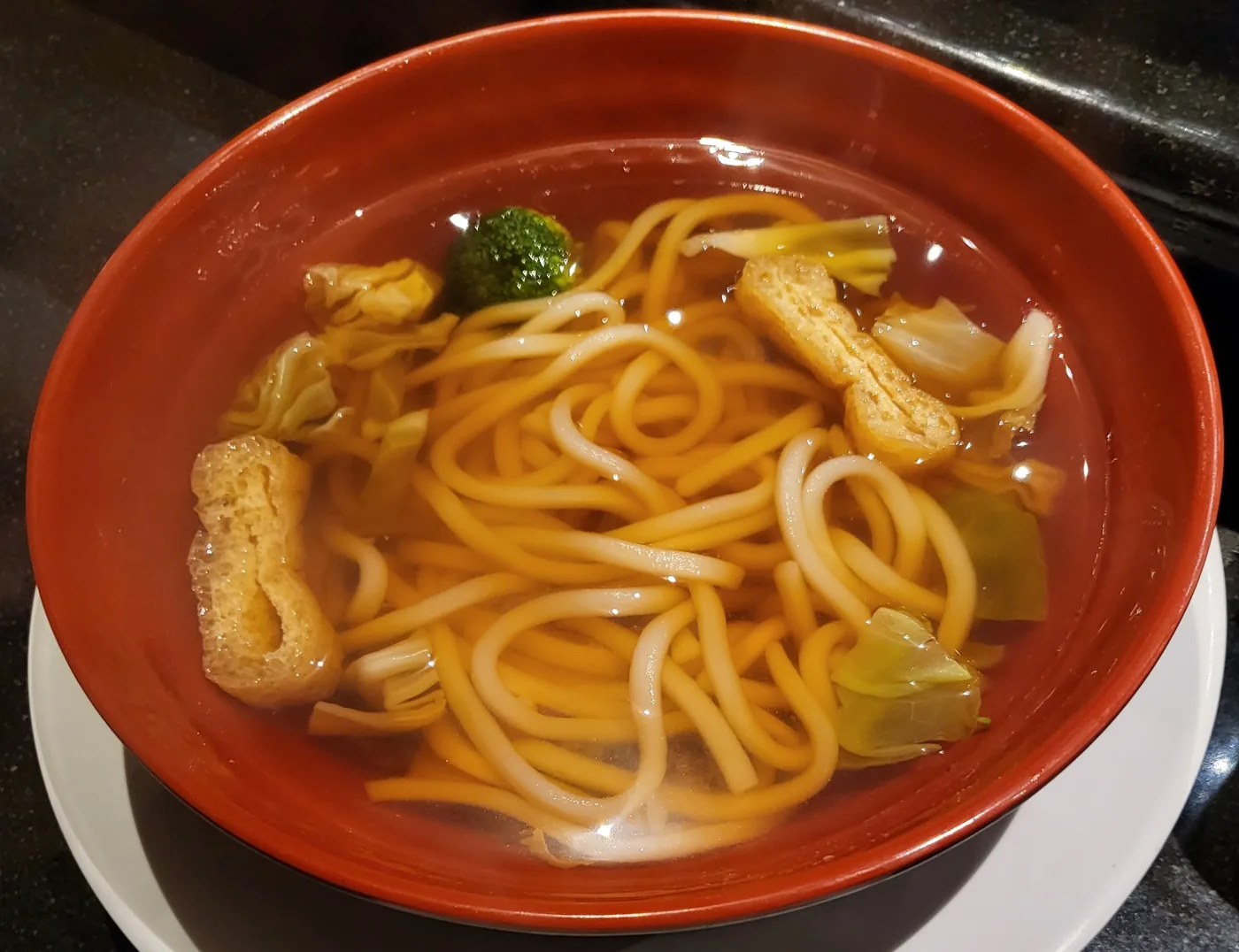
Udon broth is the opposite: a clear, light, kelp-and-dried-fish stock that stays deliberately in the background so the thick chewy noodle stays the main event. Our Plain Udon is listed with seaweed, fish cake and fried tofu, and none of that is competing with the liquid.
Which means the two suit different appetites entirely. Ramen when you want the broth; udon when you want the noodle. The full comparison is in ramen vs udon, and the savoury chemistry underneath both is in umami.
How to eat it
- Taste the broth first. Before the noodles, before the toppings. It is the thing that took hours.
- Do not let it sit. Noodles keep absorbing liquid in the bowl and soften as they go. Ramen is the least patient dish on the menu.
- Slurping helps. It pulls air across the noodle and carries aroma upward, and it cools the mouthful on the way in.
- Don’t season it. The tare already set the salt level deliberately.
- Eat it here. Noodles packed in hot broth for a car journey arrive as a different dish.
Frequently asked questions
What is the difference between tonkotsu and shoyu ramen?
They describe different layers. Tonkotsu is a broth made from pork bones; shoyu is a soy-based seasoning. A bowl can be both, and many are.
Why is tonkotsu broth white and cloudy?
A long hard boil emulsifies fat and dissolved collagen into the liquid instead of letting them separate. The cloudiness is that emulsion.
Which ramen is the lightest?
On our list, the Shoyu bowl — a clearer broth with broiled chicken breast rather than braised pork.
What is tare?
The concentrated seasoning placed in the bowl before the broth. It carries most of the salt and is what shoyu, miso and shio actually refer to.
Should I drink all the broth?
Entirely up to you. It is a seasoned, salty liquid and plenty of people leave some. Nobody will think anything of either choice.
The short version
Tonkotsu names what the broth is made from. Shoyu and miso name what it is seasoned with. They sit on different axes, which is why our Spicy Miso can be a pork broth and a miso bowl at the same time.
Taste the broth before anything else, do not let the bowl sit, and pick shoyu if you want to keep eating afterwards.