The short answer
The nametells you almost nothing
The line under ittells you everything
Place names on a sushi menu are not a system. But the descriptions underneath them are, and once you see the pattern the list gets much shorter.
Alaskan, Hawaiian, Philadelphia, New Mexican, Las Vegas, Tokyo, 71 Freeway. A specialty roll list reads like a badly shuffled atlas, and none of those names is telling you what you are about to eat.
01 — Three rolls, one rollThe clearest example on the menu
Put three of our rolls side by side and read only the descriptions.
| Roll | What the menu lists | The difference |
|---|---|---|
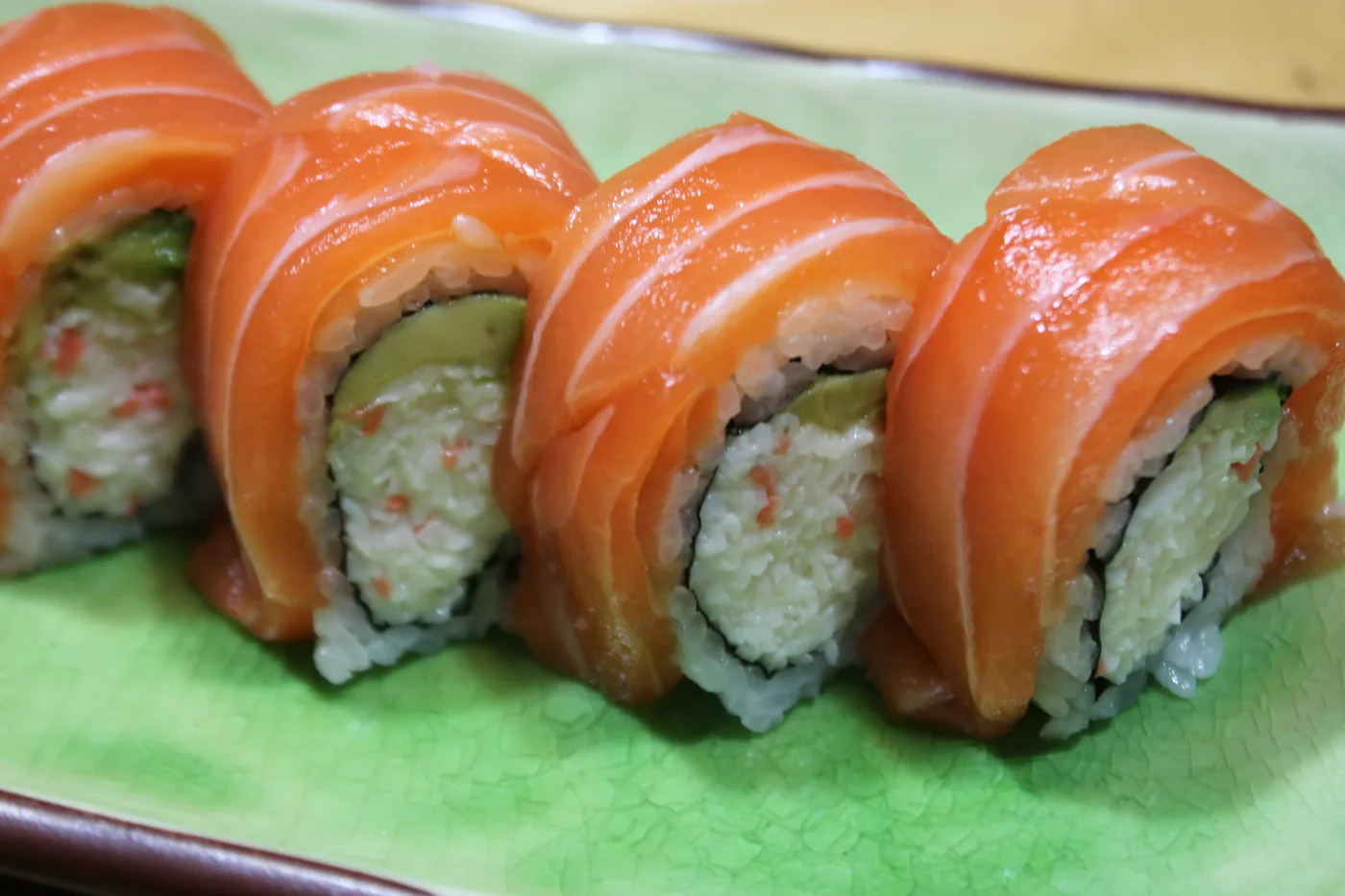
| Alaskan | Salmon with California roll | Salmon on top |
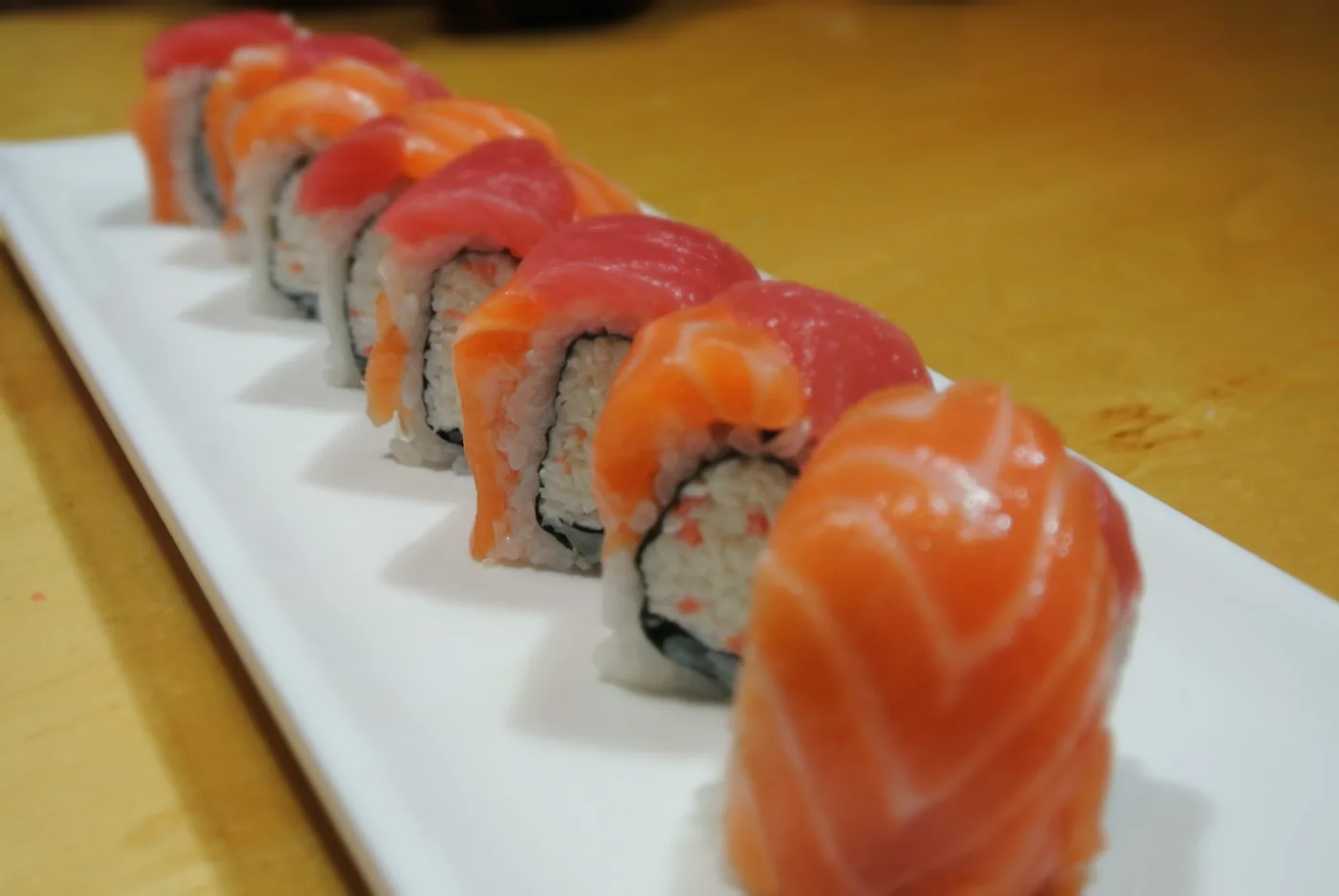
| Hawaiian | Tuna with California roll | Tuna on top |
| Ninja | Tuna and salmon with California roll | Both on top |
One roll, three toppings. The base is a California roll in all three cases, and the entire distinction is which fish is laid over it.
Nothing about Alaska, Hawaii or ninjas is doing any work here. If you like one of these you will like the others, and the only decision you are actually making is salmon, tuna, or both.
Where the words sit is the information
Once you ignore the names, the descriptions follow a consistent structure. There are three patterns, and between them they cover almost the whole list.
- “X with Y roll.” Y is the roll underneath; X is what goes on top. Salmon with California roll means a California roll with salmon over it.
- “… on top.” Stated outright. Everything before it is inside.
- A plain list. No “with”, no “on top” — everything named is inside the roll.
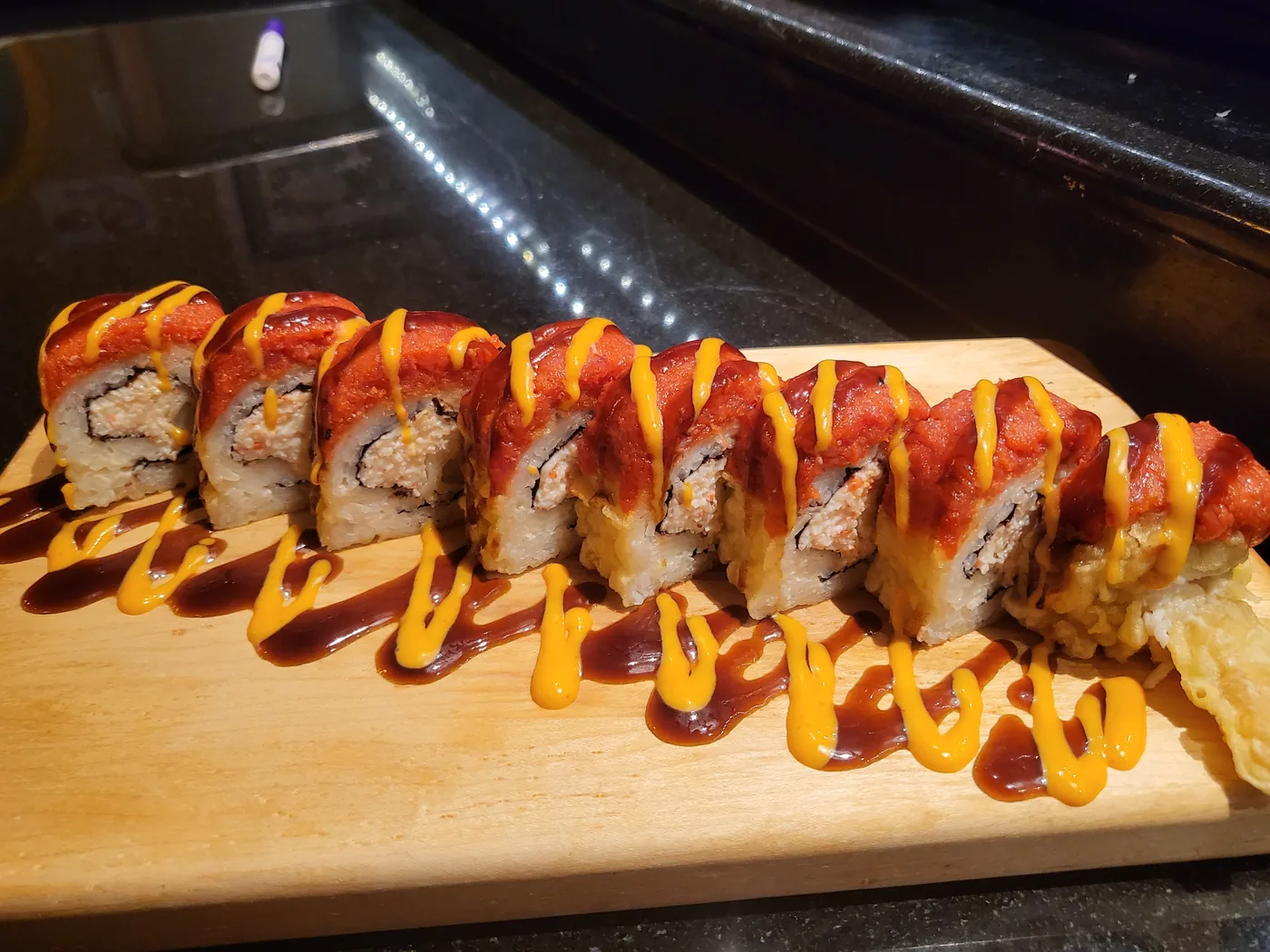
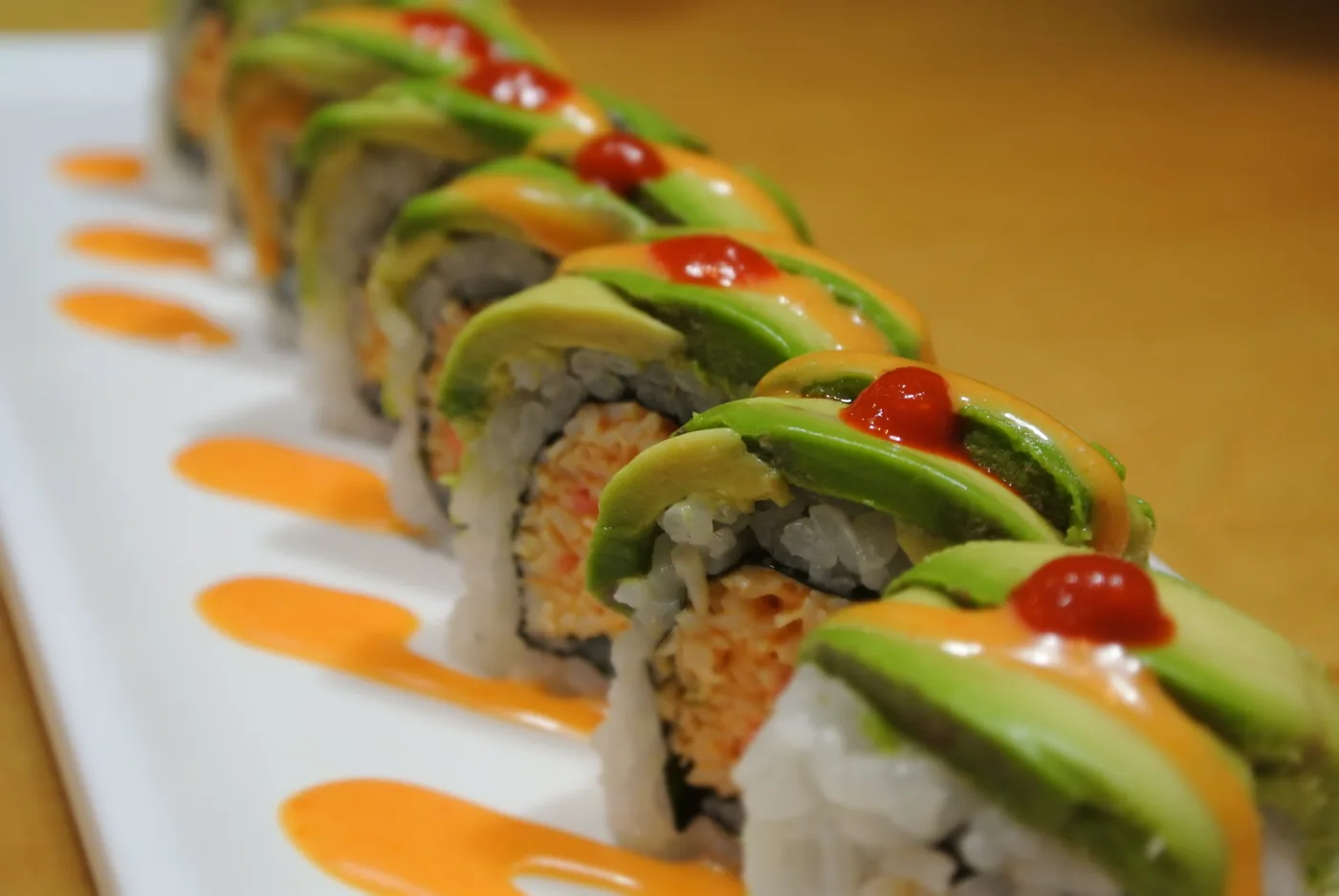
That is the whole system, and it holds across the list. Our 71 Freeway is listed as shrimp tempura and crab with spicy tuna on top: shrimp tempura and crab inside, spicy tuna over the outside. Our New Mexican is avocado with a spicy crab roll and jalapeño on top: a spicy crab roll underneath, avocado wrapped round it, jalapeño over that.
Learn to spot “with” and “on top” and you can read any American sushi menu without asking a single question, and the menu glossary covers the rest of the terms. There is more on the naming conventions in specialty roll names, decoded.
Philadelphia and New Philly
The best illustration of how little the name carries is a pair of rolls on our own list that share almost every ingredient.
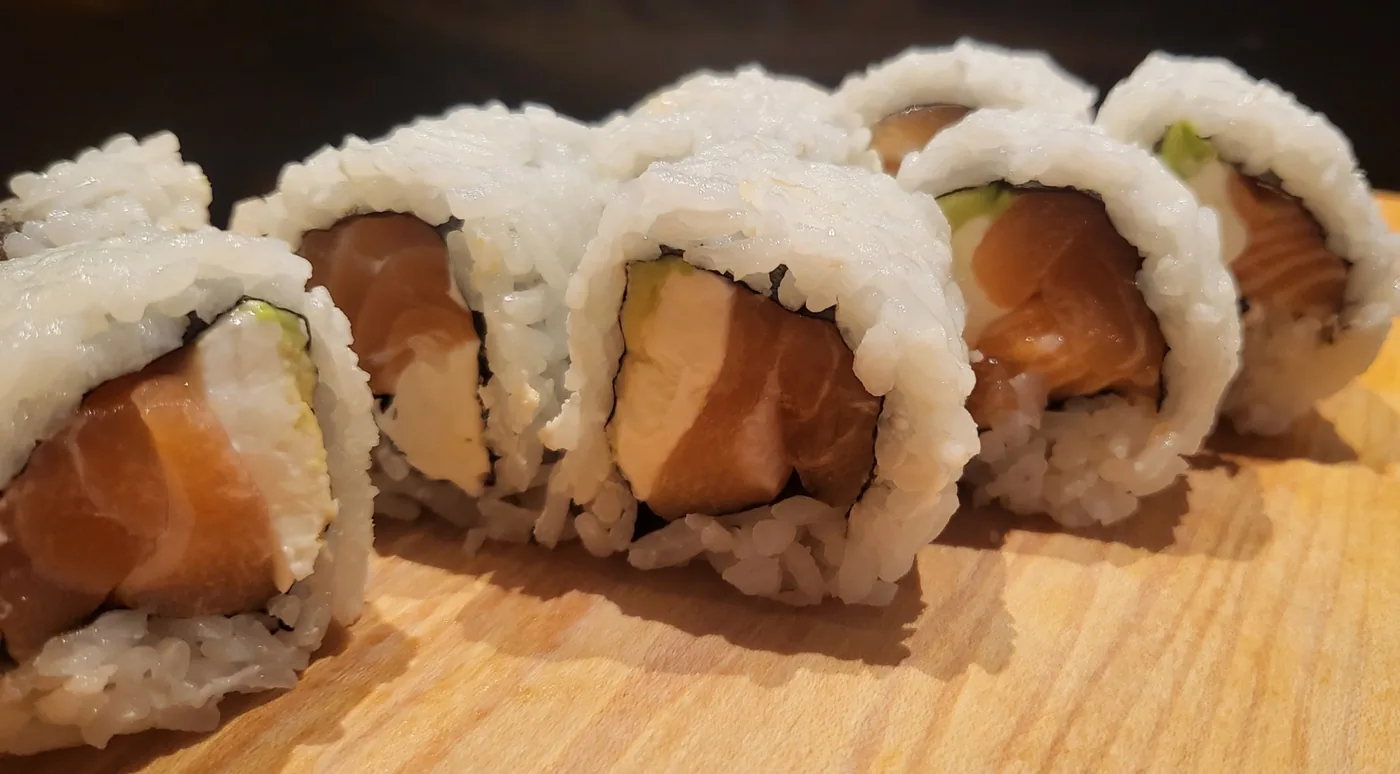
Philadelphia is listed as salmon, cream cheese and avocado with masago. Everything is inside, and the roe is on the outside.
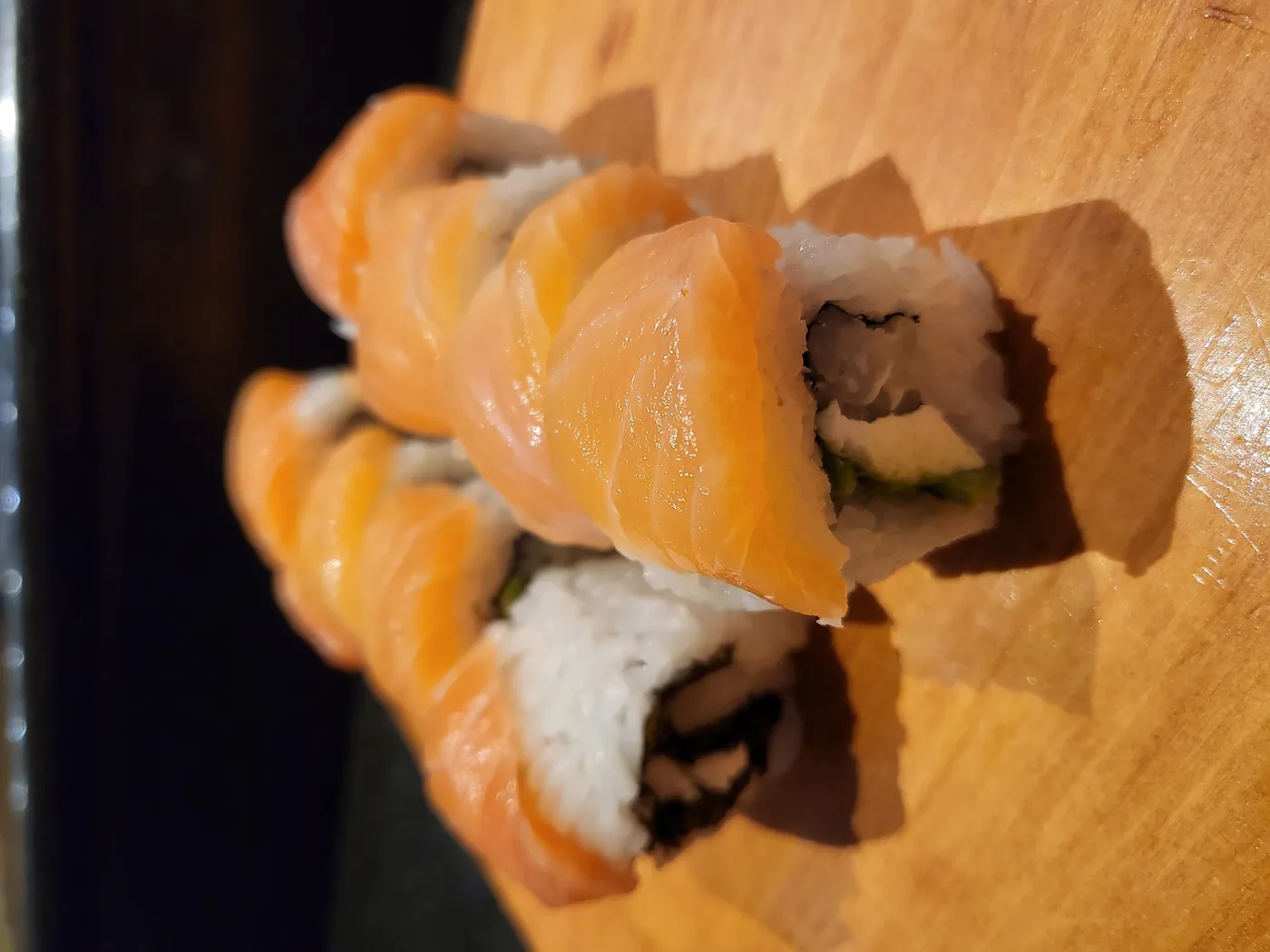
New Philly is listed as cream cheese and avocado with salmon on top. Same three ingredients, but the salmon has moved from inside the roll to over it.
So “New” does not mean new ingredients. It means the same roll rebuilt. And the two eat differently for a real reason: salmon inside a roll is one component among several, while salmon draped over the outside is the first thing your tongue meets and dominates the bite.
As for the city — the usual explanation is that the roll is named after the brand of cream cheese rather than the place. Whether or not that is the true origin, cream cheese is the thing the name reliably signals, which is more than most roll names manage. More on that ingredient in cream cheese in sushi.
They are for remembering, not for describing
It is easy to be sniffy about this. It is more useful to notice what the names are actually for.
A specialty list can run to seventy rolls. Ingredient-accurate names would produce seventy variations on “salmon, avocado and crab with something on top”, and nobody could tell them apart, remember one, or ask for it again next time. A short arbitrary name is a handle. You order the Ninja once, you liked it, you order the Ninja again.
That is also why the names skew towards places, and towards places that sound like somewhere else. The American sushi roll was invented in California and spread outward, and naming rolls after other states and cities was a way of signalling that this was a local invention rather than an import. The history is in how the American sushi roll happened.
Occasionally the reference is closer to home. Our 71 Freeway takes its name from the highway that runs past Chino Hills, which is about as local as a roll name gets.
Good to know
Because roll names carry no information, they also carry no warnings. Nothing in “Philadelphia” tells you there is dairy in it, nothing in “New Mexican” tells you there is jalapeño, and nothing in “Alaskan” tells you the fish on top is raw. The description is the only place any of that appears, and even it is not a full ingredient list — ask if you are avoiding something. See allergens on a Japanese menu.
Ordering by description instead
If you take one habit from all this, make it the one that turns a seventy-item list into a short one: decide the shape of what you want first, then scan the descriptions for it.
- Want raw fish on the outside? Look for “on top” followed by a fish name.
- Want everything cooked? Look for tempura, baked, or crab in the description and no raw fish anywhere in it — the fuller list is in sushi without raw fish.
- Want something crisp? Look for crunch, tempura or fried.
- Avoiding heat? Look for jalapeño rather than for the word spicy, which mostly means a creamy dressing.
- Avoiding dairy? Look for cream cheese, which appears in far more rolls than the names suggest.
Two minutes of that beats twenty minutes of trying to guess whether a Ninja is spicier than an Alaskan. It is not. It has more fish on it. And if you want to taste one fish without a name in the way, that is what the basic roll list is for.
Frequently asked questions
Why are sushi rolls named after American places?
Because the specialty roll is an American invention and the names are handles rather than descriptions. A short memorable name is easier to reorder than an accurate one.
What is the difference between a Philadelphia and a New Philly roll?
On our menu, Philadelphia has salmon inside with masago outside; New Philly has the salmon laid on top instead. Same ingredients, different construction.
What does “with California roll” mean in a description?
That a California roll is the base and whatever is named before it goes on top.
Is an Alaskan roll raw?
Ours is listed as salmon over a California roll, so the topping is raw salmon. Always read the description rather than the name.
Do roll names mean the same thing at every restaurant?
No. There is no standard, and the same name can mean quite different rolls in two places. The description is the only reliable guide.
The short version
Place names on a roll list are handles, not descriptions. Alaskan, Hawaiian and Ninja are one roll with three different toppings; Philadelphia and New Philly are the same ingredients built two ways.
Ignore the names, read for “with” and “on top”, and pick by what you actually want on the plate.