The short answer
The collarthe cut behind the gills
Why it is goodfat, and muscle that worked
Two of the best things on a Japanese menu are parts a Western fishmonger throws away. There are only two collars per fish.
A salmon arrives in a kitchen as a whole fish and leaves as fillets. What happens to everything else is a decent test of whether a kitchen knows what it is doing.
01 — The collarWhere it is on the fish
The collar is the wedge of flesh just behind the gills, wrapping around the pectoral fin at the top of the fish. In Japanese it is kama.
When a fish is filleted, the cut runs from behind the head down the length of the body. The collar sits ahead of where that cut starts, so it comes away with the head rather than with the fillet. In most Western processing that whole section goes to stock, to pet food, or into a bin.
Which means it is not scarce because of demand. It is scarce because there are exactly two on every fish, and a fish only has one collar’s worth of it whether the fish weighs four pounds or forty.
Why it tastes better than the fillet
Two reasons, and they compound.
The first is fat. Fish store fat toward the front and the belly, and the collar sits right in that zone. Fat carries flavour and keeps flesh moist under heat, so a collar tolerates the grill or the broiler in a way a lean tail piece simply does not.
The second is work. The muscle around the pectoral fin is used constantly — it is steering and stabilising every second the fish is alive. Working muscle develops more connective tissue and more of the compounds that read as savoury, which is the same reason a chicken thigh has more flavour than a breast.
Put those together and you get a piece that is richer, more varied in texture, and considerably harder to overcook than the premium cut it sits next to.
Salmon or yellowtail
We list both, and the menu is precise about the difference in how they are cooked.
| What the menu lists | What to expect | |
|---|---|---|
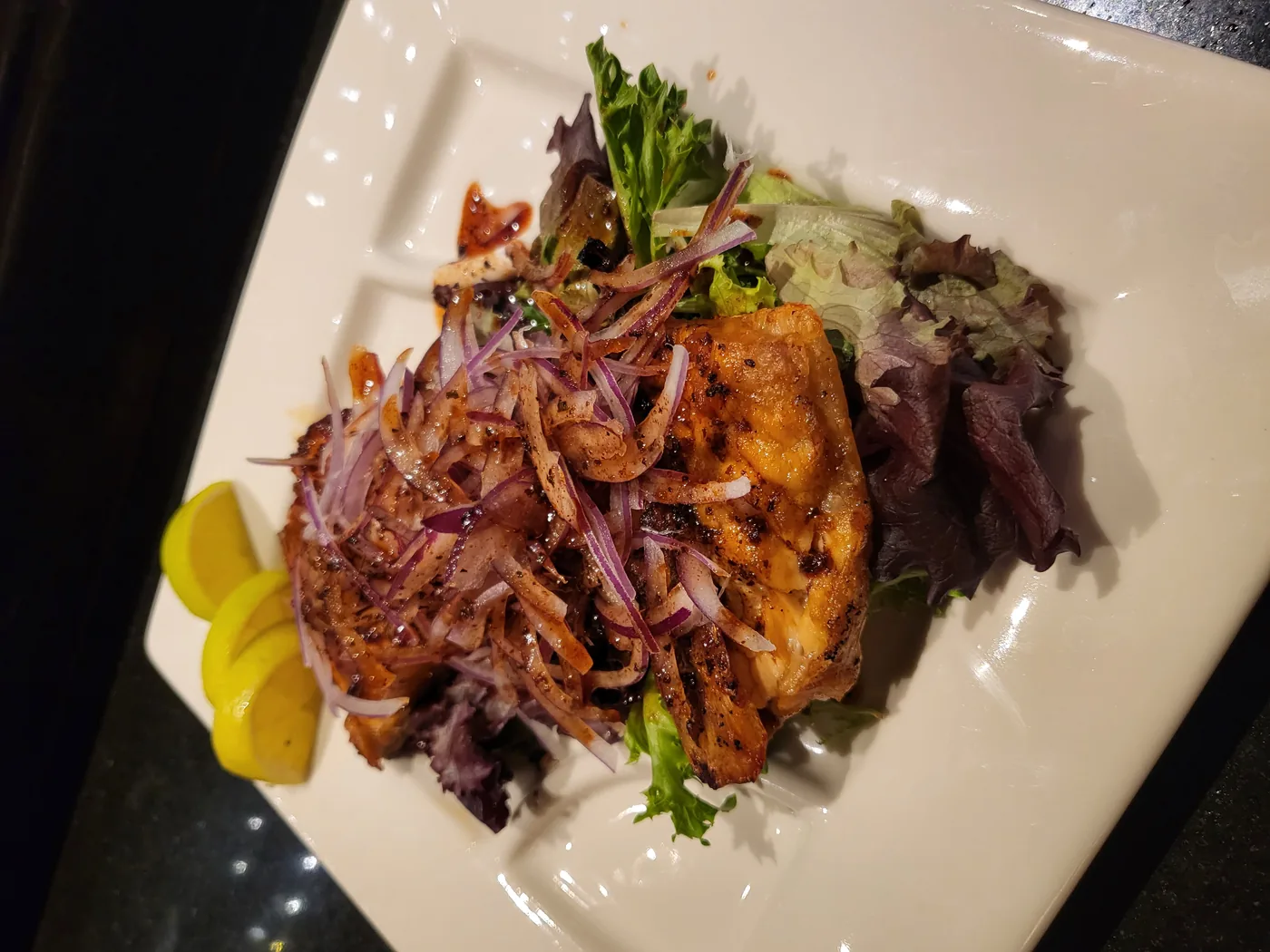
| Salmon Collar | Baked salmon fillet, collar bone | Softer, oilier, more forgiving |
| Yellowtail Collar | Broiled yellowtail fillet, collar bone | Firmer, cleaner, more savoury |
Yellowtail collar — hamachi kama — is the one that has a reputation in Japan, and it is worth ordering if you have only ever had yellowtail as sashimi. Cooked, it becomes something else entirely: denser, sweeter, with a savoury edge the raw slices never show. There is more on the fish itself in tuna, albacore and yellowtail.
How to eat it
A collar has bones in it — that is what the menu means by “collar bone” — and it is not a knife-and-fork piece. Work along the bone with chopsticks and lift the flesh away in sections; the best meat is in the pockets around the fin and underneath. It is a slightly messy dish and it is meant to be. Take your time and mind the small bones.
The other part nobody wants
Salmon skin follows exactly the same logic. It comes off during filleting, it is usually discarded, and crisped properly it is one of the better textures available.
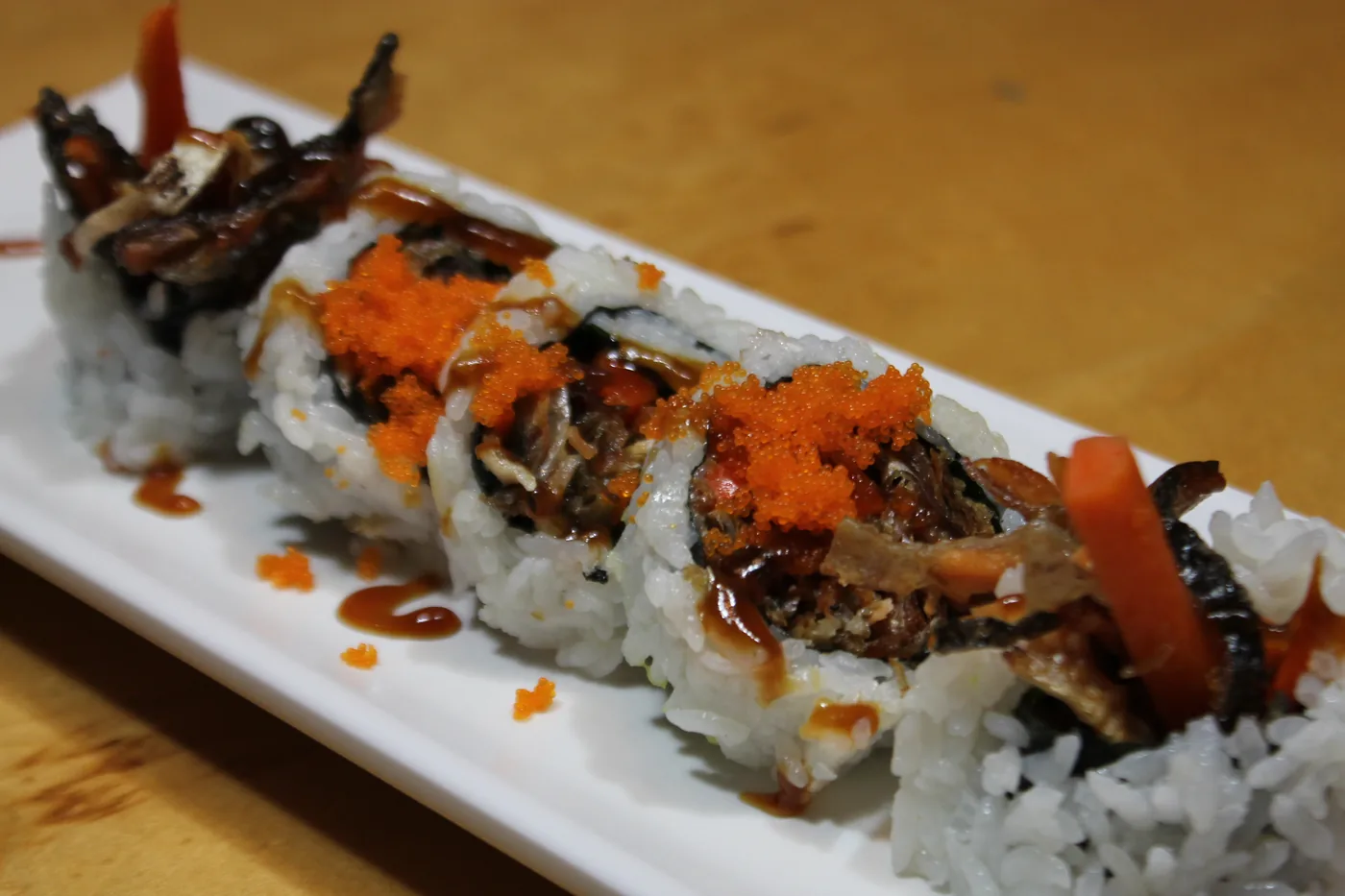
What makes it work is the layer of fat between the skin and the flesh. Under high heat that fat renders out, the water in the skin boils away, and what is left contracts into something thin, brittle and deeply savoury. It is closer to crackling than to fish.
The flavour is smoky and salty rather than fishy, which is why salmon skin converts people who think they do not like salmon. It reads as a snack.
Three places it appears
Salmon skin turns up in three different formats on our menu, and the format changes how much of it you actually taste.
- Salmon Skin Roll. A basic roll, so the skin is the point rather than one ingredient among six.
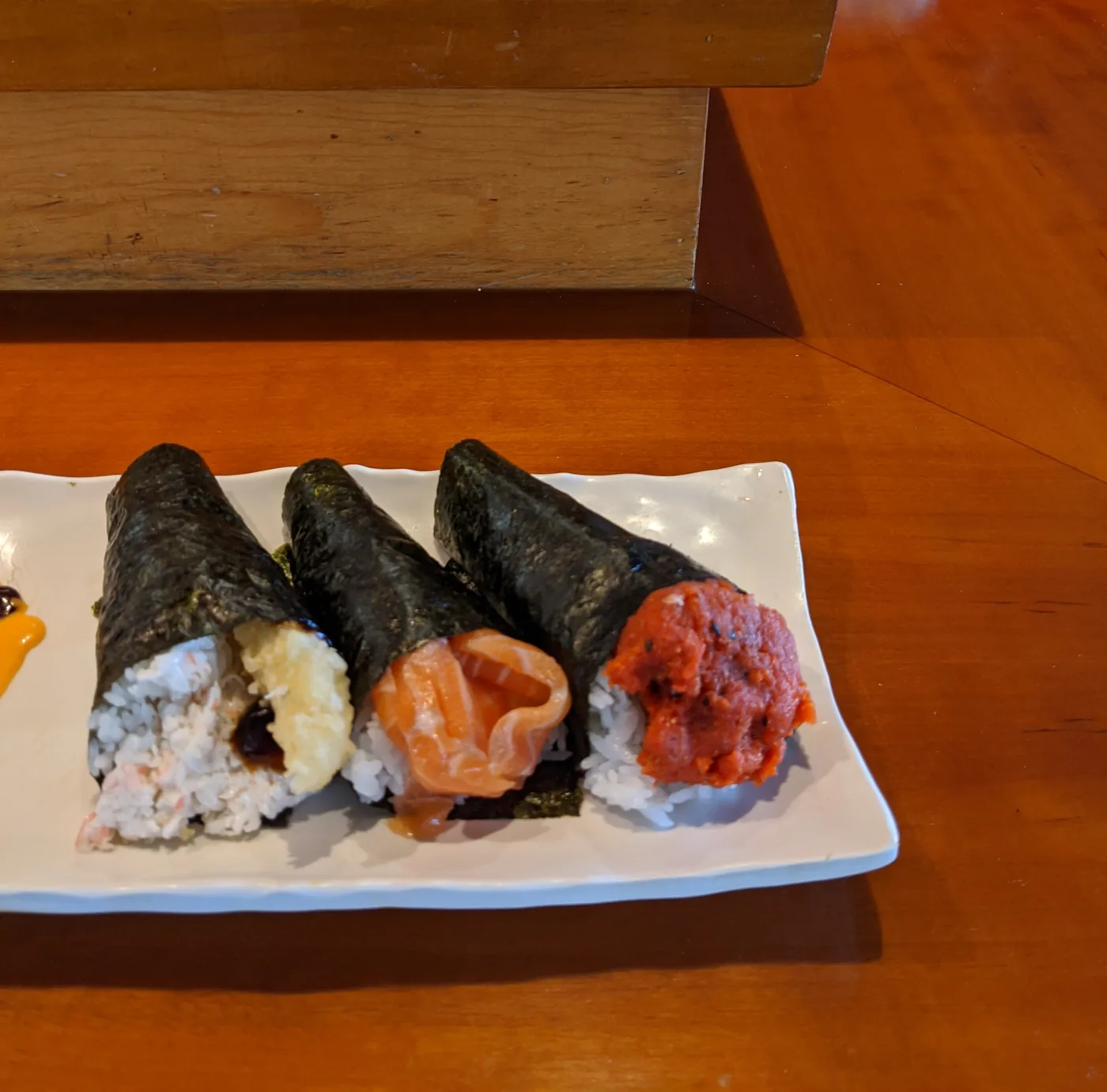
- Salmon Skin Hand Roll. Listed as salmon skin, rice and seaweed wrapped in a cone. This is the best version for texture — a hand roll is assembled to order and eaten immediately, so nothing has had time to soften.
- Salmon Skin Salad. Crisped skin over greens, in the salad section. Here it works as the substantial element in an otherwise light dish — see the cold side of the menu.
If you want to know whether you like salmon skin, order the hand roll. If you already know you do, the salad is the one that gives you the most of it.
Using the whole fish is not a trend
Western restaurants have spent the last decade rediscovering nose-to-tail cooking and presenting it as a new idea. Japanese cooking never stopped.
The reasoning is partly practical — an island cuisine built on fish had every reason not to waste any — and partly a genuine belief that different parts of an animal are different ingredients rather than better and worse versions of the same one. The collar is not a consolation prize for people who could not get the fillet. It is a distinct thing with its own uses.
You can see the same instinct across the rest of the menu. Fish roe as a garnish, dried bonito shaved onto hot food, kelp simmered for stock, the bones themselves cooked down for ramen. Almost nothing is treated as scrap — there is more on the savoury end of that in umami.
Ordering them well
- Order the collar early. It comes hot and it is better hot, and it takes longer to eat than you expect.
- It is a sharing dish. One collar between two is a good appetiser; one each is a lot before the rest of the meal.
- Do not add sauce. A collar is already rich and already seasoned. Squeeze the lemon if there is one and leave it there.
- Ask about availability. Two per fish is a hard limit, so it is a reasonable thing to check rather than assume.
- Pair skin with something sharp. Crisped skin is fatty and salty, and it wants acidity beside it.
And if you are the sort of person who orders the same salmon roll every visit, the collar is the single best argument on the menu for doing something else once. More on the fish’s full range in salmon on a Japanese menu.
Frequently asked questions
What is a fish collar?
The wedge of flesh behind the gills, around the pectoral fin. It is called kama in Japanese, and there are two per fish.
Why is the collar considered the best part?
It is fatty, and the muscle around the fin works constantly, which makes it more savoury and more varied in texture than a fillet.
Does a fish collar have bones?
Yes. Work along the bone with chopsticks and lift the flesh away in sections, and mind the smaller bones as you go.
What does salmon skin taste like?
Smoky and savoury rather than fishy, with a brittle texture closer to crackling than to fish.
Is salmon skin roll cooked?
The skin is crisped before it goes into the roll. If you are avoiding raw fish generally, check the full roll rather than the name — see sushi without raw fish.
The short version
The collar is the fatty, hard-working wedge behind the gills, and there are two per fish. The skin is the other part most kitchens discard, and crisped it is closer to crackling than to fish. Both are better than the fillet they came off.
Order a collar to share, early and hot, and try the hand roll if salmon skin is new to you.