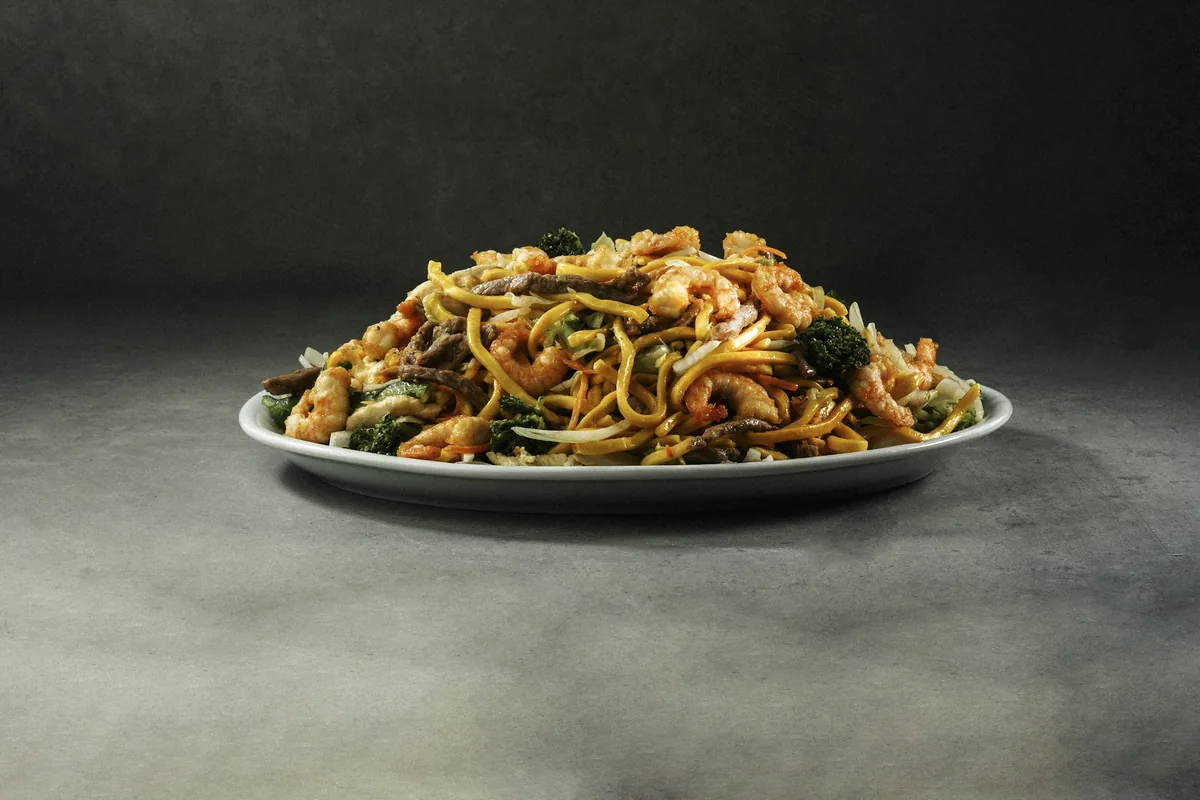
The short answer
Yakisobathin, springy noodles, stir-fried
Yaki udonthick, chewy noodles, same pan
The vegetables, the protein and the sauce are usually identical. Yaki means grilled or pan-fried, so the only thing you are really choosing is the noodle.
Plenty of Japanese menus list these two side by side and leave you to work out the difference on the spot. It is a smaller decision than it looks, and once you know what changes, you will pick the right one every time.
01 — The basicsThe noodle is the whole difference
Yaki is the Japanese word for grilled or pan-fried. Attach it to a noodle and you have named the dish: yakisoba is pan-fried soba-style noodles, yaki udon is pan-fried udon. Everything after that — the cabbage, the carrots, the sauce, the protein — tends to be the same in both.
So when a menu offers you a choice between them, it is not offering two different recipes. It is offering the same dish built on two very different noodles, and the noodle changes how the whole plate eats.
What yakisoba noodles are
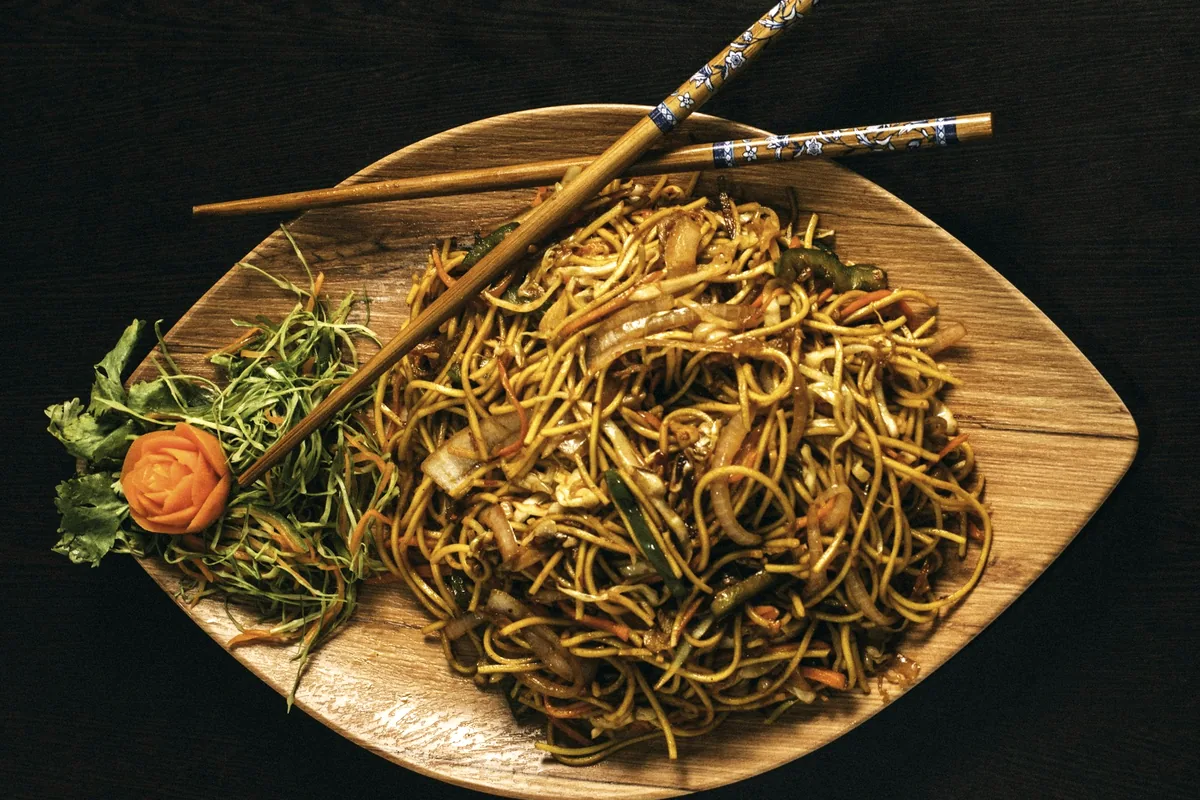
Yakisoba noodles are thin, springy and slightly yellow. They are wheat noodles made with kansui, the alkaline mineral water that also defines ramen noodles, which is where the colour and the bounce come from. In practice, a yakisoba noodle is much closer to a ramen noodle than to anything else on the menu.
Because they are thin, they take on sauce quickly and crisp at the edges where they meet the hot pan. That browning is a large part of why the dish tastes the way it does. A good plate of yakisoba has some strands that are soft and some that have caught a little colour.
What yaki udon noodles are
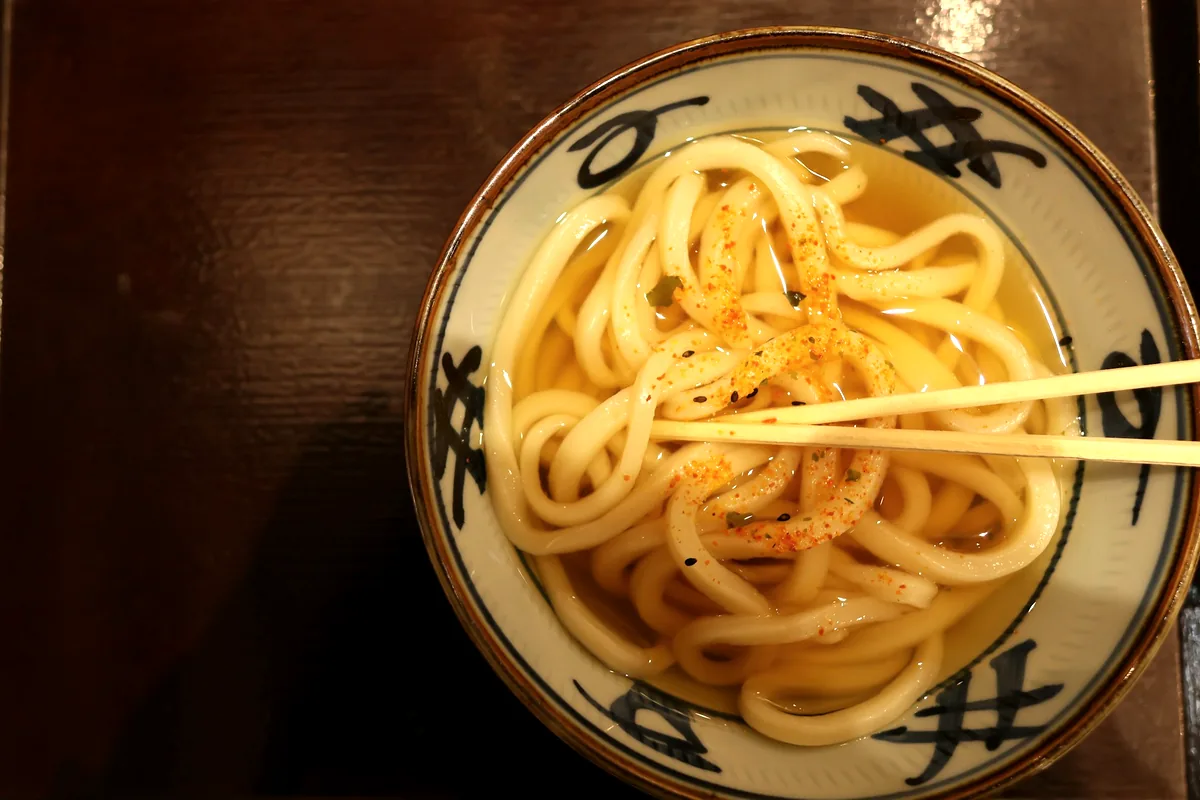
Udon noodles are thick, white and made from three things: wheat flour, salt and water. No kansui, no egg. That simplicity is the point — the noodle is soft with a heavy, satisfying chew, and it tastes mildly of wheat rather than of anything added to it.
Stir-fried, those thick strands behave differently. They do not crisp the way a thin noodle does, and they carry less sauce per bite because there is simply less surface for it to cling to. What you get instead is a chewier plate with more contrast between the noodle and everything around it.
02 — Side by sideYaki udon vs yakisoba at a glance
| Feature | Yakisoba | Yaki udon |
|---|---|---|
| Noodle thickness | Thin | Thick |
| Made with | Wheat flour and kansui | Wheat flour, salt, water |
| Colour | Pale yellow | White |
| Texture | Springy, with crisp edges | Soft with a heavy chew |
| Sauce pickup | High — coats every strand | Lower — sauce sits on the surface |
| Closest relative | Ramen noodles | Udon soup noodles |
| Eats as | Lighter, faster, more savoury | Heavier, chewier, more filling |
| Best for | Anyone who likes ramen noodles | Anyone who wants udon without soup |
The sauce is doing the same job in both
Yakisoba sauce is built on Worcestershire, thickened and sweetened until it turns into something closer to a fruity brown sauce than to the thin original. It is savoury, faintly sweet and a little tangy, and it is what makes the dish taste unmistakably Japanese-diner rather than generically stir-fried.
Yaki udon is sometimes finished with soy sauce and dashi instead, which gives a cleaner, saltier plate. But plenty of kitchens use the same Worcestershire-based sauce for both, and ours does — our stir-fried noodle dishes are all built with cabbage, broccoli, carrots, bean sprouts and Worcestershire sauce, whichever noodle you pick.
Good to know
Yakisoba contains no buckwheat, despite the name. Soba can mean buckwheat noodles, but it is also used loosely to mean any thin noodle, and that is the sense it carries here. If you are avoiding buckwheat specifically, yakisoba is not the thing to worry about — but ask the restaurant rather than assuming from a dish name.
Why both are cooked over high heat
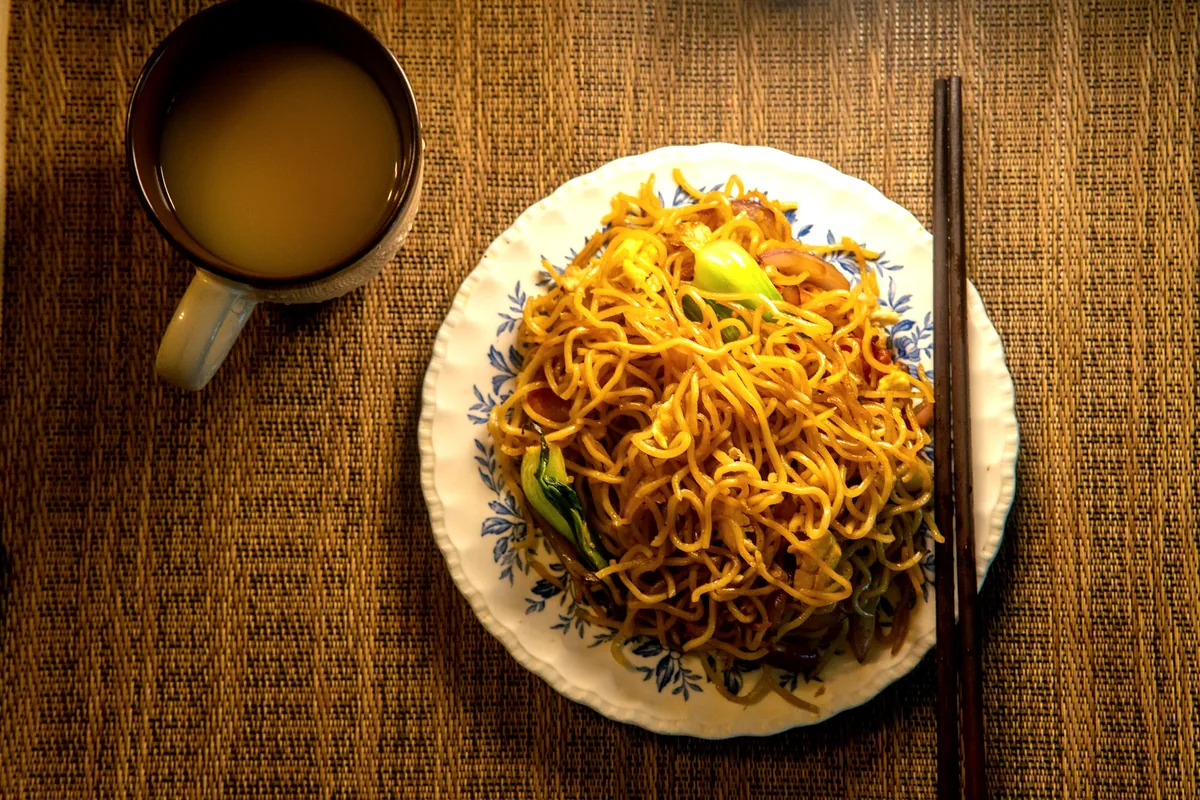
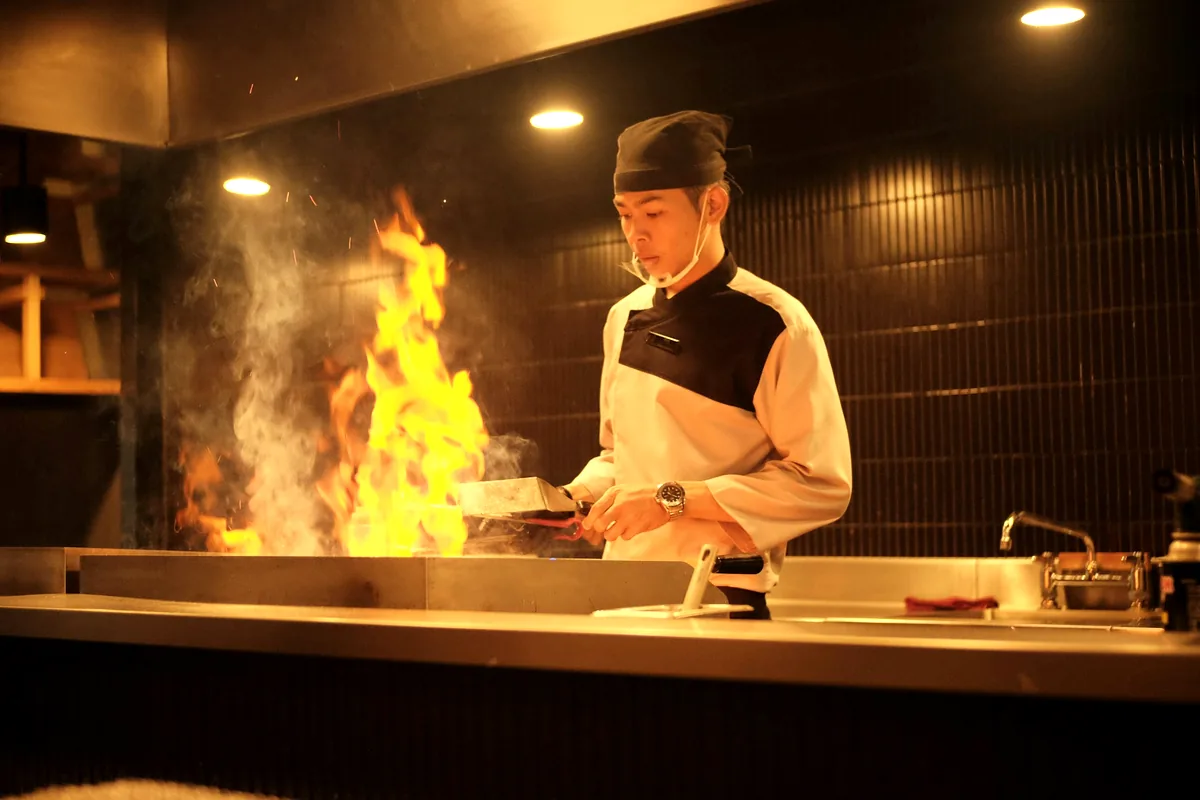
Stir-fried noodles are a hot-pan dish, and the heat is not optional. The pan needs to be hot enough that the vegetables keep some bite and the noodles pick up colour instead of steaming. Cook them gently and you get a soft, wet plate; cook them hard and fast and you get the edges and the aroma the dish is supposed to have.
That is also why the order in which things go into the pan matters. Protein first, then the harder vegetables, then the noodles and sauce at the end, so the noodles spend as little time as possible over the heat.
Which should you order?
Start from what you already like. If ramen is your usual order, yakisoba will feel familiar — same noodle family, no broth. If you tend to order udon, yaki udon gives you that thick chew without a bowl of soup in front of you.
Beyond that, a few things reliably decide it:
- You want the more filling plate. Yaki udon. Thick noodles sit heavier.
- You want more sauce flavour in every bite. Yakisoba. Thin noodles carry more of it.
- You are sharing with someone eating a soup noodle. Either works, but yakisoba gives the table more textural variety.
- You are feeding a child. Yaki udon is easier to manage — thick noodles are simpler to pick up and less inclined to slip.
- You are ordering ahead for later. Yaki udon holds better, for the reason below.
How they hold up as takeout
Stir-fried noodles are one of the better Japanese dishes to take home, because neither of them is sitting in broth. A bowl of ramen or udon soup starts softening the moment it is packed; a stir-fry does not.
Between the two, yaki udon is the sturdier traveller. Thick noodles keep their chew for longer and are less likely to clump as they cool. Yakisoba is still perfectly good after a short drive, but the thin strands soften faster and lose the crisp edges the pan gave them.
Ordering either one at Tokyo Roll & Noodle
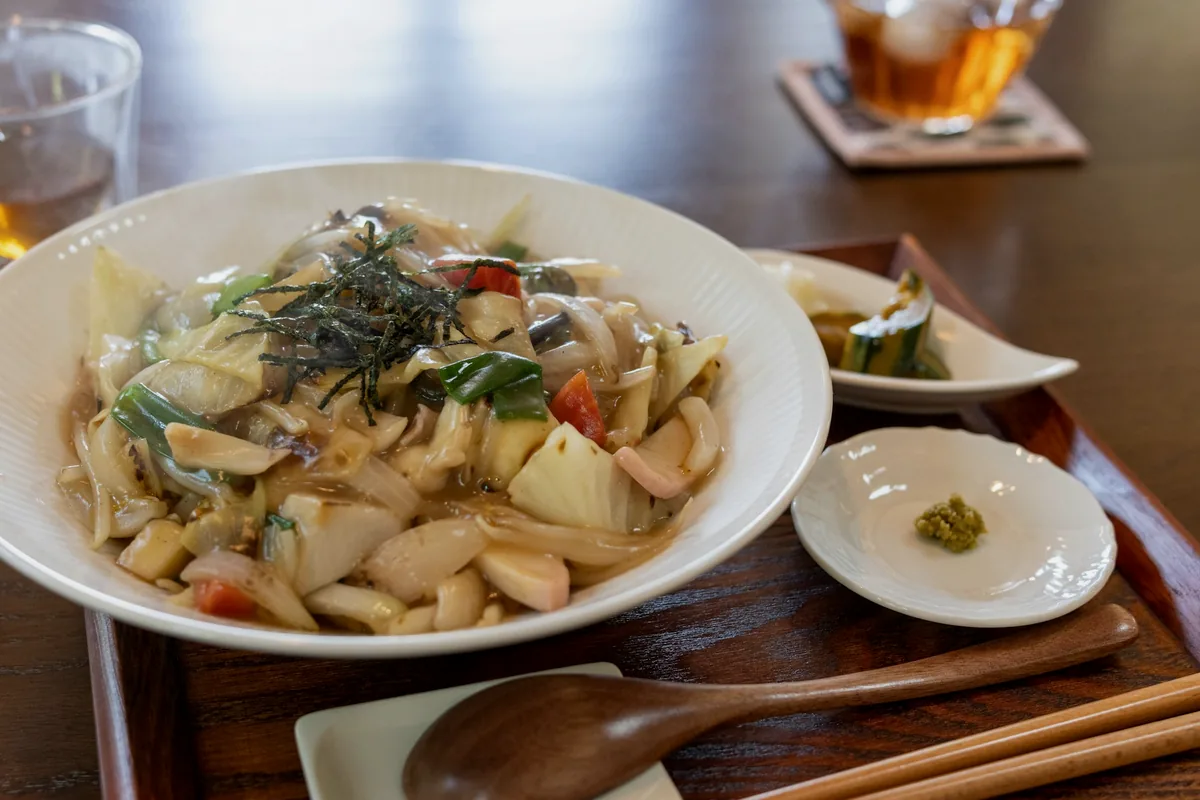
Our stir-fried noodle dishes are listed by protein rather than by noodle, and the noodle is a choice you make on each one. Chicken, beef, salmon, seafood and a mixed-vegetable version are all on the list, and each comes with your choice of yakisoba or yaki udon noodles.
The vegetables are the same across all of them — cabbage, broccoli, carrots and bean sprouts, finished with Worcestershire sauce. The seafood version is built with calamari, scallop, shrimp and mussels. You can see the whole list on the stir-fried noodle section of the menu.
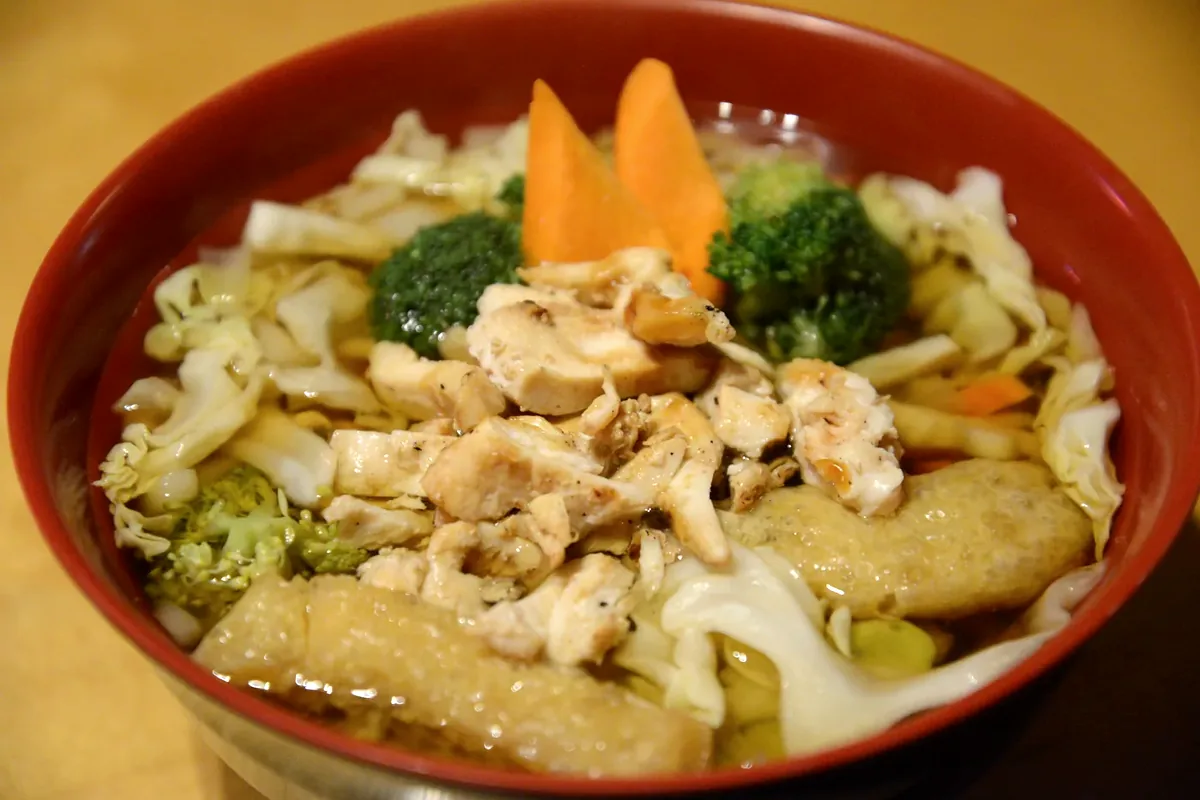
If it turns out you wanted the broth after all, the udon bowls use the same thick noodle in soup, and the five ramen broths are a different conversation entirely.
Frequently asked questions
Is yakisoba made from buckwheat?
No. Despite the name, yakisoba noodles are wheat noodles. Soba is being used here in its looser sense of a thin noodle, not to mean buckwheat.
Is yaki udon just udon soup without the soup?
The noodle is the same, but the cooking is not. Soup udon is boiled and served in broth; yaki udon is finished in a hot pan with vegetables and sauce, which browns the noodle and changes the flavour.
Which one is spicier?
Neither is a spicy dish by default. The Worcestershire-based sauce is savoury and slightly sweet rather than hot. If you want heat, ask what can be added.
Can I get either one without meat?
There is a mixed-vegetable version of our stir-fried noodles. If you follow a strict vegetarian or vegan diet, check with the restaurant about the sauce and the pan before ordering — we cannot make that call for you from a dish name.
Is one of them healthier?
Portion size and what goes in the pan matter far more than the noodle. We do not publish nutrition figures for our dishes, so treat any specific claim about either one with caution.
The short version
Same pan, same vegetables, same sauce — two different noodles. Thin and springy with crisp edges, or thick and chewy and more filling. That is the entire decision.
Both are made to order in our Chino Hills kitchen. Have a look at the full menu to see the five proteins and pick your noodle.