The short answer
Not Japaneseit arrived with the California roll
It works becausefat balances vinegared rice
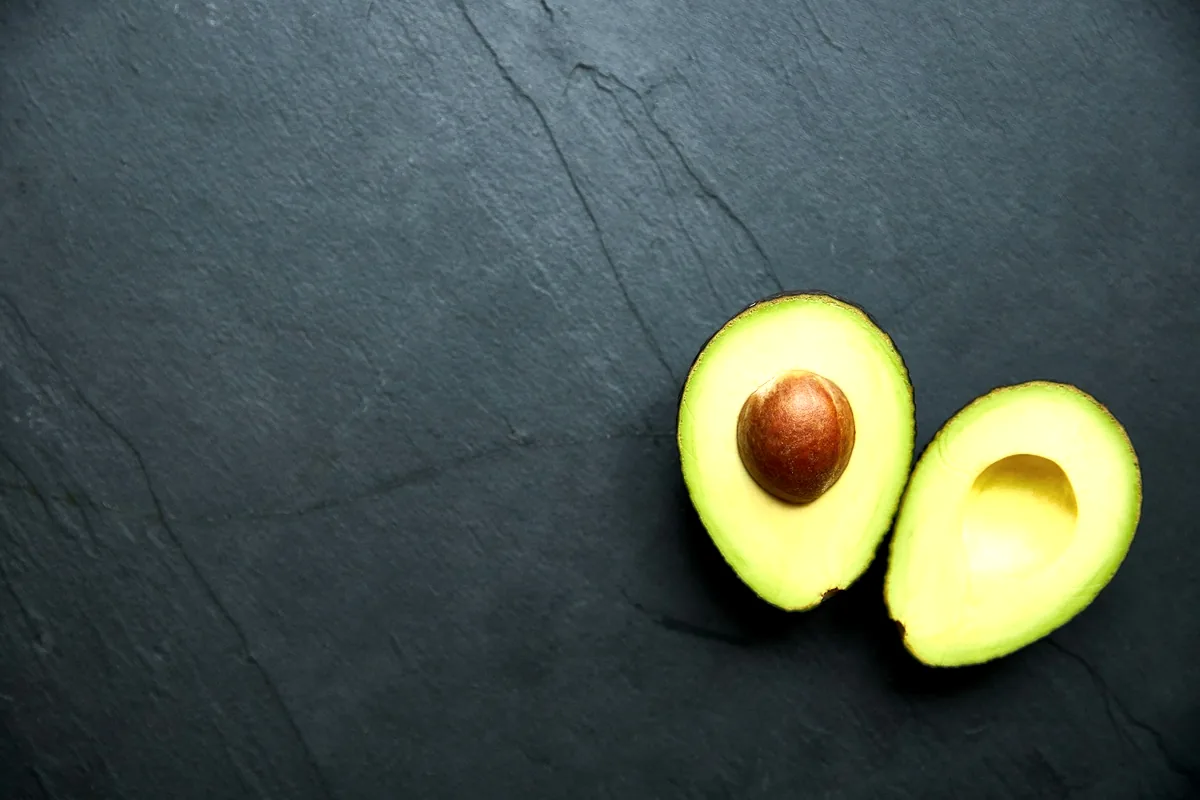
Avocado is on more rolls than any fish. It is a borrowed ingredient that turned out to solve a problem the tradition already had.
Count the avocado on a specialty list sometime. It appears more often than tuna, more often than salmon, and more often than anything else on the menu. That is worth explaining.
01 — How it got thereA substitution that stuck
Avocado is not part of traditional Japanese cooking. It reached sushi through North America, and the usual account is that it was adopted as a stand-in for fatty tuna — similar richness, similar texture, available year round and considerably cheaper.
That substitution became the California roll, and the California roll became the base layer for most of a modern specialty list. Avocado spread with it.
It is a good example of how these things actually happen — not a chef deciding to innovate, but a practical answer to what was in the market that week. The wider version of that story is in how the American sushi roll happened.
Fat against acid
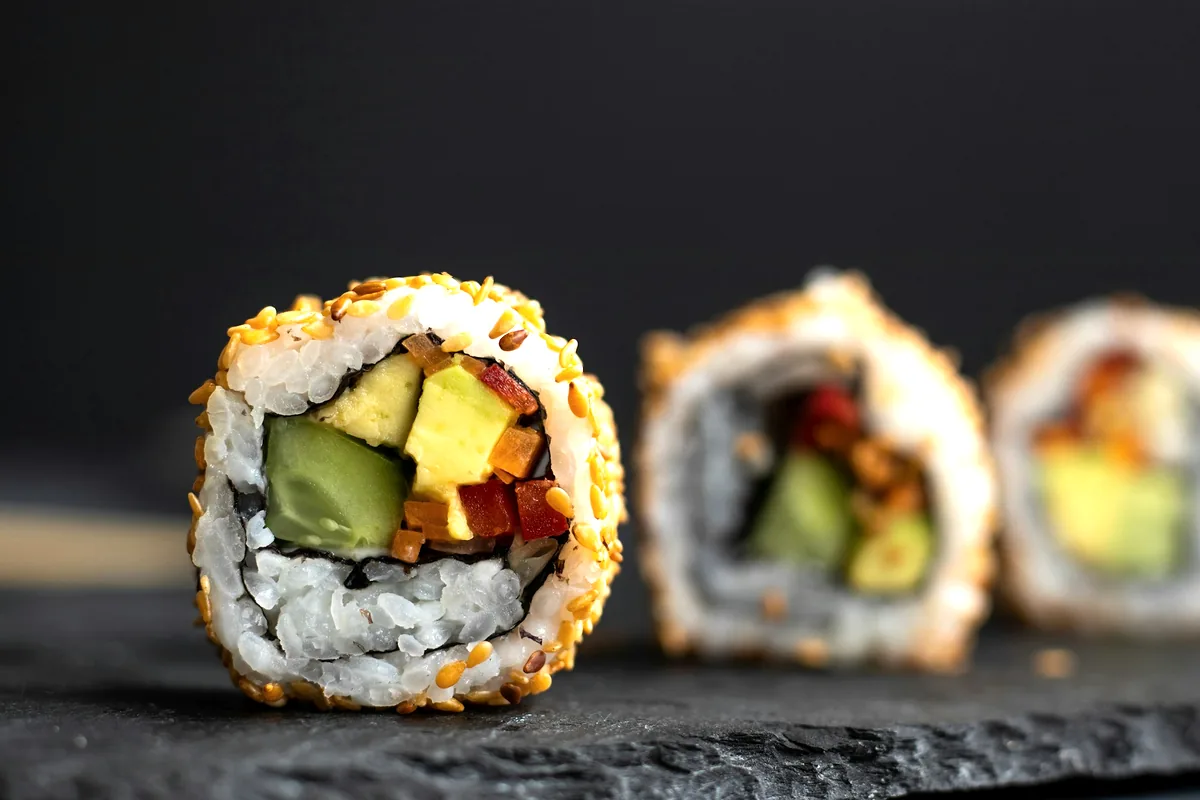
Sushi rice is seasoned with vinegar. That acidity is the whole reason the rice tastes of something, and it is also what makes rich ingredients work so well on top of it.
Fat and acid balance each other. It is the same reason cream cheese works in a Philadelphia roll, the same reason spicy mayonnaise works on a lean fish, and the same reason a fatty yellowtail is more satisfying than a lean one. Avocado is simply the vegetable answer to that equation.
It also brings texture without competing. Avocado is soft and yields at almost exactly the same rate as rice and raw fish, so a roll containing all three eats as one thing rather than as layers. Cucumber, by contrast, is deliberately the opposite — it is there to interrupt.
The three jobs it does
- Inside a roll, as one of two or three fillings. Here it is providing richness and holding the roll together — avocado is slightly adhesive, which helps.
- Laid over the top, sliced thin and fanned. This is decorative and functional at once: it looks like scales, and it stops a delicate topping drying out.
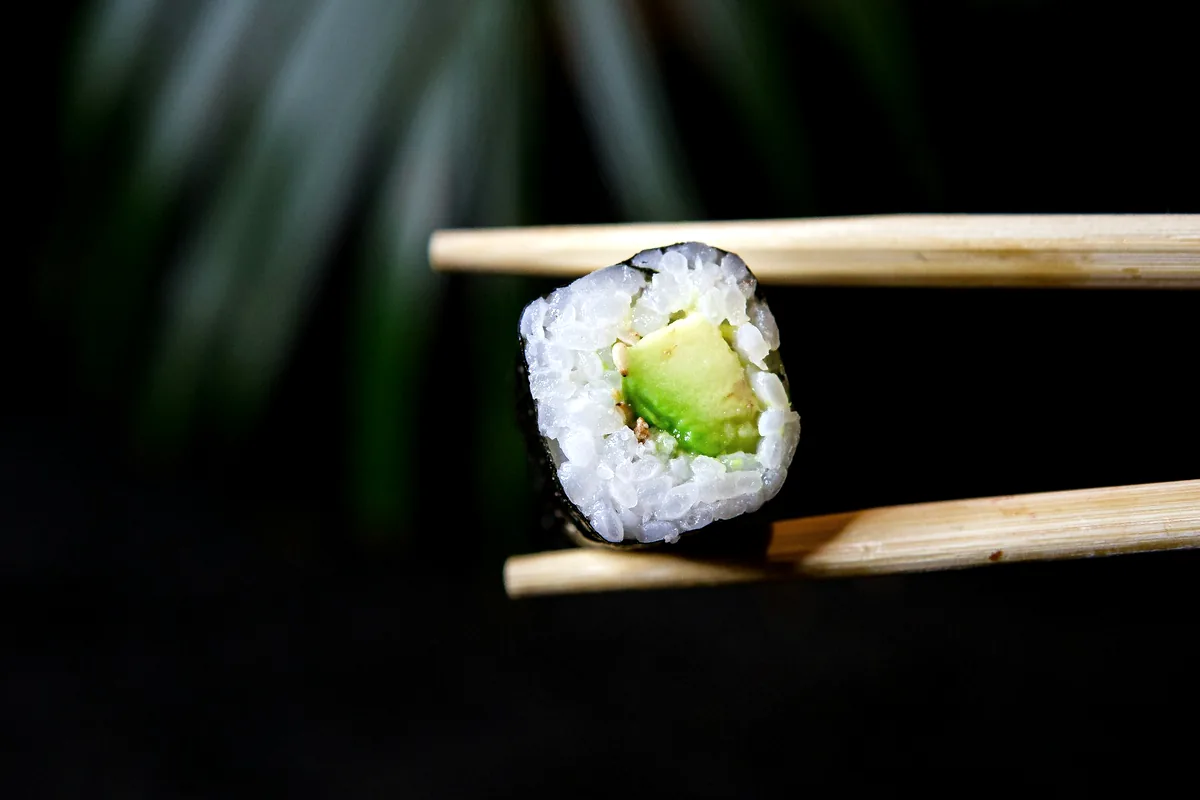
- As the whole point, in an avocado roll or hand roll. Rice, nori and avocado, and nothing else — the simplest thing on either list.
The Caterpillar is the clearest example of the second job. Overlapping avocado slices laid along the back are what give the roll its name and, more practically, what keep the eel underneath from drying.
Ripeness is the whole game
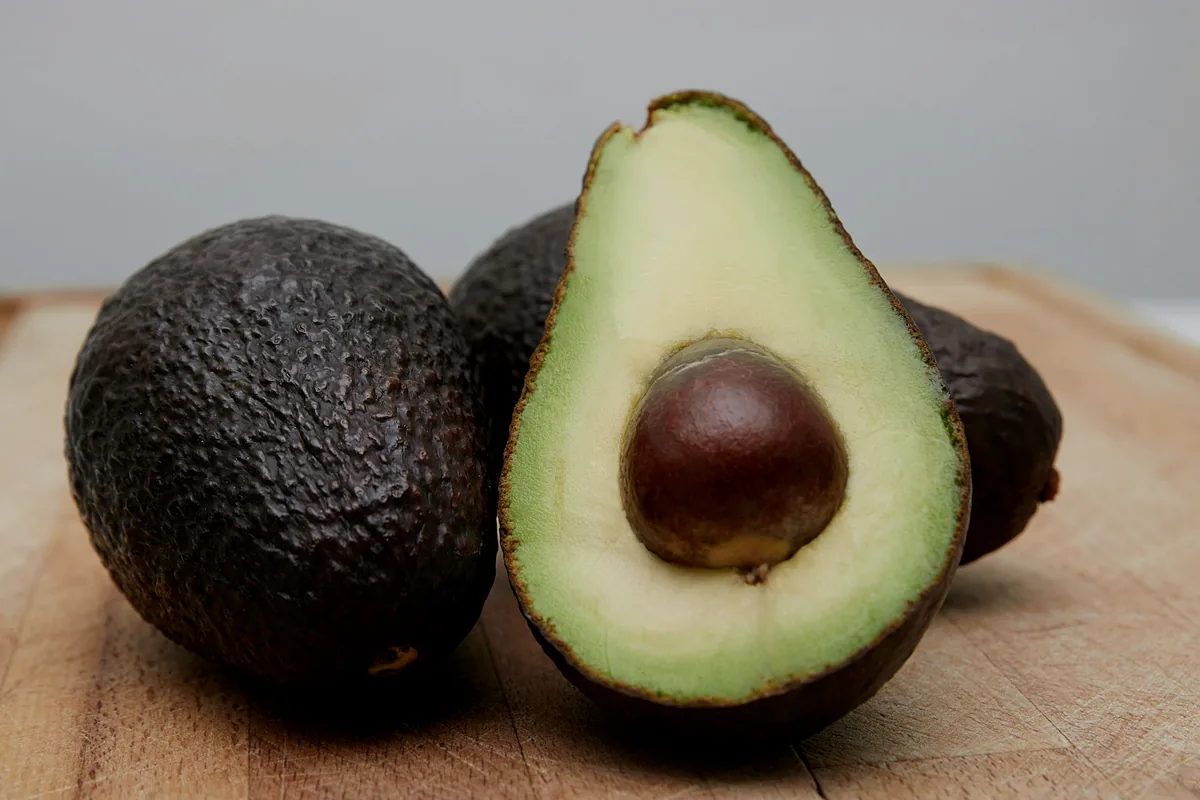
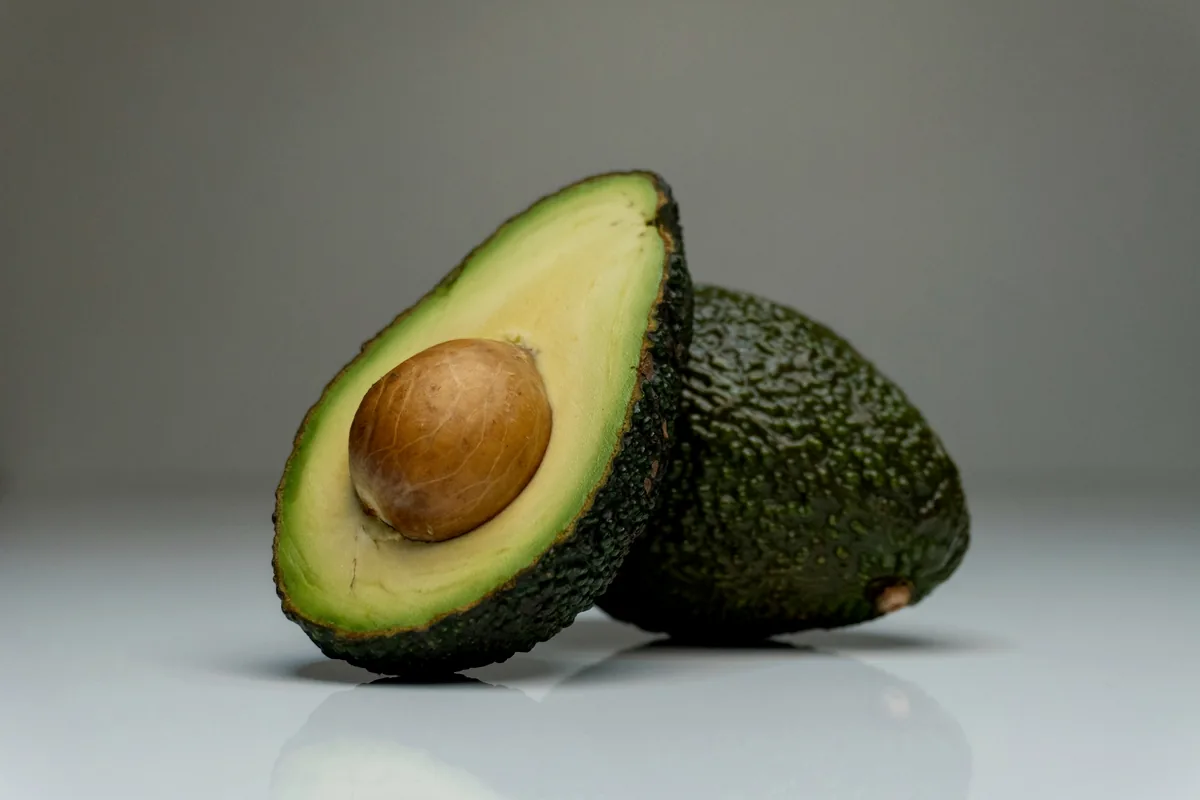
Avocado has a narrow window and it is unforgiving on either side of it. Under-ripe, it is hard and tastes of nothing, and it will not slice thin without cracking. Over-ripe, it turns to paste and cannot be laid over a roll at all.
That window is a genuine daily problem in a kitchen that uses it constantly, and it is one of the small invisible things that separates a well-run sushi bar from a careless one. Slices that hold their shape and have a clean edge came from fruit that was right that morning.
It also browns. Cut avocado oxidises within minutes, which is why it goes on at the last moment and why a roll topped with avocado is not something that can be made in advance. If you order one to take away, it is best eaten sooner rather than later.
Where it appears on our menu
| Roll | Avocado is… |
|---|---|
| Avocado Roll and Avocado Hand Roll | The whole filling |
| Vegetable Hand Roll | Alongside spring mix and gobo |
| Caterpillar | Laid over the top in overlapping slices |
| Eel Special | Over the top with eel |
| Red Bull | Over the top with eel |
| Philadelphia and New Philly | Inside, with salmon and cream cheese |
| Fisherman’s | Inside, with fried asparagus |
| Garlic Tuna | Inside, with tuna and vegetables |
| Albacore Lover and Salmon Lover | Inside a roll wrapped in fish |
| Sunkist and Crazy Albacore | Over the top, under the fish |
That is a partial list. Once you start looking for it on a specialty menu, the more surprising thing is which rolls leave it out.
Ordering tip
If you find specialty rolls too rich, avocado is usually part of the reason rather than the sauce. It is fat, and three fatty components — avocado, cream cheese and spicy mayonnaise — appear together more often than you would guess. A basic roll or something with cucumber resets the palate faster than another sauced one.
The vegetarian angle
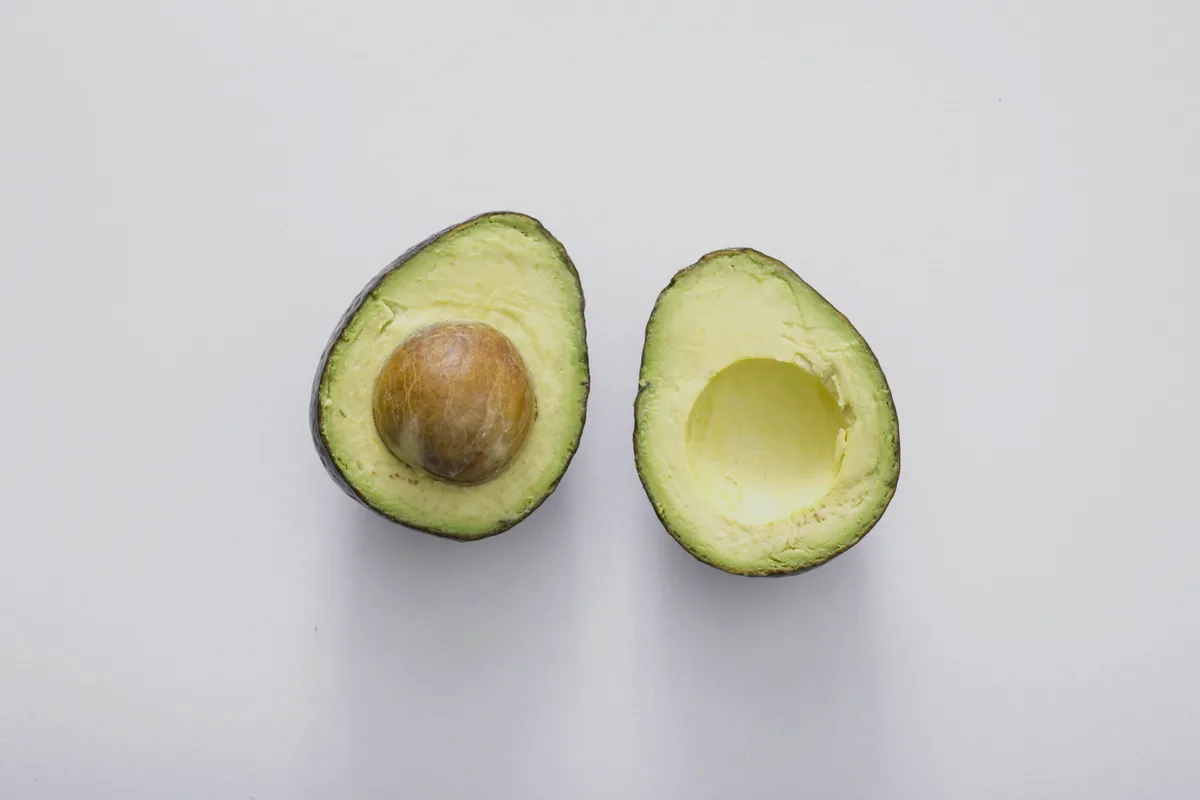
Avocado is the reason a vegetable roll is satisfying rather than merely virtuous. Take it out and you have rice, nori and cucumber, which is refreshing but thin. Put it in and the roll has body.
For anyone eating without fish it does the job that fat would otherwise have to come from, which is why it anchors most vegetarian options on a sushi menu. The wider picture, including the things that are less obvious, is in vegetarian and vegan at a Japanese restaurant.
Frequently asked questions
Is avocado traditional in Japanese food?
No. It reached sushi through North America, and the usual account has it substituted for fatty tuna in what became the California roll.
Why is avocado in so many rolls?
Its fat balances the vinegar in sushi rice, its texture matches rice and raw fish, and it is available all year. Very few ingredients do all three.
Can I order a roll without avocado?
Ask — on some rolls it is a filling that can be left out, and on others it is structural. Starting from a roll that never had it is usually simpler.
Does avocado make sushi heavier?
It adds fat, so a roll with avocado, cream cheese and mayonnaise is a rich order. We do not publish nutrition figures, so treat specific claims with caution.
Why does avocado on a roll go brown?
Cut avocado oxidises within minutes. It is added at the last moment for that reason, and a roll topped with it is best eaten soon rather than carried far.
The short version
Borrowed, not traditional, and it stayed because fat balances vinegared rice. Inside a roll it adds richness and holds things together; on top it protects and decorates; on its own it is the simplest order on the list. Ripeness is the only difficult part.
It is on more of the menu than any fish.