The short answer
It startedby hiding the seaweed
It ended upfried, sauced, and stacked
Cream cheese, jalapeno and deep fryers are not corruptions of sushi. They are what happened when a Japanese format met American ingredients, and the results have their own logic.
Somewhere between a sushi bar in Tokyo and a sushi bar in Chino Hills, the roll changed shape. It got bigger, it turned inside out, it acquired cream cheese, and eventually a lot of it went into a fryer. None of that was an accident.
01 — Inside outThe problem was the seaweed
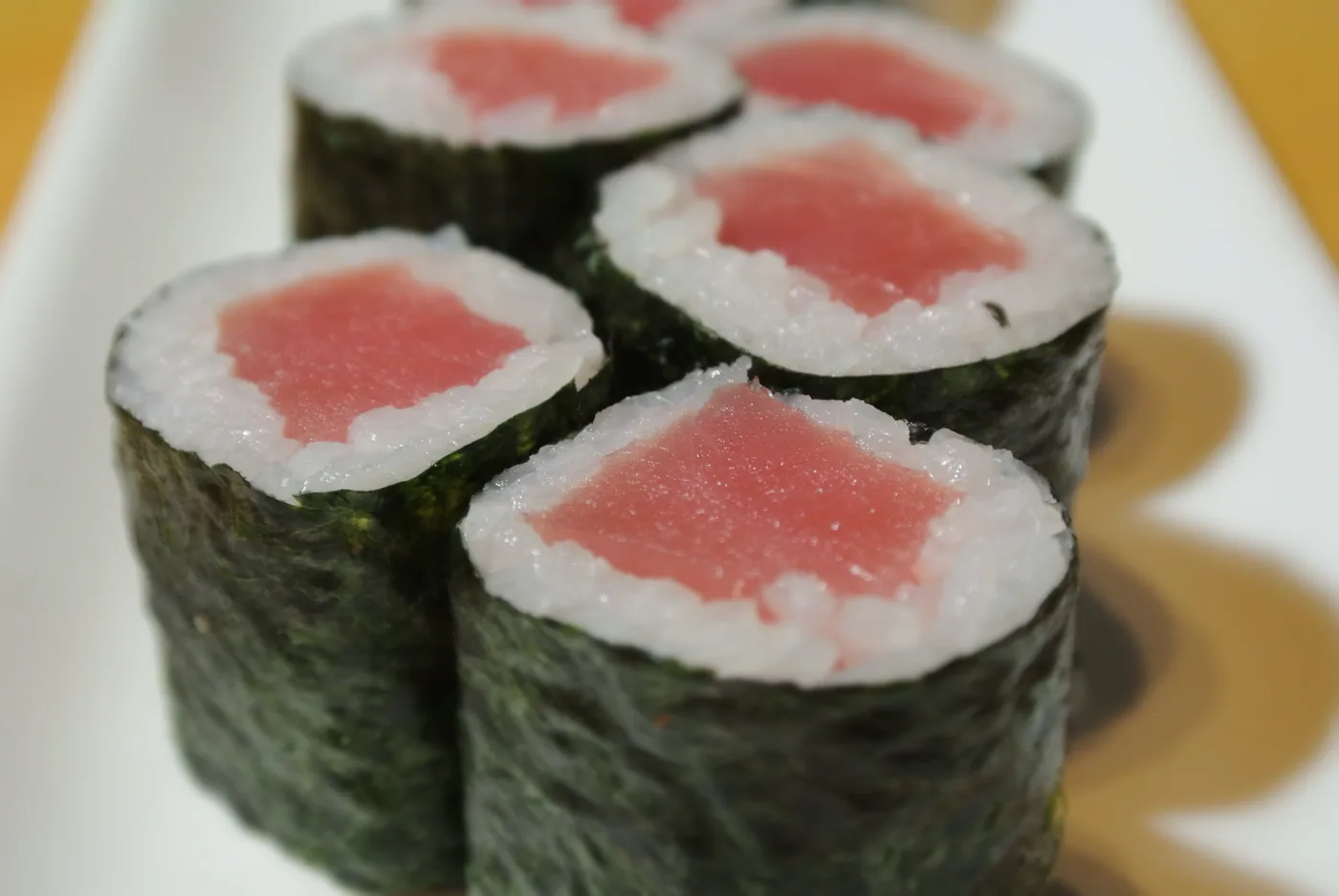
A traditional cut roll has nori on the outside. To diners unfamiliar with it, a black wrapper is the least appealing part of the plate, and the story of the American roll begins with sushi chefs working around that reaction.
The fix was to turn the roll inside out: rice on the outside, nori hidden underneath it against the filling. That single change made the roll look completely different — white and clean instead of black and unfamiliar.
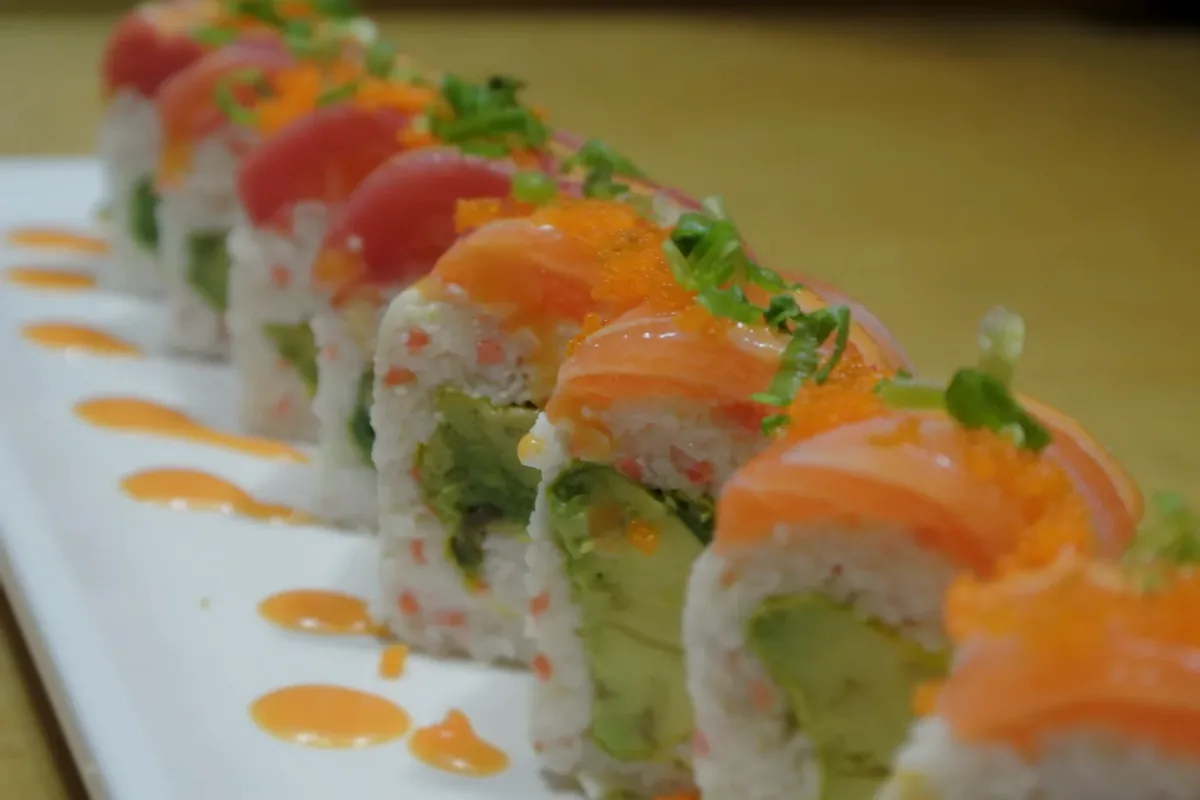
It also created a surface. A roll with rice on the outside can be rolled in sesame or masago, or have things laid across the top of it, and the entire modern specialty list follows from that.
The California roll as a platform
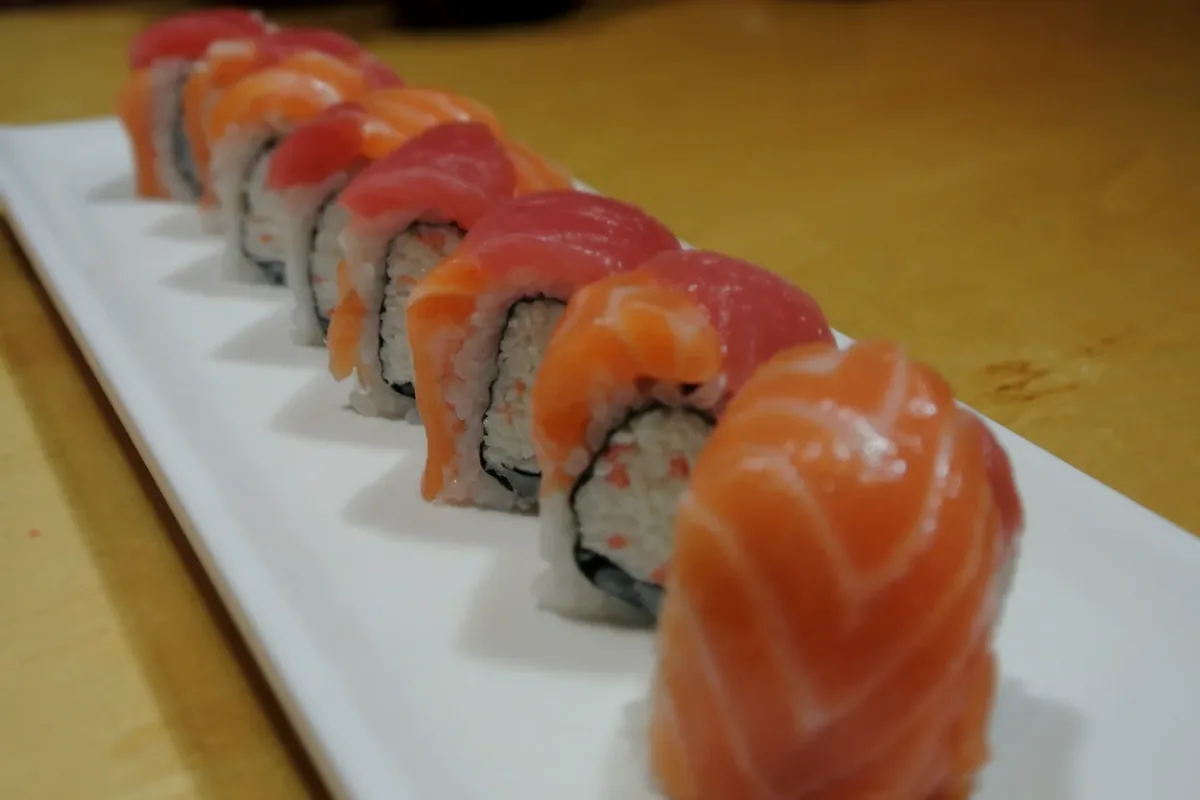
Imitation crab and avocado, rice on the outside, nothing raw. It is the roll that made sushi ordinary in America, and it did so by removing every barrier at once — no visible seaweed, no raw fish, nothing unfamiliar on the plate.
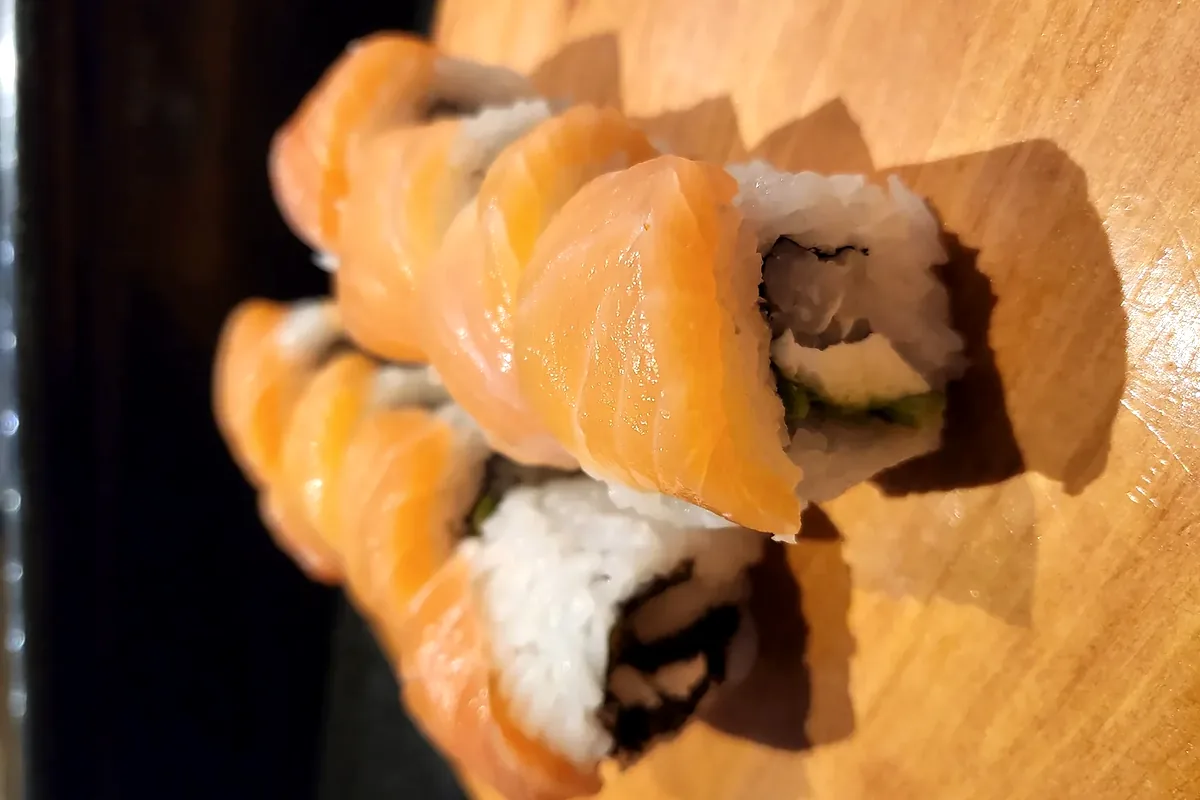
What is more interesting is what happened next. Once a mild, entirely cooked roll existed, it stopped being a destination and became a foundation. Look down any specialty list and you will find the phrase w/ California roll over and over: salmon on a California roll, baked scallop on a California roll, popcorn chicken on a California roll.
That is the structural innovation. The base is neutral and reliable, and the character of the roll comes entirely from what goes on top of it.
02 — New ingredientsCream cheese, and why it works
Cream cheese in sushi has no precedent in Japan and it appears on nearly every American specialty list. The reason it stuck is not novelty — it is that it solves a real problem.
Sushi rice is seasoned with vinegar, and vinegar and fat balance each other. Salmon and cream cheese works for the same reason smoked salmon and cream cheese works on a bagel, and once you notice that the Philadelphia roll is essentially a bagel taken apart and rearranged, the whole thing makes sense.
It also fries well. Cream cheese loosens under heat into something close to a sauce, which is why so many of the fried rolls have it in the middle.
Jalapeno, garlic and crispy onion
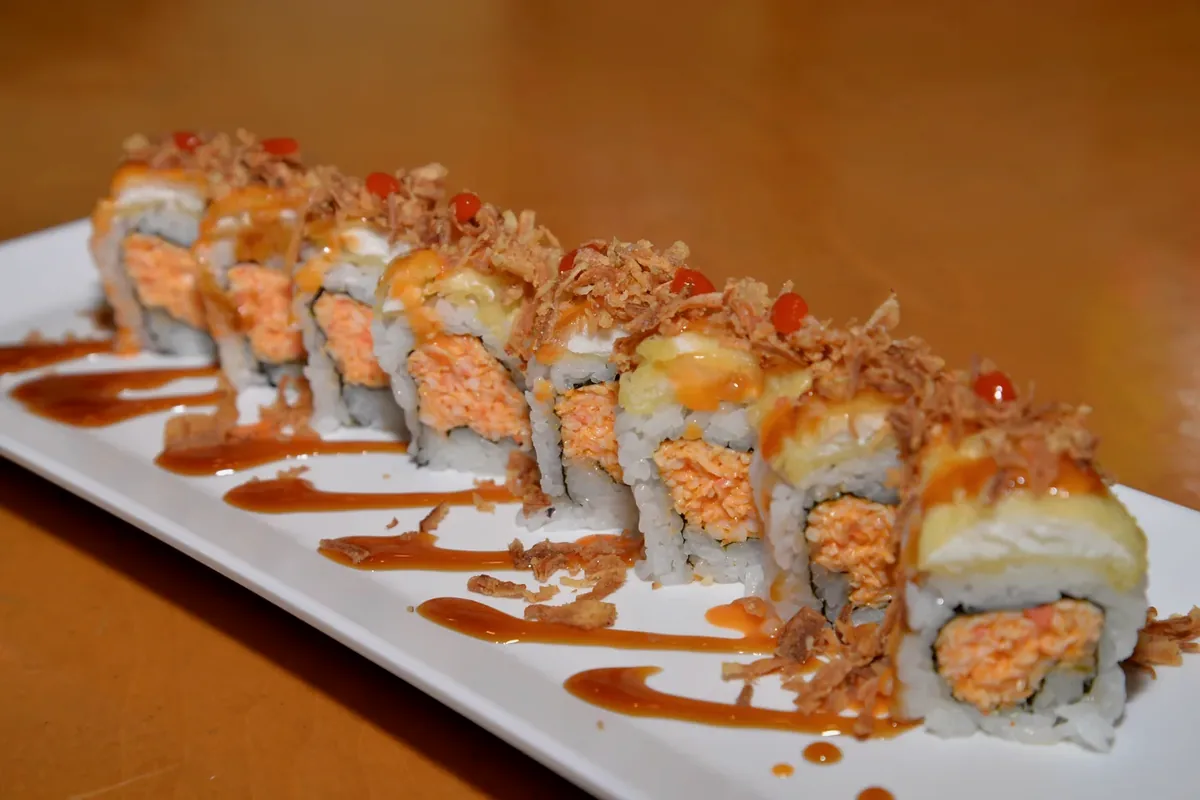
The second wave of borrowed ingredients was about sharpness and crunch rather than richness. Jalapeno turns up sliced on top of rolls. Fried garlic and crispy onion get scattered across them. Citrus appears as actual slices of lemon.
All of these are doing what pickled ginger and wasabi do in a traditional setting — cutting through fat and resetting the palate — but doing it inside the roll rather than beside it. It is the same principle borrowed into a different form.
Stuffed jalapenos on the appetiser list are the logical endpoint of that thread: the garnish became the dish.
Where it went furthest
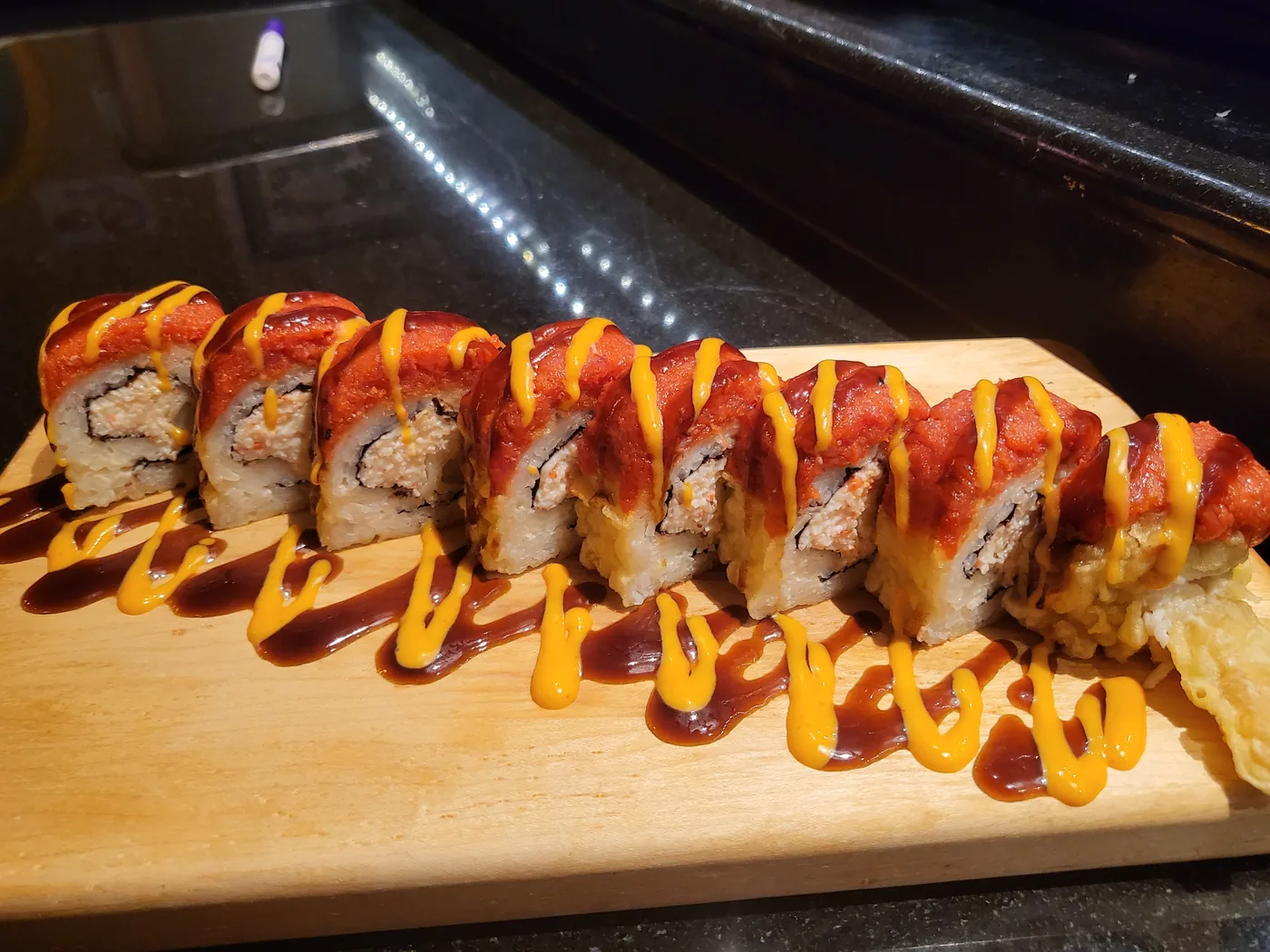
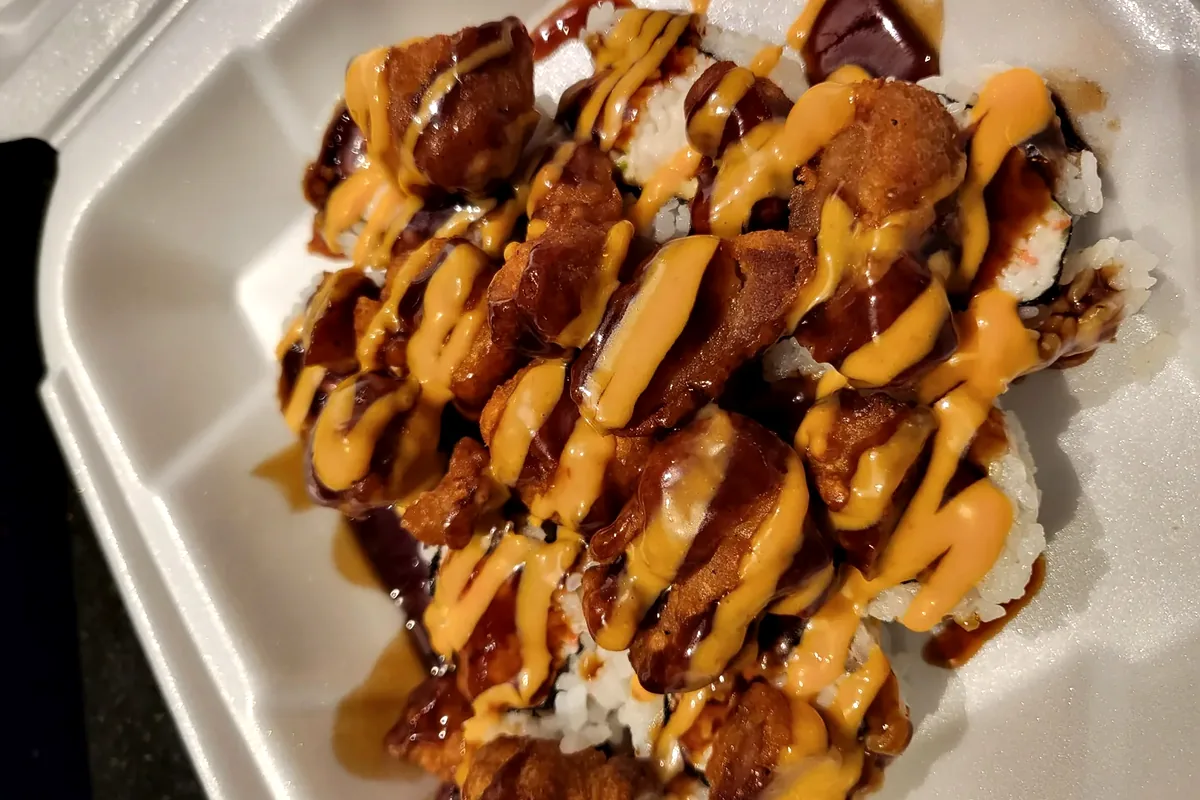
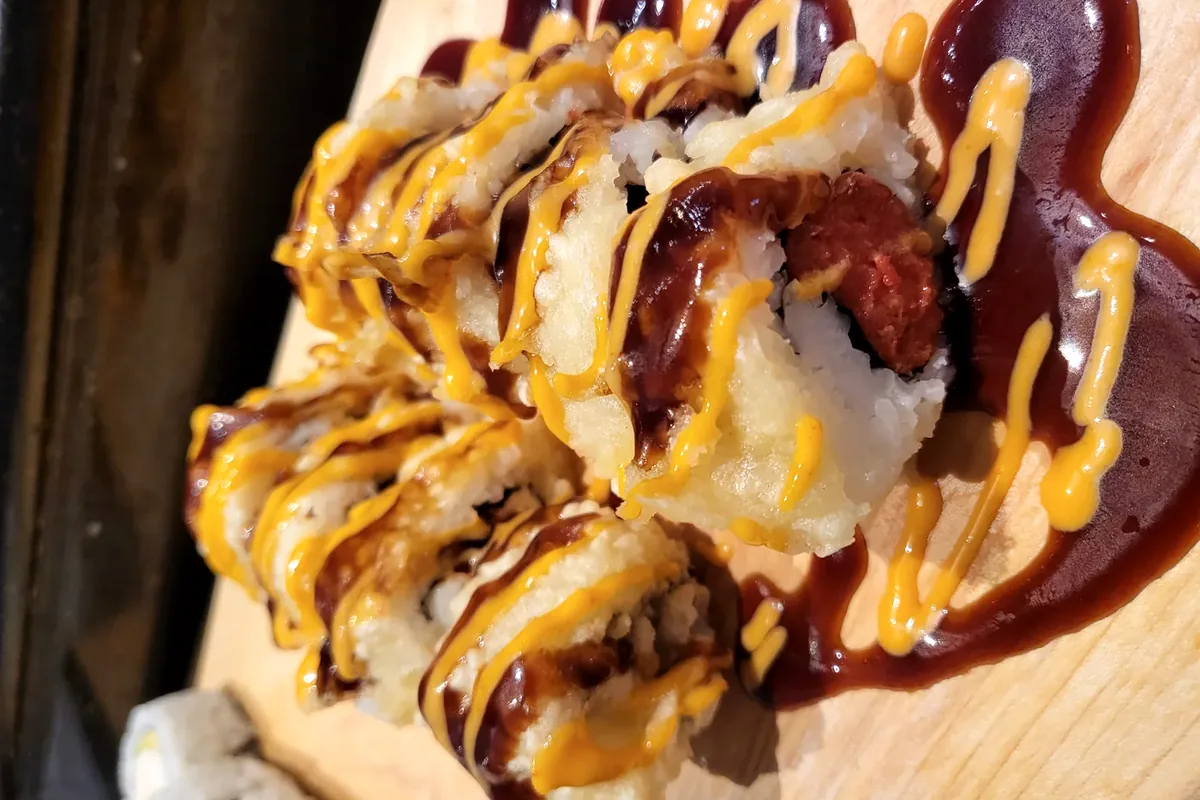
Frying a finished roll is the point at which the American roll stopped resembling its origin at all. Rice, filling, nori and all, battered and dropped into oil.
It works because rice behaves well under heat — the outside crisps, the inside steams, and the whole thing arrives warm rather than cool. That temperature shift is the real change. Traditional sushi is served at body temperature or below; a fried roll is hot food.
There is a gradient here rather than a binary. Lightly fried warms and sets the roll without a hard shell. Deep fried commits. And a roll can be fried in one part and fresh in another, which is how something like a Tiger works.
What changed, and what did not
| Traditional | American specialty | |
|---|---|---|
| Nori | Outside | Hidden inside |
| Size | Slim, one or two fillings | Thick, three or more |
| Topping | Rare | Expected |
| Sauce | Served alongside | Applied in the kitchen |
| Temperature | Cool | Often warm or hot |
| Dairy | None | Cream cheese, mayonnaise |
| The rice | Seasoned, central | Seasoned, central |
That last row is the one that matters. Every other line has moved, and the rice has not. Sushi is defined by the seasoned rice, which is why a deep fried roll with cream cheese in it is still, unambiguously, sushi.
Good to know
Ordering a specialty roll is not a lesser choice than ordering nigiri. They are different formats built for different things — nigiri to show off a single fish, a specialty roll to combine textures. A good meal usually has both, and starting with the nigiri while your palate is clean is the only real rule.
How to order across both worlds
- Start plain, finish loud. Nigiri or sashimi first, specialty rolls after. The reverse order costs you the fish.
- One fried roll per table. Two is heavy, and they blur together.
- Read for the base. If several rolls say w/ California roll, they share a foundation and will taste more alike than the names suggest.
- Balance dairy. Two cream cheese rolls in one order is a lot of the same richness.
- Keep something sharp on the table. Seaweed salad, ginger, or a citrus-dressed roll resets between the rich ones.
The words that tell you which is which are all in the description rather than the name — how to read a specialty roll listing covers the vocabulary.
Both are on the same menu
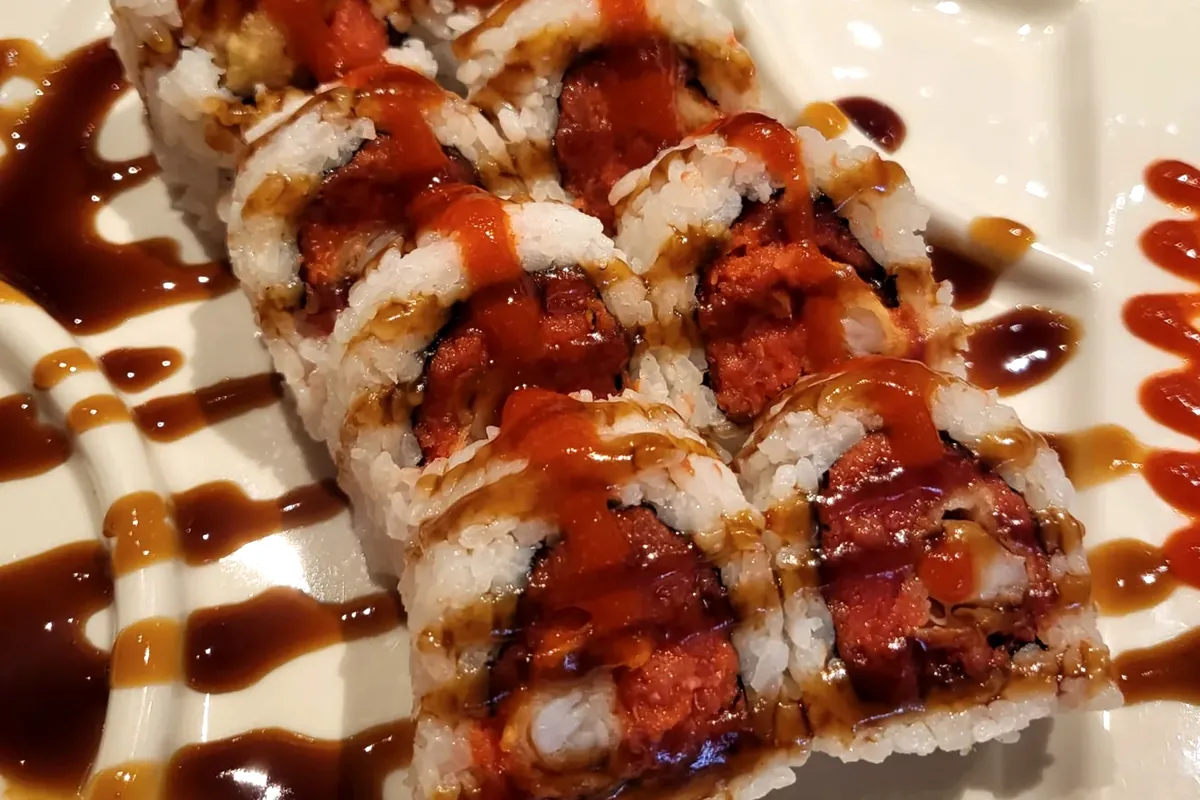
Our basic roll list is the traditional end — single fillings, nori outside, nothing on top. The hand rolls sit alongside it. The specialty list is the other end, seventy-odd rolls deep, with everything described above happening somewhere on it.
They are not in competition. A table that orders a tuna roll, a Philadelphia and something out of the fryer has covered more ground than one that commits to either tradition, and that is the argument for keeping both lists.
Frequently asked questions
Is a California roll authentic sushi?
It is sushi by the only definition that matters — it is built on seasoned rice. It is not traditional Japanese, and it has been part of sushi menus for long enough to be a tradition of its own.
Do they eat cream cheese sushi in Japan?
Not conventionally. Cream cheese rolls are an American development, though rolls of that style now appear in tourist areas in Japan too.
Why are American rolls so much bigger?
More fillings and a topping, which forces a thicker roll. That is also why a specialty roll piece is often too large for one bite, where nigiri is designed to be exactly one.
Is a fried roll still healthy?
A fried roll with cream cheese is a rich dish, and we do not publish nutrition figures. Treat any specific claim about it with caution and order it as the indulgence it is.
What should I order if I want the traditional version?
The basic roll list, nigiri, or sashimi. Those are the formats where nothing has been added and the fish has nowhere to hide.
The short version
Hide the nori, use the rice as a surface, add fat to balance the vinegar, and eventually put the whole thing in a fryer. Every step solved a problem, and the seasoned rice underneath never changed.
Both ends of that history are on the menu. Order from each and the difference makes itself obvious.