The short answer
The gripbottom stick still, top stick moves
The rulenever stand them upright in rice
Most chopstick etiquette is about not resembling a funeral rite. Beyond that it is ordinary table manners, and nobody minds if you use your hands for sushi.
Two sticks, and a surprising amount of anxiety attached to them. Here is the mechanics, the handful of things that genuinely matter, and the much longer list of things that do not.
01 — The gripOnly one of them moves
This is the whole thing, and almost everyone who struggles is trying to move both.
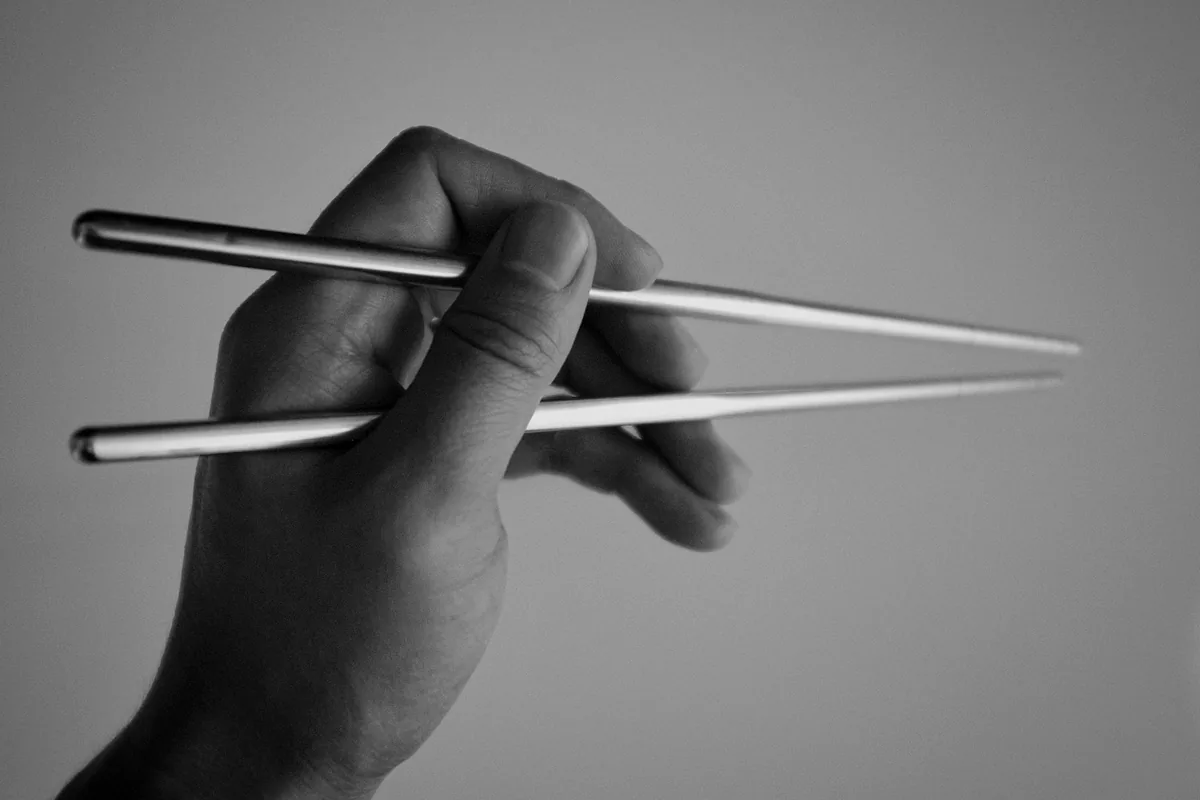
The bottom stick is fixed. It rests in the crook between thumb and index finger and against the tip of your ring finger, and from there it does not move at all. It is a shelf.
The top stick is held like a pencil, between the tips of the thumb, index and middle fingers, and it is the only part that travels. Open and close it against the fixed one and you have a hinge.
If they cross, slip or fight each other, the bottom stick has come loose. Reset it, hold it firmly against the ring finger, and try again with just the top one.
Four things that make it easier
- Hold them further back. Gripping near the tips feels safer and gives you no leverage. Two-thirds of the way up is where control is.
- Keep the tips level. If one is longer than the other, tap them gently on the table to square them up before you start.
- Aim for the gap. Open wider than you think you need to and close onto the food rather than stabbing at it.
- Do not squeeze. Tension is what makes them cross. A relaxed hand works better than a determined one.
Wooden chopsticks are much easier than lacquered ones, which are slippery. If you are learning, the disposable pair is your friend.
The two rules that are actually rules
Do not stand chopsticks upright in a bowl of rice. This is the one that genuinely lands badly, because it mimics an offering made to the dead at a Japanese funeral — incense standing in a bowl. It is not a matter of politeness so much as an unwelcome image at a dinner table.
Do not pass food from chopsticks to chopsticks. This echoes a part of a Japanese cremation rite in which bones are passed between mourners. If you want to give someone food, put it on their plate.
Both are specific and both have a reason. Between them they cover almost everything anybody would actually notice.
And the smaller ones
| Habit | Why it is avoided | How much it matters |
|---|---|---|
| Standing them in rice | Resembles a funeral offering | Genuinely — avoid it |
| Passing food stick to stick | Echoes a cremation rite | Genuinely — avoid it |
| Spearing food | Reads as giving up | Mildly — nobody will say anything |
| Pointing with them | The same as pointing with a knife | Ordinary table manners |
| Rubbing them together | Implies the restaurant gave you splintery ones | Slightly, and it is common anyway |
| Digging through a shared dish | The same as it would be anywhere | Ordinary table manners |
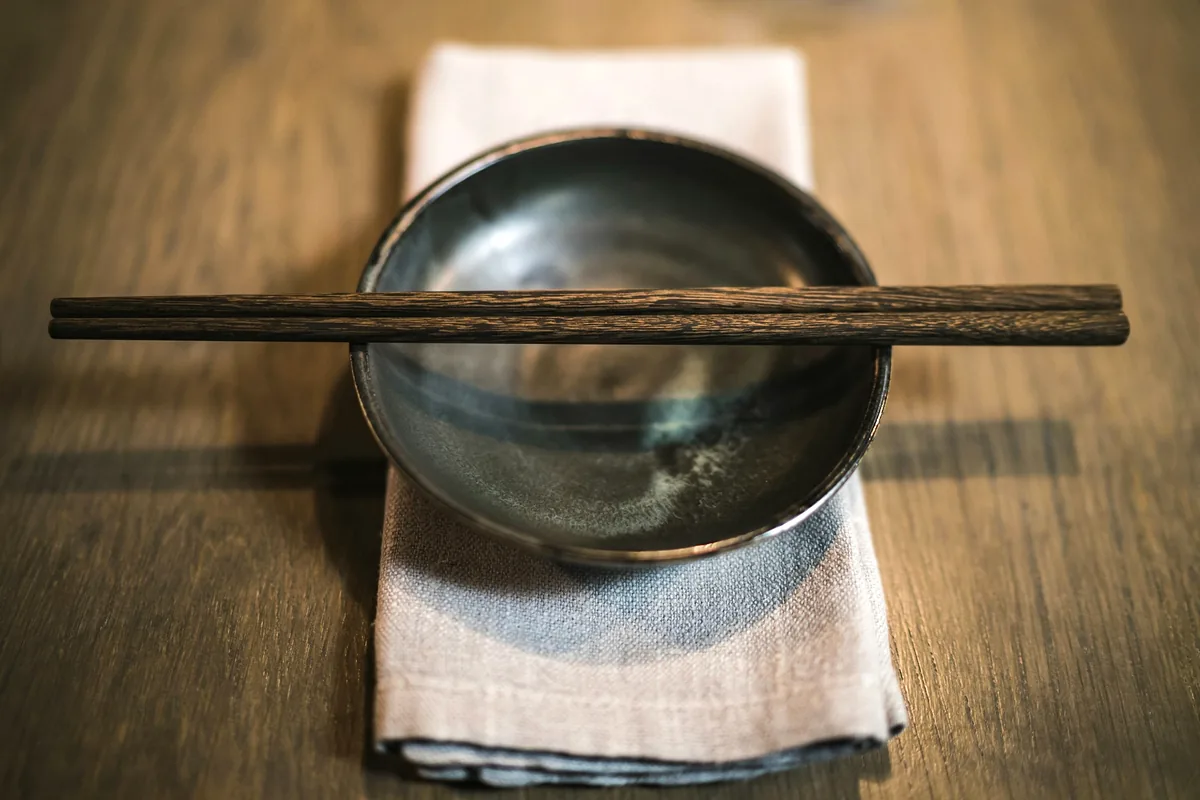
| Resting them on the table | Tips should stay off the surface | Use the rest or the wrapper |
Good to know
If there is no chopstick rest, fold the paper wrapper into a small loop and use that. It is what the wrapper is for once the chopsticks are out of it, and it solves the problem of where to put them between courses.
You are allowed to use your hands
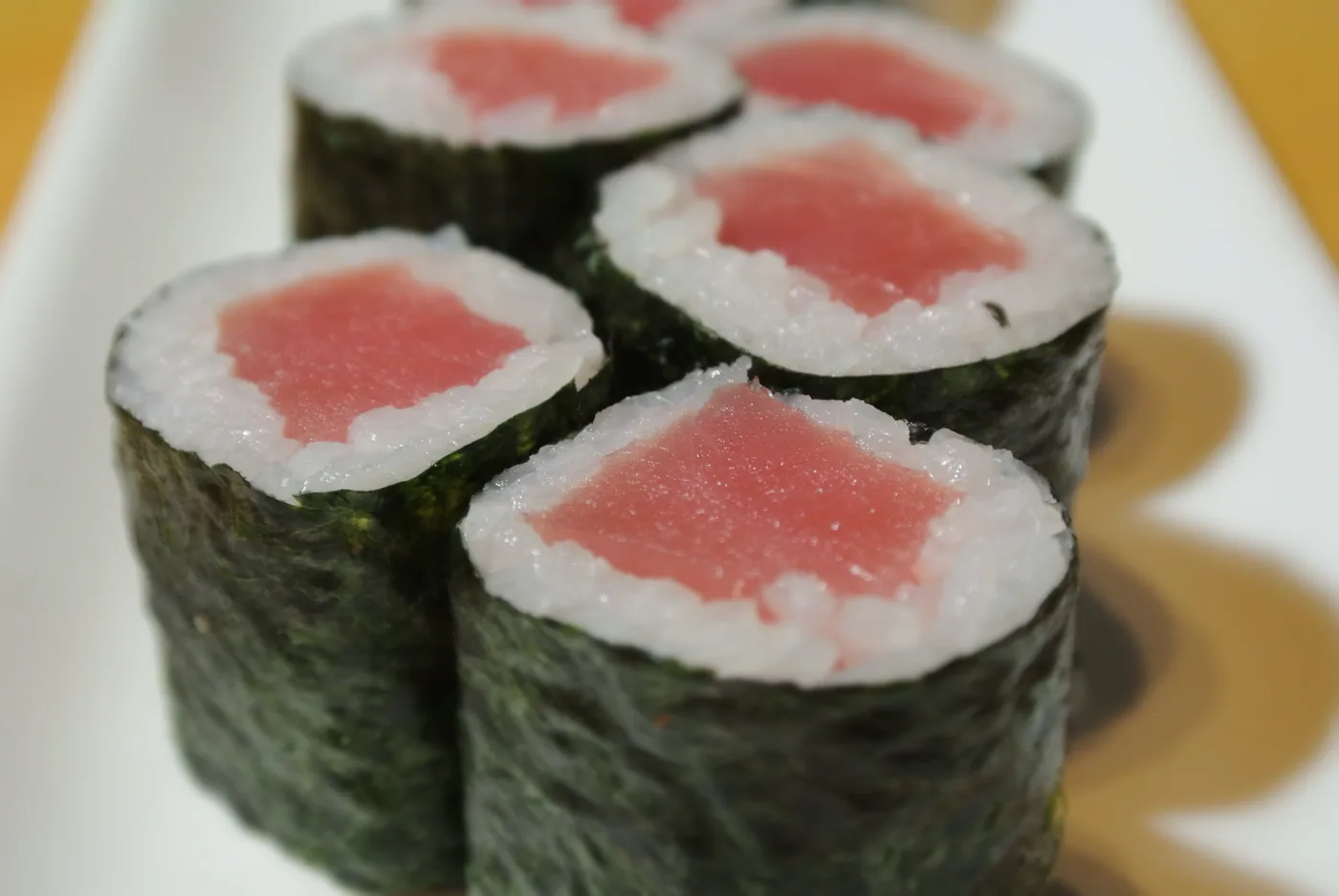
Nigiri is traditionally finger food. Picking a piece up with your hands is not a shortcut for people who cannot manage chopsticks — it is the older method, and it gives you far better control over a piece that is designed to be turned upside down for the soy sauce.
Hand rolls are unambiguously finger food; a cone cannot be picked up any other way. Cut rolls work with either. Sashimi is the one thing that really wants chopsticks, because there is no rice to hold and nothing to grip.
So the honest hierarchy is: chopsticks for sashimi and noodles, hands or chopsticks for rolls, hands for hand rolls, and nobody is watching.
Noodles are a different problem
A bowl of ramen defeats people who are fine with everything else, because you are trying to lift something long and hot out of liquid.
The method is to take a small amount — far less than feels efficient — lift it clear of the broth, and draw it in rather than trying to get all of it into your mouth at once. Slurping is not rudeness here; pulling air in with the noodles cools them on the way and is the reason the technique exists.
Use the spoon in the other hand as a landing pad if you want. And eat the noodles before you work through the toppings — they keep softening the whole time, which is covered in what is in a bowl of ramen.
Ask for a fork
Genuinely. A child fighting chopsticks is a child not eating, and an adult concentrating on cutlery is not tasting the food. Every Japanese restaurant has forks and none of them mind.
The goal is a good meal, not a performance. If you want to practise, practise on the noodles at the end when there is nothing left to lose.
Frequently asked questions
Is it rude to eat sushi with your hands?
No. Nigiri is traditionally eaten by hand, and hand rolls can only be eaten that way. Sashimi is the item that really needs chopsticks.
Why can’t chopsticks stand up in rice?
It resembles incense standing in a bowl at a Japanese funeral. It is the one chopstick habit that reliably reads badly.
Should I rub disposable chopsticks together?
It implies the restaurant provided splintery ones, so it is mildly impolite — though it is common enough that nobody is likely to comment.
Is slurping noodles really acceptable?
Yes. Drawing air in cools the noodles and carries the aroma of the broth. It is normal and it is faster.
Can I ask for a fork?
Always. It is a completely ordinary request and a better outcome than a difficult meal.
The short version
Hold the bottom stick still and move only the top one. Never stand them in rice or pass food between pairs. Use your hands for nigiri and hand rolls, chopsticks for sashimi and noodles, and a fork whenever you like.
The rest of the table is covered in ordering across a Japanese menu, and the food is on the menu.