A menu that runs from nigiri to teriyaki plates can be difficult to navigate. The simplest approach is to order in layers rather than picking one thing.
Start with something from the appetizer list. Edamame and garlic edamame are the lightest openers; gyoza, mixed tempura and chicken karaage are more substantial. Agedashi tofu and takoyaki sit somewhere in between.
Salads are worth ordering as a middle course rather than a starter. The seaweed salad and salmon skin salad both hold up well next to richer dishes, and the house salad comes with a mango dressing.
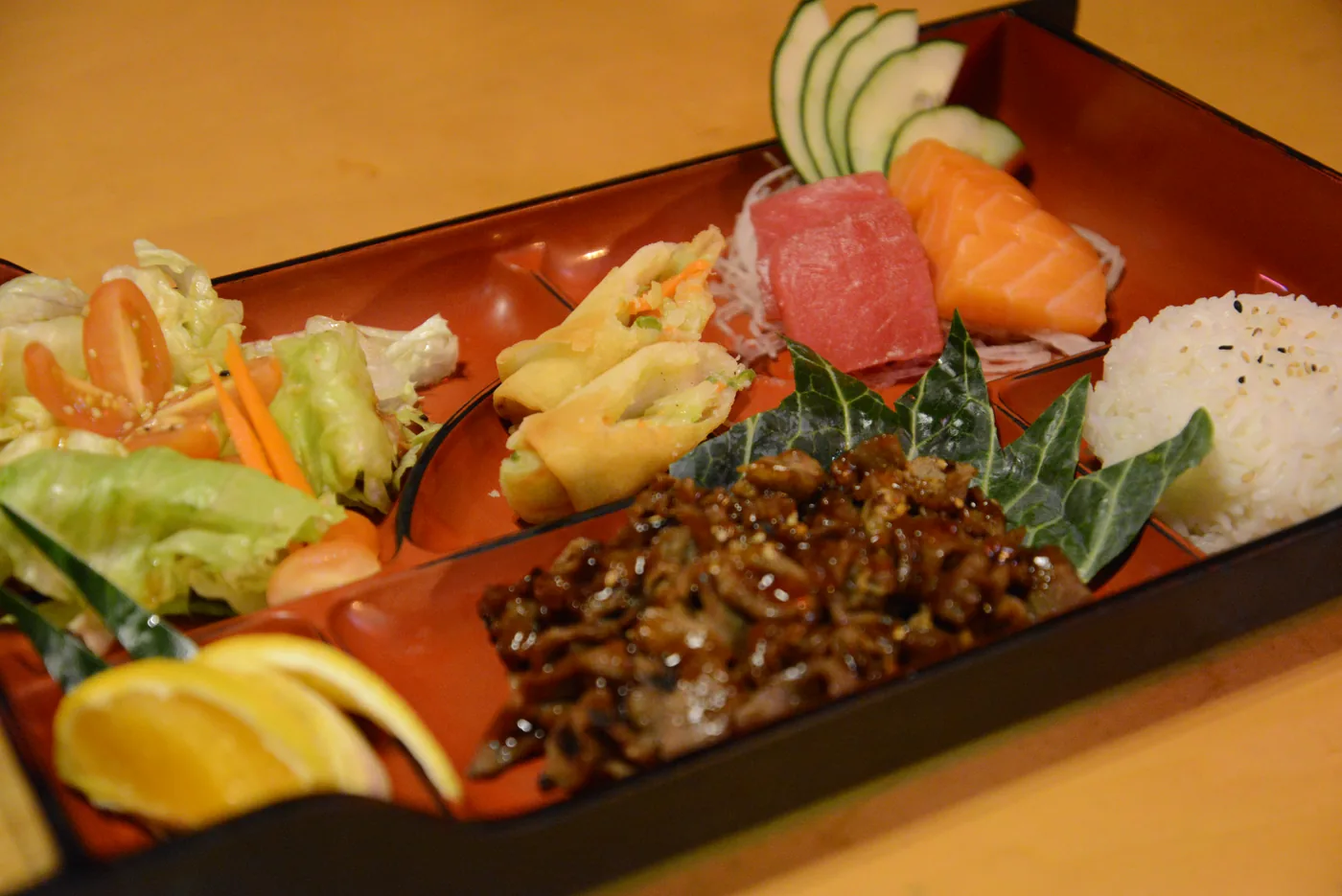
For the main part of the meal, the useful distinction is hot versus cold. If you want one of each, a bento box combination covers it – choose two or three items, served with salad, miso soup and steamed rice.
Sharing across a larger table is what the party platters are for. They run from a 42-piece assorted sushi platter up to 64-piece roll selections, which is generally more economical than ordering rolls individually.
See the full menu for everything described here.
Ordering for a group is a different problem from ordering for yourself. For piece counts, platter sizes and timing, see how much sushi to order for a party.