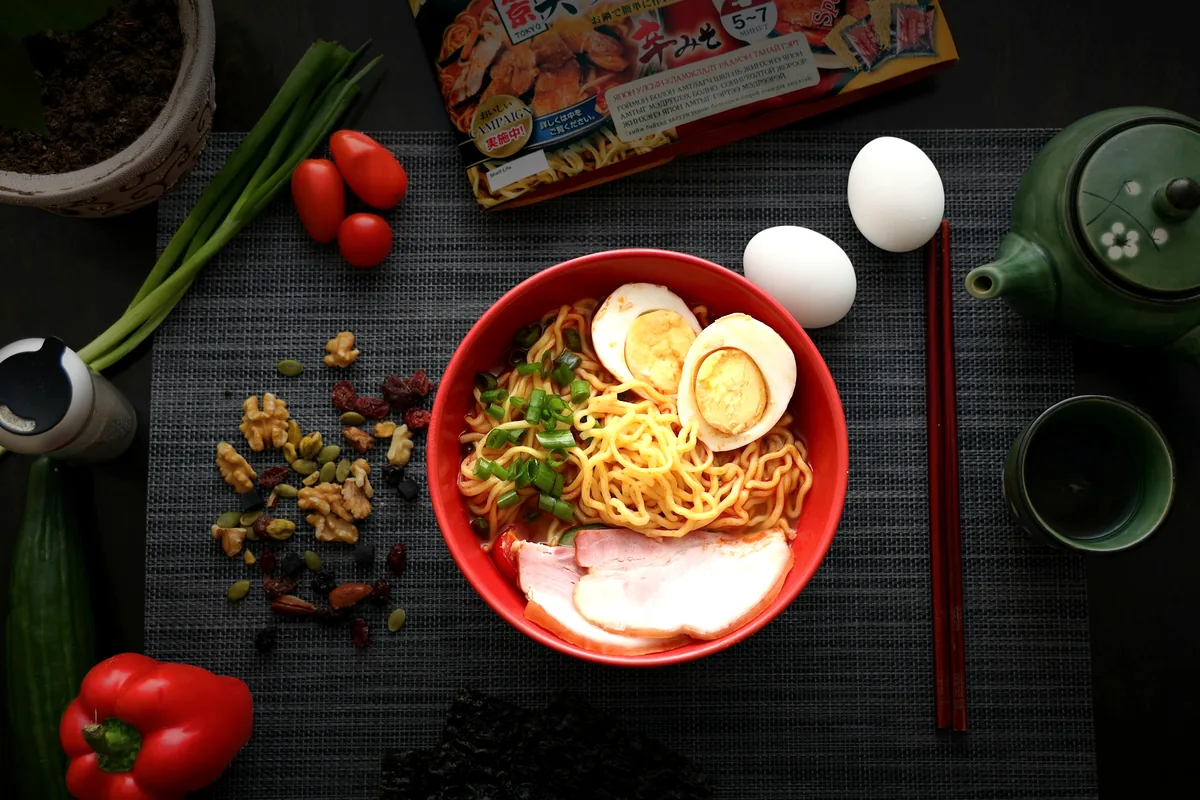
The short answer
Instantfried and dried noodles, powdered broth
Restaurantfresh noodles, a broth built for hours
They share a name and very little else. The interesting part is that instant ramen was invented to imitate the restaurant version, and it changed what people expect from it.
For most people outside Japan, instant noodles came first and the restaurant bowl came later. That order of introduction shapes what people expect, usually in the wrong direction.
01 — The noodleOne is fried, the other is not
Both start similarly: wheat flour, water, salt and kansui, the alkaline mineral water that gives ramen noodles their spring and their yellow tint.
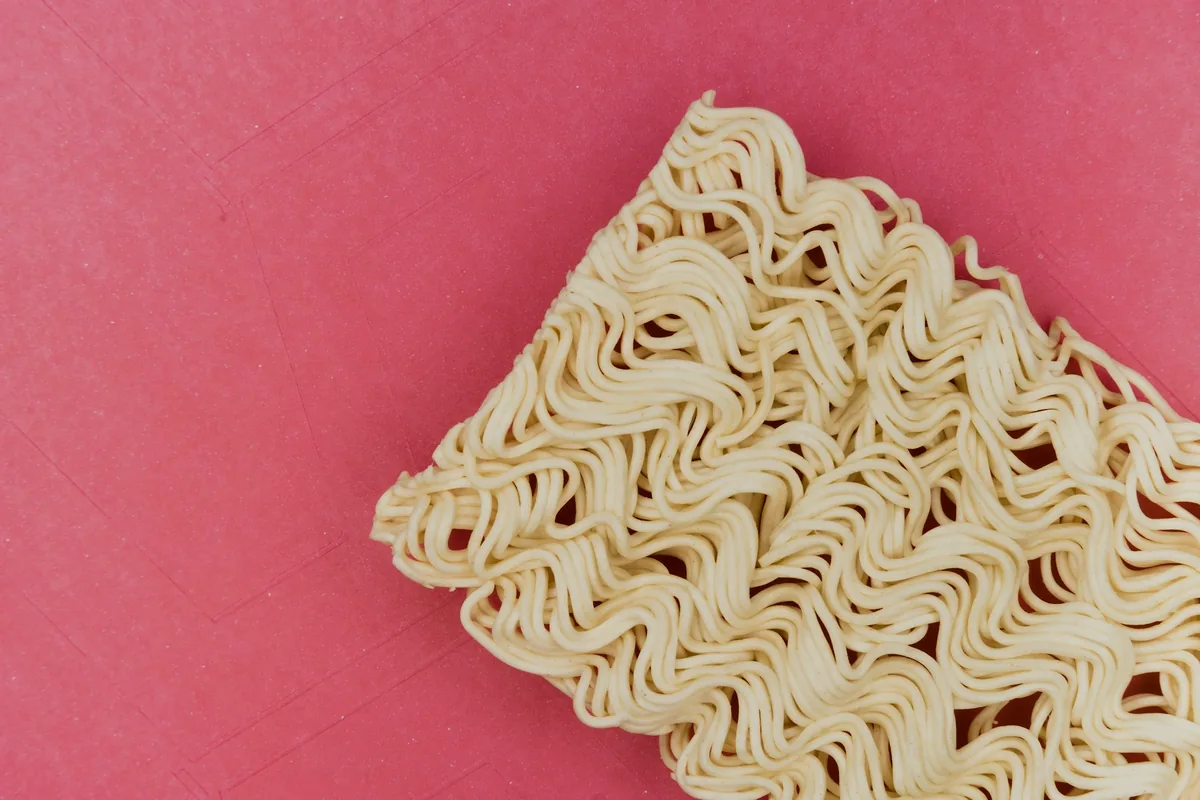
Then they diverge. Fresh ramen noodles are cut and cooked in boiling water for a minute or two before going into a bowl. Instant noodles are steamed, then flash-fried in oil to drive out the moisture, which is what makes them shelf-stable for months and what lets them rehydrate in three minutes.
That frying is the whole difference. It leaves the noodle porous, which is why instant noodles soften so fast in liquid and keep softening until nothing is left of the texture. A fresh noodle resists for far longer, which is why a restaurant bowl still has bite eight minutes in.
Where instant noodles came from
Instant ramen was invented in Japan in 1958, and it was explicitly an attempt to make the restaurant dish available at home in a country still short of food after the war. The flash-frying method was the breakthrough that made it work.
The cup version followed in 1971, and between them they became one of the most widely eaten manufactured foods on earth. It is a genuinely impressive piece of food engineering.
But it means the copy reached most of the world before the original did. Plenty of people have eaten instant noodles hundreds of times and a restaurant bowl once, which is an unusual way round for a dish.
Powder versus a pot
This is the larger gap, and it is not really a fair comparison.
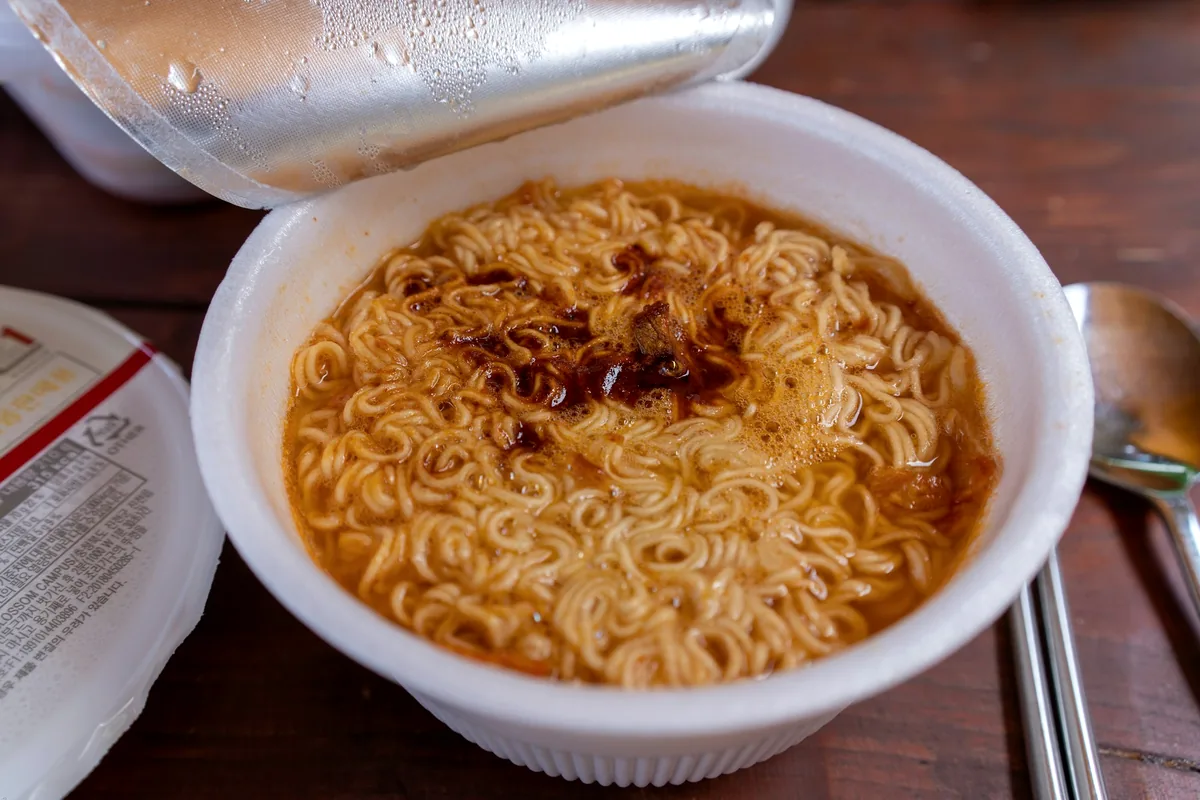
An instant sachet is a seasoning powder: salt, flavourings, dried aromatics, sometimes a small oil packet. It dissolves in hot water and produces something savoury very quickly. It is designed to taste like a broth rather than to be one.
A restaurant broth is made by extraction. A pork-bone tonkotsu is simmered hard for many hours until collagen breaks down and the liquid turns opaque and thick — that cloudiness is dissolved collagen, not fat or flour. A shoyu or miso broth is built differently but on the same principle: something is cooked in water until the water becomes the dish.
The five broths we serve each work this way and each tastes distinct because of what went into the pot rather than what was added at the end — they are compared in the five broths.
Side by side
| Instant | Restaurant | |
|---|---|---|
| Noodle | Steamed, flash-fried, dried | Fresh, boiled to order |
| Texture | Soft quickly, then softer | Springy, holds for several minutes |
| Broth | Powder dissolved in water | Extracted over hours |
| Fat | An oil sachet, if any | Rendered from the bones or added as an aroma oil |
| Toppings | Dried flakes, or whatever you add | Braised pork, marinated egg, fresh greens |
| Time to make | Three minutes | Hours, before the restaurant opens |
| Best at | Being available at midnight | Being a meal |
Good to know
Instant noodles are typically high in sodium, and the seasoning sachet is where most of it is. That is a formulation fact rather than a health verdict — we do not publish nutrition figures for our own dishes and are not in a position to give dietary advice. If sodium matters to you, read the packet and speak to a doctor rather than a restaurant blog.
Three expectations worth resetting
Ramen is not a quick meal. Instant noodles take three minutes, so people expect the restaurant version to arrive fast. It is made to order from components that took hours to prepare, and it comes out when it comes out.
The broth is the dish. With instant, the noodles are the point and the liquid is a vehicle. In a restaurant bowl it is the reverse — the broth is what took the work and what distinguishes one bowl from another.
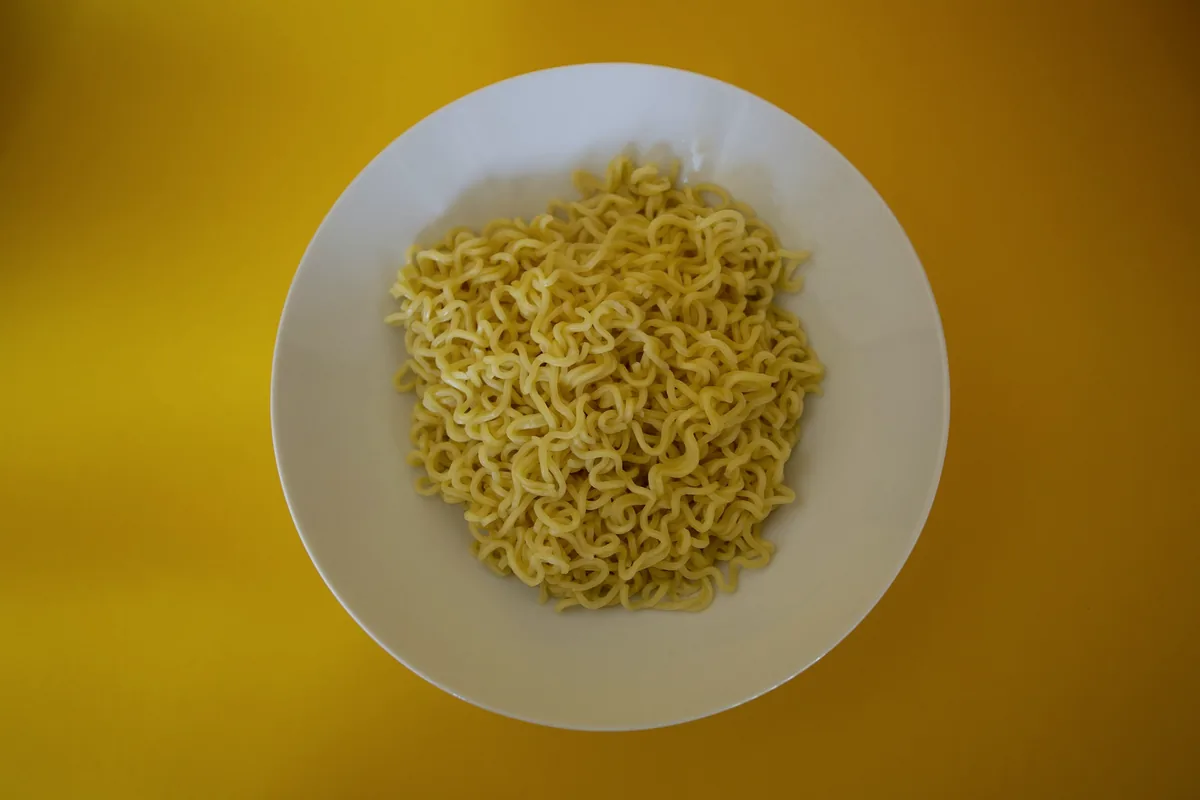
It has a clock on it. Instant noodles are already soft, so leaving them does not change much. Fresh noodles keep firming down and then softening in hot broth, and a restaurant bowl is noticeably past its best after about ten minutes. Eat the noodles first — the toppings will wait, as set out in what is in a bowl of ramen.
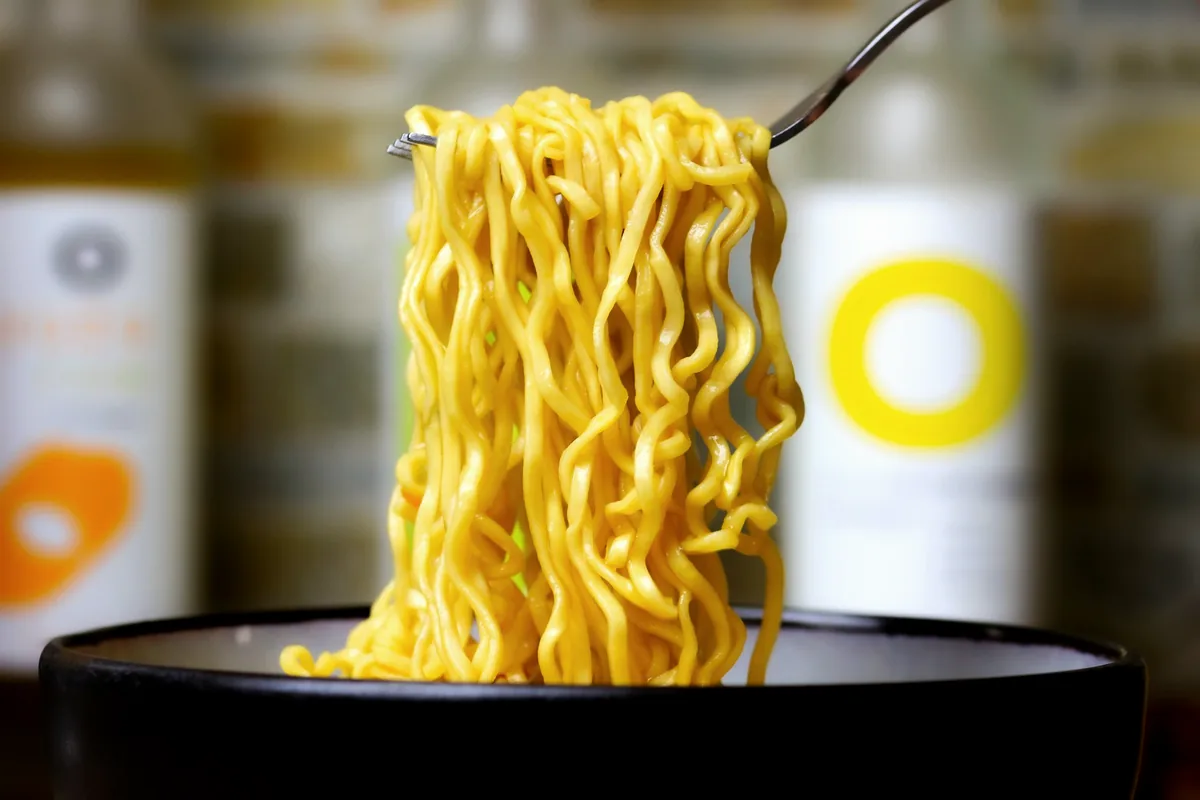
Making instant noodles better
Not a competition, and worth saying plainly: instant noodles are good at what they are for. A few things genuinely improve them.
- Use less of the sachet. Half to two-thirds is usually enough, and it stops the salt flattening everything else.
- Cook the noodles separately. Boiling them in the broth releases starch and makes the liquid cloudy and dull.
- Add an egg. A soft egg does most of what a marinated one does in a restaurant bowl.
- Add something green and something sharp. Spring onion and a little vinegar or chilli oil cover the two things the packet cannot.
- Add fat. A small spoon of sesame oil at the end gives the broth a body it otherwise lacks.
None of that turns it into a restaurant bowl. It does make it a better version of itself, which is the achievable goal.
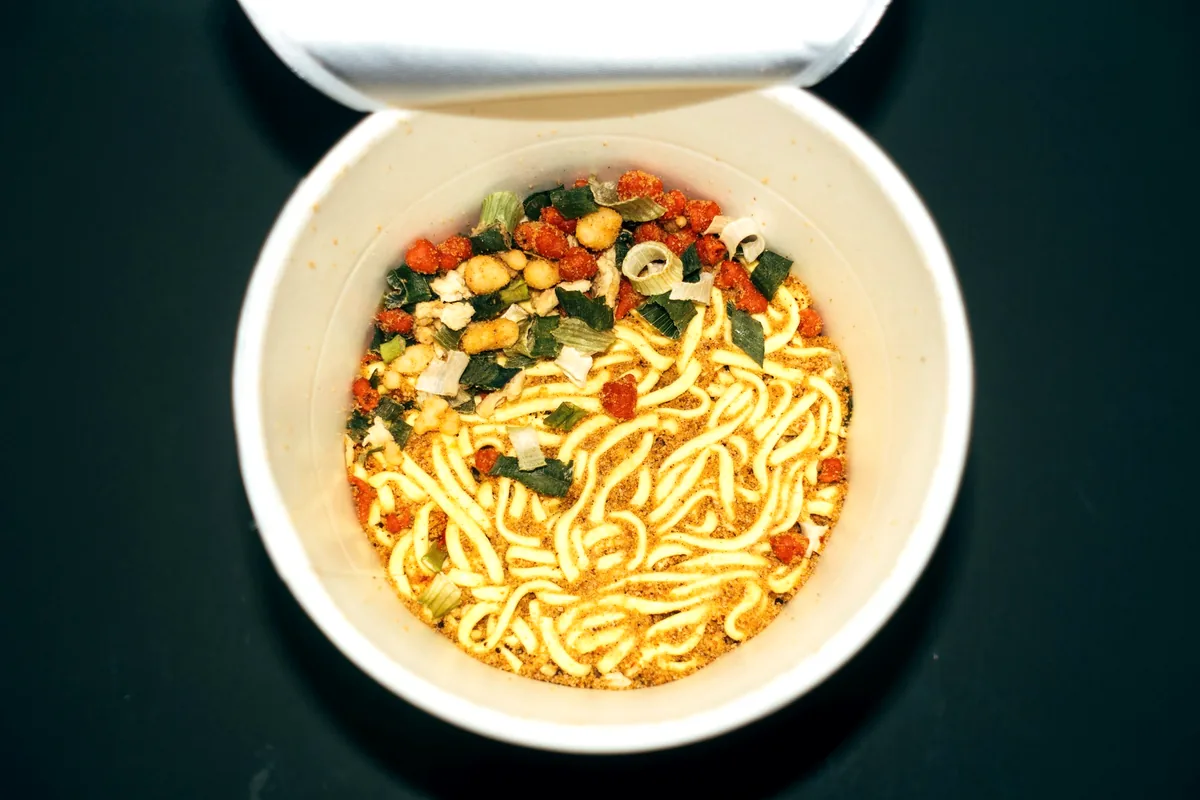
Frequently asked questions
Are instant noodles real ramen?
They are a manufactured version of it, invented in Japan to bring the restaurant dish home. Same ancestry, very different product.
Why are instant noodles fried?
Flash-frying drives out moisture, which makes them shelf-stable and lets them rehydrate in a few minutes. It also leaves them porous, which is why they soften so fast.
Why is restaurant ramen broth cloudy?
In a tonkotsu, the cloudiness is collagen and fat emulsified into the liquid by hours of hard boiling. It is the visible result of the extraction.
Why does restaurant ramen take longer to arrive?
It is assembled to order from components prepared over hours. The three-minute expectation comes from the instant version and does not transfer.
Can I make restaurant-style ramen at home?
The broth is the hard part and it takes most of a day. Improving an instant bowl with an egg, greens and a little fat is a far better use of an evening.
The short version
Instant noodles are fried and dried so they keep and rehydrate fast; the sachet is seasoning rather than stock. A restaurant bowl is fresh noodles in a liquid that took hours to become itself. Both are good. They are not the same dish and the three-minute expectation does not carry over.
The five bowls are on the menu, and the wider noodle family is in the four Japanese noodles.