The short answer
Wheatramen, udon, somen
Buckwheatsoba, and only soba
Four noodles, two grains. Everything else — thickness, colour, whether it is served hot or cold — follows from how the dough was made.
Japanese noodle names get used loosely in English, and one of them is actively misleading. Here is the whole family, and where our own noodle list sits inside it.
Before you read on
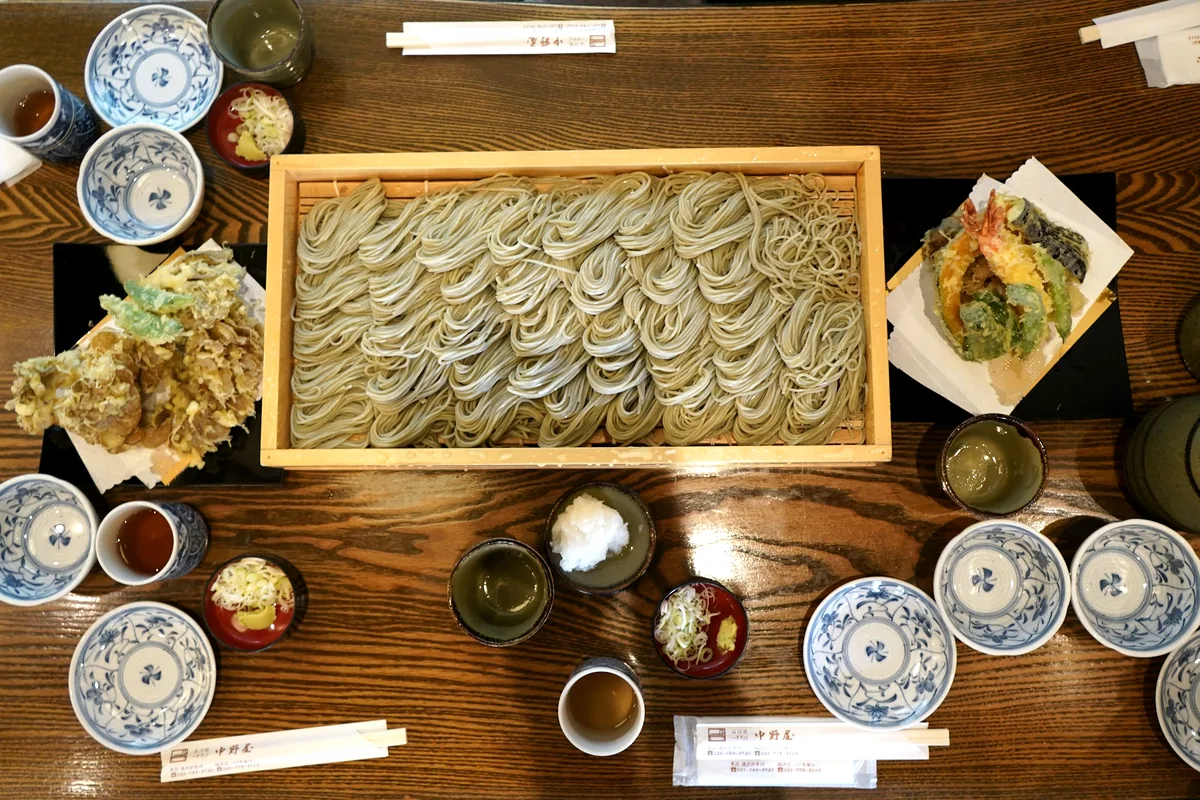
Two of the four noodles below — soba and somen — are not on our menu. This is a general guide rather than an order list, and the photographs in this article are stock rather than our own kitchen. Where we do serve something, it is named.
Everything starts with the flour
Three of the four major Japanese noodles are wheat. Only soba is buckwheat, and buckwheat is not wheat at all — despite the name it is not even a grass, but a seed related to rhubarb.
That difference shows in the colour before you taste anything. Wheat noodles run from white to pale yellow; buckwheat is grey-brown, sometimes almost purple, and the darker the noodle the higher the buckwheat content.
It also shows in the flavour. Wheat noodles are mild and take on whatever they are served in. Soba tastes of itself — nutty and faintly bitter, closer to wholemeal bread than to pasta.
Ramen
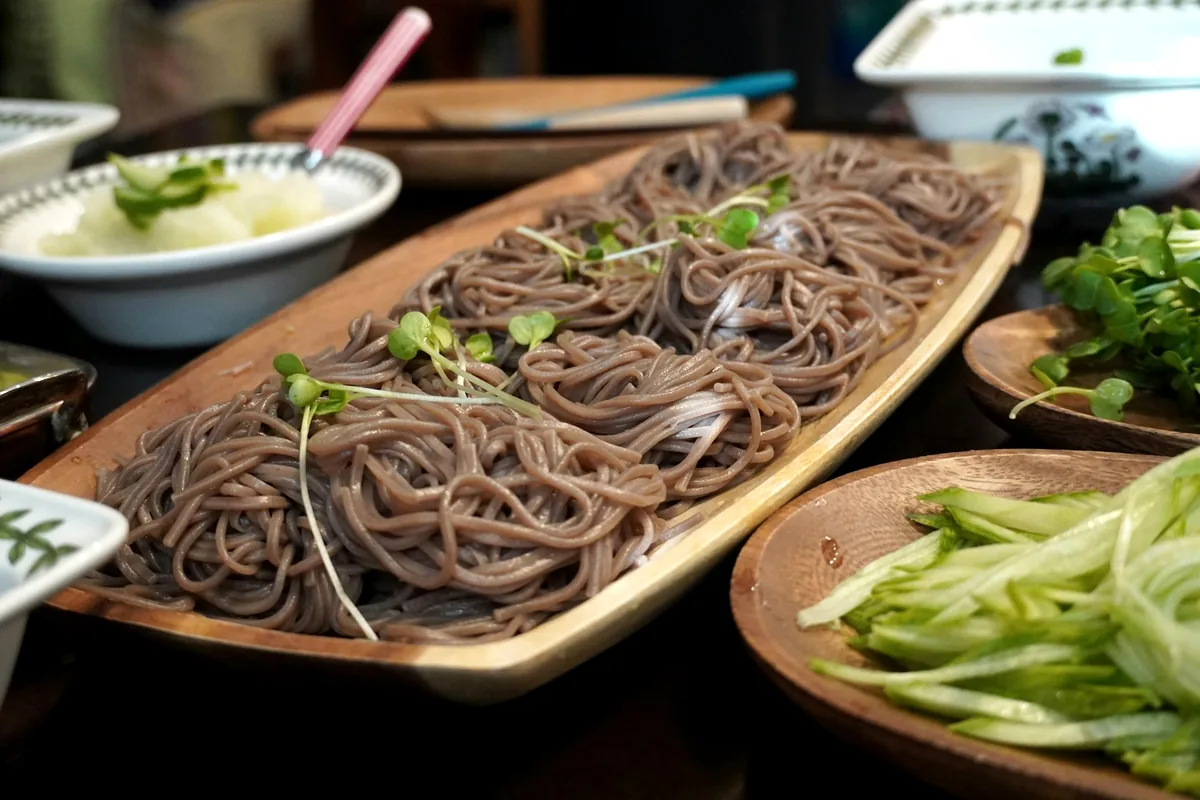
Thin, springy, usually wavy and faintly yellow. Wheat flour worked with kansui, an alkaline mineral water that gives the noodle its bounce, its colour and its resistance to going soft in hot broth.
Kansui is the defining ingredient. Take it out and you no longer have a ramen noodle, whatever else you do to the dough. We serve five ramen bowls, and the differences between them are in the broth rather than the noodle — that comparison is in the five broths.
Udon
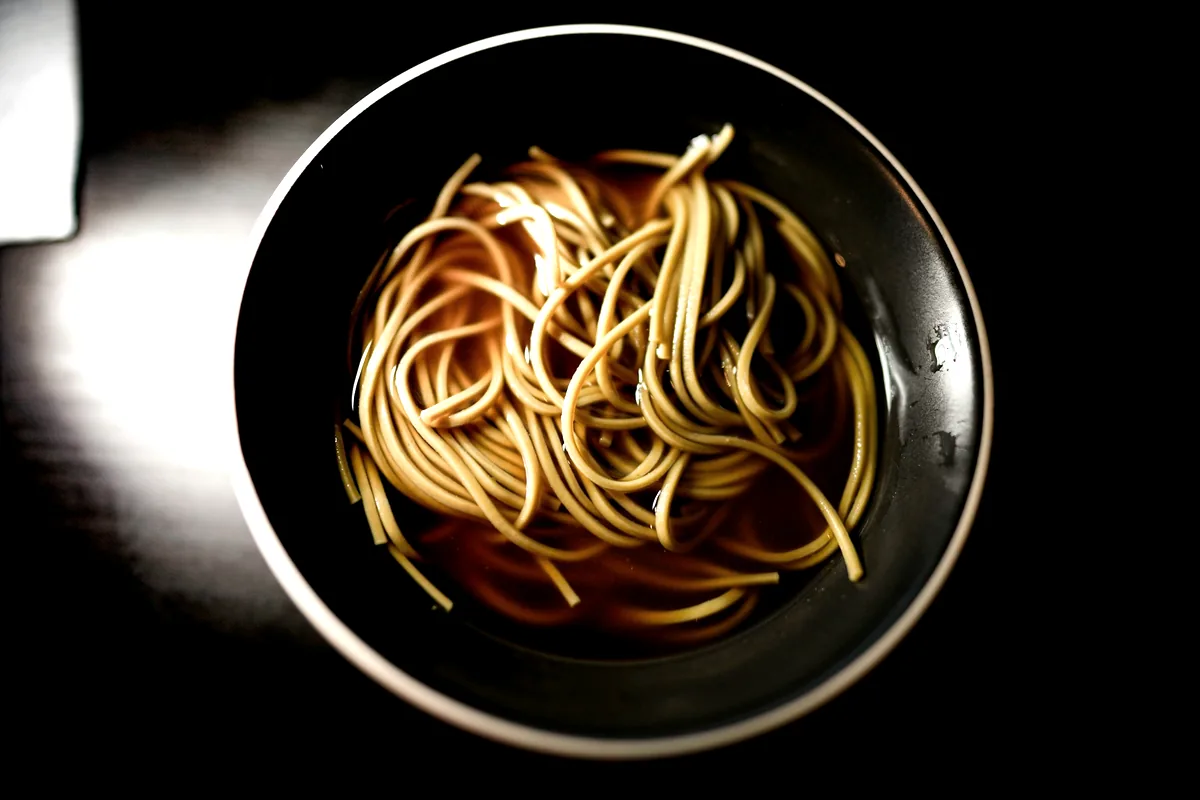
Thick, white and chewy, made from three things only: wheat flour, salt and water. No kansui, no egg. The simplicity is the point — udon is the one noodle where the noodle itself is the main event rather than a vehicle for broth.
It is also the most versatile. Hot in broth, cold with a dipping sauce, or stir-fried as yaki udon, it holds its texture through all three. We serve it in bowls and stir-fried; the comparison with ramen is in ramen versus udon.
Soba
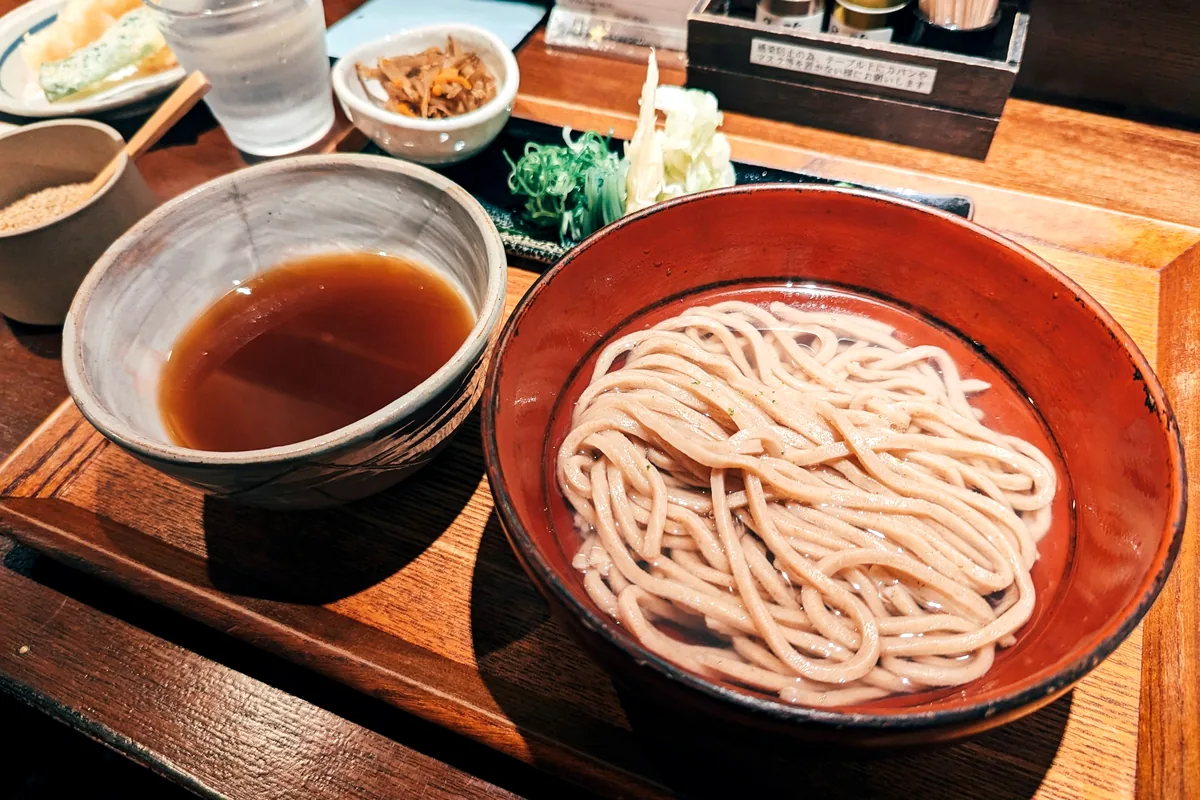
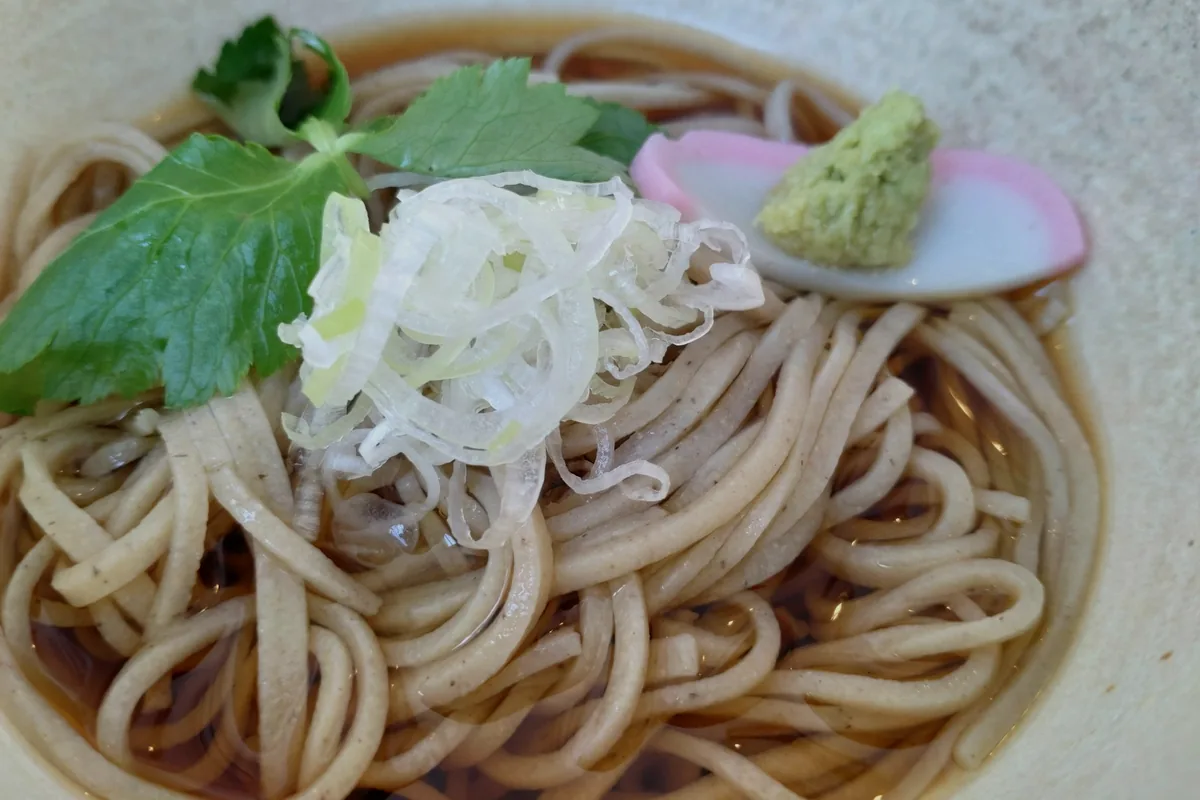
Thin, flat-ish and grey-brown, made with buckwheat flour — usually cut with some wheat flour, because pure buckwheat has no gluten and is difficult to hold together.
Soba is most often served cold on a bamboo tray with a cup of dipping sauce alongside, which is the format called zaru. It is also served hot in broth, but the cold version is where its flavour comes through, because heat flattens it.
It is worth being precise here: soba is the noodle most people have heard of and the one least often eaten outside Japan, and it tastes markedly different from the other three.
Somen
Very thin white wheat noodles, stretched with oil rather than cut, which is what makes them so fine. Almost always served cold, often over ice, with a light dipping sauce.
Somen is summer food in Japan and barely registers on menus elsewhere. If you have eaten a very thin, very pale noodle served cold, that is what it was.
Yakisoba, which is none of the above
This is the one that causes trouble. Yakisoba contains no buckwheat — it is a wheat noodle, closely related to ramen, and the word soba is being used in its loose sense of any thin noodle.
So a plate of yakisoba is not a plate of soba, and someone avoiding buckwheat has been worrying about the wrong dish. We serve it stir-fried with a choice of noodle; the alternative is yaki udon, and the comparison is in yaki udon versus yakisoba.
The four compared
| Ramen | Udon | Soba | Somen | |
|---|---|---|---|---|
| Flour | Wheat + kansui | Wheat | Buckwheat | Wheat |
| Thickness | Thin | Thick | Thin | Very thin |
| Colour | Pale yellow | White | Grey-brown | White |
| Texture | Springy | Chewy | Firm, a little grainy | Delicate |
| Usually served | Hot, in rich broth | Hot or cold | Cold, with dipping sauce | Cold |
| Flavour | Mild | Mild, wheaty | Nutty, distinctive | Very mild |
| On our menu | Yes, five bowls | Yes, bowls and stir-fried | No | No |
Which one you actually want
- You want a rich, filling bowl. Ramen. The broth is doing most of the work.
- You want texture. Udon. Nothing else has that chew.
- You want the noodle to taste of something. Soba — and cold, not hot.
- You want something light in hot weather. Somen, or cold udon.
- You want noodles without soup. Yakisoba or yaki udon, both stir-fried.
What we serve, and what we do not
Our noodle list covers the wheat side of this family. Five ramen bowls, each on its own broth. Four udon bowls — plain, chicken, beef, and a shrimp tempura version with the tempura served on the side. And five stir-fried dishes with a choice of yakisoba or yaki udon noodles.
We do not serve soba or somen. If those are what you are after, this article is a guide rather than a menu — but if you came looking for soba because you wanted noodles that are not swimming in broth, yaki udon or yakisoba will very likely scratch the same itch.
Frequently asked questions
Is soba gluten free?
Usually not. Buckwheat itself contains no gluten, but most soba is cut with wheat flour to hold it together, and pure buckwheat soba is uncommon. Never assume — ask.
Does yakisoba contain buckwheat?
No. It is a wheat noodle. The word soba is being used loosely to mean a thin noodle, which is a genuine source of confusion.
Which noodle is closest to spaghetti?
None of them, but somen is the closest in thickness and udon the closest in the way it is eaten as a substantial noodle in its own right.
Why are Japanese noodles slurped?
Drawing in air cools the noodles on the way to the mouth and carries the aroma of the broth with them. It is normal and it is faster.
Do you serve soba?
No. Our noodle list is ramen, udon and the stir-fried yakisoba and yaki udon dishes.
The short version
Four noodles, two grains. Ramen is thin wheat with kansui, udon is thick wheat, somen is very thin wheat, and soba is the buckwheat one. Yakisoba, despite the name, belongs with the first group.
We serve the wheat side of that list — have a look at the menu to see the bowls and the stir-fried plates.