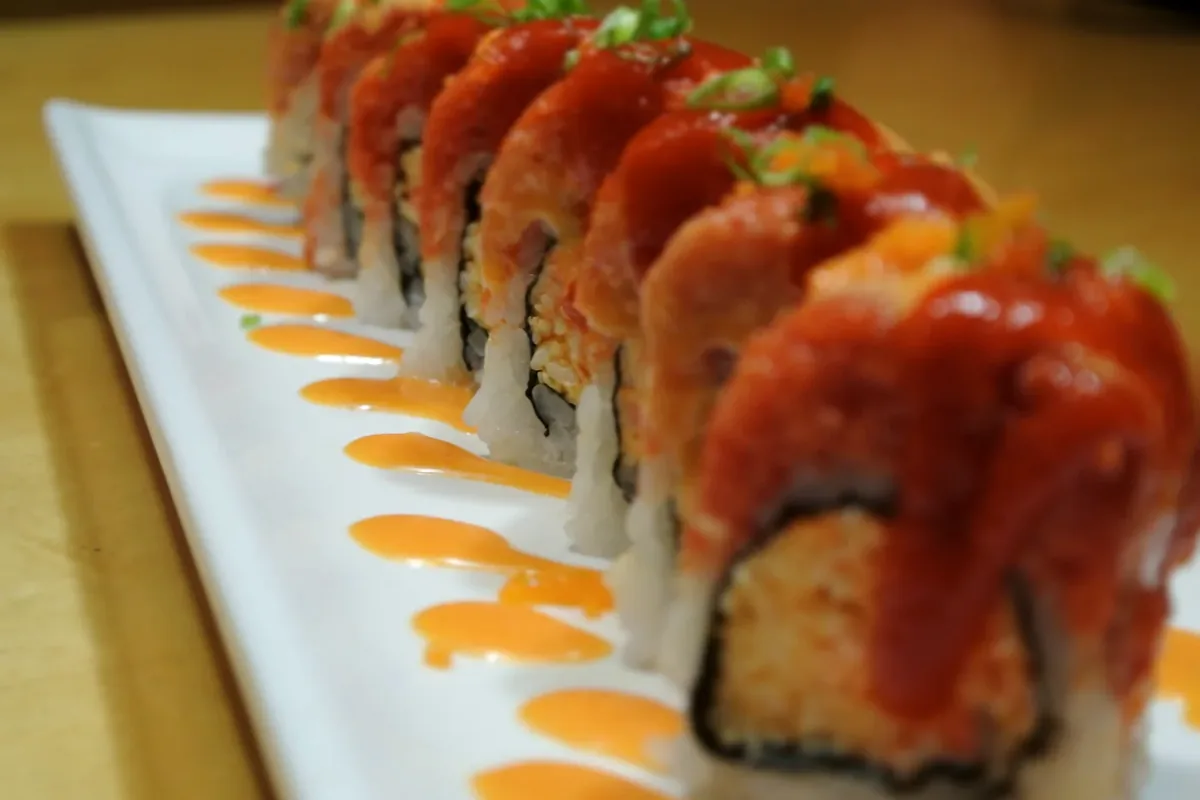
The short answer
Tunadeep red, firm, clean
Albacorepale pink, soft, mild
Yellowtailnear-white, buttery, rich
Albacore is a tuna. Yellowtail is not — it is an amberjack, and it sits on the menu beside tuna purely because they eat well in the same company.
Three names that appear all over a sushi menu, often within the same roll. They look similar written down and nothing alike on the plate.
01 — TunaThe one everything else is measured against
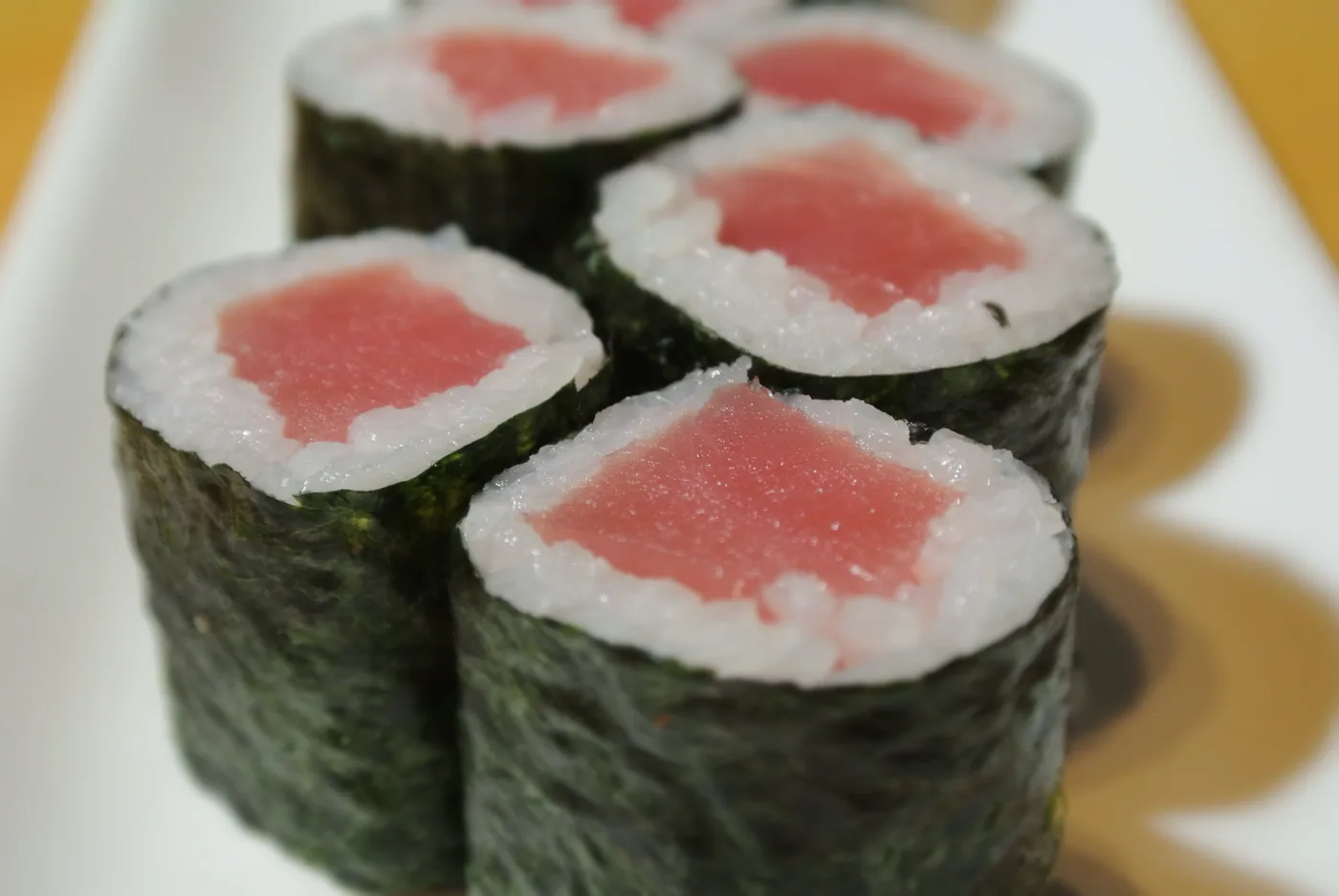
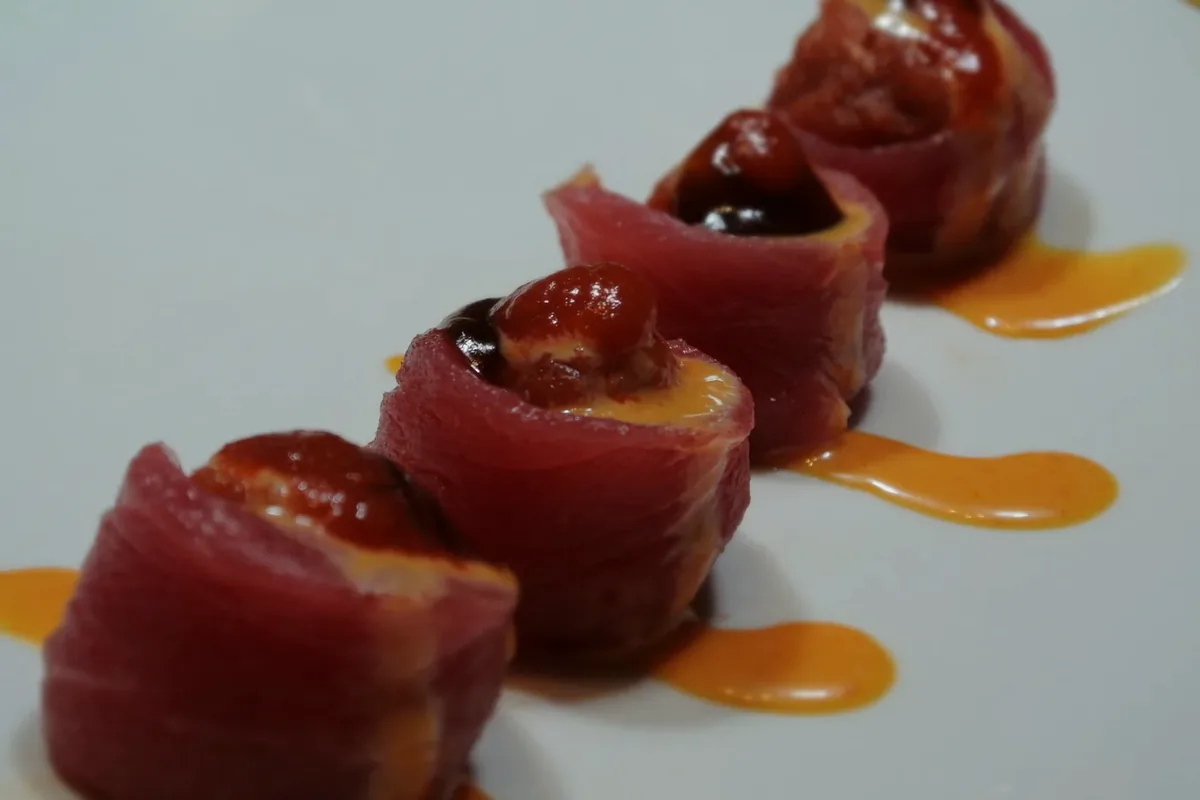
When a Japanese menu says tuna without qualifying it, it means the red-fleshed cut — deep crimson, firm, and clean-tasting rather than oily. It holds a slice better than almost any other fish, which is why it is the default for both nigiri and rolls.
The flavour is more mineral than fishy. People who describe raw fish as tasting of the sea are usually describing something else; good tuna tastes closer to very lean beef, and that comparison converts more sceptics than any amount of persuasion.
It also takes to being chopped. Spicy tuna is tuna diced and folded through a spicy mayonnaise, and it is a genuinely different ingredient from a slice of the same fish — softer, creamier, and much milder.
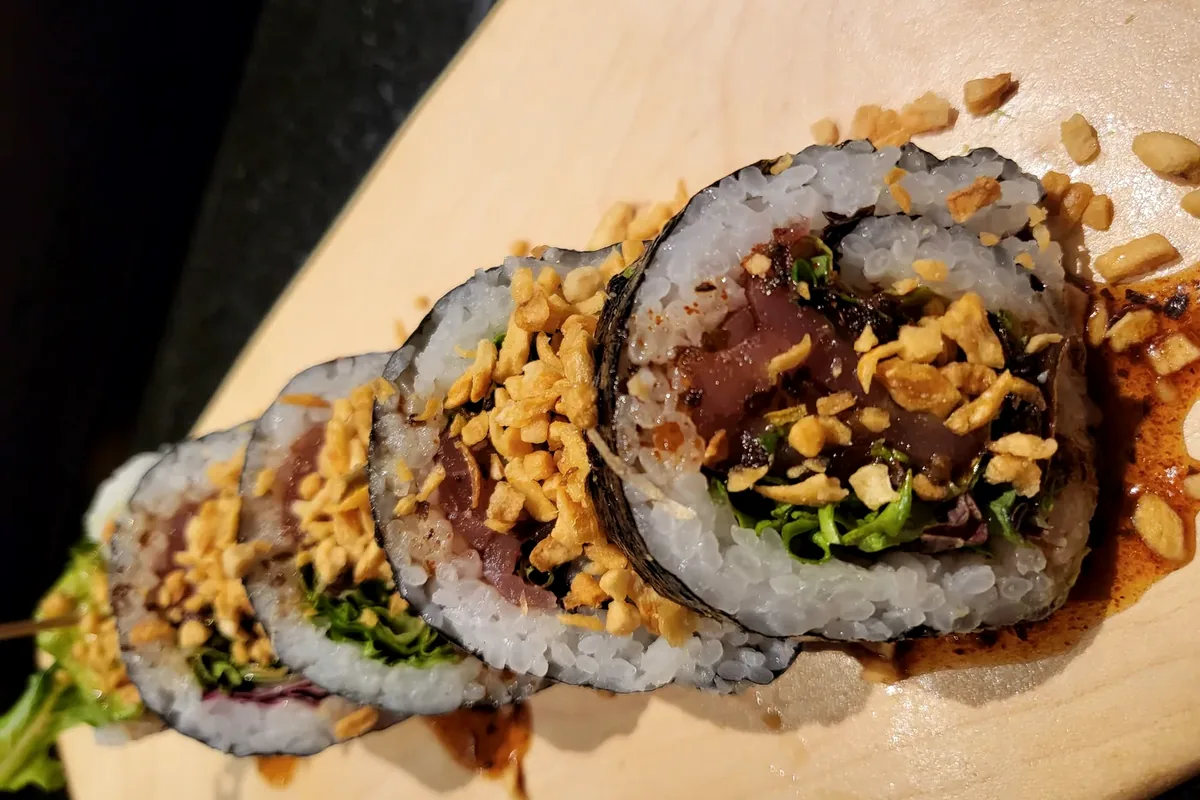
A tuna that does not look like one
Albacore is a species of tuna, but its flesh is pale pink rather than red and its texture is markedly softer. Order it next to regular tuna and you would not guess they were related.
It is milder and slightly sweeter, and it is often served seared — the outside briefly cooked and the centre left raw, sometimes with a citrus or ponzu dressing. That searing suits it, because albacore has enough fat to take the heat without drying.
If tuna feels too assertive, albacore is the softer landing. It is also the fish most likely to be paired with something sharp: jalapeno, red onion, citrus, crisp fried garlic.
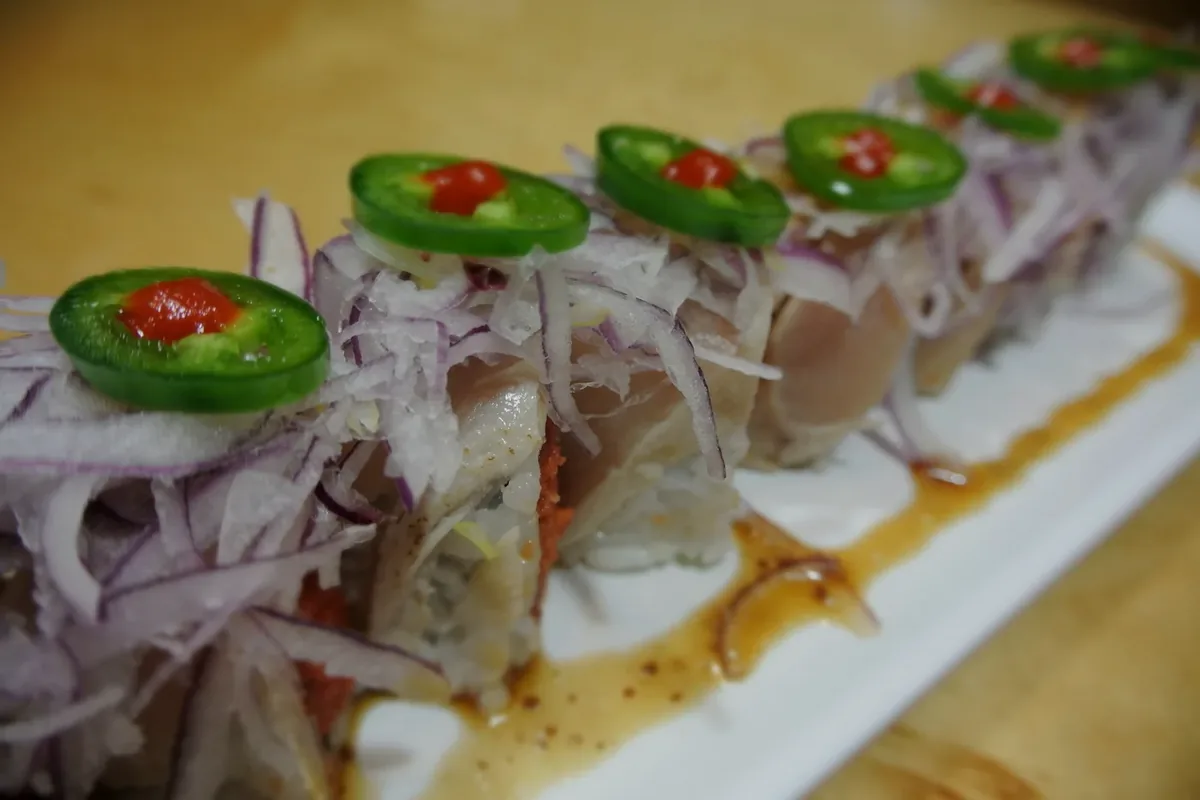
Not a tuna at all
Yellowtail — hamachi — is a species of amberjack, not a tuna. Its flesh is almost white with a faint pink cast, and it is the fattiest of the three by a clear margin.
That fat is the point. Yellowtail is buttery in a way tuna never is, and it carries a rich finish that stays in the mouth. It is the fish that most often turns someone from ordering sushi occasionally into ordering it deliberately.
It is almost always served with something acidic nearby, because richness needs cutting. Green onion is the standard, and it appears in the middle of a spicy yellowtail roll for exactly that reason.
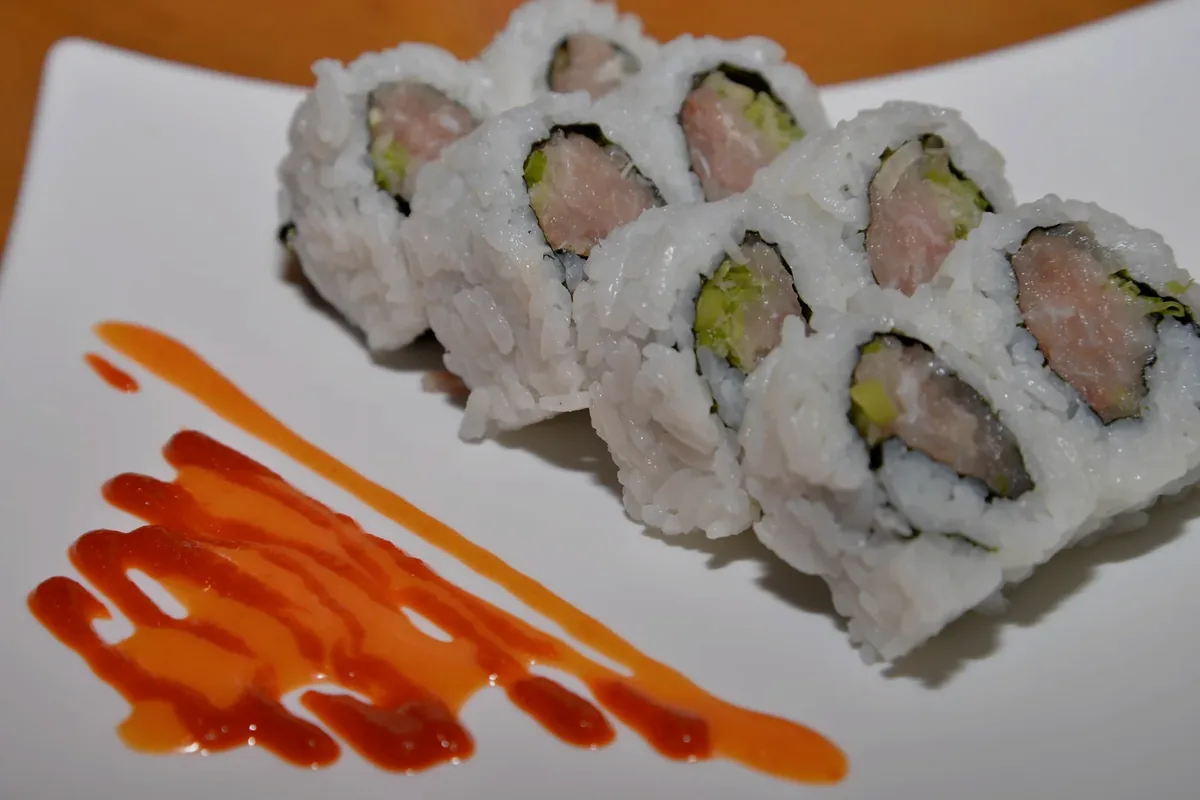
The three side by side
| Tuna | Albacore | Yellowtail | |
|---|---|---|---|
| Japanese name | Maguro | Bincho | Hamachi |
| Family | Tuna | Tuna | Amberjack |
| Colour | Deep red | Pale pink | Near white |
| Texture | Firm, meaty | Soft | Buttery |
| Fat | Lean | Moderate | High |
| Flavour | Clean, mineral | Mild, faintly sweet | Rich, lingering |
| Often served | Sliced or chopped spicy | Seared, with citrus | With green onion |
| Try it if | You want a clean first taste | Tuna is too strong | You want the richest option |
Ordering tip
Order these three in that sequence — tuna, then albacore, then yellowtail. Each is richer than the last, so working upwards means you taste every one properly. Reverse the order and the yellowtail flattens everything that follows it.
What “spicy” changes
All three appear in spicy versions, and the word means the same thing each time: the fish is chopped and mixed with a spicy mayonnaise rather than sliced.
This levels them out. A spicy tuna and a spicy yellowtail are much closer to each other than plain tuna and plain yellowtail are, because the mayonnaise contributes most of the texture and a good share of the flavour. If you want to taste the difference between the fish, order them plain.
The heat itself is mild. We set out what the other menu words signal in reading a specialty roll description.
Seared, and why it is not cooked
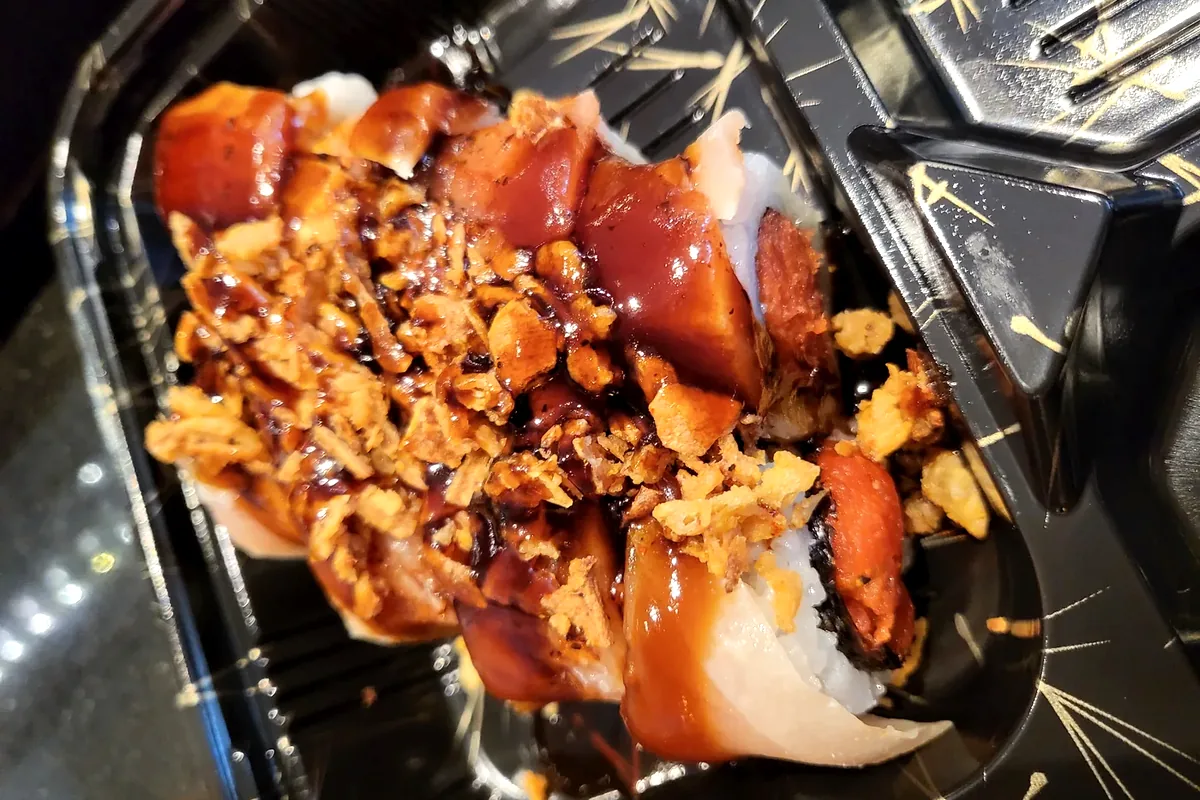
Searing gives the outside of a fillet a few seconds of direct heat and leaves the centre raw. It changes the surface flavour considerably — there is a toasted note that is not there otherwise — without turning the fish into cooked fish.
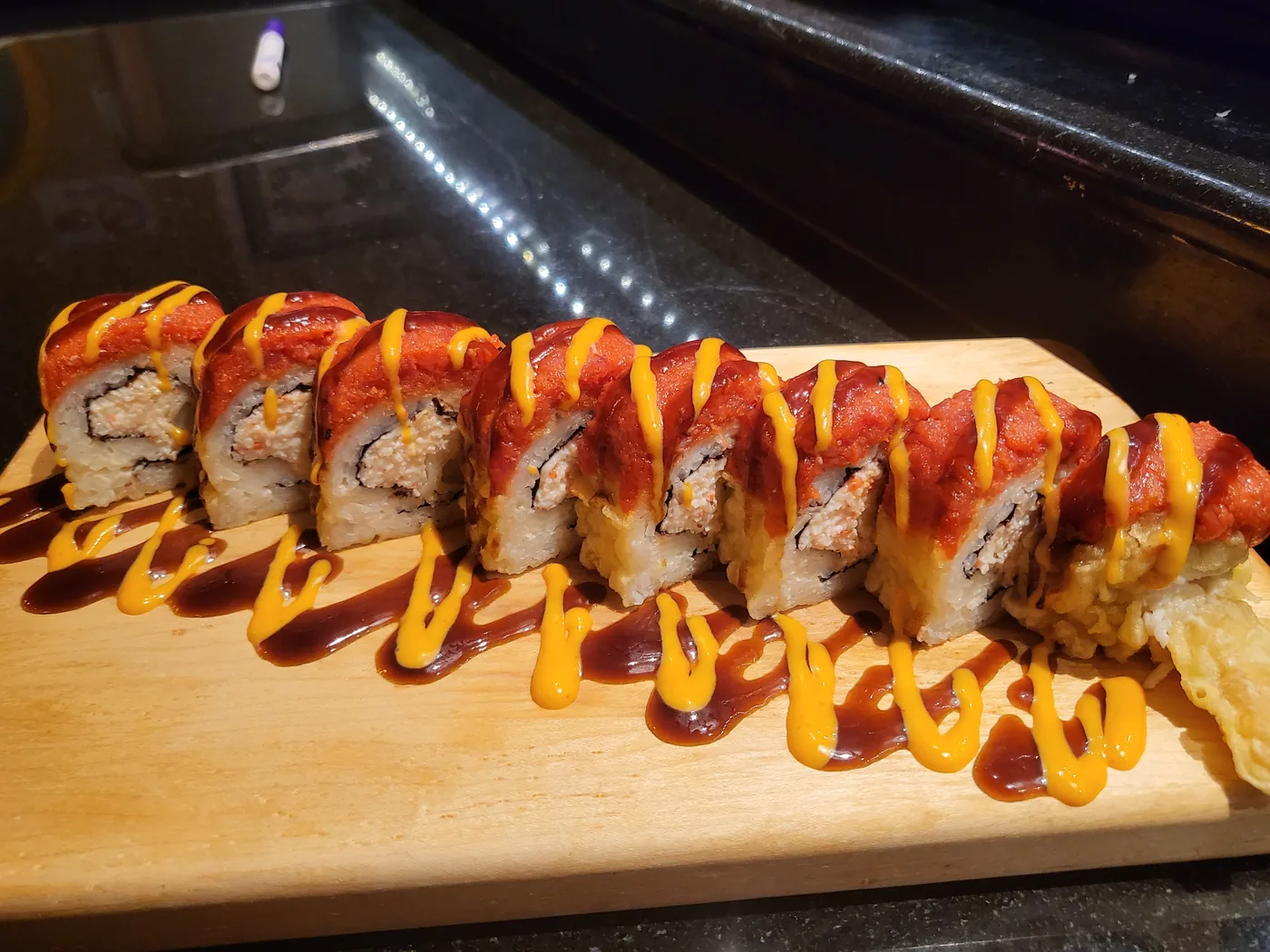
Albacore takes to this best of the three. Crazy Albacore uses seared albacore over a spicy tuna roll, with crunch onion on top.
Worth being clear about: seared is not cooked. If you are avoiding raw fish, a seared item does not qualify, and our guide to cooked options is the better place to start.
Where to find each on our menu
All three run through the basic roll list in plain and spicy versions, and all three appear as hand rolls. Beyond that:
- Tuna. 911 pairs spicy tuna with spicy crab. Garlic Tuna adds fried garlic crunch to tuna and avocado. Red Skin puts sliced and spicy tuna together without rice.
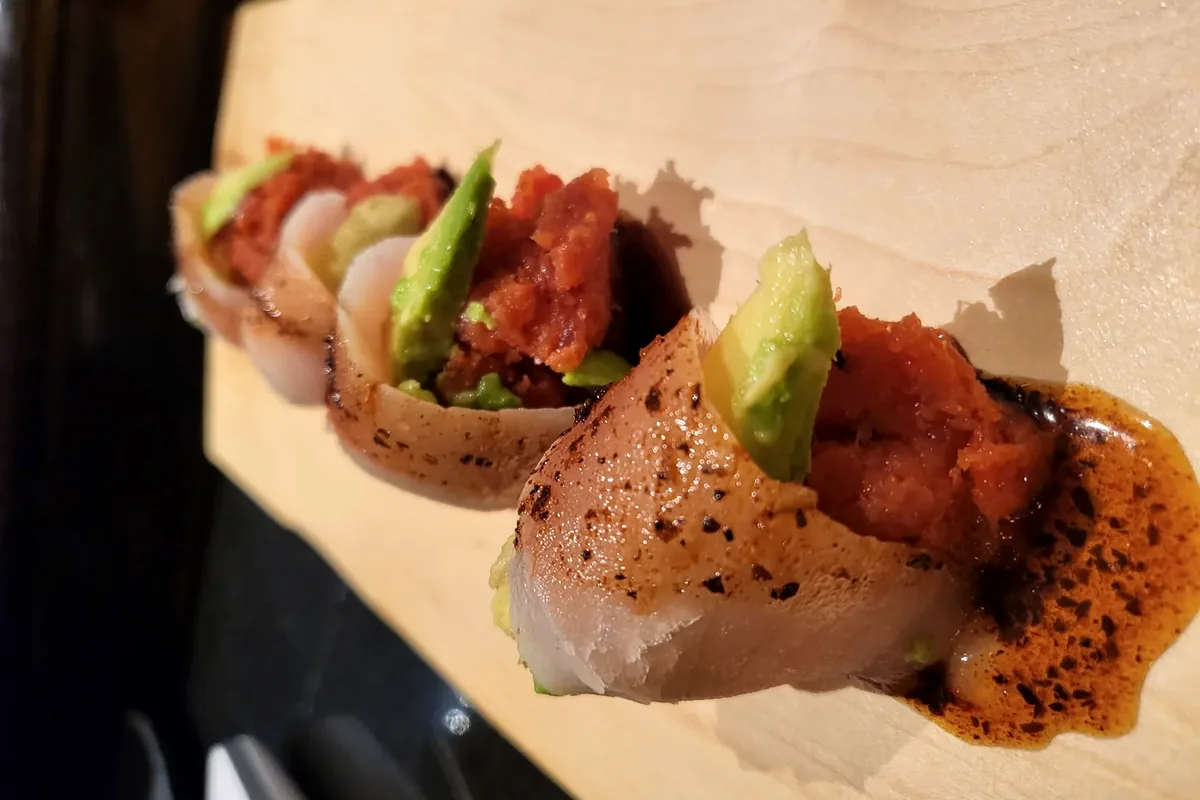
- Albacore. Albacore Lover wraps spicy tuna and avocado in albacore, no rice. Aloha adds jalapeno and red onion. Crazy Albacore sears it.
- Yellowtail. The plain and spicy rolls, plus the spicy yellowtail hand roll.
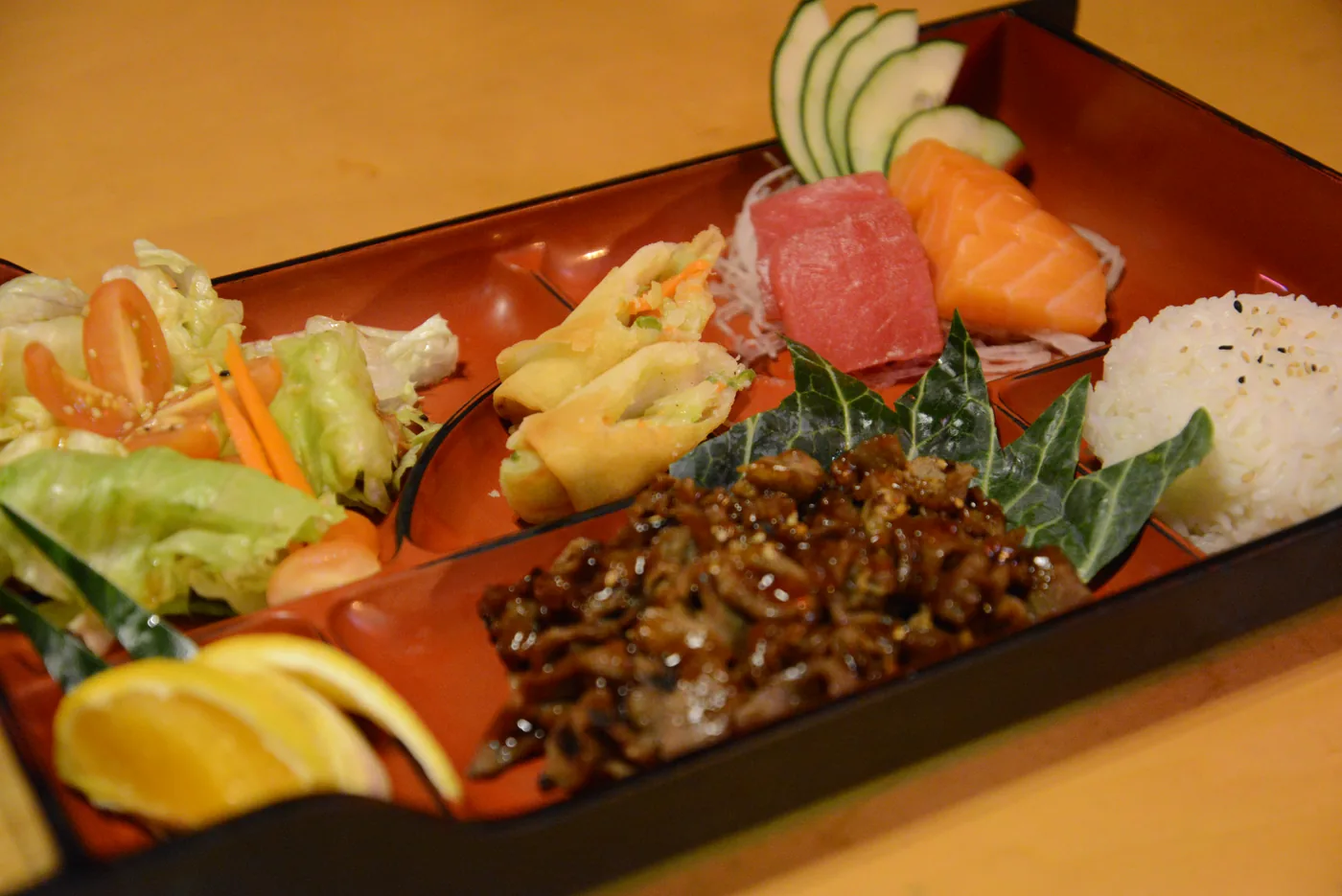
- All three at once. The assorted sashimi and the larger party platters are the efficient way to compare them.
Frequently asked questions
Is albacore the same as white tuna?
Albacore is often called white tuna, and on most menus that is what the term refers to. It is worth asking if you are unsure, because the phrase has been used loosely elsewhere in the industry.
Is yellowtail a kind of tuna?
No. It is an amberjack. It sits beside tuna on menus because the two work well in the same meal, not because they are related.
Which is best for someone new to raw fish?
Albacore, usually — it is the mildest and softest. Salmon is milder still, and we wrote about the ways it appears separately.
Why is spicy tuna cheaper than sliced tuna?
Chopping uses trim that cannot be sliced cleanly, which is efficient rather than inferior. Pricing varies, so check the current menu rather than assuming.
Are any of these cooked?
Not in their standard forms. Seared albacore is cooked only on the surface. If you need a fully cooked order, ask rather than inferring it from a description.
The short version
Red and firm, pink and soft, white and buttery. Tuna is the clean one, albacore is the gentle one, yellowtail is the rich one — and only two of the three are actually tuna.
All three run through our sushi bar list. Have a look at the full menu, or order the assorted sashimi and settle it in one sitting.