The short answer
One fishraw, baked, fried or grilled
Plus the skincrisped, and a dish in its own right
Salmon appears more times on a Japanese menu than any other single ingredient, and it tastes almost nothing like itself between one preparation and the next.
Count the salmon on a sushi menu sometime. It will be in the basic rolls, the hand rolls, half the specialty list, the sashimi, the appetisers and the hot kitchen. It is the same fish every time, and that is the interesting part.
01 — RawWhere most people start
Raw salmon is soft, fatty and mild. It has none of the iron edge of tuna and none of the firmness of yellowtail, which is why it is almost always the fish people try first and often the one they keep ordering.
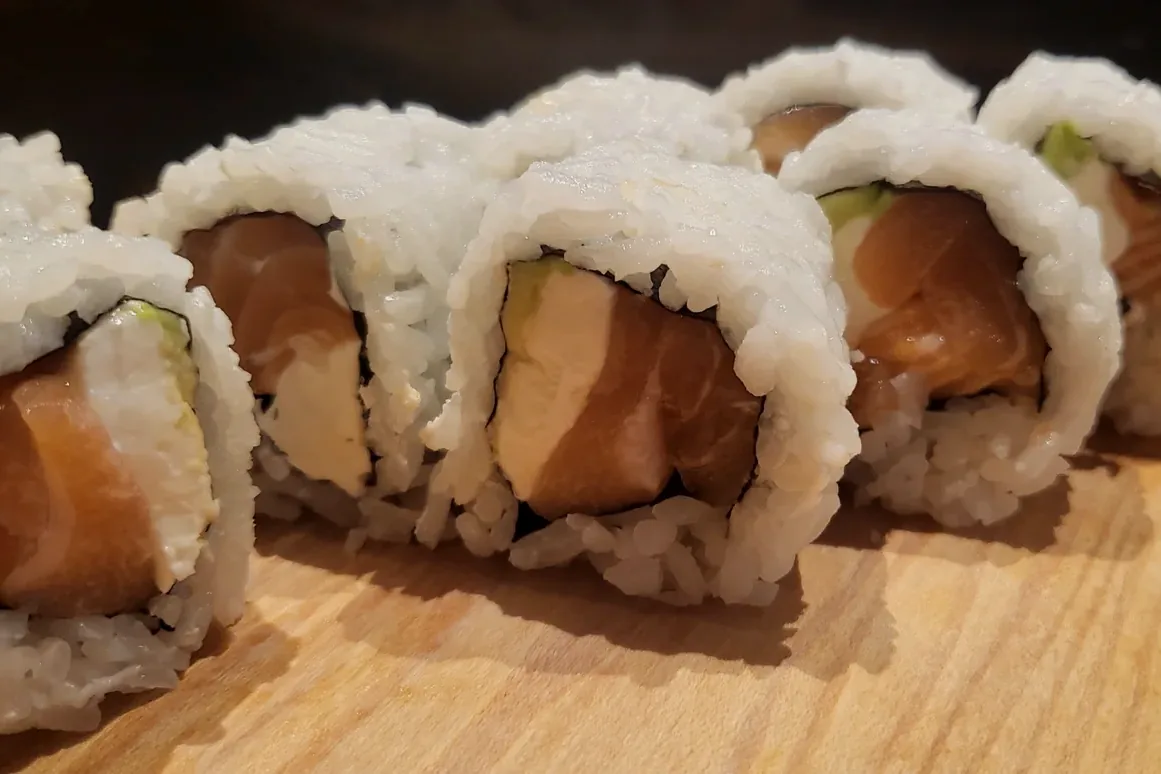
It appears three ways. Sliced over rice as nigiri; sliced on its own as sashimi; or rolled, either plain in a Salmon Roll or chopped and dressed as spicy salmon.
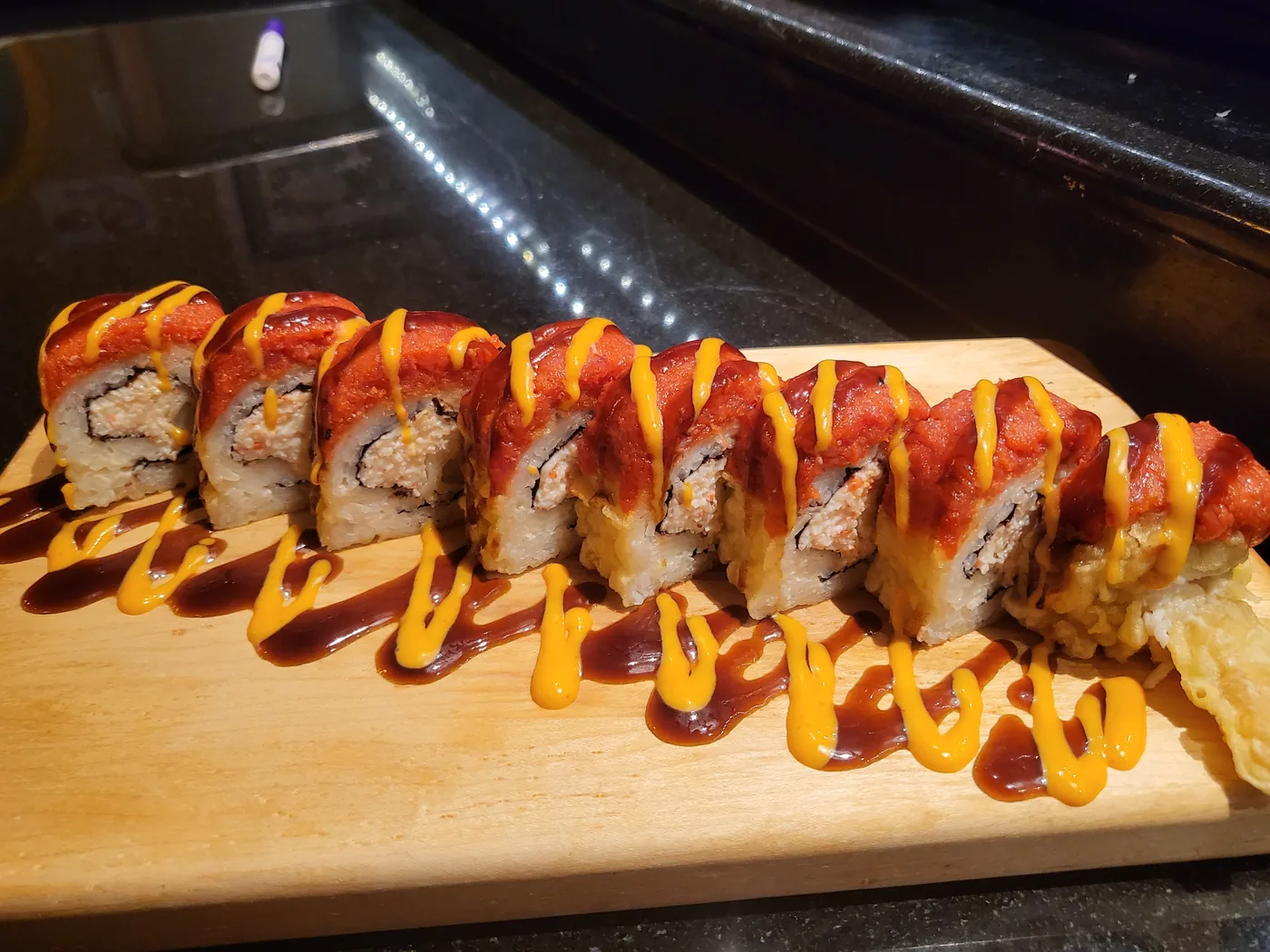
Spicy salmon is worth understanding as its own thing. The fish is chopped rather than sliced and mixed with a spicy mayonnaise, which changes the texture completely — softer, creamier, and much further from the taste of the plain fish than people expect.
Salmon without the rice
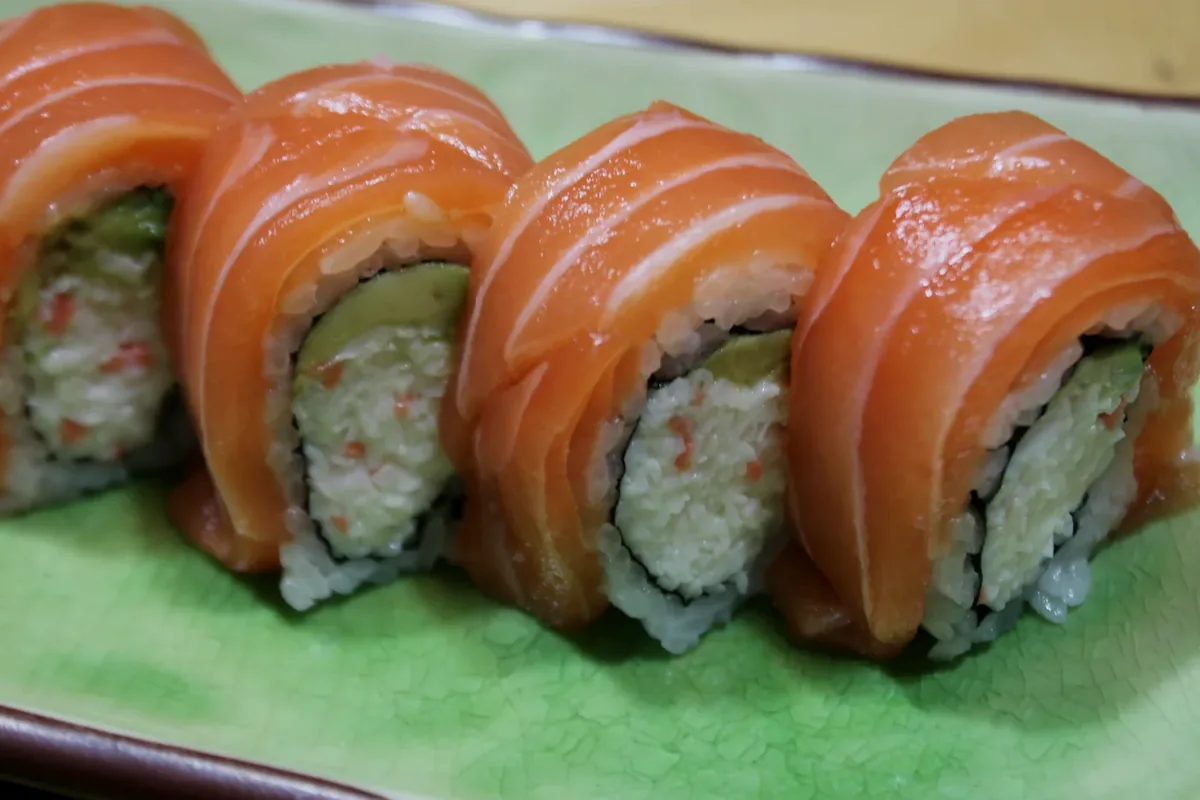
A handful of rolls use salmon as the wrapper rather than the filling. Instead of nori and rice on the outside, slices of salmon are laid around the roll and pressed in.
These are cut into five pieces rather than eight because each one is denser, and they eat much closer to sashimi than to a roll. If you like salmon specifically, this is the format that gives you the most of it.
Baked, and the difference it makes
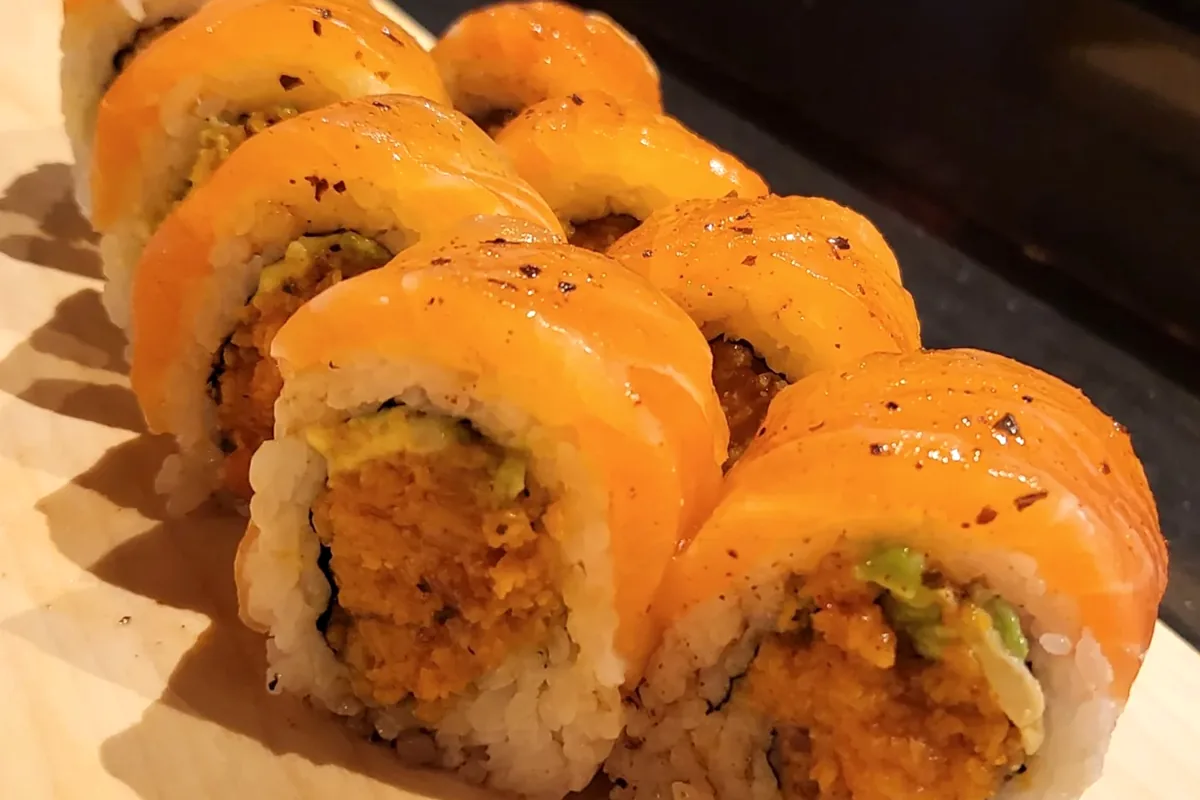
Baked salmon on a sushi menu is not a fillet. It is salmon mixed with sauce, spread over a roll and finished under heat until the top colours and the whole thing is warm.
The result is rich and soft rather than flaky, and it arrives warm, which surprises people ordering it for the first time. Baked Salmon and Baked Alaskan both work this way, over a California roll.
If you are avoiding raw fish entirely, baked salmon rolls are one of the better routes into a sushi menu — we set out the rest in what to order if you do not like raw fish.
Deep fried, with cream cheese
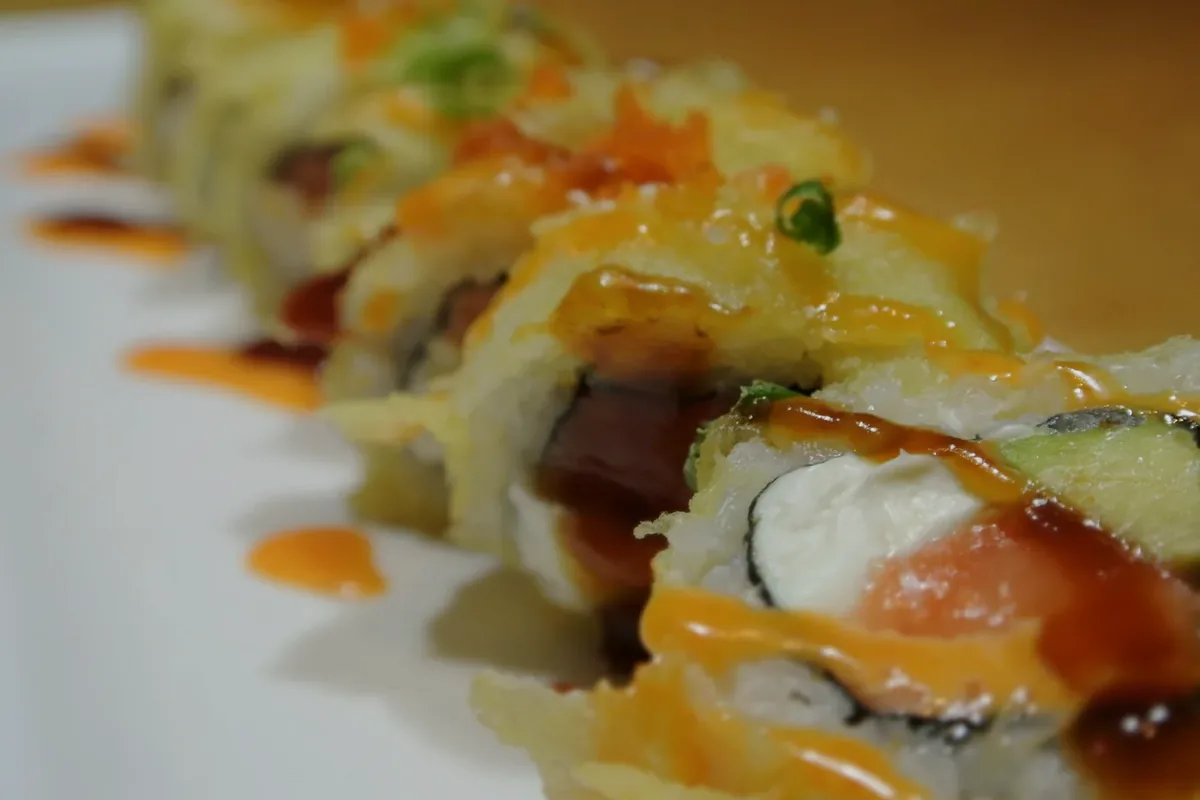
Salmon and cream cheese is the Philadelphia combination, and it is one of the few pairings that works in every format. Fresh, it is a clean roll of salmon, cream cheese and avocado. Fried whole, it becomes Golden Philadelphia — the same three things, hot, with a crisp shell.
Frying changes the cream cheese more than it changes the salmon. It loosens and turns almost like a sauce, which is the whole appeal.
Good to know
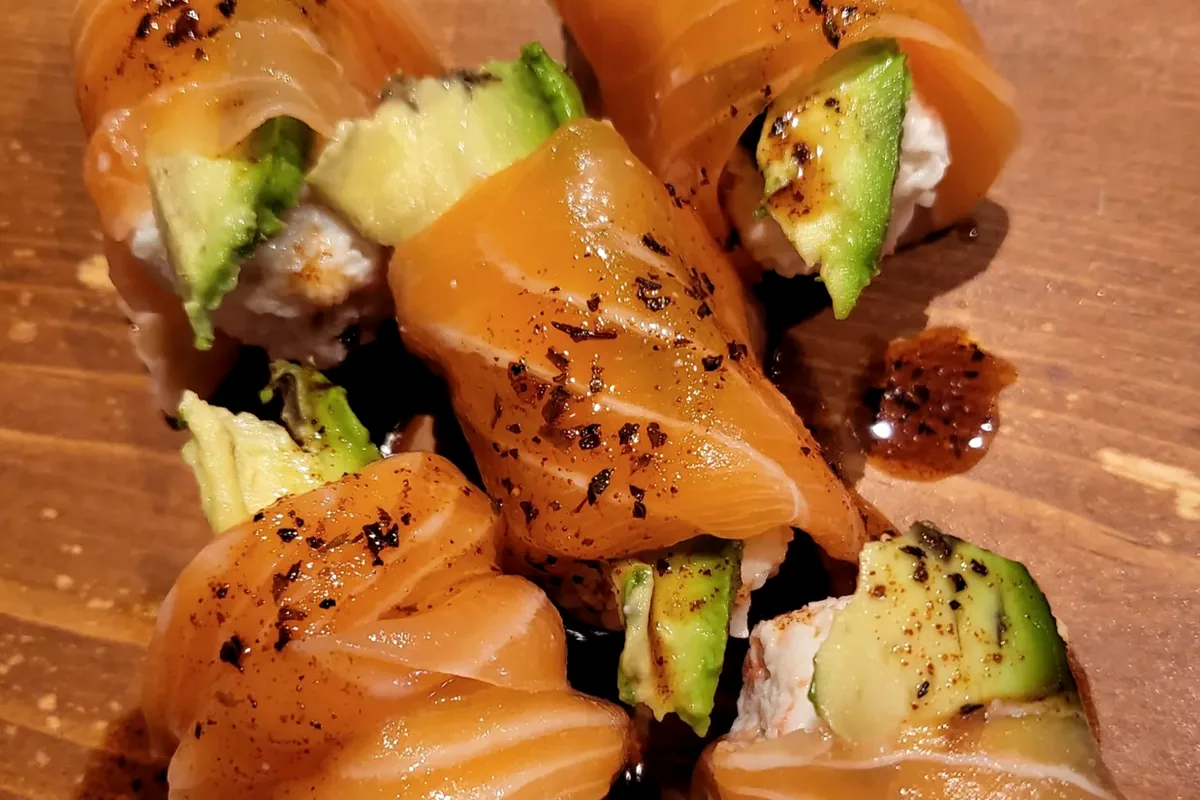
Cajun salmon and seared salmon are a middle ground worth knowing about: the surface is cooked and seasoned while the centre stays raw. If you are avoiding raw fish, seared is not the same as cooked — ask before ordering rather than reading it as a cooked dish.
The parts nobody orders
Two of the best salmon dishes on any Japanese menu are the ones people walk past.
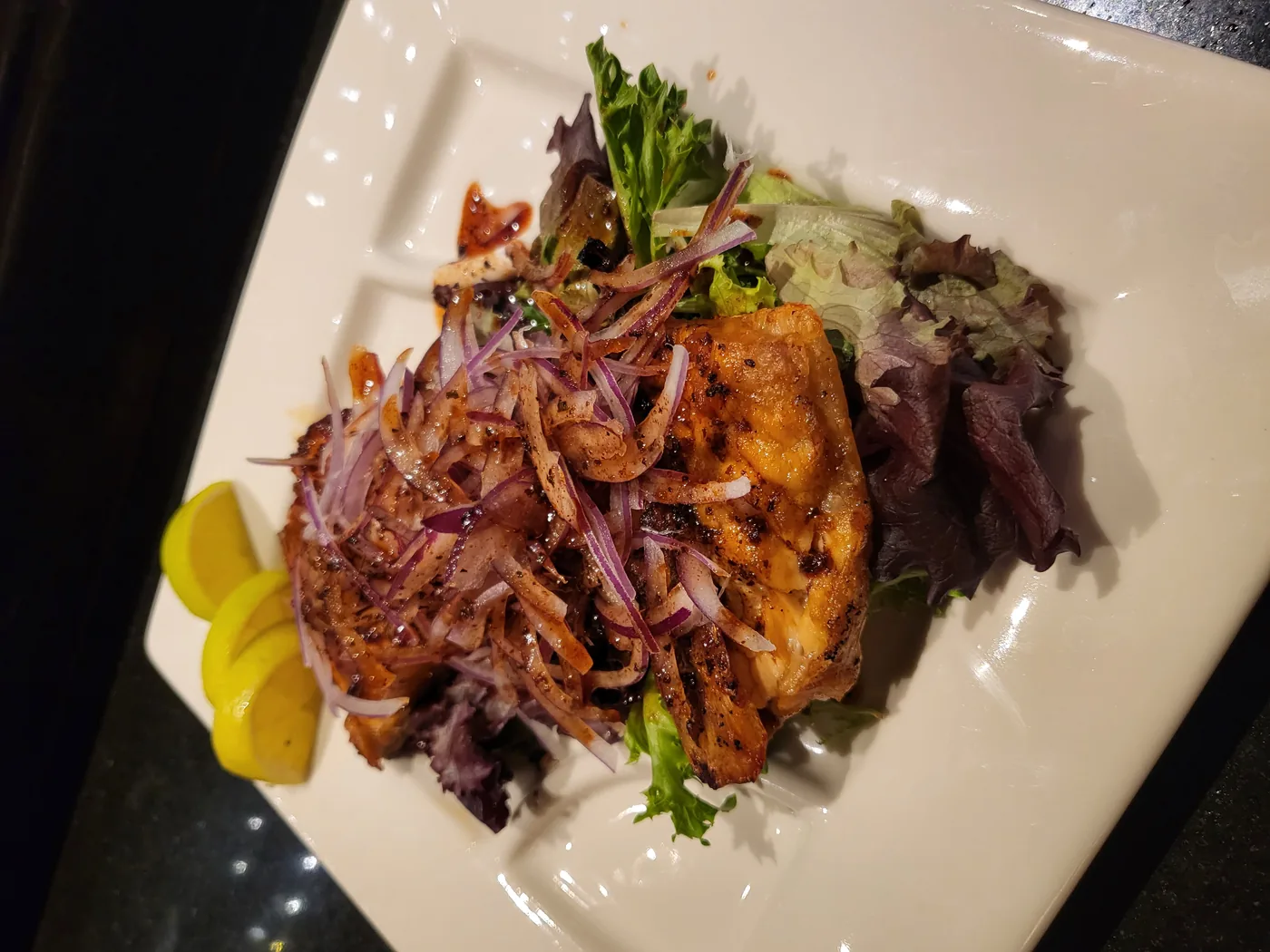
The collar. The wedge of meat behind the head, where the fish is fattiest. It is baked and served on the bone, and you eat it with your fingers and a bit of patience. There is less meat than on a fillet and it tastes better than any of it.
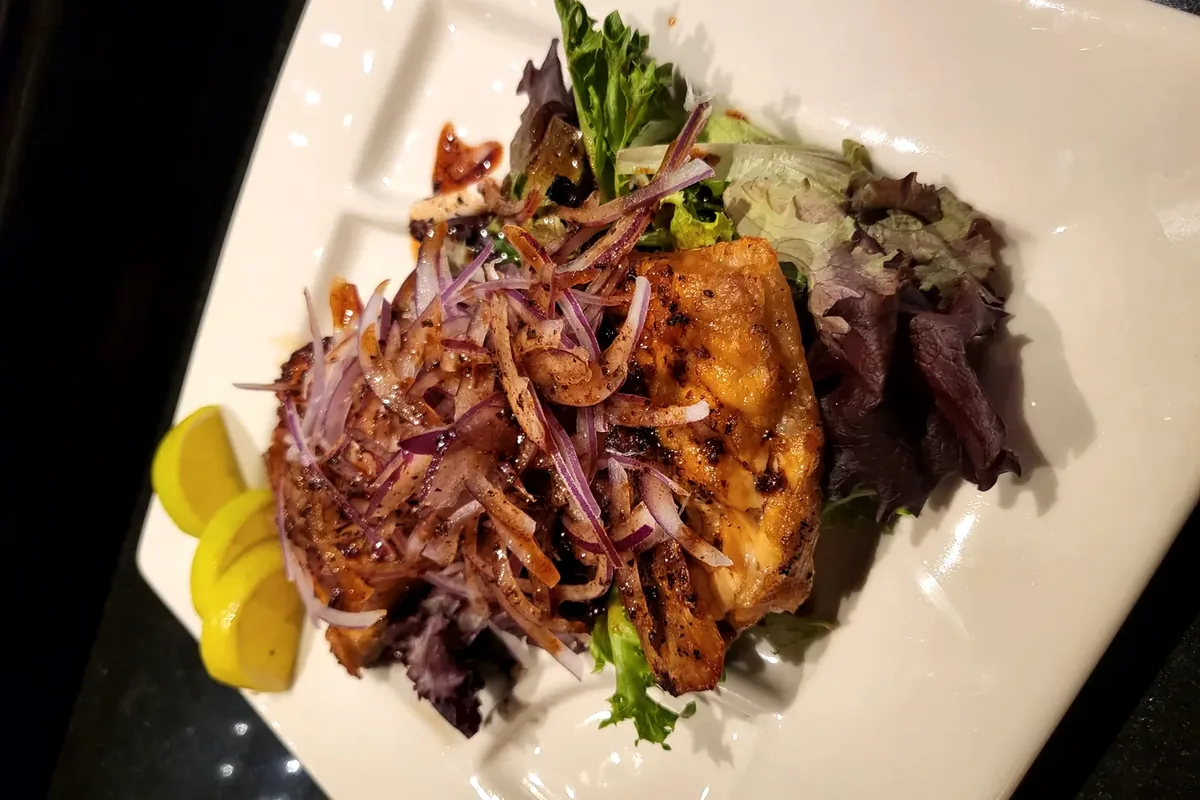
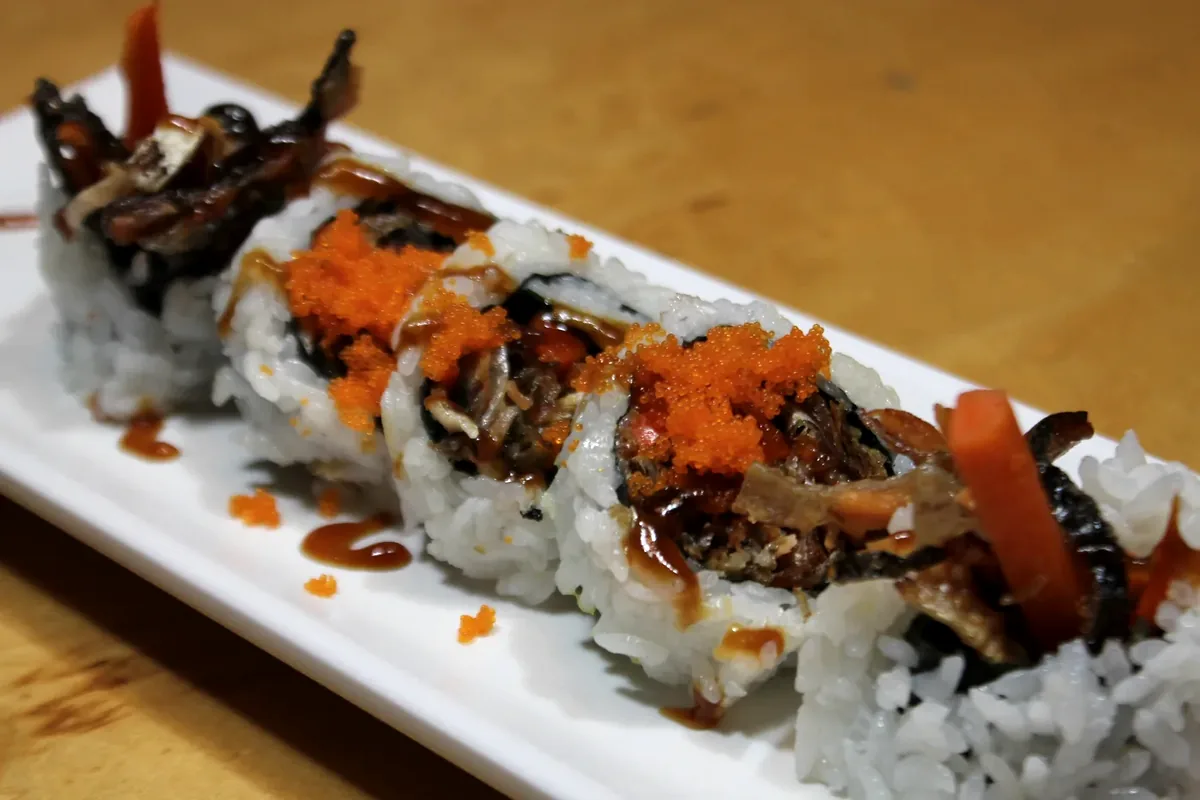
The skin. Crisped until it shatters, then rolled with rice or served over salad. Salmon Skin Roll, Salmon Skin Hand Roll and Salmon Skin Salad all use it. It is savoury, smoky and closer to a snack than to fish.
Grilled and glazed
The hot kitchen treats salmon as a main rather than a topping. Salmon Teriyaki is grilled and glazed and served as a plate with salad, miso soup and steamed rice — the same treatment given to beef and short ribs.
Salmon also appears in the stir-fried noodles, grilled and tossed through cabbage, broccoli, carrots and bean sprouts with your choice of yakisoba or yaki udon noodles.
Salmon across the menu, at a glance
| Preparation | Texture | Where to find it |
|---|---|---|
| Raw, sliced | Soft, fatty, mild | Sashimi, nigiri, Salmon Roll |
| Raw, chopped and dressed | Creamy, spiced | Spicy Salmon Roll and hand roll |
| As a wrapper | Dense, fish-forward | Salmon Lover |
| Baked over a roll | Warm, rich, soft | Baked Salmon, Baked Alaskan |
| Deep fried | Crisp shell, molten inside | Golden Philadelphia |
| Grilled and glazed | Firm, sweet-savoury | Salmon Teriyaki, Salmon Yakisoba |
| Baked on the bone | Fatty, flaking | Salmon Collar |
| Crisped skin | Crunchy, smoky | Salmon Skin Roll and Salad |
How to build a salmon order
- Start raw, finish cooked. Sashimi or nigiri first, while your palate is clean; the baked or fried roll after.
- Do not order two spicy salmon items. The mayonnaise dominates, and two of them taste the same.
- Put the skin somewhere. A salmon skin roll alongside anything else is the cheapest texture on the table.
- Try the collar once. It is the dish most likely to change what you order next time.
- Pair fried with fresh. Golden Philadelphia next to a plain Salmon Roll shows you what frying actually did.
Frequently asked questions
Is salmon a good first raw fish to try?
It is the usual recommendation. Salmon is mild, soft and familiar in a way tuna and yellowtail are not, and its flavour is close to what most people already associate with the fish.
What is the difference between salmon and spicy salmon?
Spicy salmon is chopped and mixed with a spicy mayonnaise rather than sliced. The heat is mild; the bigger change is the texture, which becomes soft and creamy.
Is salmon skin actually good?
It is one of those things that converts people. Crisped properly it is savoury and crunchy rather than fishy, and it works as well in a salad as it does in a roll.
Is baked salmon on a roll fully cooked?
Baked rolls are finished under heat. If you need certainty about whether a specific dish is fully cooked — for pregnancy or any other reason — ask the restaurant directly rather than inferring it from the menu.
What is a salmon collar?
The cut behind the gills and pectoral fin, served on the bone. It is the fattiest part of the fish, and it is baked rather than served raw.
The short version
Raw it is soft and mild. Baked it is rich and warm. Fried it is crisp. Grilled it is firm and sweet. And the skin, which most people never order, is the crunchiest thing on the menu.
All of it is on the menu — it is worth reading the salmon entries as a group rather than by section.