The short answer
The namea label, and nothing more
The descriptionthe actual recipe, in order
Specialty roll names are not standardised between restaurants. Read the line underneath instead — it is written in a consistent grammar, and once you know it you can order anything.
Hot Night. Red Bull. Fisherman’s. Golden Tiger. A specialty roll list reads like a jukebox, and none of those names tells you what arrives on the plate. The description underneath does, and it follows rules.
01 — The problemRoll names are not a standard
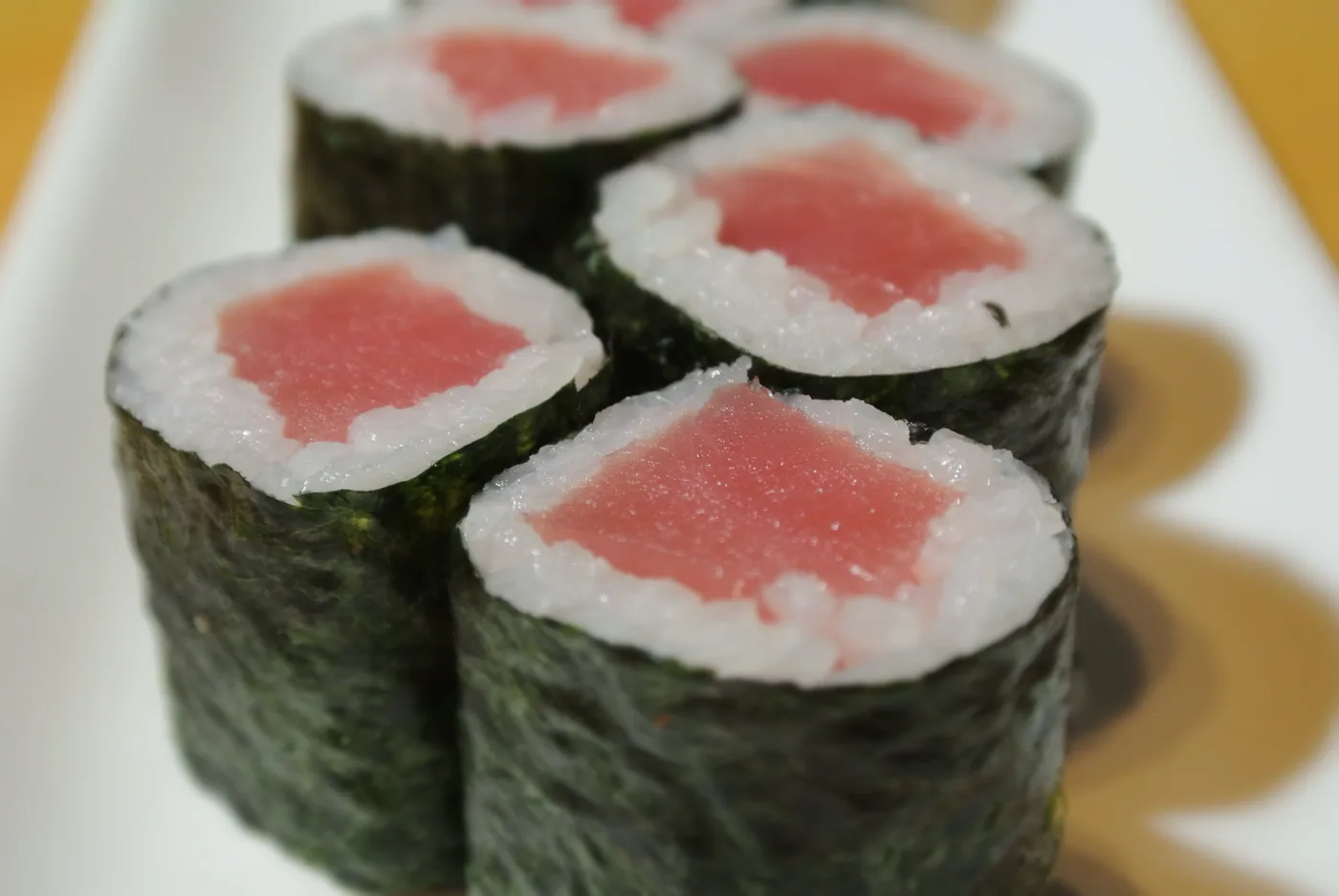
Basic rolls are consistent almost everywhere. A tuna roll is tuna and rice; a California roll is imitation crab and avocado. You can order either one anywhere in the country and get roughly the same thing.
Specialty rolls are the opposite. They are invented in-house, named for whatever the kitchen felt like, and there is no registry. A roll called Dragon at one restaurant might be eel and avocado; at another it might be shrimp tempura with nothing eel about it. The name carries no guarantee.
This is why regulars order by memory and everyone else orders by pointing. It does not have to be that way — the descriptions are far more consistent than the names, because a kitchen writing seventy of them falls into a handful of patterns.
The grammar of a roll description
Descriptions on a specialty list are not free prose. Across our own seventy-odd rolls they fall into three patterns, and two of them announce themselves with a keyword.
Pattern one: the word roll after w/. “Salmon w/ California roll” means a California roll is the base and salmon is laid over it. Whenever a named roll appears in the second half, that named roll is the body and everything before it is the topping.
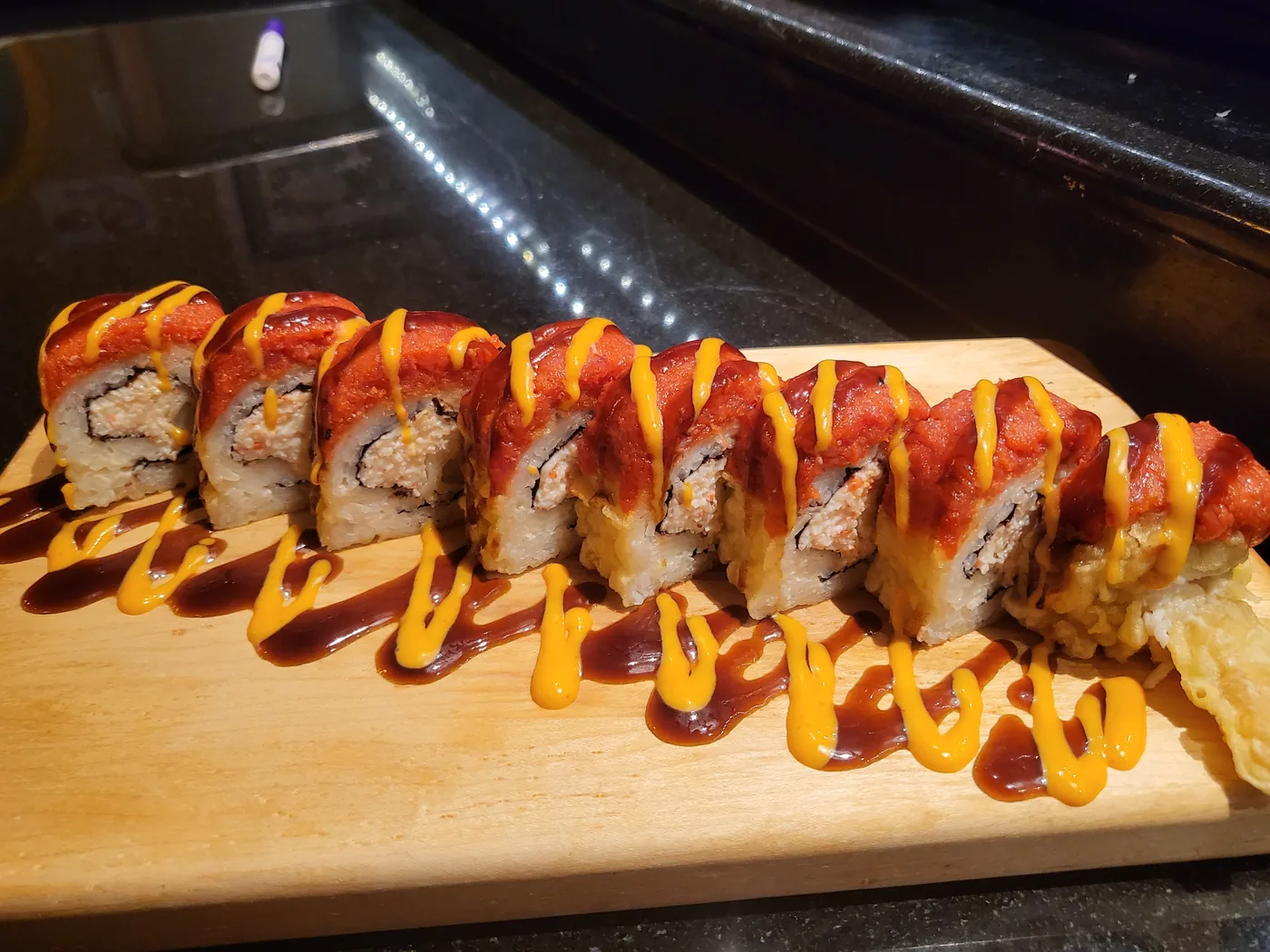
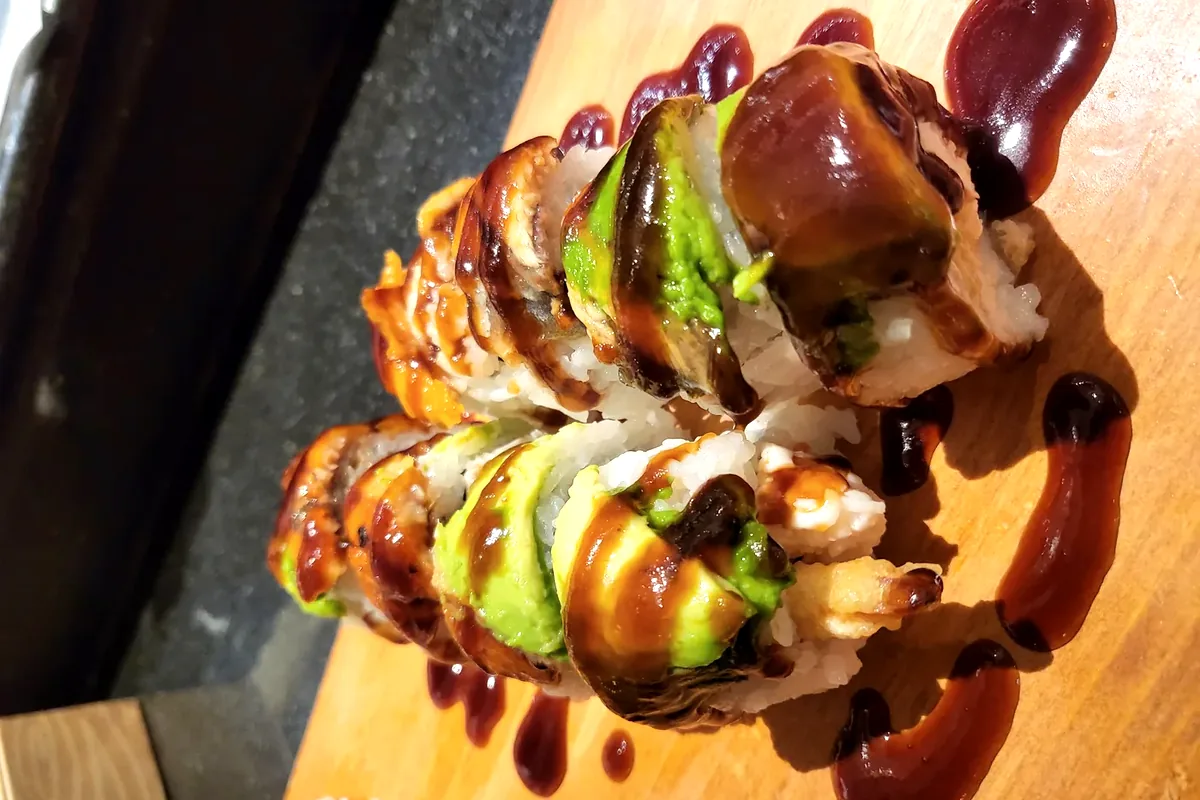
Pattern two: the words on top. “Shrimp tempura, crab with eel, avocado on top” puts shrimp tempura and crab inside, eel and avocado over them. Here the order runs the other way, and on top is what tells you so.
Pattern three: a flat list. “Crab, cream cheese, lightly fried” has no topping at all. Everything named is inside, and any technique word applies to the finished roll rather than to one ingredient.
Those two keywords — a named roll in the second half, or the phrase on top — resolve almost every description you will meet. Where neither appears, assume pattern three.
Eight words that carry real information
Everything else in a description is an ingredient. These eight words describe technique, and they are the ones that change what the roll is actually like to eat.
| Word | What it means | What you get |
|---|---|---|
| Tempura | Battered and fried, then rolled inside | Crisp centre, soft outside |
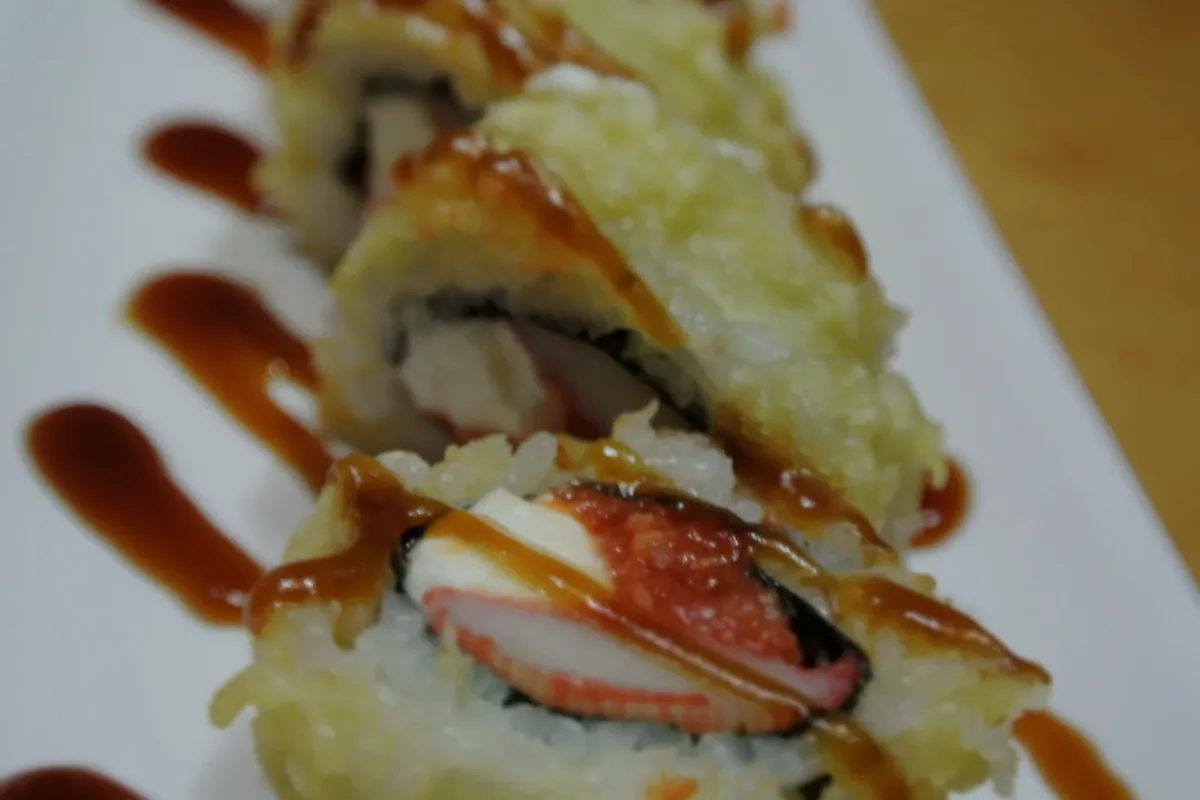
| Deep fried | The finished roll is battered and fried whole | Crisp all over, served warm |
| Golden | Used here to mean deep fried | Same as above |
| Lightly fried | A shorter, gentler fry | Warm and set, less crunch |
| Baked | Topped with seafood and sauce, finished under heat | Warm, rich, soft |
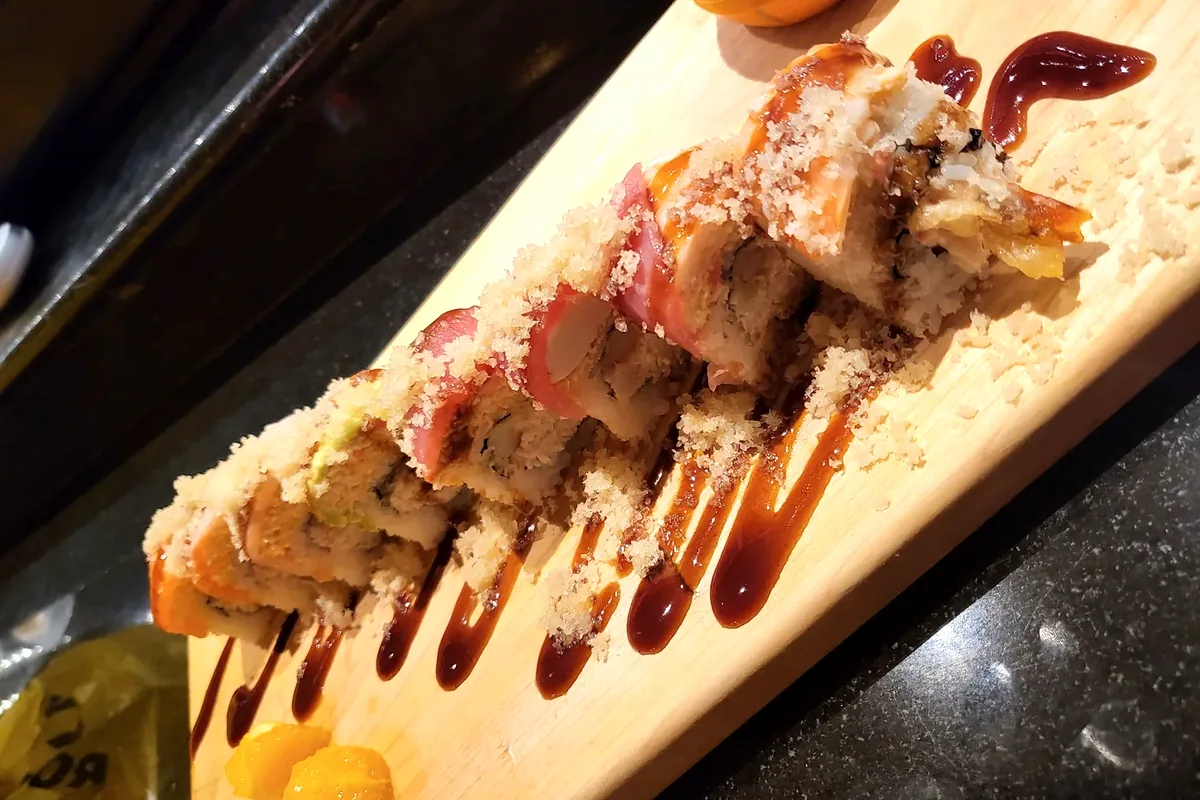
| Crunch | Fried tempura crumb scattered on top | Texture without frying the roll |
| Spicy | Mixed with a spicy mayonnaise | Mild heat and creaminess, not chilli heat |
| No rice | Wrapped in fish or cucumber instead of rice | Lighter, and more fish per piece |
Ordering tip
Spicy on a sushi menu almost never means hot. It means the filling has been dressed with a spicy mayonnaise, which reads as creamy first and warm second. If you want genuine heat, ask what can be added rather than ordering something with spicy in the name.
Cooked, raw, or both
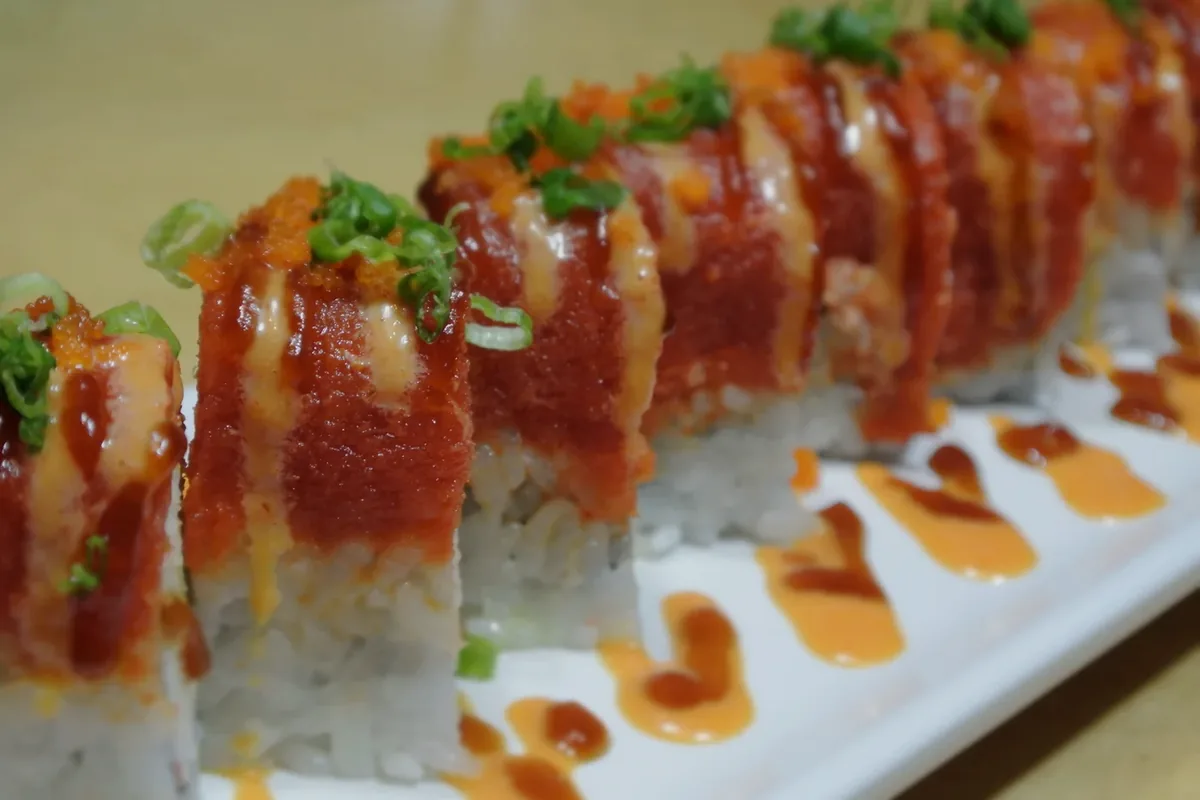
Splitting a description into inside and on top has a useful consequence: a roll can be cooked inside and raw on top. Hot Night is exactly that — shrimp tempura inside, raw spicy tuna over it. If you are avoiding raw fish, the inside being cooked is not enough.
Read both halves before deciding. We wrote a longer guide to ordering sushi when you do not eat raw fish, and the short version is that tempura, baked, fried, eel and crab are your signals in either half.
Why some rolls say “no rice”
A handful of rolls are wrapped in slices of fish or in cucumber rather than in rice and nori. They are usually cut into five pieces rather than eight, because each piece is denser and there is no rice bulking it out.
These eat more like sashimi than like a roll, and they are worth knowing about if you find standard rolls too rice-heavy. They are also the ones most likely to be entirely raw, since the wrapper itself is fish.
03 — Worked examplesSeven of our rolls, decoded
Here is the method applied to rolls people ask about by name. Inside first, then what is on top.
| Roll | Inside | On top |
|---|---|---|
| Hot Night | Shrimp tempura | Spicy tuna |
| Red Bull | Shrimp tempura, crab | Eel, avocado |
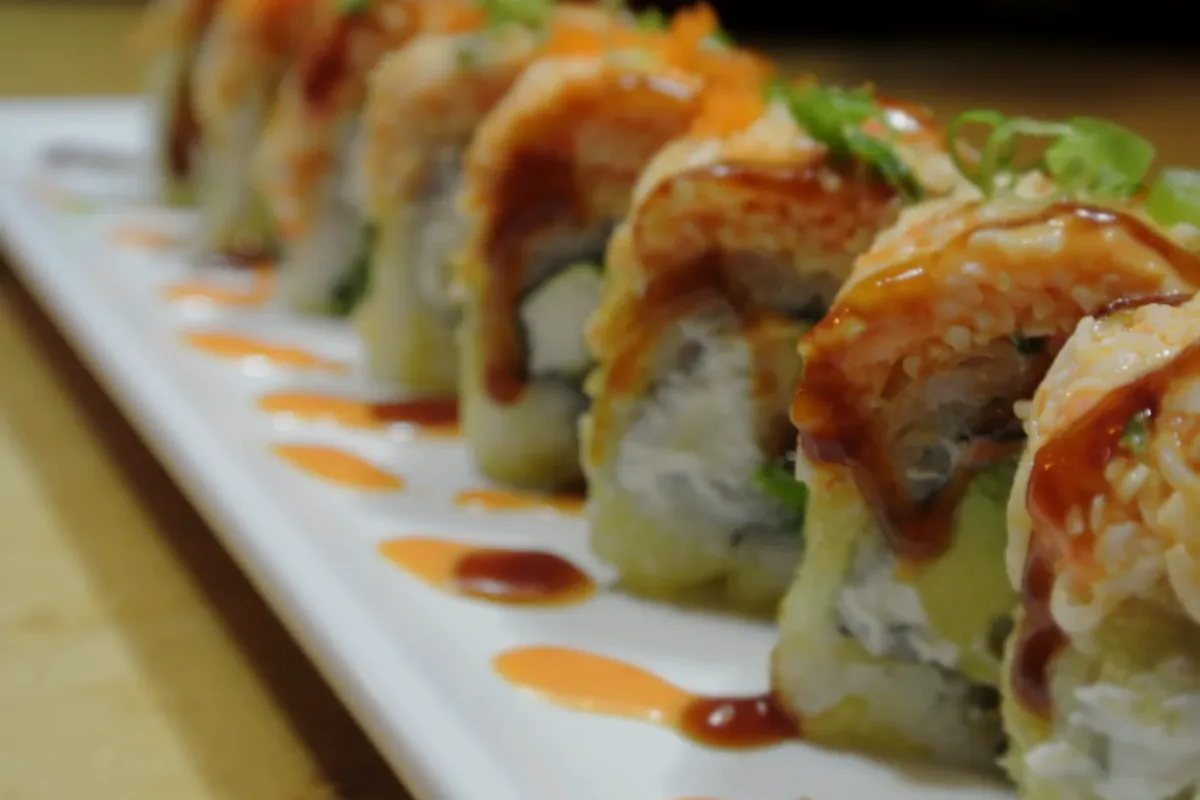
| Golden Tiger | Deep fried shrimp tempura, cream cheese | Spicy crab |
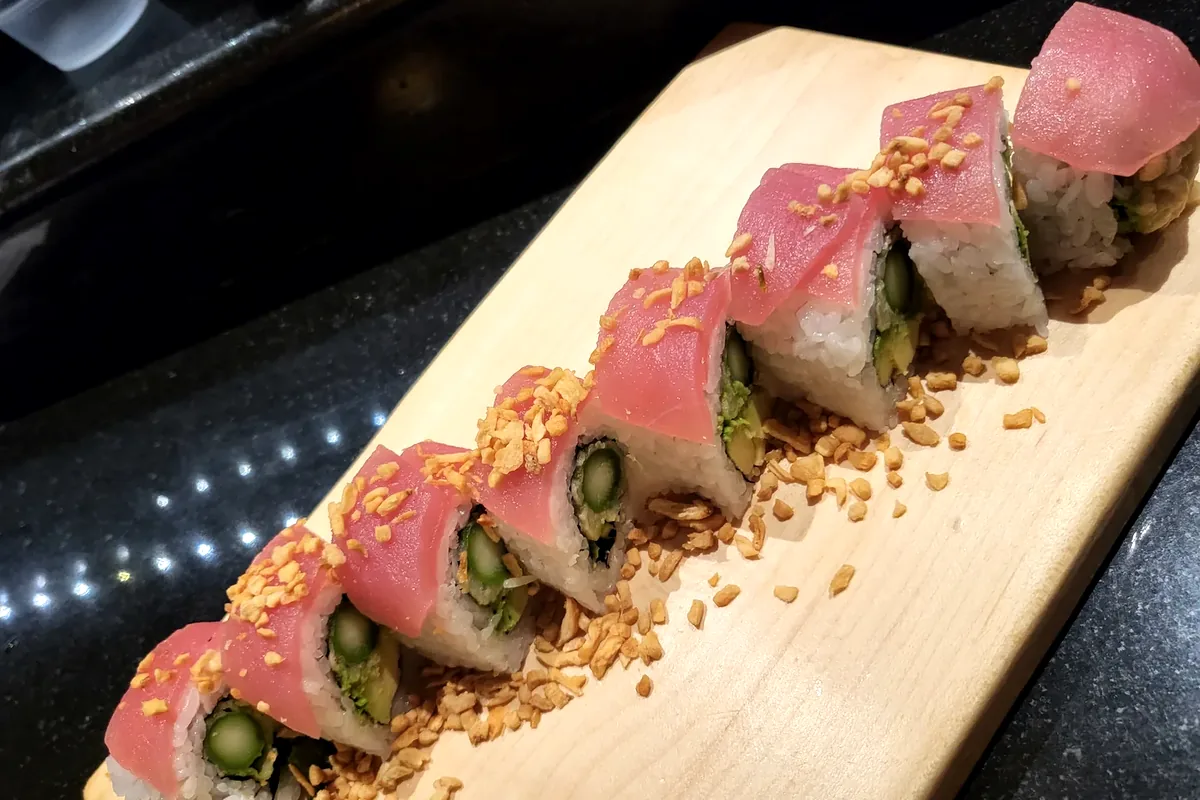
| Fisherman’s | Fried asparagus, avocado | Tuna, fried garlic |
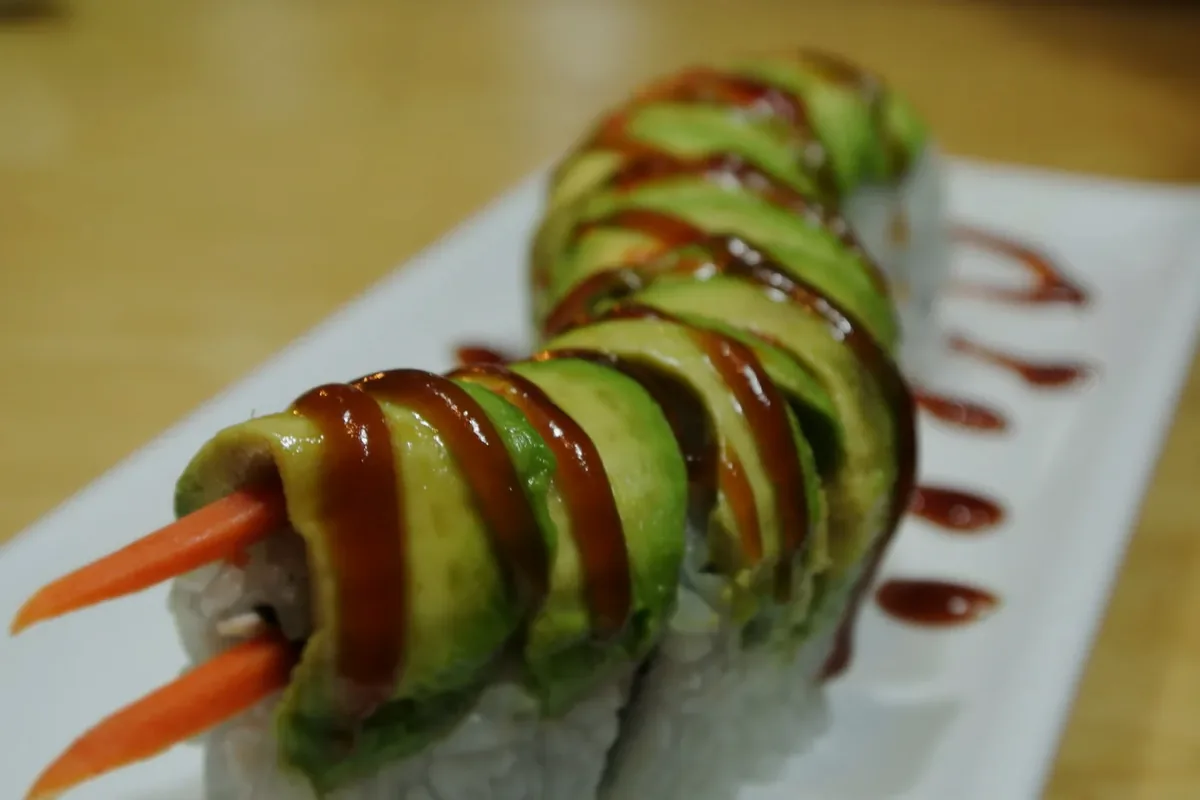
| Caterpillar | Eel, crabmeat | Avocado |
| Las Vegas | Spicy tuna, cream cheese, crab — deep fried | — |
| Crunch Rainbow | Shrimp, crab | Tuna, salmon, albacore, tilapia, shrimp, spicy crab |
Where the names come from
Some are descriptive if you squint. Caterpillar is named for the overlapping avocado slices laid along its back, which is the one case where the name is genuinely a picture of the roll. Rainbow is named for the row of different fish across the top.
Most are not. Fisherman’s, Red Bull, Hot Night and Las Vegas are just names, and no amount of staring at them will produce an ingredient list. That is the point of learning to read the line underneath.
How to order from a list you do not know
- Pick your texture first. Decide between crisp, baked or fresh, then scan for the word that matches.
- Read past the first half. The topping is often the strongest flavour on the plate.
- Count the pieces. Eight-piece rolls are standard; five-piece rolls are usually denser or made without rice.
- Order two you can compare. One cooked and one fresh tells you more about your own taste than two of the same kind.
- Ask about anything unclear. Letter codes and short descriptions leave gaps, and the sushi bar can fill them.
Frequently asked questions
Is the same roll name the same at every restaurant?
No, and this is the single most useful thing to know. Basic rolls are consistent; specialty rolls are invented in-house. Always read the description rather than assuming from a name you recognise.
What does “crunch” mean on a sushi menu?
Fried tempura crumb, scattered over the roll. It adds texture without the roll itself being fried, which is why you see it on top of rolls that are otherwise fresh.
Why are some rolls five pieces and some eight?
Eight is the standard cut. Rolls made without rice, or with a particularly dense filling, are usually cut into five larger pieces instead.
What are the letters after some roll names?
They are the kitchen’s own shorthand for how a roll is finished. Rather than guess, ask the sushi bar what a particular code means on the roll you are considering.
Can I ask for a roll without one ingredient?
Ask — some substitutions are straightforward and some are not, depending on how the roll is built. If you are avoiding an ingredient for an allergy rather than a preference, say so explicitly.
The short version
Ignore the name. Read the description as two halves — inside, then on top — and watch for the eight technique words. That is the whole skill, and it works on any specialty list anywhere.
Ours runs to more than seventy rolls. Have a look at the full menu, or start with how a baked roll differs from a fried one.