The short answer
Most green pastehorseradish, mustard and colouring
Real wasabia grated rhizome, rare and short-lived
This is not a scandal. Real wasabi is difficult to grow and loses its aroma within about fifteen minutes of grating, which makes it impractical almost everywhere.
The green paste beside your sushi is one of the most misunderstood things on the table — what it is, how much to use, and what it is actually for.
01 — What it isA plant that does not travel
Wasabi is a plant — Wasabia japonica — and the part used is the rhizome, a thick stem that grows partly above the soil. It is grated into a paste on a fine grater, traditionally one surfaced with sharkskin, which produces a texture closer to a purée than to anything shredded.
Growing it is genuinely difficult. It wants cool running water, shade and a narrow temperature range, it takes a year or more to reach size, and it is prone to disease when crowded. There is not much of it, and it is expensive.
The bigger problem is time. The compounds responsible for wasabi’s heat and aroma are volatile and form only when the cells are broken. They peak within a few minutes of grating and are largely gone within fifteen. Real wasabi cannot be prepared in advance, cannot sit in a squeeze tube, and cannot be shipped as a paste.
So what is in the tube
The standard substitute is horseradish, which is a relative of wasabi and carries a similar kind of heat, usually with mustard and a green colouring. Some products contain a small amount of real wasabi alongside; many contain none.
It works because the heat behaves the same way. Both plants produce their pungency from the same family of compounds, and both hit the nose rather than the tongue.
What is missing is the rest of it. Real wasabi is sweeter, greener and more aromatic, and the heat arrives and clears faster. The substitute is blunter and lingers. If you have only had the tube version, you have had the heat without the flavour it was standing in for.
Why it goes up your nose
Chilli heat comes from capsaicin, which is oil-soluble, binds to receptors on the tongue and stays there. Water spreads it around; time is the only cure.
Wasabi heat comes from volatile compounds that evaporate. They travel up the back of the throat into the nasal passages as vapour, which is why the sensation is in your sinuses rather than your mouth, and why it clears in seconds instead of minutes.
Practical consequence: breathe out through your nose rather than in. Inhaling drives the vapour further up. Exhaling clears it, and the whole thing is over almost immediately.
Good to know
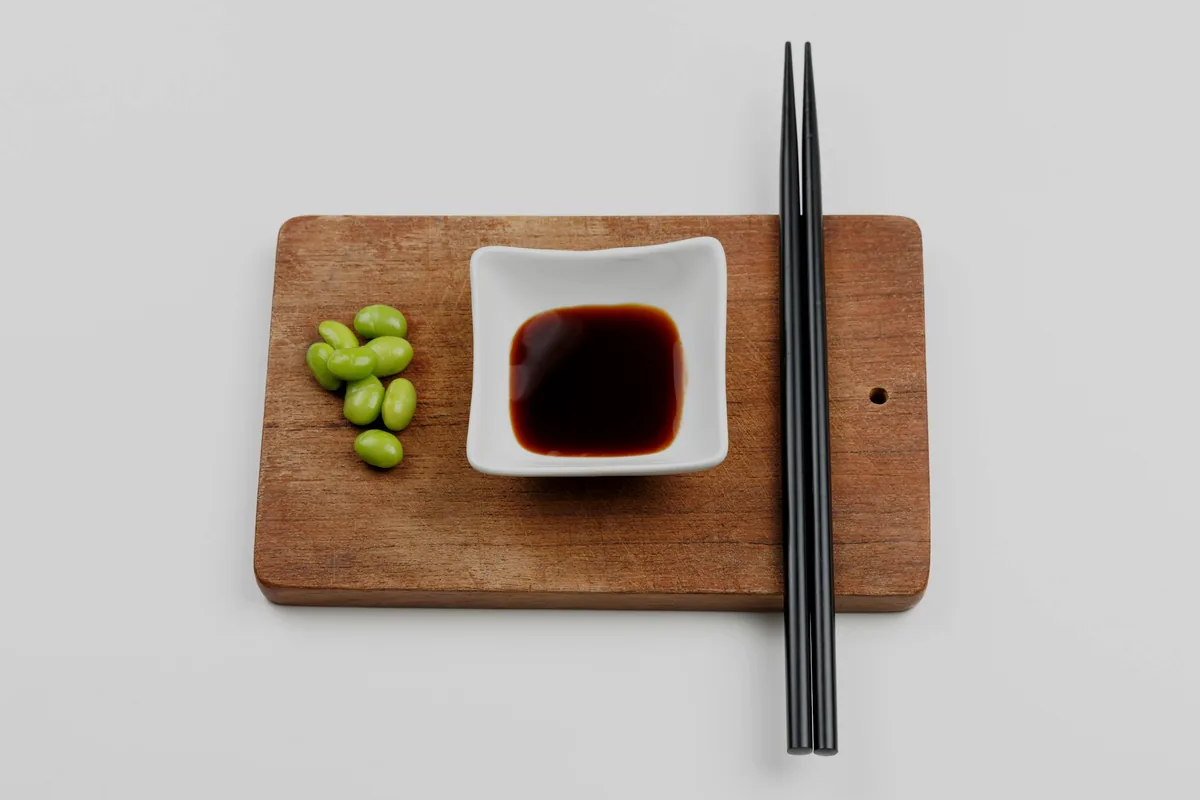
Do not stir wasabi into your soy sauce. It is the most common thing people do with it and it wastes most of what it is for — the aroma compounds disperse in the liquid within a minute, leaving a muddy dish and a piece of fish that tastes only of soy. Put a small amount directly on the fish instead.
It is already in your nigiri
Traditionally the chef puts a small dab of wasabi between the fish and the rice when forming a piece of nigiri. The amount is judged for that particular fish — more for something rich or strongly flavoured, less for something delicate.
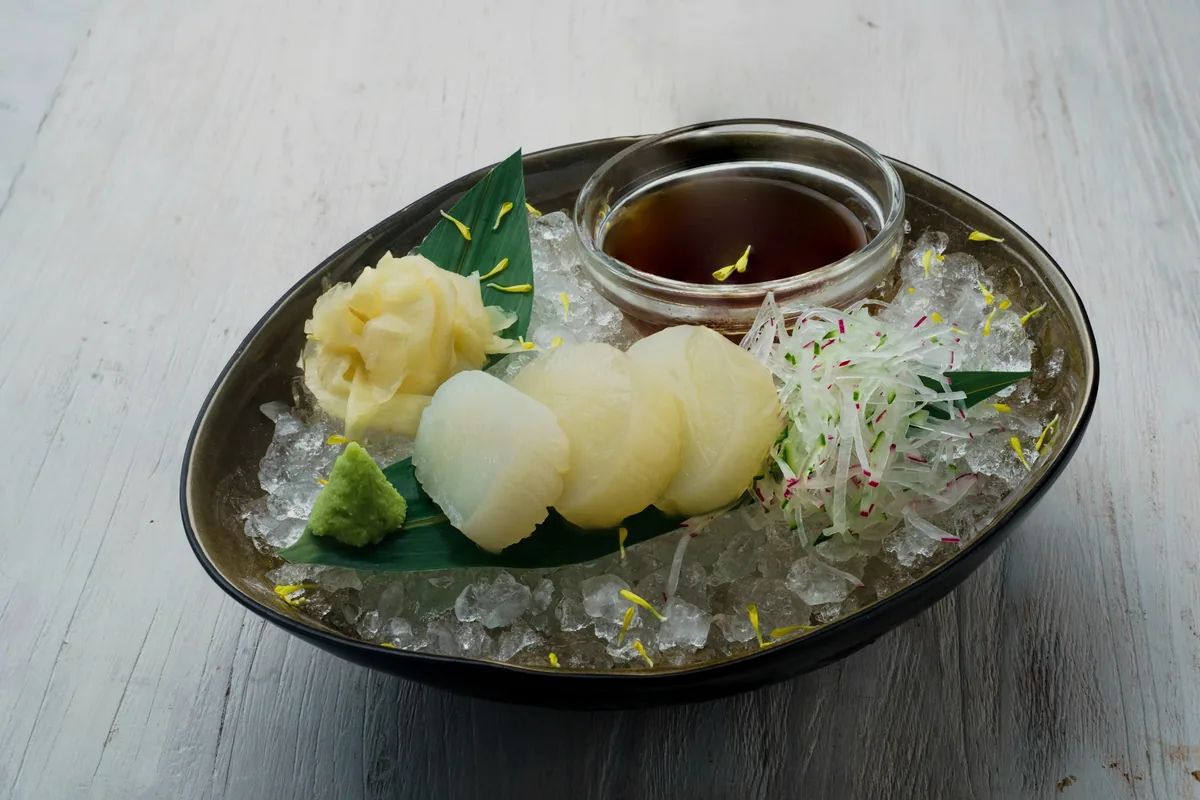
That is why a mound of it also arrives on the plate: it is there for the rolls, the sashimi and for anyone who wants more, not because the nigiri was sent out unseasoned.
If you dislike it, say so when you order and it can be left out. That is an ordinary request and a much better outcome than scraping it off at the table.
03 — Using itWasabi, ginger and soy, and what each is for
| What it is | What it is for | Common mistake | |
|---|---|---|---|
| Wasabi | Grated rhizome, or horseradish paste | A sharp accent on the fish | Stirring it into soy sauce |
| Pickled ginger | Thinly sliced ginger in vinegar | Clearing the palate between fish | Eating it on top of the sushi |
| Soy sauce | Fermented soybean and wheat | Salt, on the fish side | Soaking the rice in it |
All three exist to make the fish read more clearly, which is the same job from three directions — sharpness, a reset, and salt. There is more on the rest of what arrives on the table in the sauces explained.
How much to use
- Start with almost none. A smear the size of a grain of rice on a piece is a normal amount.
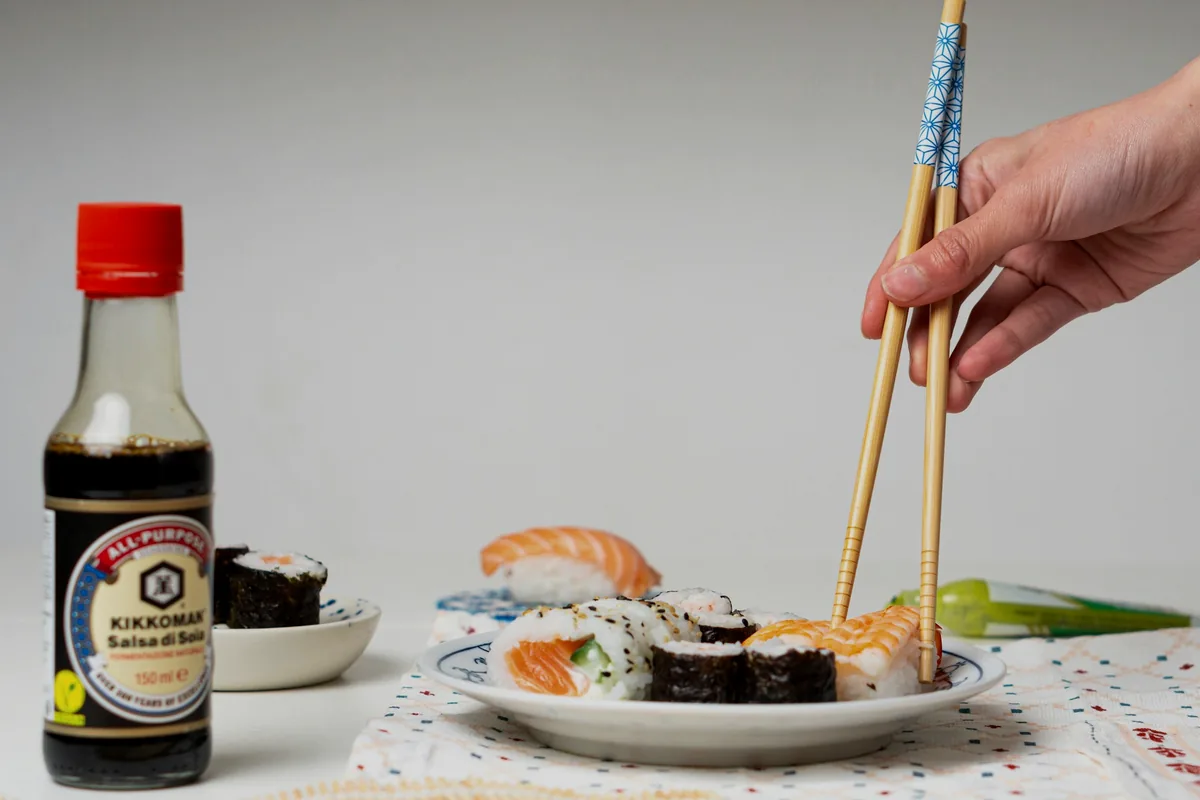
- Put it on the fish. Not in the soy, not under the rice.
- More for oily fish, less for lean. It cuts richness, so salmon and yellowtail take more than tuna.
- Skip it on anything already sauced. A specialty roll with eel sauce and spicy mayo does not need a third strong flavour.
- Breathe out, not in. If you overdo it, exhaling through the nose ends it in seconds.
Frequently asked questions
Is restaurant wasabi real wasabi?
Usually not. Most is horseradish with mustard and colouring. That is a practical consequence of how hard real wasabi is to grow and how fast it loses its aroma, rather than a deception.
Why does wasabi burn my nose and not my tongue?
Its pungent compounds are volatile, so they travel as vapour into the nasal passages. Chilli heat is oil-soluble and stays on the tongue, which is why it lasts much longer.
Should I mix wasabi into soy sauce?
No. It disperses within a minute and you lose most of the aroma. Put a small amount on the fish instead.
Can I ask for sushi without wasabi?
Yes, and it is a completely normal request. Say so when you order rather than after, since it goes in as the piece is made.
Is wasabi the same as horseradish?
They are related plants in the same family, which is why horseradish substitutes so convincingly. They are not the same species and real wasabi is sweeter and more aromatic.
The short version
The green paste is usually horseradish, for good practical reasons. The heat is volatile rather than oily, which is why it goes up rather than down and clears in seconds. Use very little, put it on the fish, and never stir it into the soy.
It matters most on the plainest things on the menu — and the rest of the table is covered in ordering across a Japanese menu.