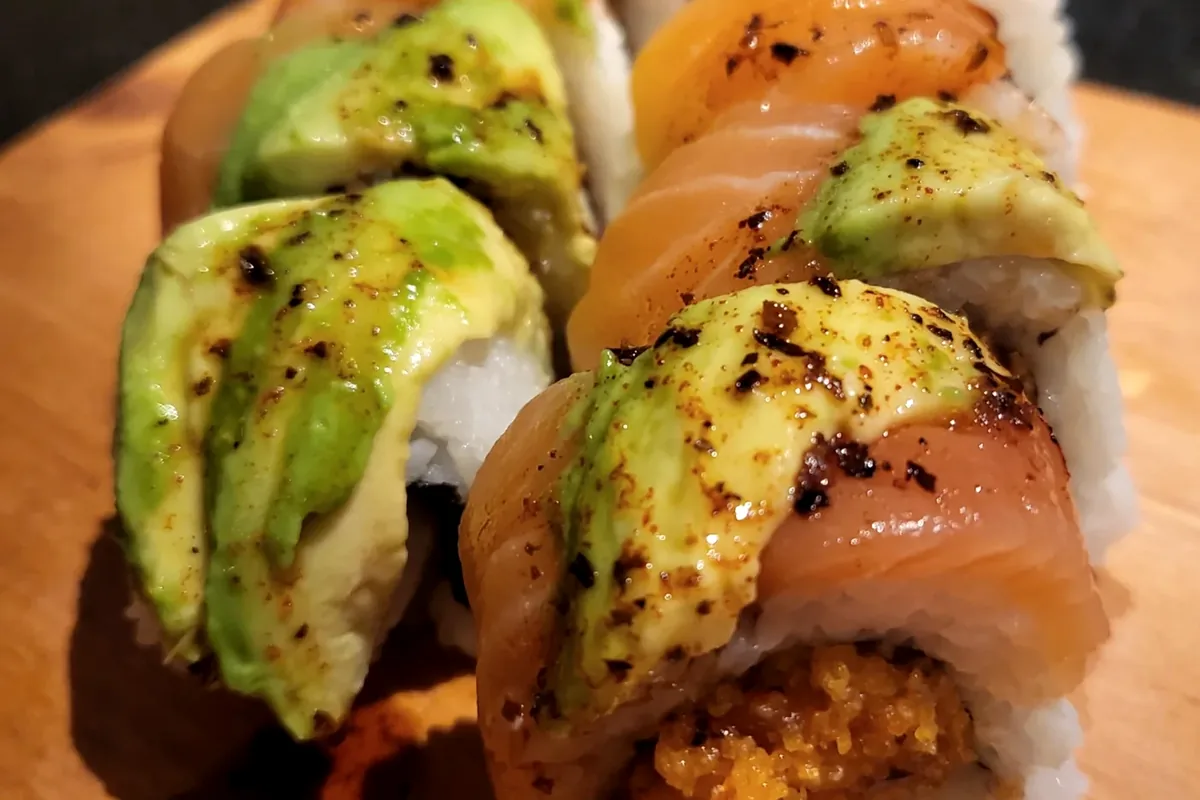
The short answer
Dark and sweeteel sauce
Orange and creamyspicy mayo
Thin and citrusponzu
Those three account for nearly every drizzle you will see on a specialty roll. Soy sauce is the fourth, and it is the one most people use wrong.
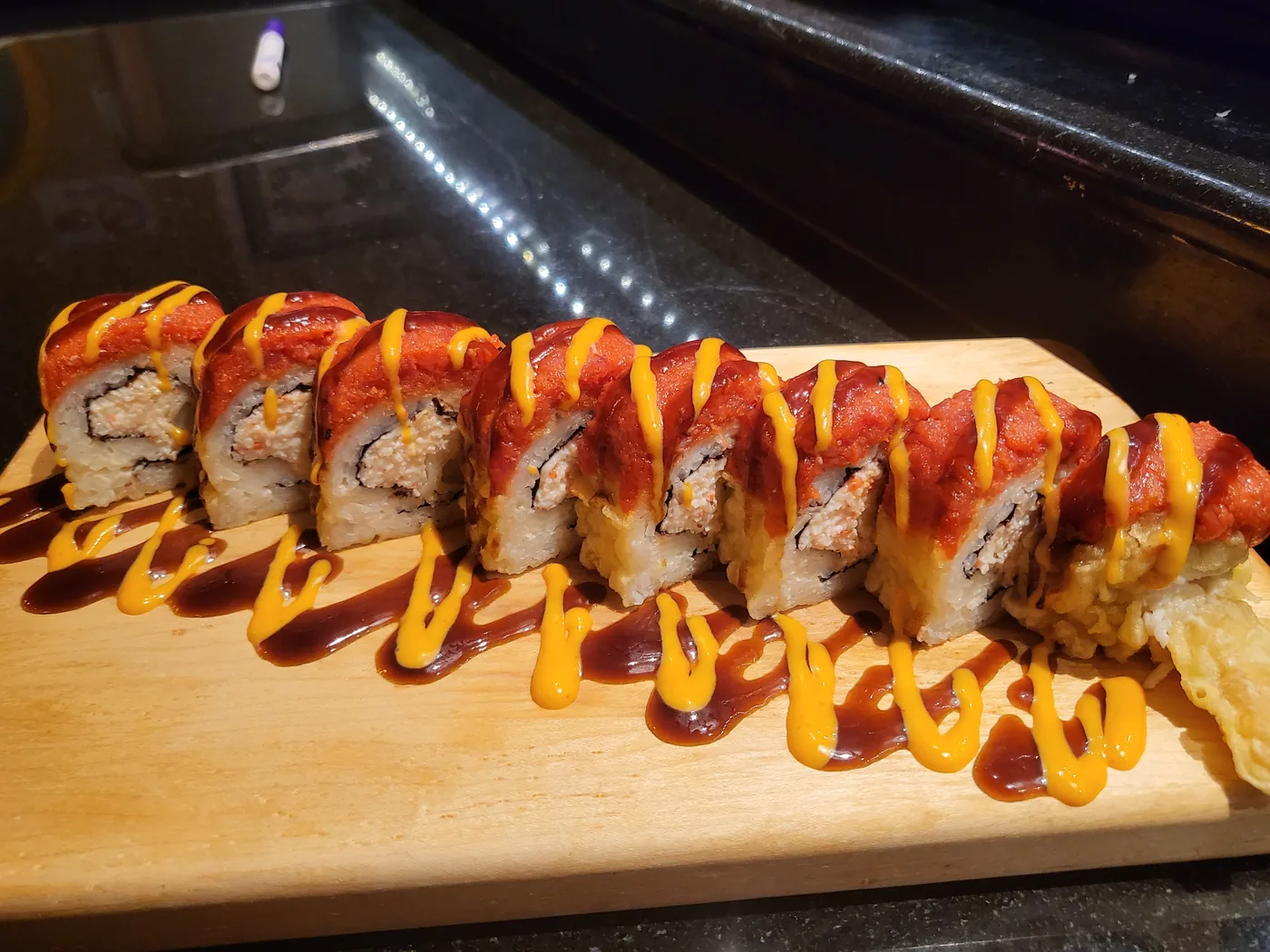
Look down a plated specialty roll and you will usually see two sauces on it before you have taken a bite. They are not decoration, they are not interchangeable, and each one is there to do a particular thing to the roll underneath.
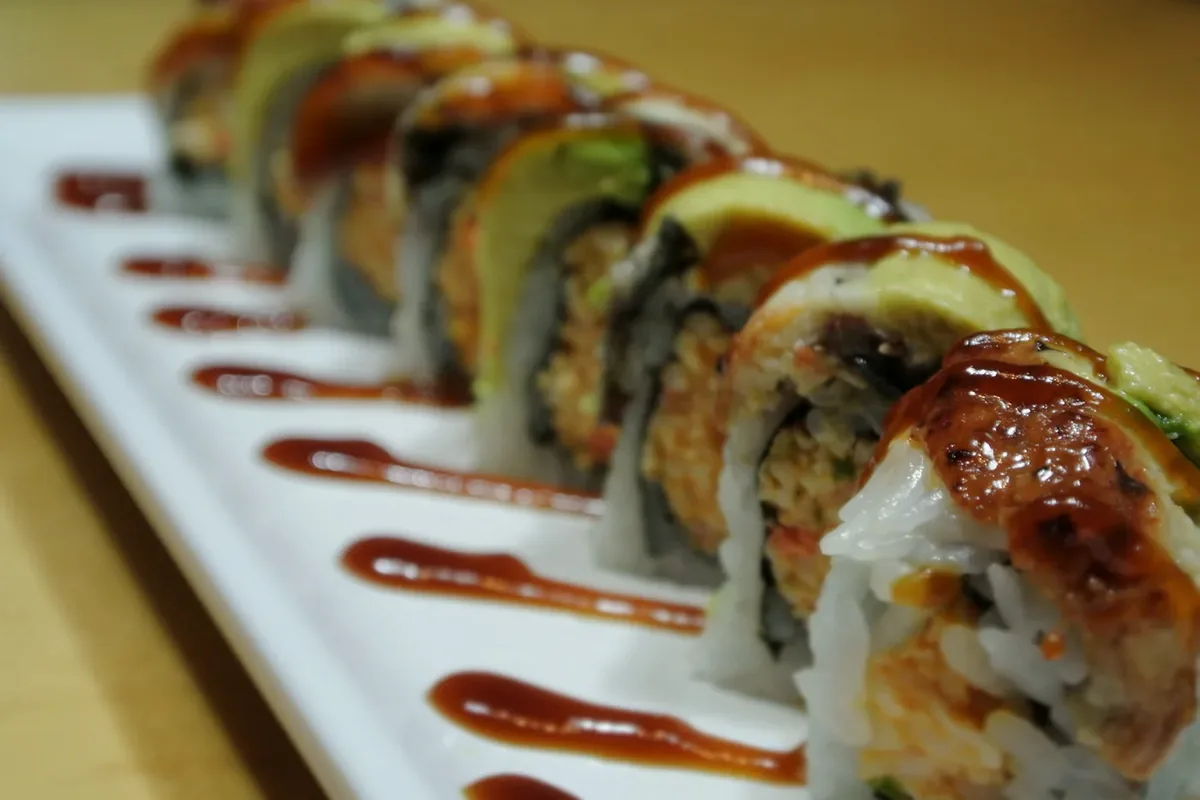
01 — The four on the tableEel sauce
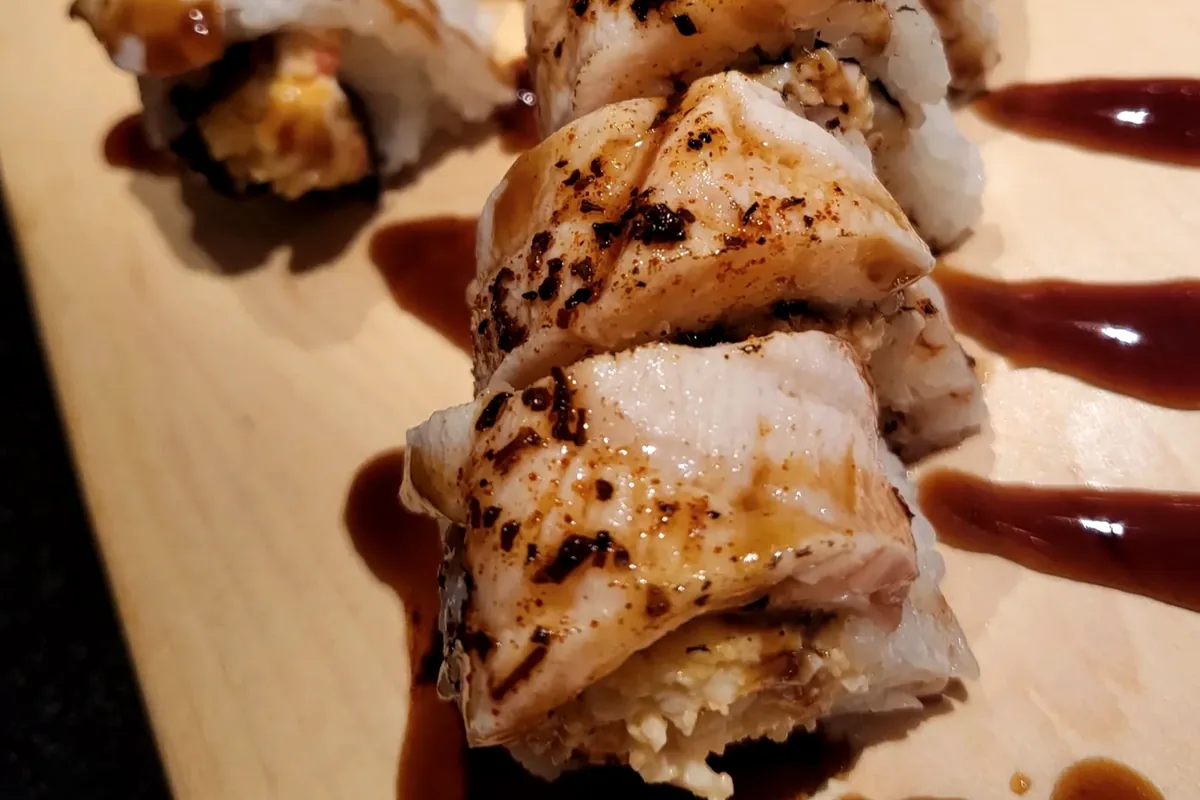
Thick, glossy, dark brown and sweet. Despite the name it contains no eel — it is called that because it is the glaze brushed onto grilled eel, and the name stuck to the sauce rather than the fish. It is built from soy sauce and mirin reduced with sugar until it coats a spoon.
Its job is sweetness against salt and richness against lean. It goes over eel, over baked rolls, and over anything fried, and it is the single most common drizzle on an American-style sushi menu.
It is also the sauce most likely to be overdone. A roll with eel sauce corner to corner tastes mostly of eel sauce, which is a shame when there is a good fish underneath.
Spicy mayonnaise
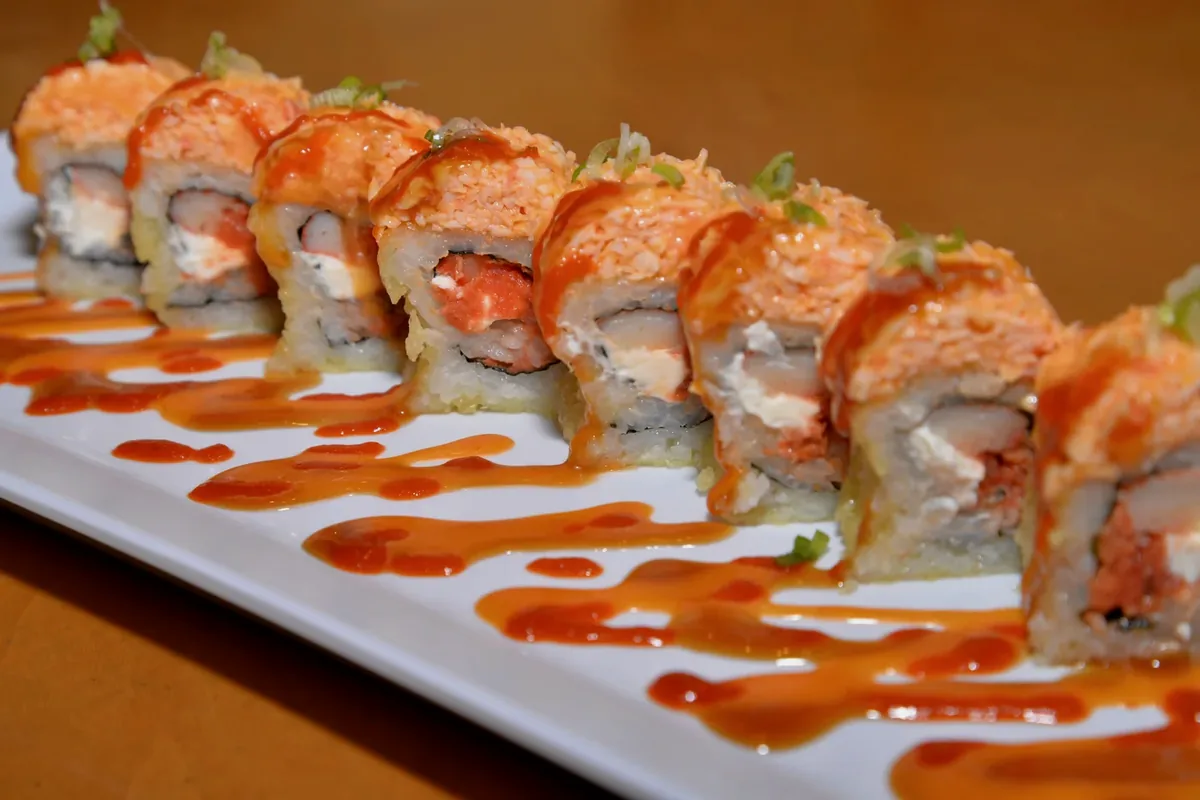
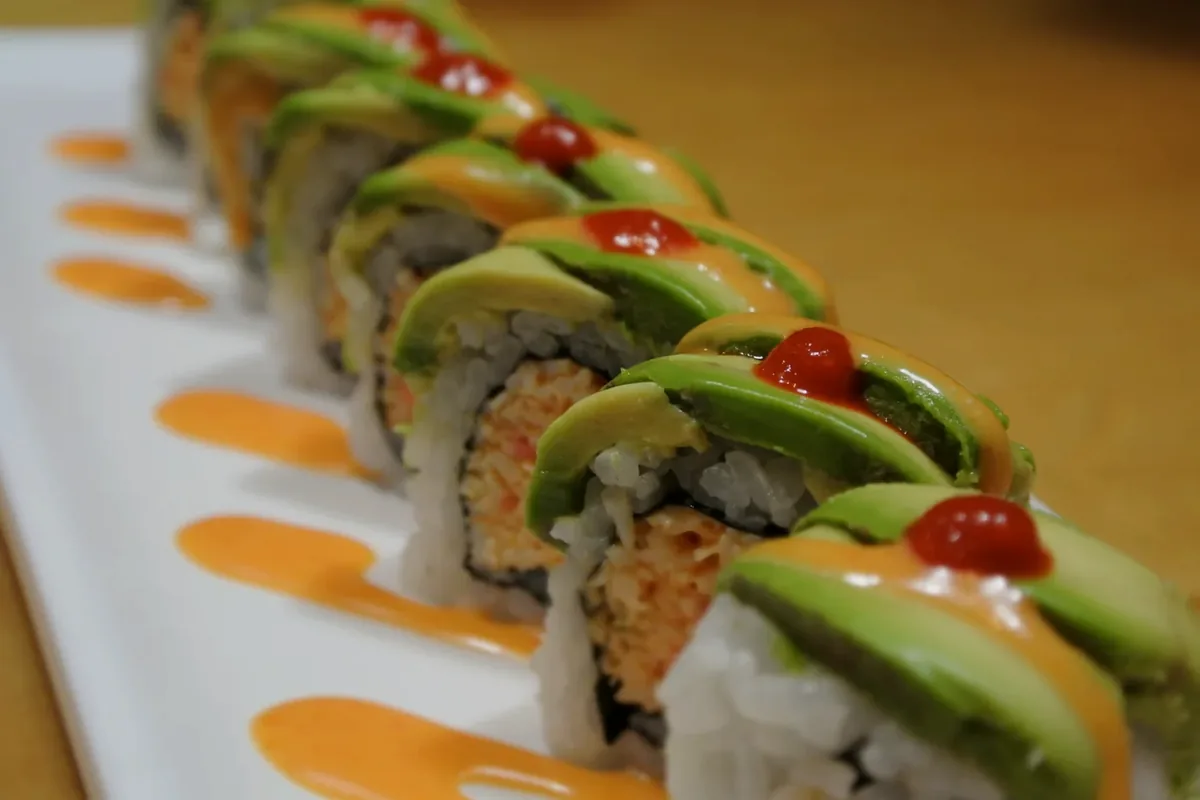
Japanese mayonnaise loosened with chilli sauce. It is the orange one, and it reads as creamy long before it reads as hot — the heat is a background note rather than the point.
It does two jobs. Drizzled on top it adds richness to lean fish. Mixed through chopped fish it becomes the filling itself, which is what spicy tuna, spicy crab and spicy scallop all mean on a menu.
This is worth knowing when you are reading a description: spicy tells you a mayonnaise is involved, not that the dish will be hot. If you want actual heat, ask for hot sauce on the side.
Ponzu
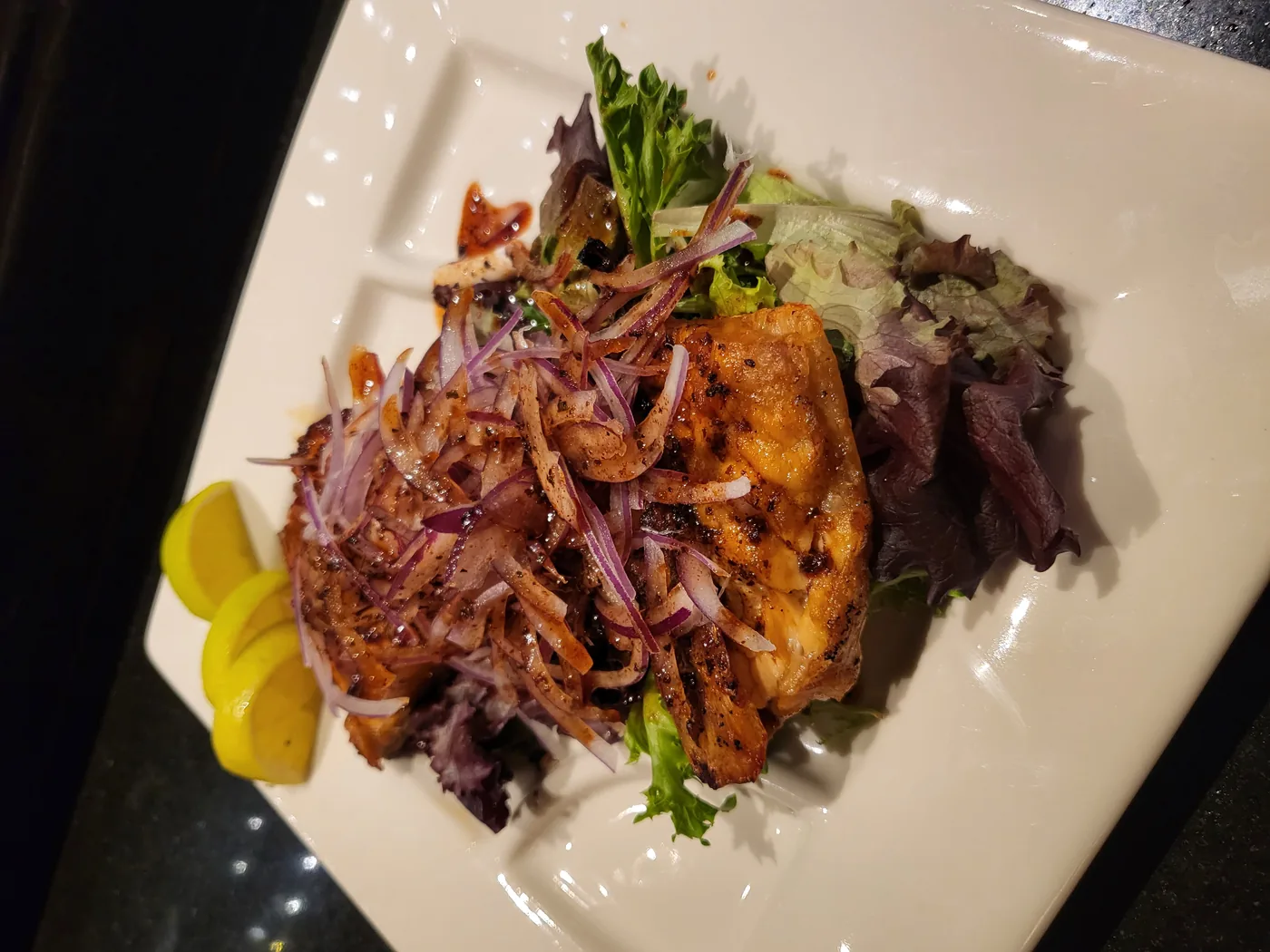
The odd one out: thin, sharp and citrus-led, made from soy sauce with citrus juice and dashi. Where the other two add weight, ponzu takes it away.
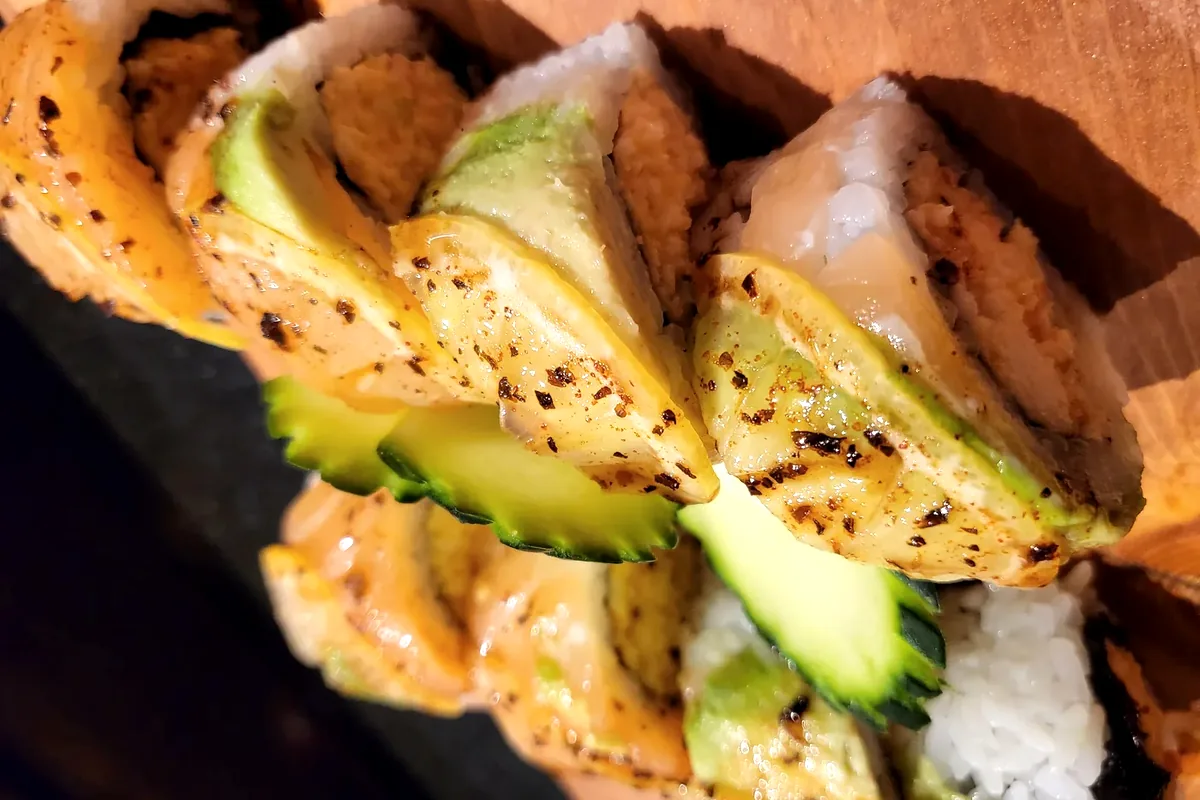
It belongs with fatty and seared things — albacore, yellowtail, anything with a torch near it — because acidity is what cuts fat. If a roll arrives with a pale, watery-looking dressing rather than a thick drizzle, that is ponzu.
It is also the most useful sauce to ask for if you find a menu too sweet overall.
Hot sauce
The one that actually delivers heat, and the only one on the list that does. It is served alongside rather than applied in the kitchen, so it is entirely under your control.
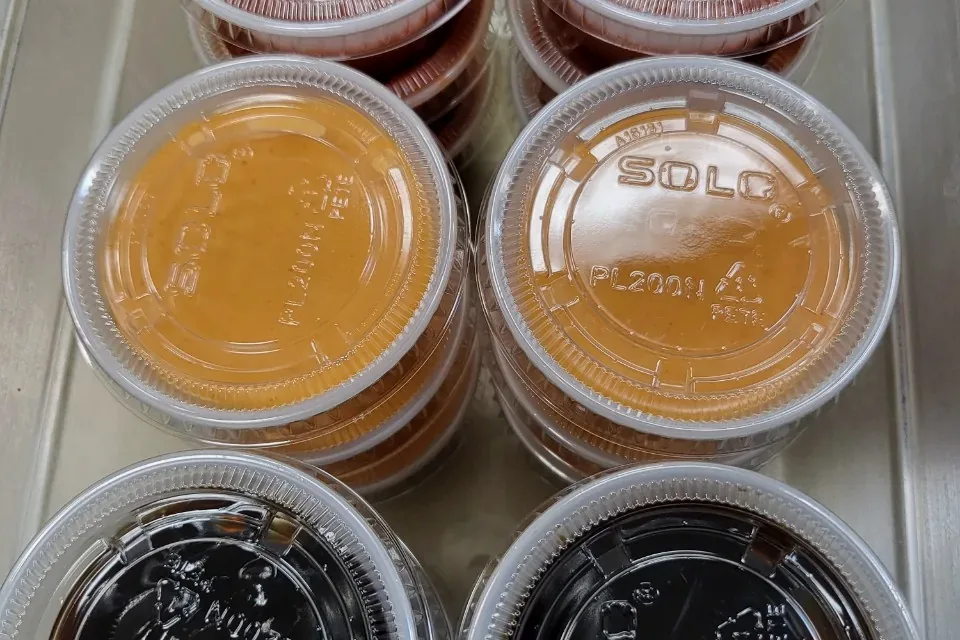
All four are available as extra sauces on the side, which is the sensible way to handle any of them if you have a preference.
Which sauce, and what it does
| Sauce | Looks like | Tastes | Goes with |
|---|---|---|---|
| Eel sauce | Thick, dark, glossy | Sweet and savoury | Eel, baked rolls, anything fried |
| Spicy mayo | Orange, creamy | Rich, mildly warm | Lean fish, chopped fillings |
| Ponzu | Thin, pale brown | Sharp, citrus | Fatty fish, seared items |
| Hot sauce | Red, thin | Genuinely hot | Whatever you want it on |
| Soy sauce | Thin, near black | Salty, deep | Nigiri and sashimi |
| Tonkatsu sauce | Thick, brown | Tangy, fruity | Breaded cutlets |
| Teriyaki glaze | Dark, shiny | Sweet, soy-led | Grilled meat and fish |
Soy sauce, and the mistake everyone makes
Soy sauce is for the fish, not for the rice. Dipping a piece of nigiri rice-first means the rice acts as a sponge, the piece falls apart, and you taste soy sauce instead of the thing you ordered.
Turn the piece over and touch the fish to the sauce instead. It takes one attempt to get used to and it changes how the fish tastes.
The other half of the mistake is mixing wasabi into the soy dish to make a slurry. Wasabi is meant to go on the fish in small amounts; stirred into soy it loses most of its aroma within a minute. There is more on this in our guide to ordering across a Japanese menu.
Ordering tip
A roll that arrives already sauced does not need soy sauce as well. The kitchen has balanced it. Adding soy to a roll finished with eel sauce and spicy mayo gives you three sauces competing, and the fish disappears underneath them.
Wasabi, ginger and what they are for
Wasabi is a heat that goes up rather than down — it hits the nose and clears in seconds, unlike chilli, which sits on the tongue. A small amount on the fish is the intended dose.
Pickled ginger is not a topping. It is a palate cleanser, eaten between different fish so that the last one does not colour the next. Putting it on top of a piece of sushi is the most common misuse of anything on the table.
Both are there to let the fish read clearly, which is the same job every sauce on this page is doing from a different direction.
Beyond the sushi bar
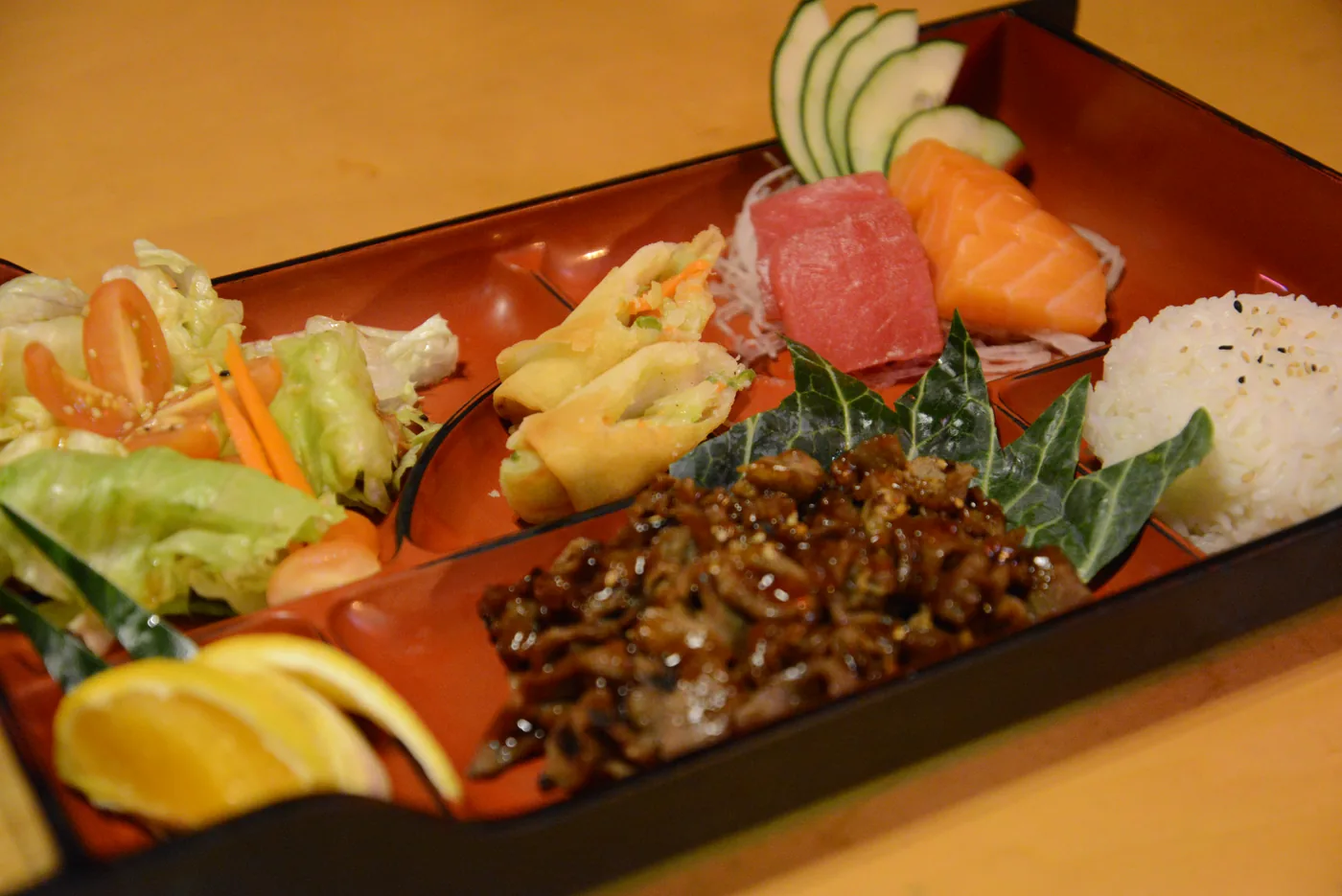
The hot kitchen runs its own set. Teriyaki glaze is soy, mirin and sugar reduced until it clings — sweeter and thinner than eel sauce, and applied during grilling rather than after. Tonkatsu sauce is thick, fruity and tangy, closer to a Worcestershire-based brown sauce, and it is served beside breaded cutlets rather than on them.
Those two are frequently confused with each other, and the difference decides which dish you are ordering — we set it out in katsu versus teriyaki.
The stir-fried noodles use a Worcestershire-based sauce again, and the house salad comes with a mango dressing rather than the ginger one most people expect.
Frequently asked questions
Does eel sauce contain eel?
No. It is named for the dish it is used on, not for what is in it. It is a reduction of soy sauce, mirin and sugar. If you need to confirm ingredients for an allergy, ask the restaurant.
Is spicy mayo actually spicy?
Mildly. It reads as creamy first. Anything described as spicy on a sushi menu almost always means this mayonnaise rather than real heat.
Should I put soy sauce on a specialty roll?
Usually not. Specialty rolls arrive sauced and balanced. Save the soy for nigiri and sashimi, which arrive plain.
What is the sauce on takoyaki?
Okonomiyaki sauce — thick, dark and sweet-savoury, in the same family as tonkatsu sauce, usually with mayonnaise over it.
Do these sauces contain gluten or soy?
Soy sauce is a base for most of them and typically contains wheat. If you need to avoid either, ask the restaurant about the specific sauce rather than assuming from its name.
The short version
Dark and thick is sweet. Orange and creamy is rich. Thin and pale is sharp. Red is the only one that is genuinely hot, and soy sauce belongs on the fish rather than the rice.
All four can be ordered on the side — have a look at the menu, or at how to read a roll description before you decide.