The short answer
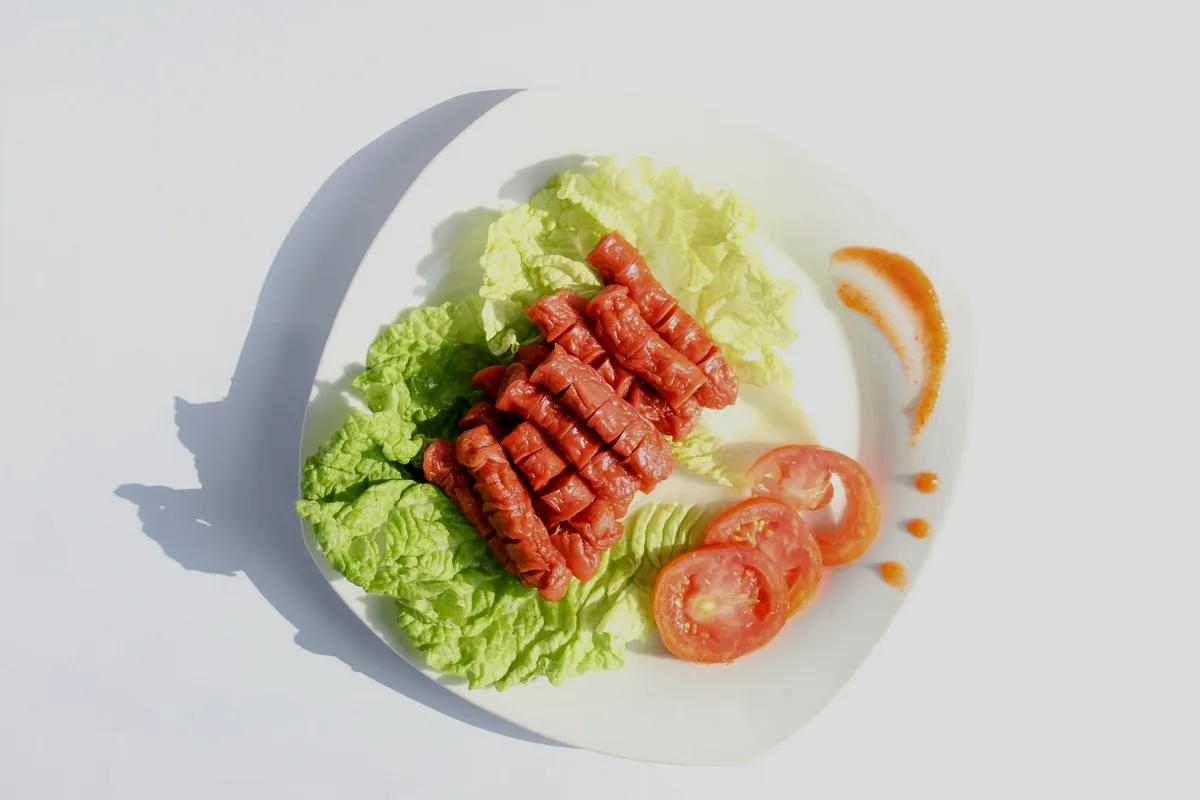
Kanikamacooked white fish, shaped and coloured
Notcrab, and not vegetarian
It is a real fish product with a long history, invented in Japan, and it is in more rolls than any other single ingredient after rice.
The California roll is built on it, dozens of specialty rolls are built on the California roll, and almost nobody knows what it actually is. Here is the answer, including the parts that matter if you are avoiding something.
01 — What it isSurimi, which is older than it sounds
Imitation crab is made from surimi: white fish, usually Alaska pollock, minced and then washed repeatedly in water until almost everything except the protein has been rinsed away. What is left is a pale, odourless, extremely bland paste.
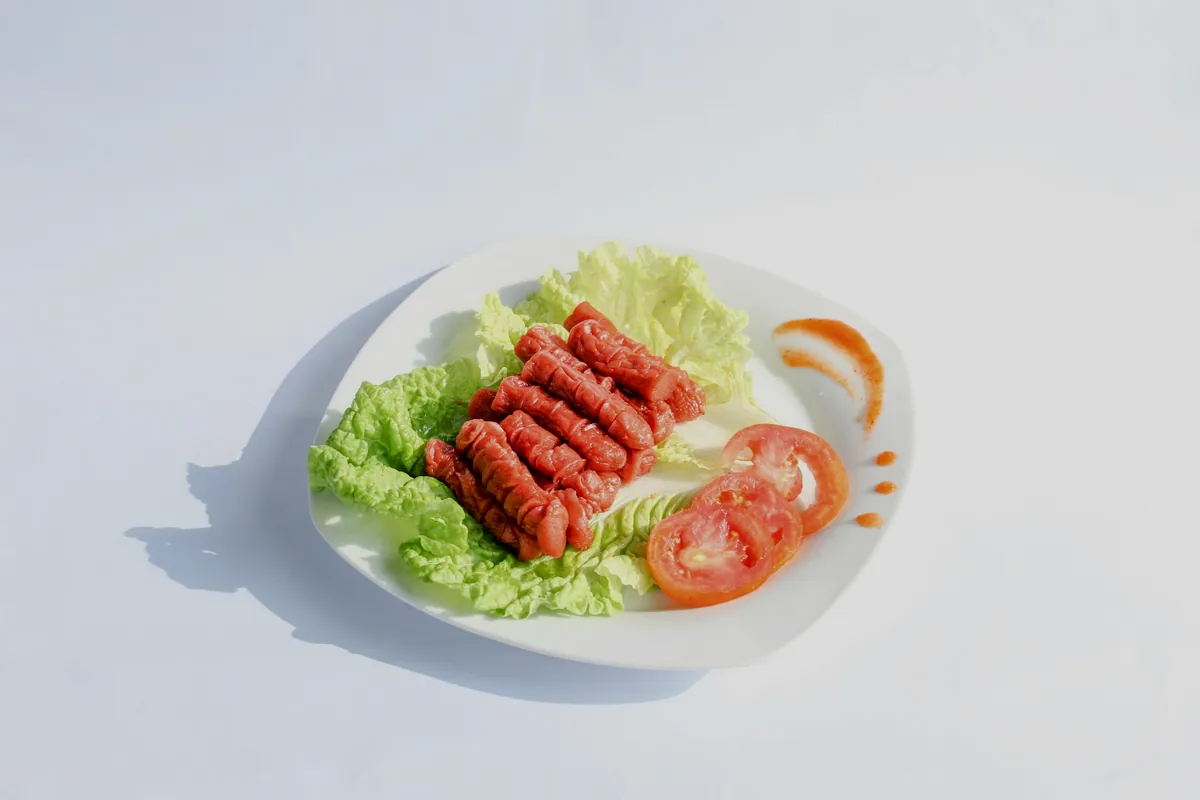
That paste is mixed with starch, salt, sugar, egg white and flavouring, worked until it becomes elastic, formed into sheets, cooked, rolled into sticks and painted with a red-orange stripe down one side.
Surimi itself is not a modern invention. Fish paste products have been made in Japan for centuries — kamaboko, the pink-and-white fish cake in a bowl of udon, is the same family. Crab-flavoured sticks were developed in the 1970s and spread worldwide from there.
Why it exists
Not primarily to deceive anybody. Surimi was a way of turning abundant, cheap, mild white fish into something with texture and shelf life, and the crab-flavoured version was a way of making it appealing.
It has real advantages in a sushi kitchen. It is already cooked, so it involves none of the handling that raw fish does. It is consistent, which matters when a roll has to be identical a hundred times a week. It is mild, so it can sit under a strong topping without fighting it. And it holds together when a roll is cut, which real crabmeat does not.
Those are the reasons it became the base of the California roll rather than an occasional substitution — and, through that roll, the base of most of a specialty list.
The three things people get wrong
It is not vegetarian. This is the most consequential misunderstanding. It is a fish product — the whole thing is made of fish — and the name does nothing to signal that. Anyone avoiding fish should treat it as fish.
It is not crustacean, but it may not be crustacean-free. The base is fish rather than crab, so it is not shellfish in the usual sense. However, some products include crab extract for flavour. If you have a shellfish allergy, this is a question for the restaurant about the specific product, not something to infer.
It is not free of wheat or egg. Starch binders commonly include wheat, and egg white is a standard ingredient. That puts two more allergens into a great many rolls without any mention on a menu — the wider map is in allergens on a Japanese menu.
Please ask rather than assume
Formulations differ between manufacturers, and the same restaurant may change supplier. Everything above describes what these products typically contain. If you are avoiding fish, shellfish, wheat or egg, ask about the actual product in use rather than relying on a general description.
Where it turns up, and under what name
Menus use several words for the same thing, which does not help.
| On a menu it says | It usually means |
|---|---|
| Crab | Imitation crab, unless the menu says otherwise |
| Crabmeat | The same |
| Kanikama | The same, using the Japanese word |
| Spicy crab | Imitation crab chopped and mixed with spicy mayonnaise |
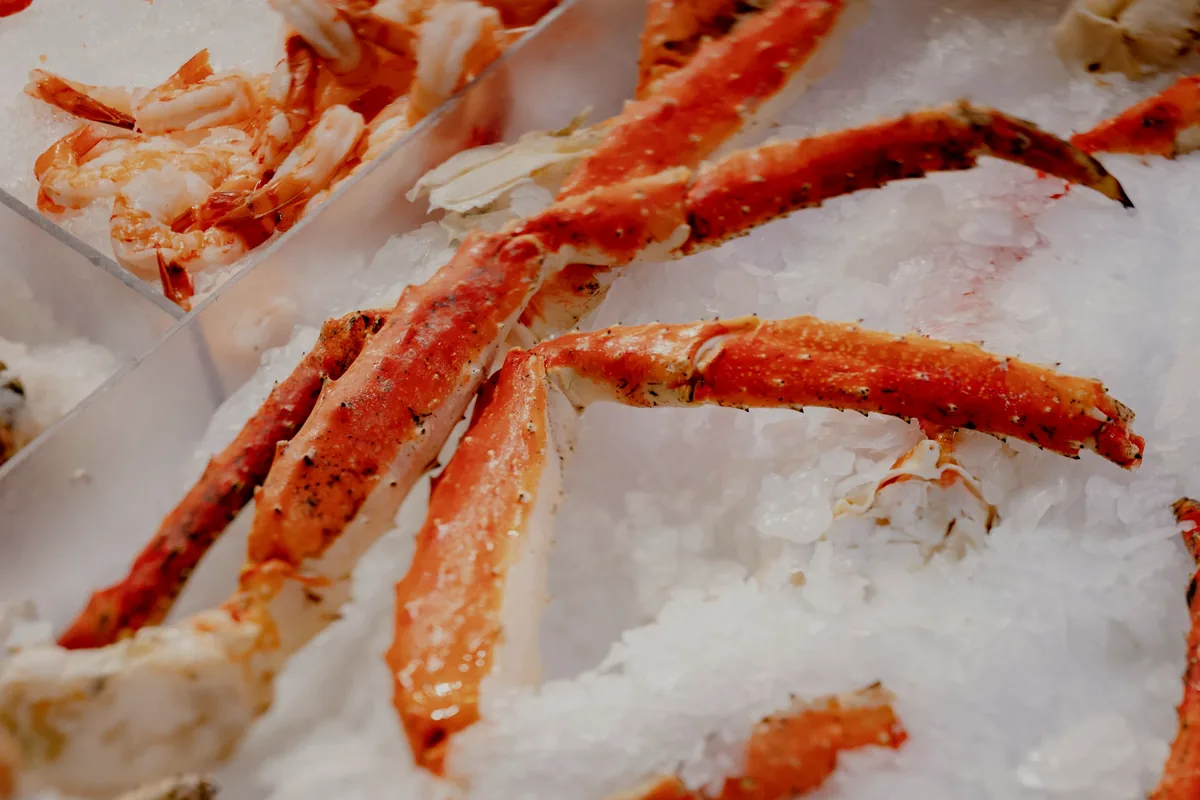
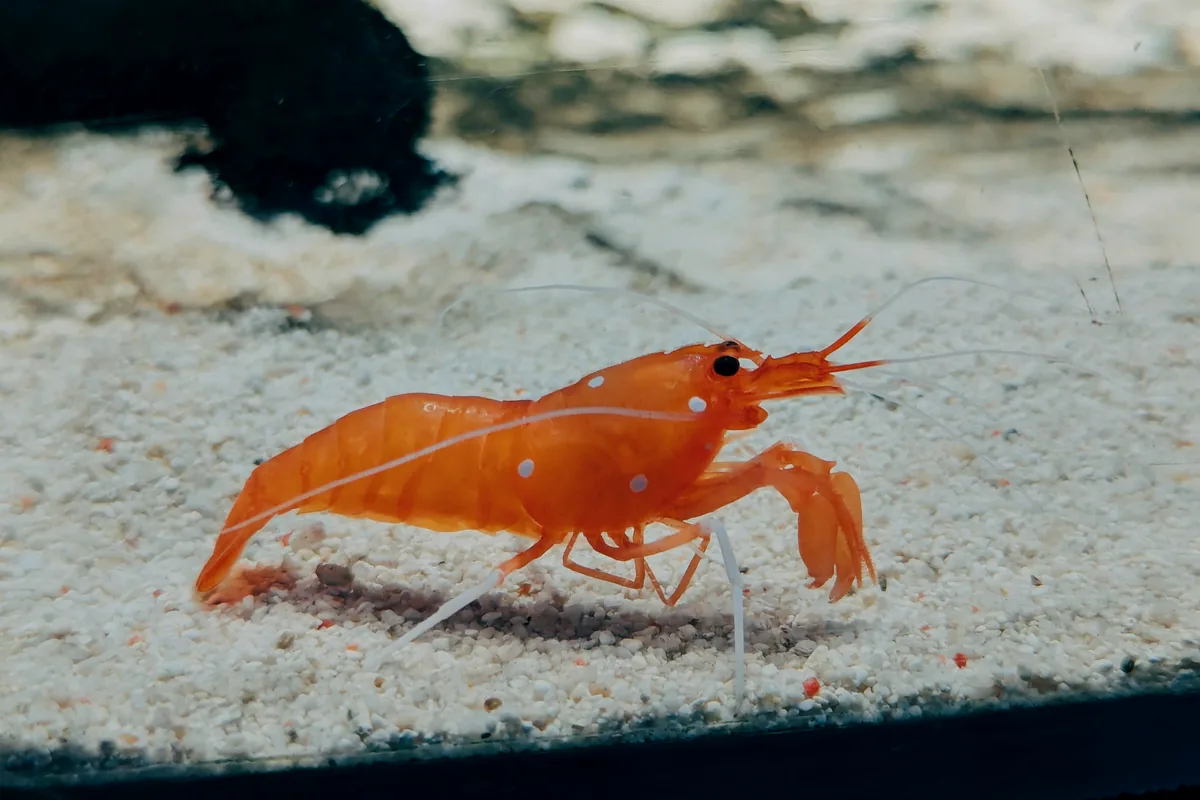
| Soft shell crab | A real crab, whole and fried |
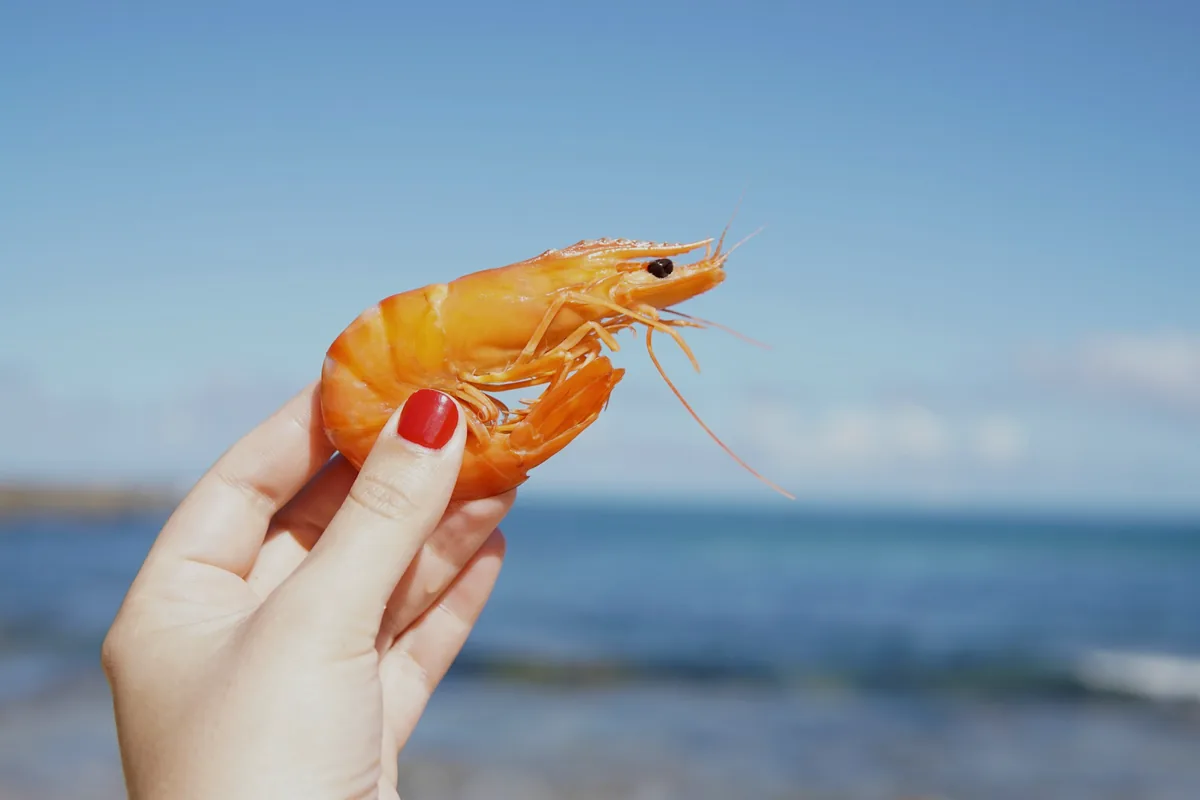
| Crawfish | A real crustacean, cooked |
The last two rows are the ones worth remembering. Soft shell crab and crawfish are genuine crustaceans; the entries reading simply crab or crabmeat generally are not.
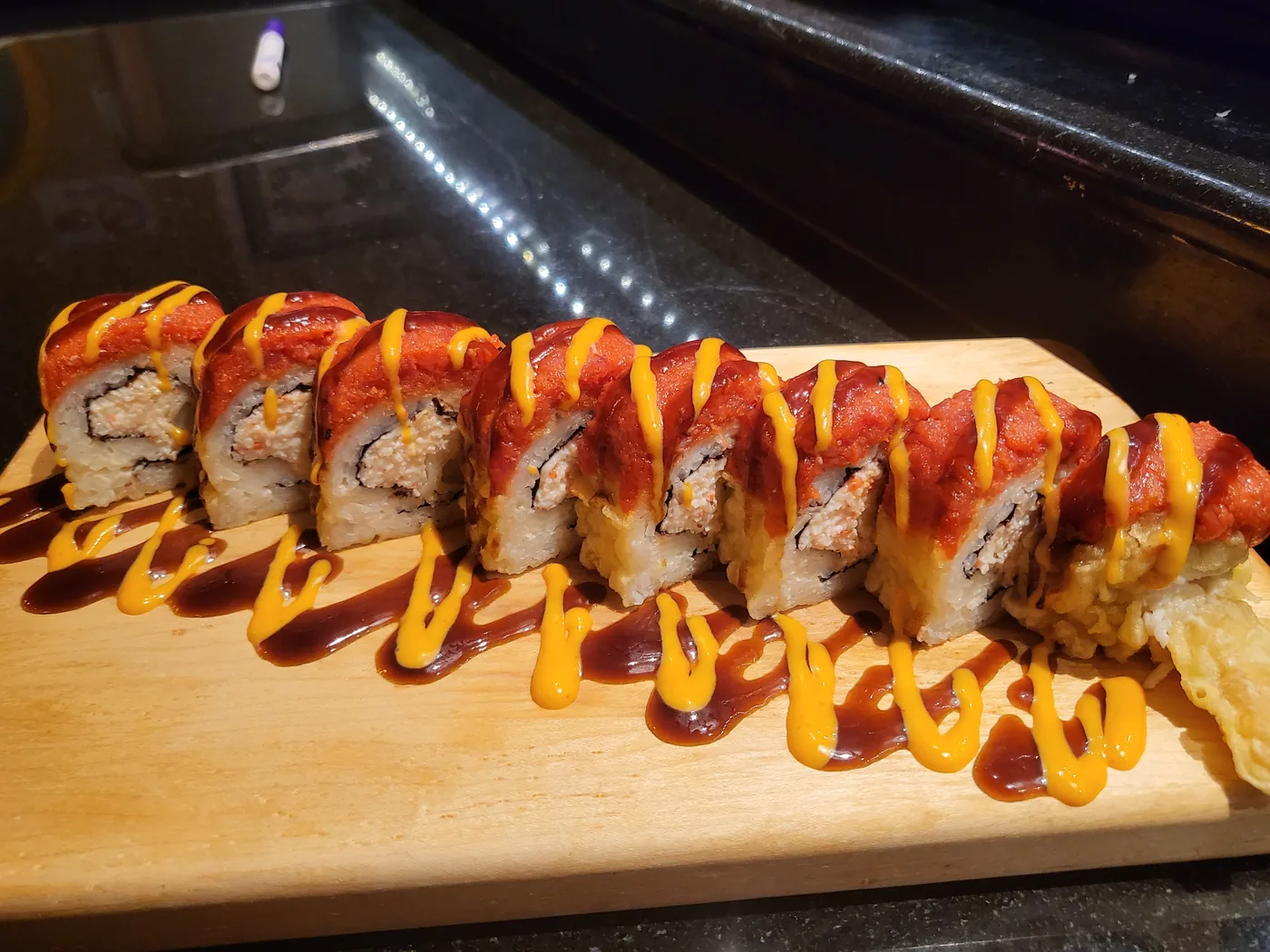
On our own list it appears in the California roll and hand roll, and through them in a long run of specialty rolls. Dynamite is described with kanikama by name, and Rock ’N Roll pairs it with baked crawfish — real and imitation in one roll.
Is it worse than real crab?
It is different, and treating it as a failed attempt at crab misses what it is good at.
Real crabmeat is sweet, delicate and stringy, and it is at its best on its own where nothing competes with it. It is also expensive, seasonal and structurally hopeless inside something that gets cut into eight pieces.
Kanikama is mild, slightly sweet, consistent and cohesive. In a roll with five other things happening, those properties are more useful than delicacy would be. It is doing a job, and it does it well.
Where it is genuinely worth noticing is when a menu charges as though it were crab. Reading the description rather than the roll name is the defence, and that method is set out in how to decode a roll description.
If you want the real thing
- Order soft shell crab. Whole, fried, shell and all — unambiguously a crustacean.
- Look for crawfish. Also real, and it appears baked or deep fried.
- Read for the word imitation. Menus that use it are being precise; menus that do not are usually still serving it.
- Ask directly. “Is the crab in this real crab?” is a normal question and gets a straight answer.
Frequently asked questions
What is imitation crab made of?
Surimi — white fish, usually pollock, washed to a bland paste and then bound with starch, egg white, salt, sugar and flavouring, formed, cooked and coloured.
Is imitation crab vegetarian?
No. It is made from fish. The name gives no indication of that, which makes it one of the most common misunderstandings on a sushi menu.
Is it safe with a shellfish allergy?
The base is fish rather than crustacean, but some products contain crab extract. Ask about the specific product rather than assuming either way.
Is imitation crab cooked?
Yes. It is cooked during manufacture, which is why rolls built on it contain nothing raw.
Why do restaurants use it instead of crab?
Cost is part of it, but so are consistency, shelf life and the fact that it holds together when a roll is cut. Real crabmeat falls apart.
The short version
Cooked white fish, washed to a paste, bound with starch and egg, shaped and painted. Not crab, not vegetarian, and not necessarily free of wheat, egg or crab extract. It is a genuinely useful ingredient with a misleading name.
Where it appears, and where the real crustaceans are, is on the menu.