The short answer
Orderone appetiser, three rolls, one hot dish
Intwo rounds, not one
Two people is the size a Japanese menu suits best. Everything is shareable, nothing is a fixed course, and you can order twice.
Most guidance on ordering assumes a table of six. Two is a different problem — you want range without ending up with eight dishes and no appetite — and it has a neater solution.
01 — The shapeOrder in two rounds
This is the single most useful habit for a table of two, and almost nobody does it. Order about two-thirds of what you think you want, eat it, then order again.
It works because a Japanese kitchen sends food out as it is ready rather than in courses, so a second order slots in without any awkwardness. Nothing is waiting on anything else, and there is no equivalent of interrupting a main course.
What you get is a meal that keeps arriving rather than one that lands all at once and goes cold at the edges. You also get to order the second round knowing what the first one was like, which is a considerable advantage on an unfamiliar menu.
A first round that works
One appetiser, two rolls, one thing from the hot kitchen. That is enough food to be a real meal, it uses both kitchens so it arrives faster, and it leaves room to order again.
- The appetiser. Edamame if you want to start eating immediately; gyoza or karaage if you want something more substantial.
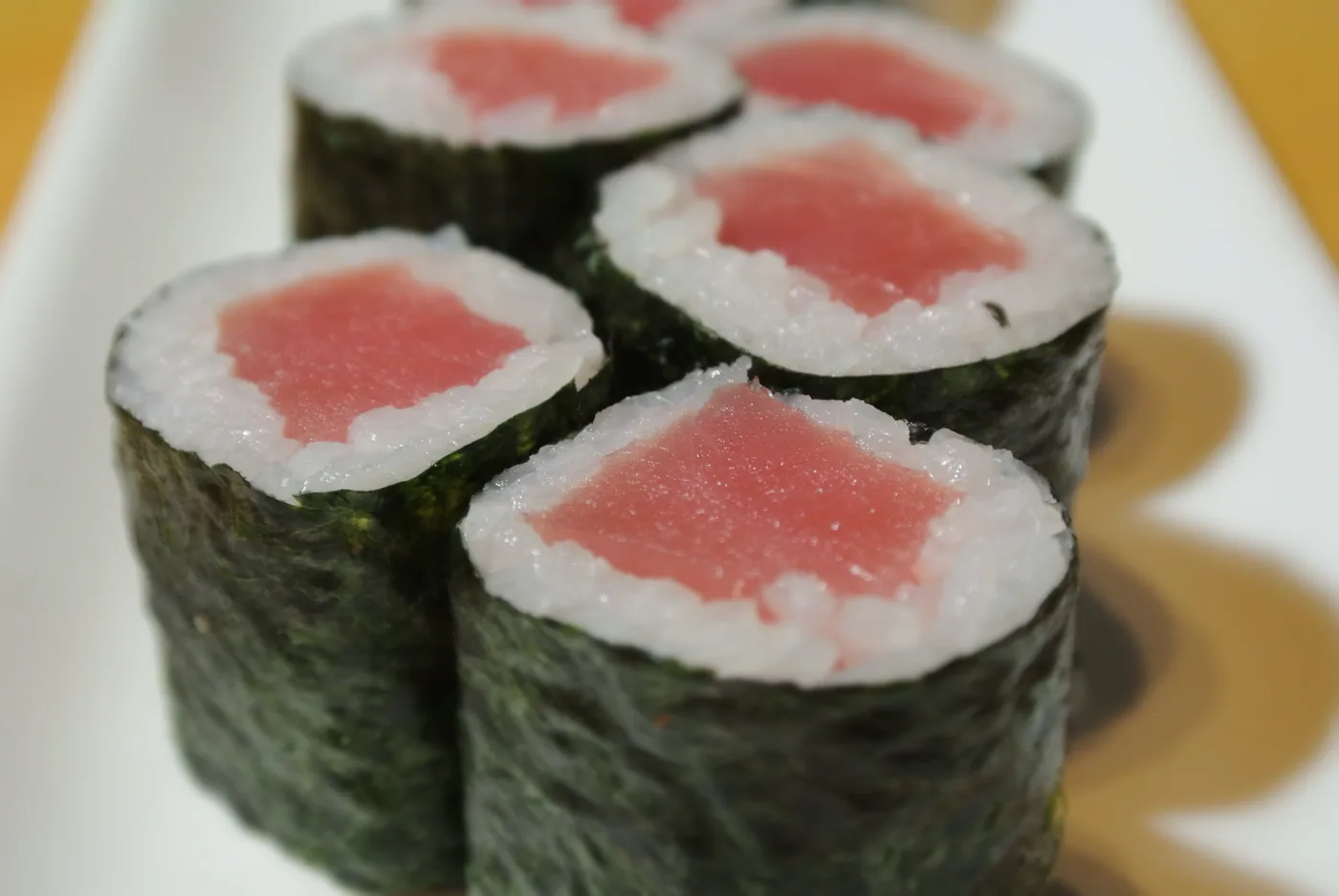
- Roll one. Something you know you like. This is the safety net.
- Roll two. Something you do not know. This is the point of the evening.
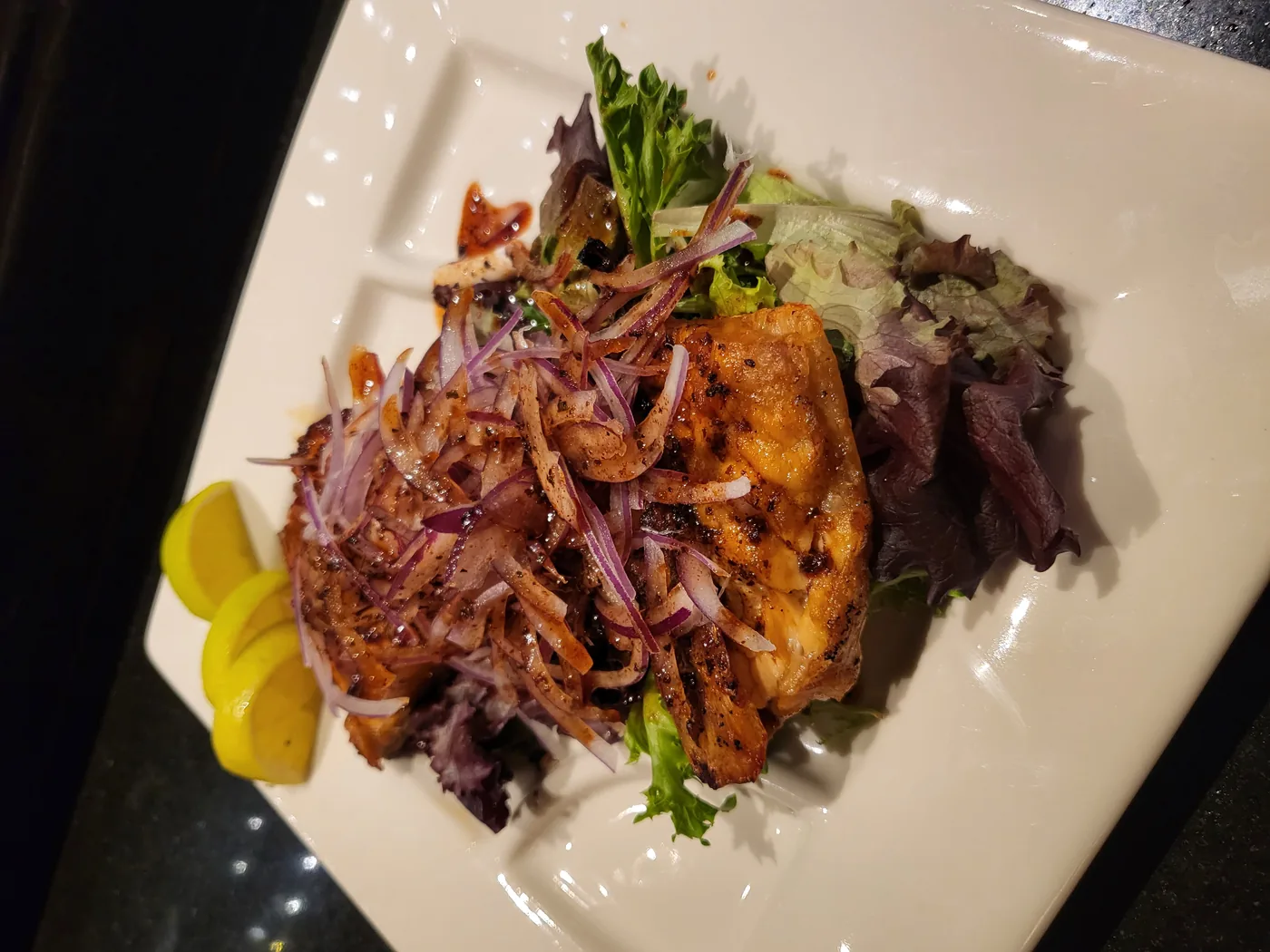
- The hot dish. Katsu, a teriyaki plate or a bowl of ramen — whichever of you wants the substantial thing.
Then stop. If you are still hungry, the second round is where the sashimi, the second unfamiliar roll or a hand roll goes.

Four contrasts worth building in
A good order for two is not four things you like. It is four things that are different from each other.
| Contrast | One side | The other |
|---|---|---|
| Temperature | Rolls, sashimi | Ramen, katsu, teriyaki |
| Texture | Something fried | Something fresh |
| Richness | A baked or fried roll | A plain roll or seaweed salad |
| Effort | Something to pick apart | Something you just eat |
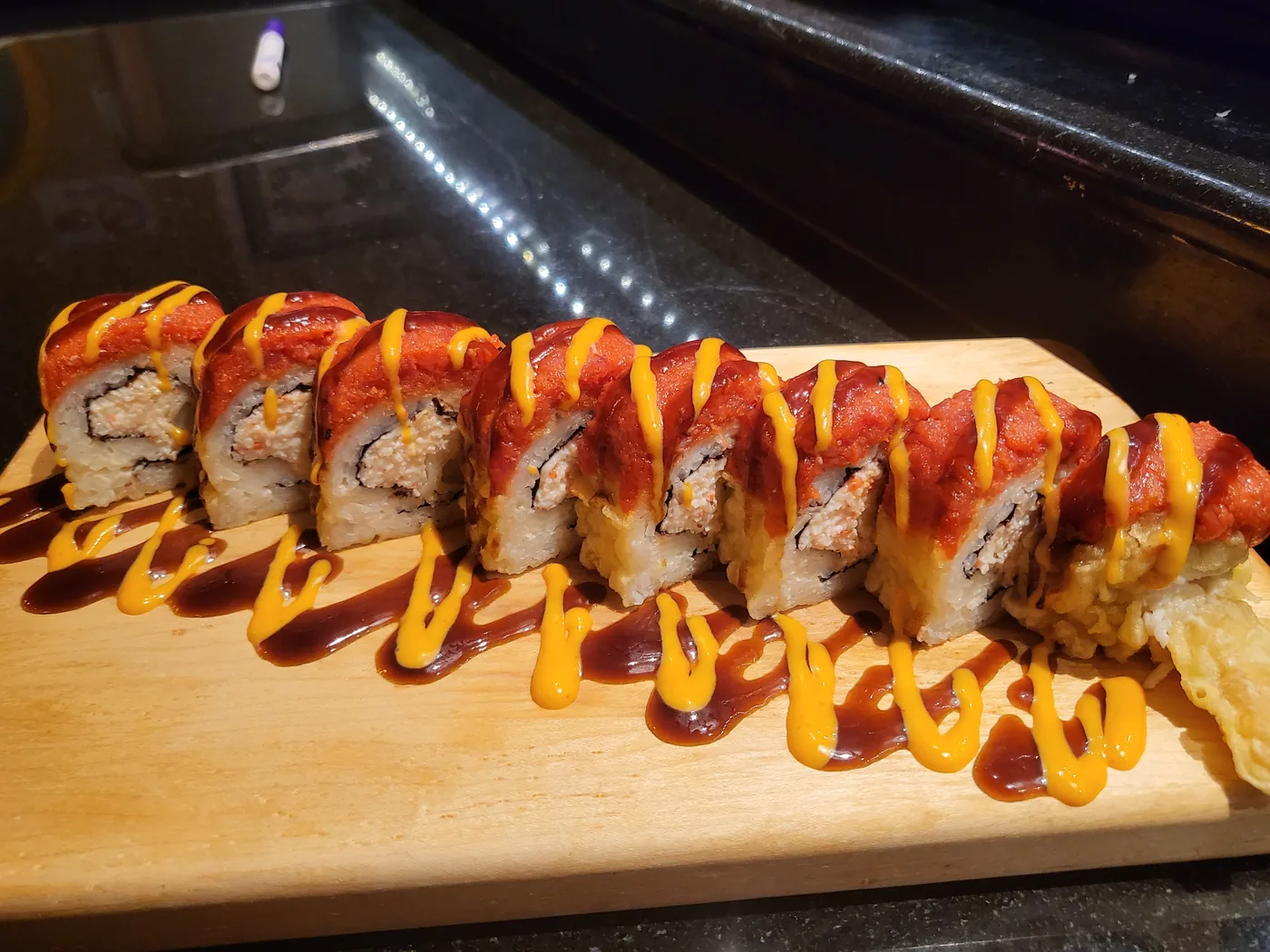
The one people get wrong most often is richness. Two specialty rolls sounds like variety and tastes like one thing, because both arrive sauced with the same two sauces. One specialty roll and one basic roll gives you far more contrast for the same money.
Ordering tip
If you both want the same roll, order it once and add something else. Eight pieces divides evenly between two people and two of the same roll is sixteen pieces of one flavour. The exception is a hand roll, which cannot be shared and should be ordered one each.
Counter or table
For two people this is a real choice rather than a formality, and it changes the evening.
The counter puts you in front of the person making half your food. You can ask what is good, order a piece at a time, and eat hand rolls at their best. It is the better seat for a meal about the food, and it is easier to get at lunch or early evening.
A table is better for talking. You are facing each other, the room is further away, and a longer meal does not require you both to keep turning. It is also the only sensible option if you are ordering much from the hot kitchen, since none of that comes from the counter anyway.
The split between the two stations is worth understanding either way — it is set out in the sushi bar and the hot kitchen.
When one of you does not eat raw fish
This is the most common version of the problem and it is entirely solvable, because a sushi menu is far more cooked than it looks.
Order one baked or fried roll, one raw one, and something hot to share. Nobody is eating around anything and nobody is having a worse meal. The full list of what is cooked is in what to order if you do not like raw fish.
The version that does not work is ordering entirely to one person’s preference and assuming the other will find something. There is always something — but it is better chosen deliberately.
When you want it to feel like an occasion
Three things do most of the work, and none of them is spending more.
- Come after seven. The room is full, the light is low and nobody is waiting for your table.
- Order in rounds. A meal that unfolds over ninety minutes feels different from one that arrives at once.
- Start with sashimi. It is the cleanest thing on the menu and the right thing to eat while your palate is fresh — the reasoning is in nigiri versus sashimi.
And order something neither of you has had. The best part of a menu with seventy specialty rolls on it is that two people can eat here regularly for a year without repeating themselves.
Frequently asked questions
How many rolls should two people order?
Three between two is a reliable starting point alongside an appetiser and one hot dish, with the option to order more. Four rolls and nothing else tends to be a lot of rice.
Is it rude to order twice?
Not at all — it is how the format is meant to work. Food arrives as it is ready rather than in courses, so a second order fits in naturally.
Should we sit at the counter?
If the meal is about the food, yes. If it is about the conversation, take a table — facing each other is easier than sitting side by side.
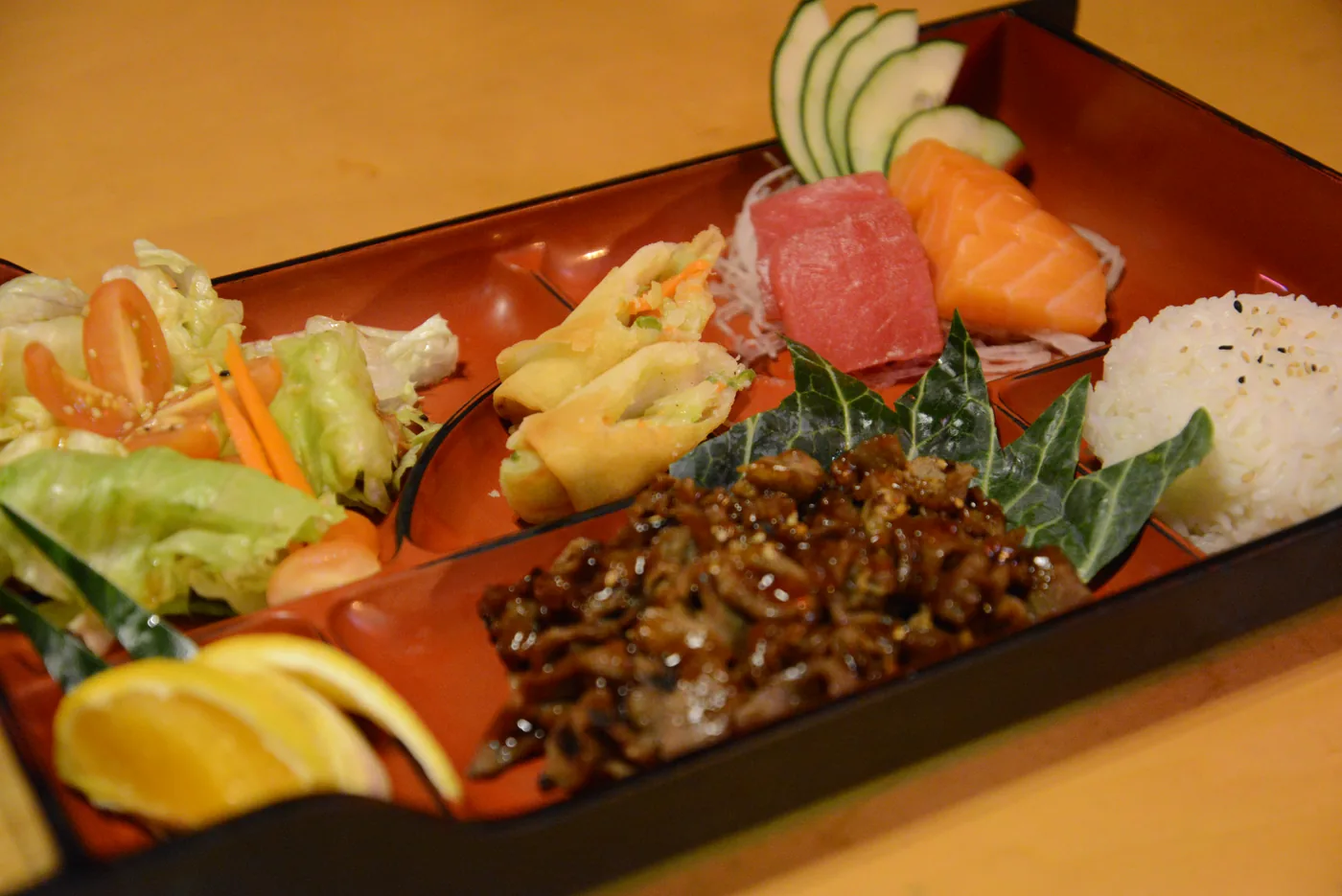
Can we split a bento?
A bento is built as one person’s meal, so it splits into two small meals rather than two full ones. Two people are usually better served ordering separately and sharing.
What if we disagree about what to order?
Order one of each and share both. Almost nothing on a Japanese menu is a single-person dish, which is the whole advantage of eating here as a pair.
The short version
Order two-thirds of what you want, use both kitchens, build in contrast rather than more of the same, and order again. Two people can cover more of a Japanese menu in one evening than four can, because nothing has to be agreed on all at once.
The list is on the menu, and hours are on the contact page.