The short answer
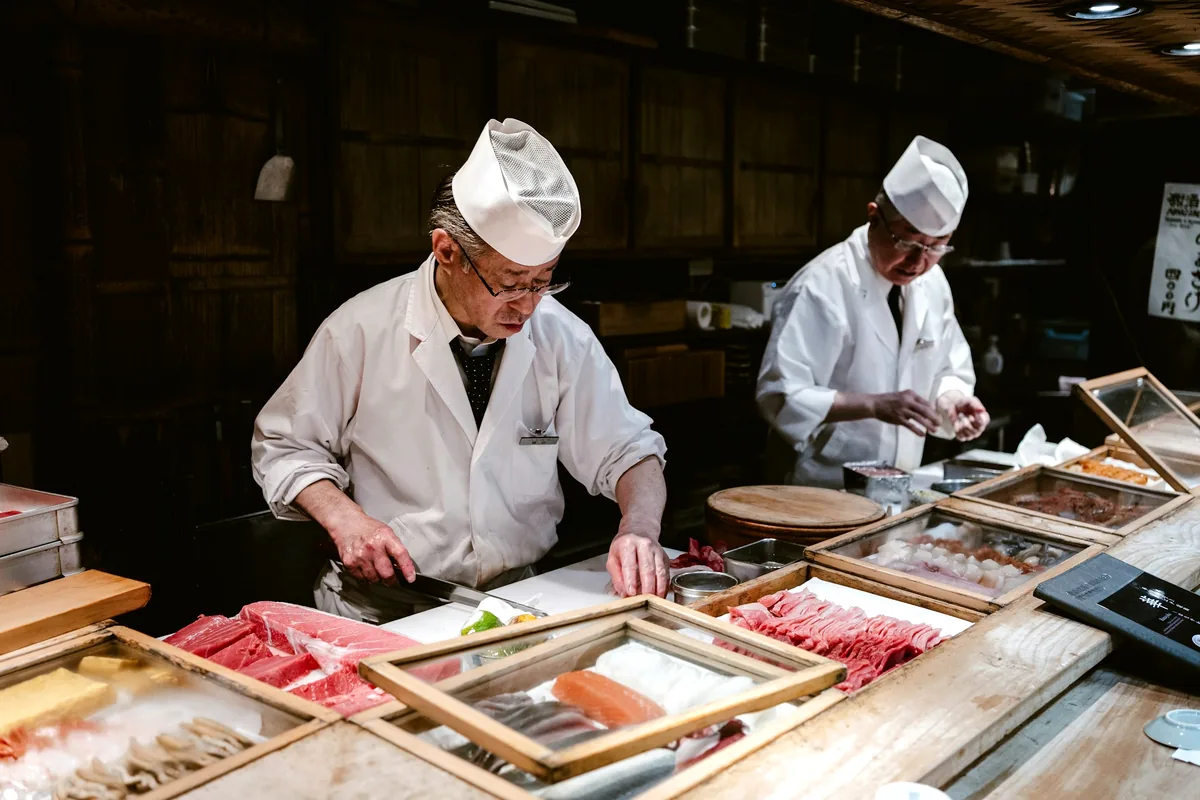
Sushi barcold, assembled, in view
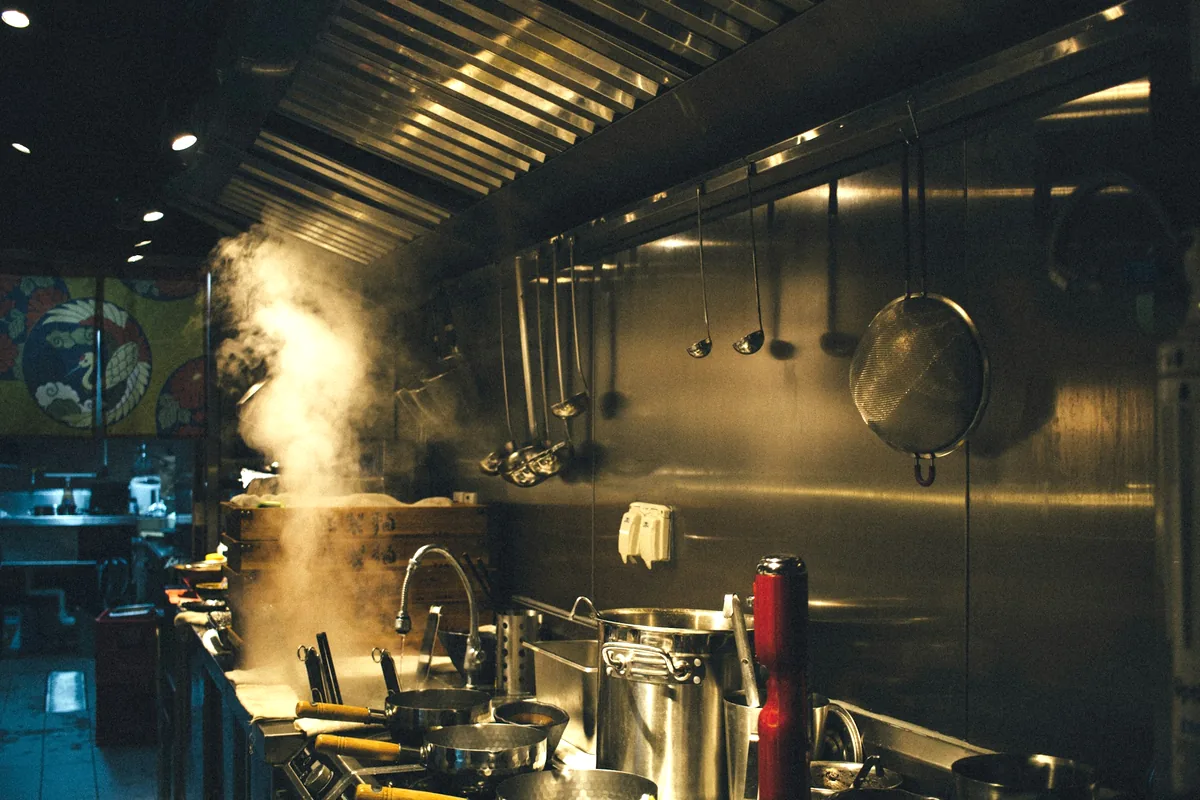
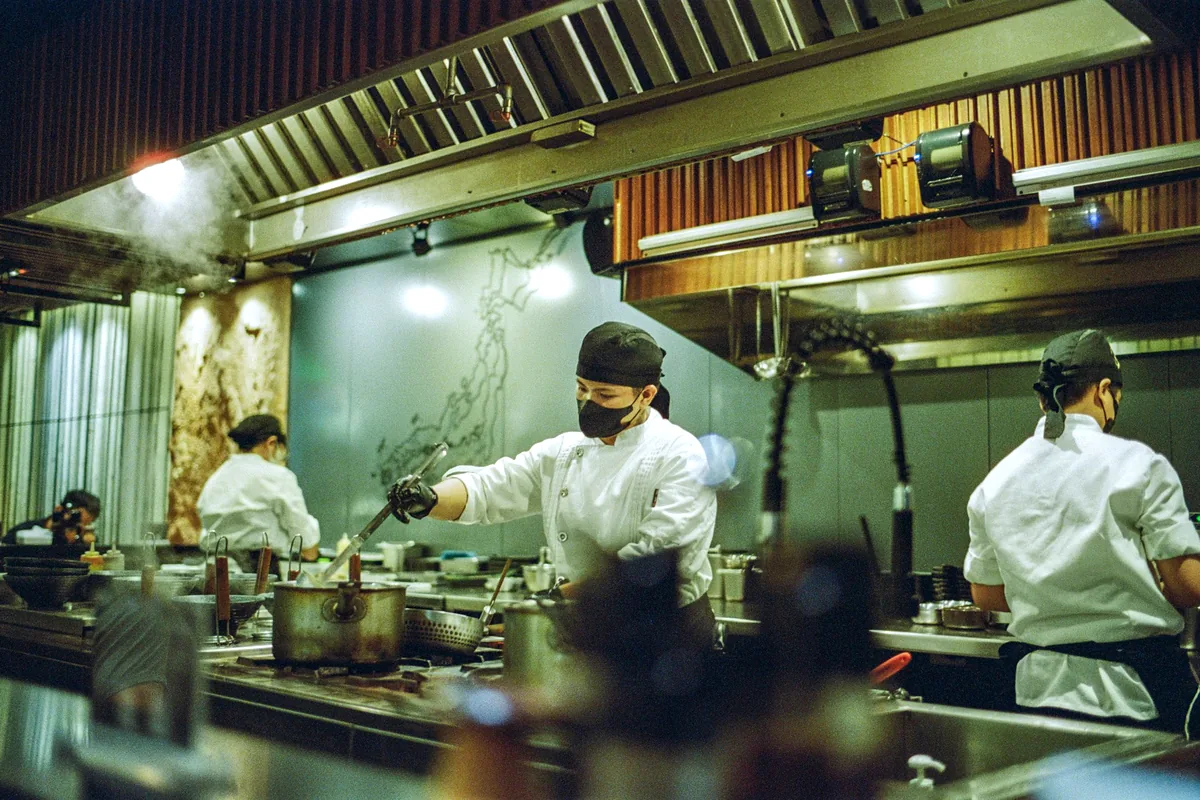
Hot kitchencooked to order, out of sight
A Japanese restaurant is two kitchens sharing a dining room. Once you see the split, the menu stops looking like a list and starts looking like a floor plan.
Menus at Japanese restaurants are long, and the order of the sections looks arbitrary until you realise it is describing a building.
01 — Two kitchensThe counter and the back
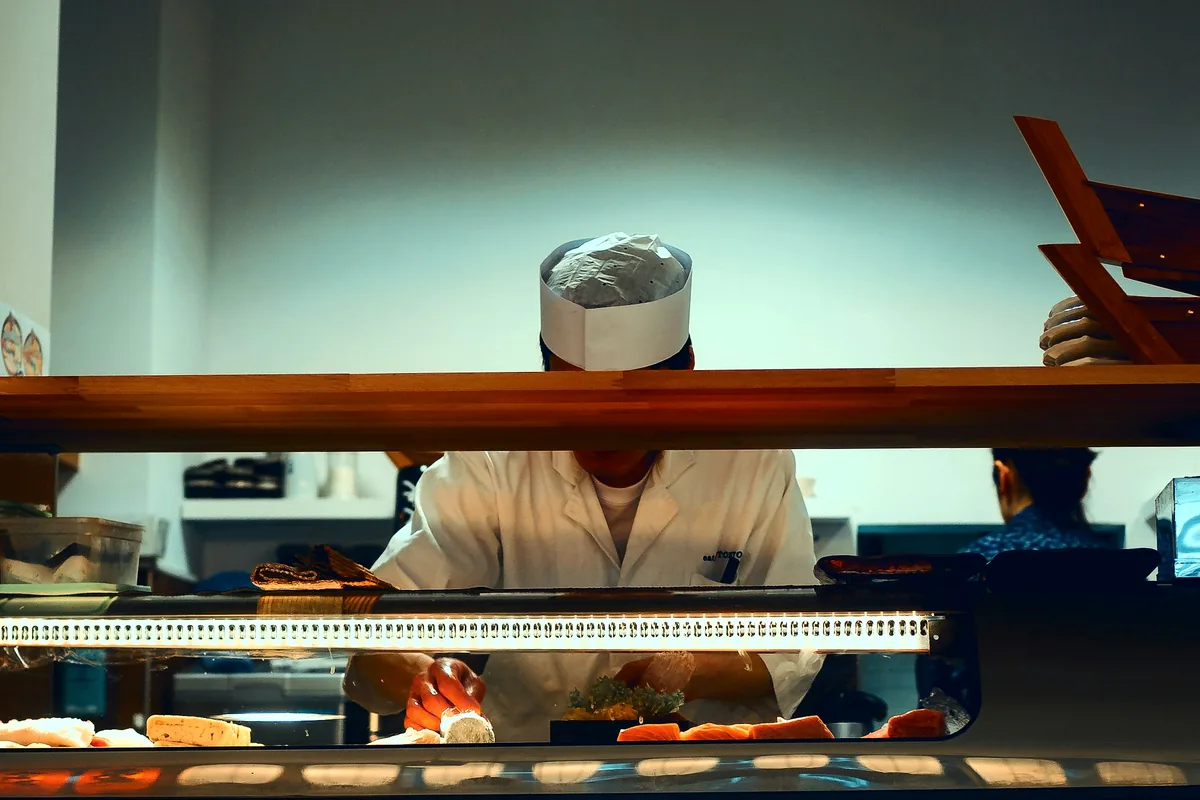
The sushi bar is the counter you can see. Nothing there is cooked to order in the usual sense — fish is portioned in advance, rice is made in batches, and the work at service is slicing and assembly. It is a station built around a knife and a chilled case.
The hot kitchen is behind a wall, and it is a different animal: burners, a fryer, a grill, stock pots. Everything it produces is cooked to order and leaves hot.
These two run on entirely different clocks, use different equipment, and are staffed by people with different training. They happen to share a dining room and a menu, and almost nothing else.
Why the sushi bar is in the room
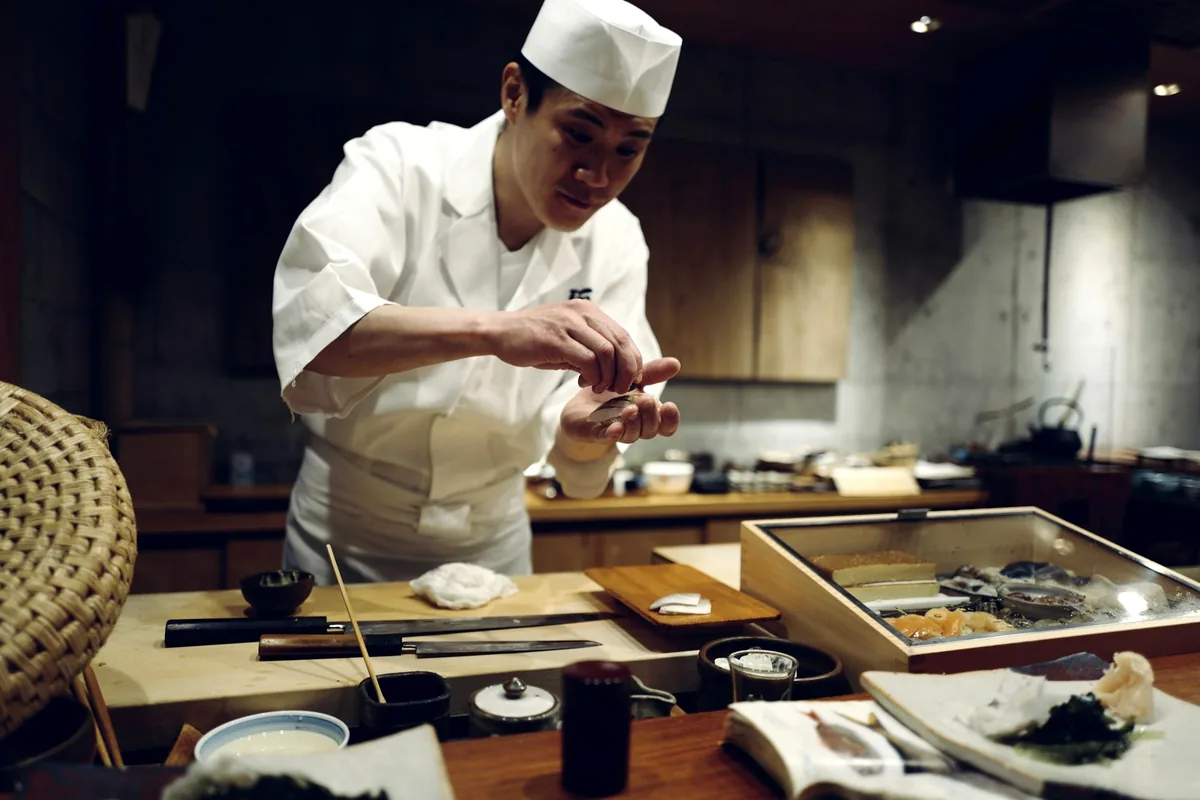
Partly because it can be. Sushi is assembled rather than cooked, so it produces no smoke, no spatter and very little noise — there is nothing about it that needs extraction or a wall.
Partly because the work is worth watching, and both sides know it. A counter seat is a genuinely different experience from a table, and it is the one place in any restaurant where you can see your food being made and ask the person making it a question.
And partly because of timing. Hand rolls have a two-minute window before the nori softens, and handing one across a counter is the only way to serve it at its best — the reason it is a counter format is set out in hand roll versus cut roll.
What each station is good at
The two sides have genuinely different strengths, and knowing which is which is most of the value in understanding the split.
The sushi bar is where variety lives. Seventy specialty rolls is possible because assembling a roll from prepared components takes a couple of minutes, not because a kitchen can hold seventy recipes in its head. A hot kitchen cannot work that way — every extra dish is another pan, another timing, another thing to hold at temperature. That is why the noodle and plate sections of any Japanese menu are short and the roll section is long.
The hot kitchen is where depth lives. A broth takes hours before service starts and cannot be improvised; a fryer produces something that has to reach you within minutes of coming out. Those are constraints the sushi bar simply does not have, and they are the reason the hot side of a menu changes far less often than the roll list.
Neither is the senior partner. They are two different crafts that happen to be good at different halves of a meal.
02 — Reading the menu as a mapWhich section comes from where
| Menu section | Comes from | Arrives |
|---|---|---|
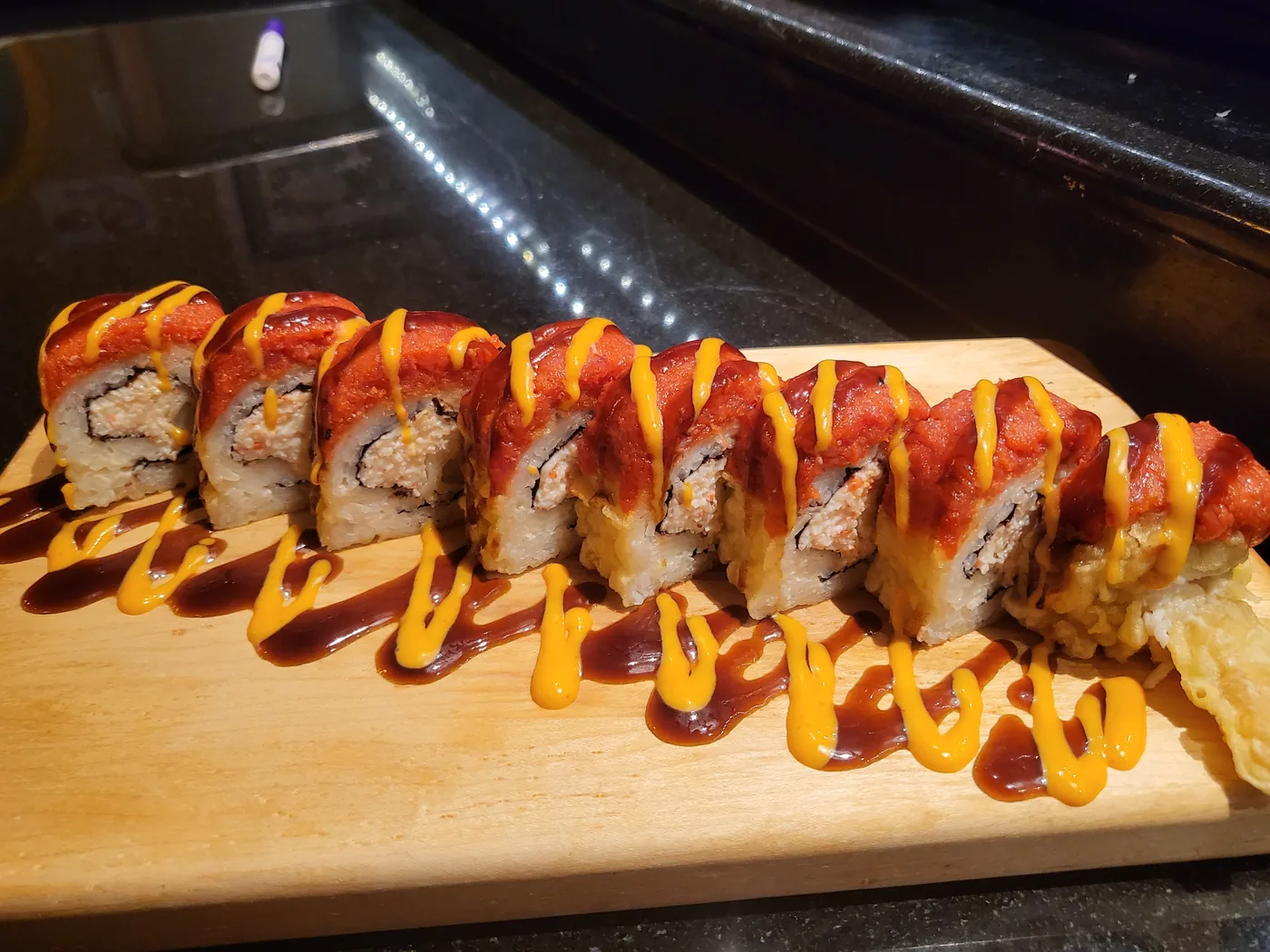
| Specialty rolls | Sushi bar | Cool, plated and sauced |
| Basic rolls | Sushi bar | Cool, quickly |
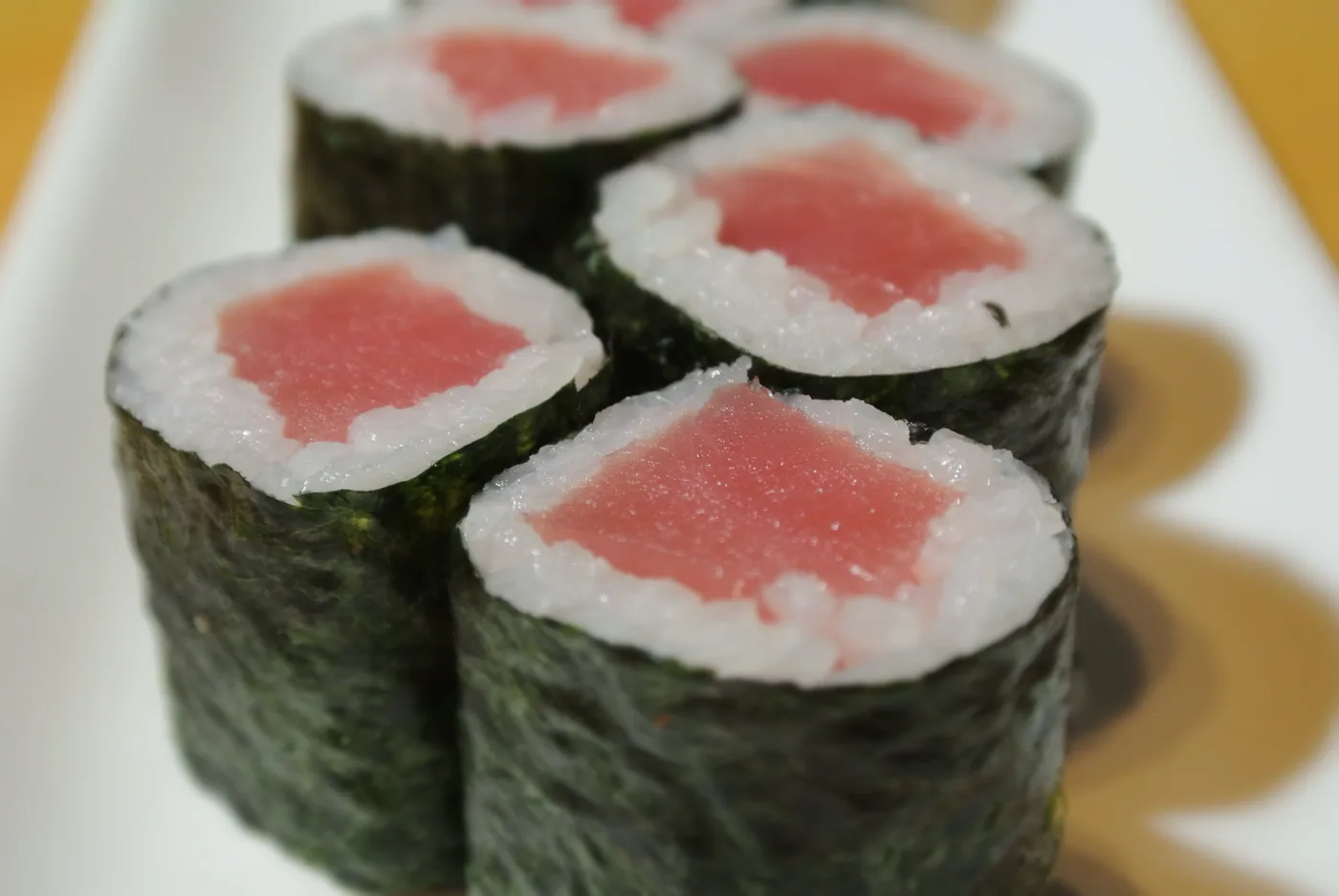
| Hand rolls | Sushi bar | Immediately, eat at once |
| Sashimi | Sushi bar | Cool |
| Party platters | Sushi bar | Cool, with notice |
| Ramen | Hot kitchen | Hot, eat the noodles first |
| Udon | Hot kitchen | Hot |
| Yakisoba and yaki udon | Hot kitchen | Hot, off a high flame |
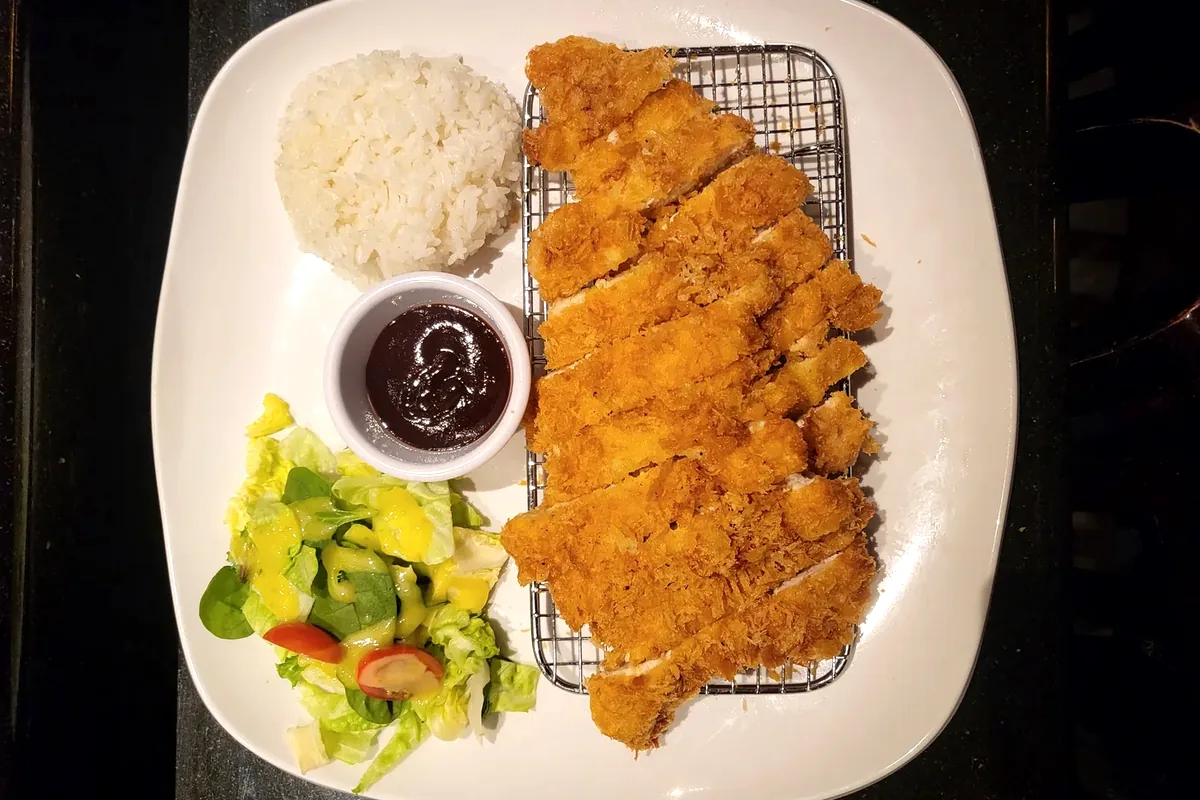
| Katsu and teriyaki | Hot kitchen | Hot, plated with sides |
| Appetizers | Both | Whenever they are ready |
The appetiser list is the interesting one, because it is the only section drawn from both. Edamame, gyoza, karaage and tempura come from the hot kitchen; crispy rice on spicy tuna and the collars come from the sushi bar.
Why your food arrives in that order
This is the practical payoff. Japanese restaurants do not serve in courses — each dish leaves whichever station finished it, whenever that is, and two stations working in parallel means arrival order is close to unpredictable.
A roll can beat an appetiser to the table. A ramen bowl can arrive before the sushi you ordered first. None of that is disorganisation; it is two kitchens with different cycle times sending out food as it is ready.
If you want a specific sequence, ask for it when you order. It is a normal request and it is the only way to get one.
Ordering tip
Spread your order across both stations and everything arrives faster. Four rolls means one station doing all the work while the other stands idle. Two rolls and a hot plate uses both, and the table fills up sooner.
What this changes about ordering
- Use both sides. A meal drawn from one station is a narrower meal and a slower one.
- Sit at the counter if hand rolls matter. They are the one thing that genuinely improves by three metres.
- Expect the hot food to take longer. Cooked to order means cooked to order.
- Ask the sushi chef, not the menu. They know what came in and what is worth ordering today.
- Order hot food last if you want it last. Otherwise it arrives whenever it is done.
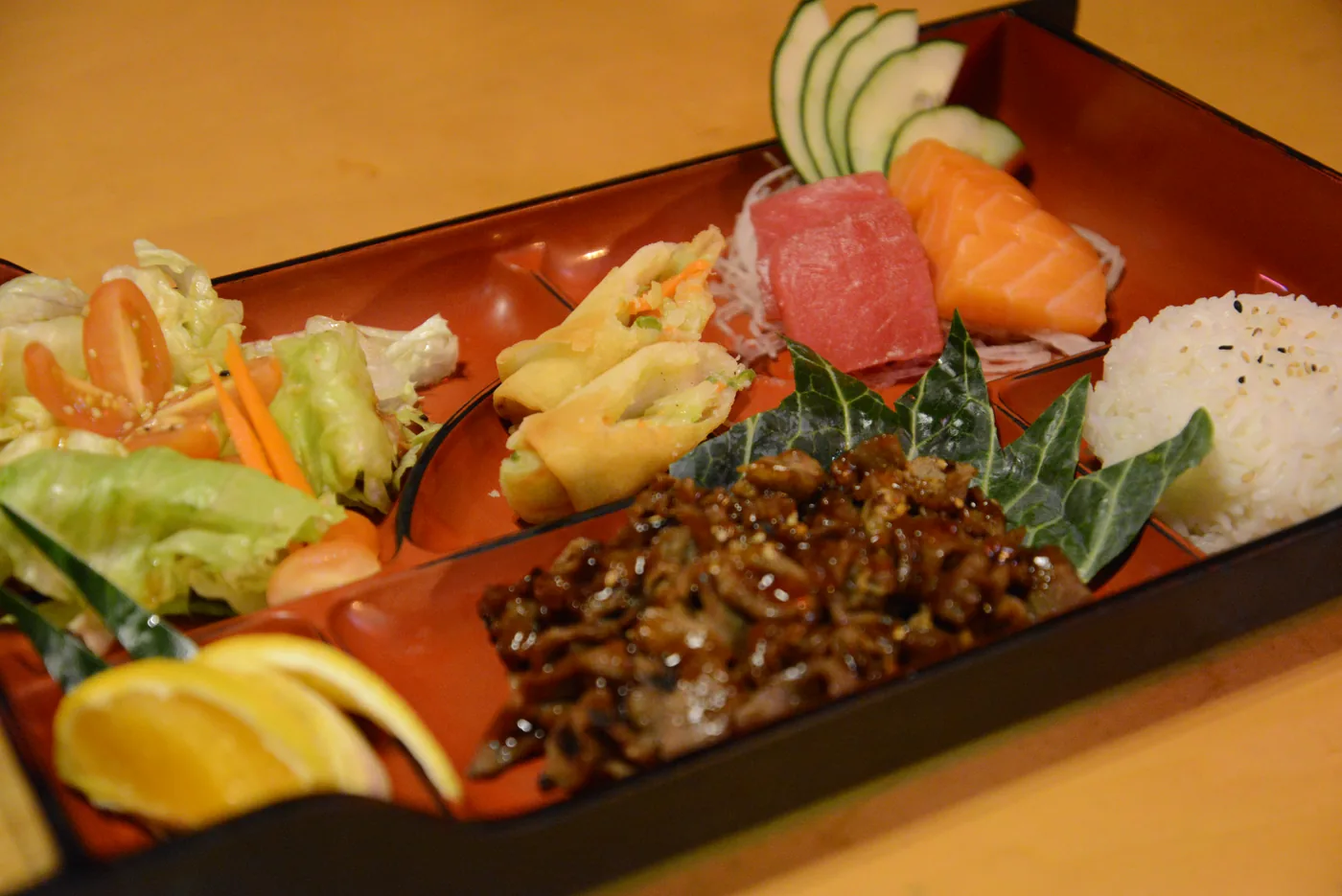
A bento combination is the neat solution to all of this at once: two or three items from across the menu, arriving together on one tray. That format is covered in what is a bento box.
Two kitchens, one menu
Our own list splits the same way. The sushi bar carries more than seventy specialty rolls, fifteen basic rolls, fourteen hand rolls, sashimi and the party platters. The hot kitchen runs five ramen bowls, four udon, five stir-fried noodle dishes, chicken katsu and the teriyaki plates.
The name says it as plainly as it can be said. Roll, and noodle.
Frequently asked questions
Why does my food arrive in a strange order?
Because two stations are working in parallel and each sends out food as it finishes. It is not a mistake. Ask for a sequence if you want one.
Is it better to sit at the sushi bar?
For hand rolls and for asking questions, yes. For a group ordering across the whole menu, a table is easier.
Does the same chef make everything?
No. The sushi bar and the hot kitchen are separate stations with separate staff, separate equipment and different training.
Why do appetisers sometimes arrive last?
Because they come from whichever station is making them, and that station may be busy. There is no course structure holding them in sequence.
Can I order from both sides at once?
Yes, and it is the better way to order. It uses both stations, so the food arrives sooner and the meal covers more ground.
The short version
Two kitchens, one dining room. The counter assembles and stays cool; the back cooks to order and sends food out hot. The menu is organised by which is which, and ordering across both gets you a better meal faster.
Both sides are on the menu, and how to order across one covers the rest.