The short answer
Mostly cookedshrimp, crab, mussel, crawfish
Sometimes rawscallop, and only scallop
The shellfish half of a sushi menu is the cooked half. If raw fish is not for you, this is where most of the menu opens up.
Sushi menus get read as a fish list, and the shellfish gets skimmed. That is a mistake — it is the section with the most cooking in it, the most texture, and the widest range of things happening on one plate.
01 — CrabTwo different things called crab
Most crab on a sushi menu is kanikama — imitation crab, made from cooked white fish paste shaped and coloured to resemble crab leg. It is not a cheap substitute so much as its own ingredient, mild and slightly sweet, and it is the backbone of the California roll.
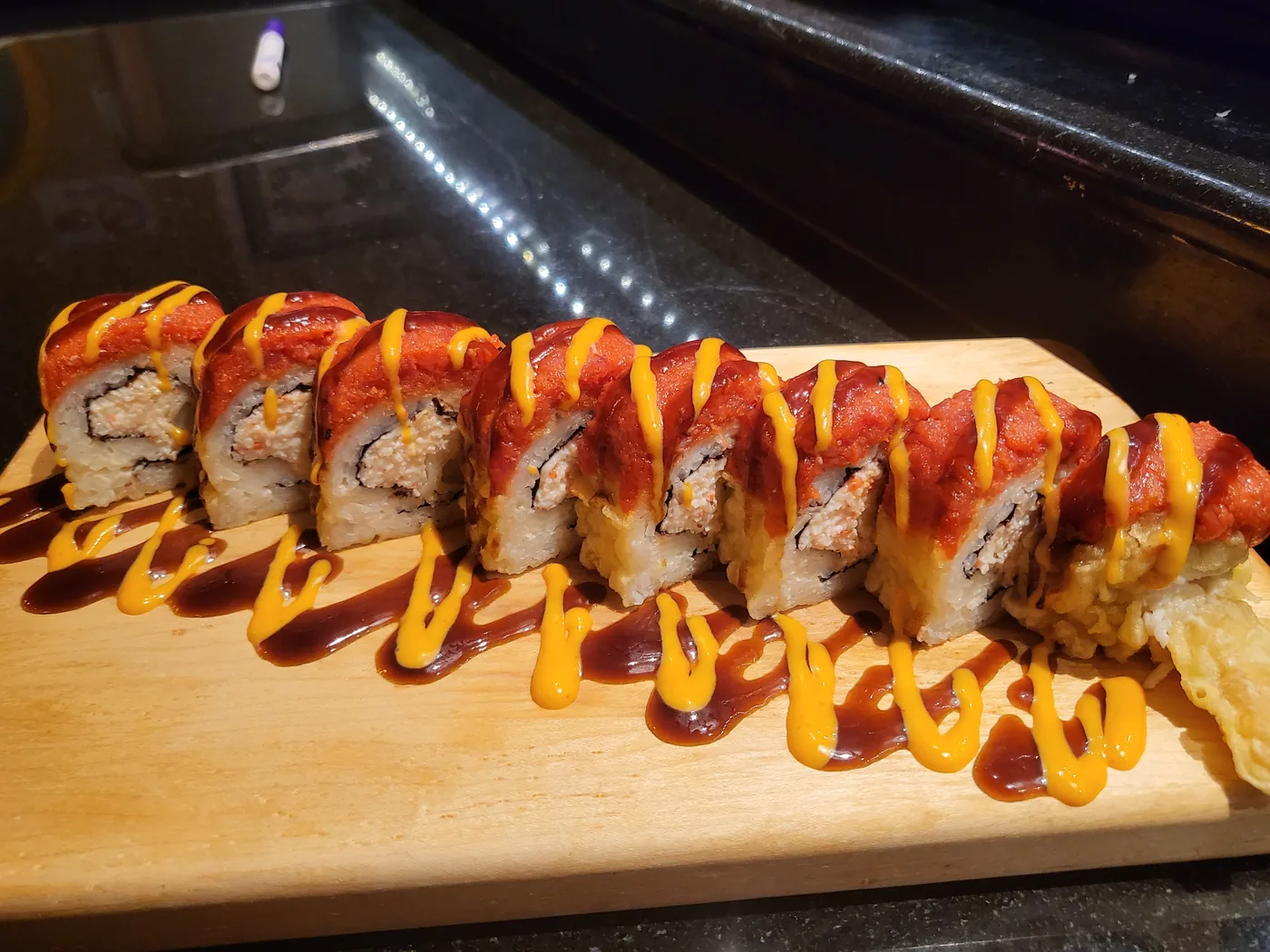
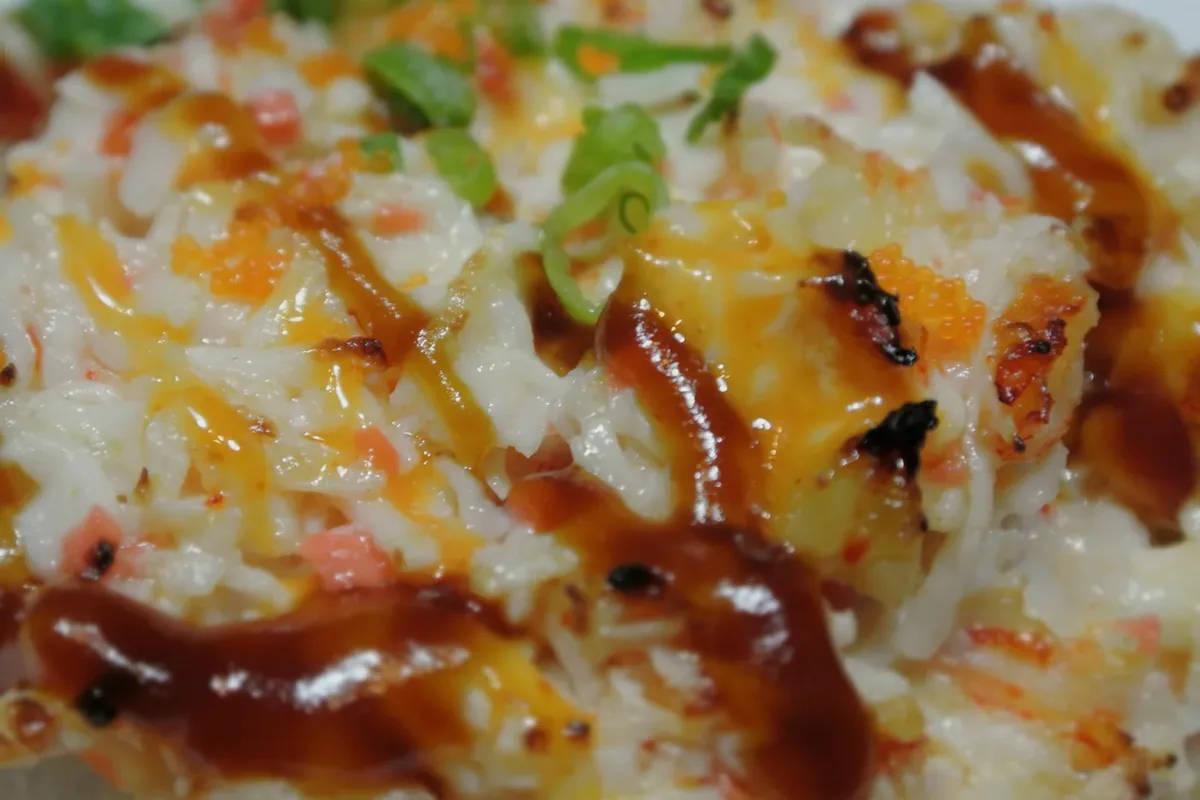
Spicy crab is the same thing chopped and mixed with a spicy mayonnaise, in exactly the way spicy tuna is made. It appears all over a specialty list as a base layer, because it holds a roll together and gives the topping something soft to sit on.
Soft shell crab is a different proposition entirely: a whole crab, caught after moulting, fried and eaten shell and all. We covered how it is cooked in tempura, panko and deep fried.
The most versatile thing on the menu
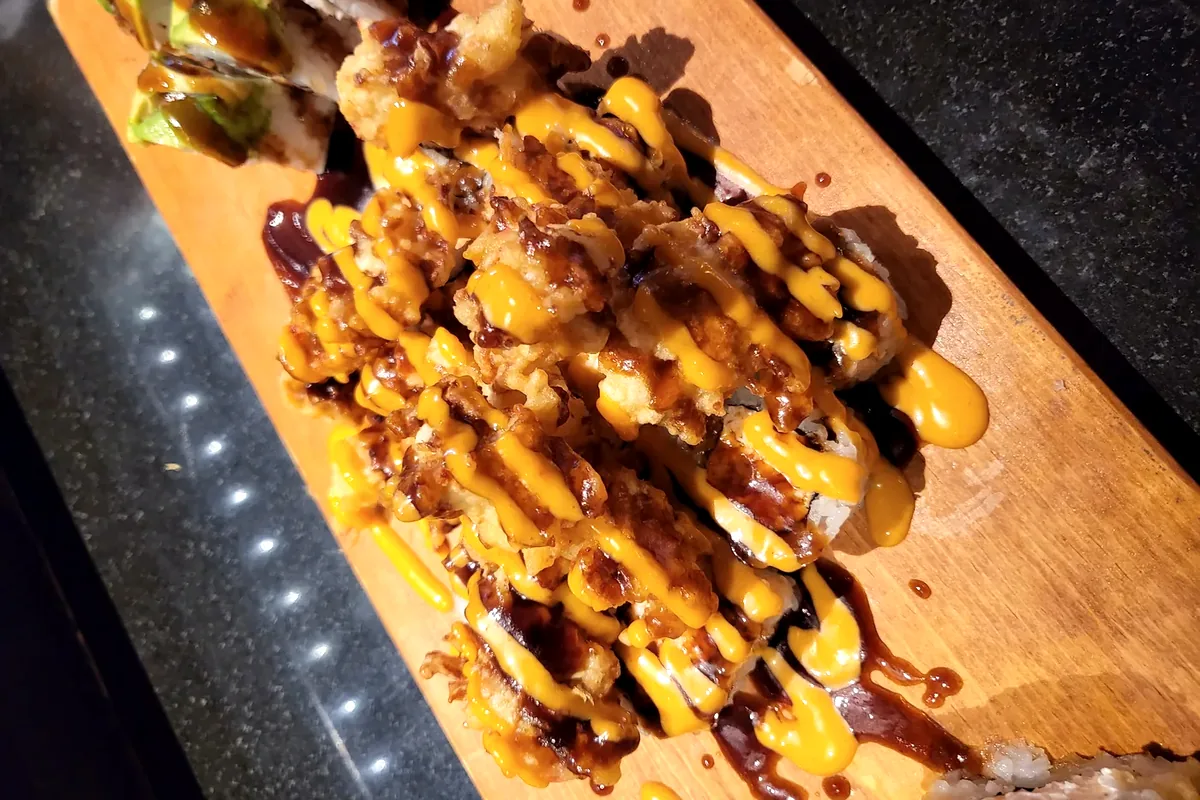
Shrimp turns up in more forms than any other ingredient. Boiled and sliced, it is the mild cooked topping people order when they are not sure about anything else. Battered as tempura, it becomes the most common filling on any specialty list. Fried in a heavier coating, it becomes popcorn shrimp and goes on top instead of inside.
It is also the one shellfish that shows up right across a Japanese menu rather than just at the sushi bar — in mixed tempura, in the stir-fried noodles, on the side of a udon bowl, and as a garlic-sauced plate from the hot kitchen.
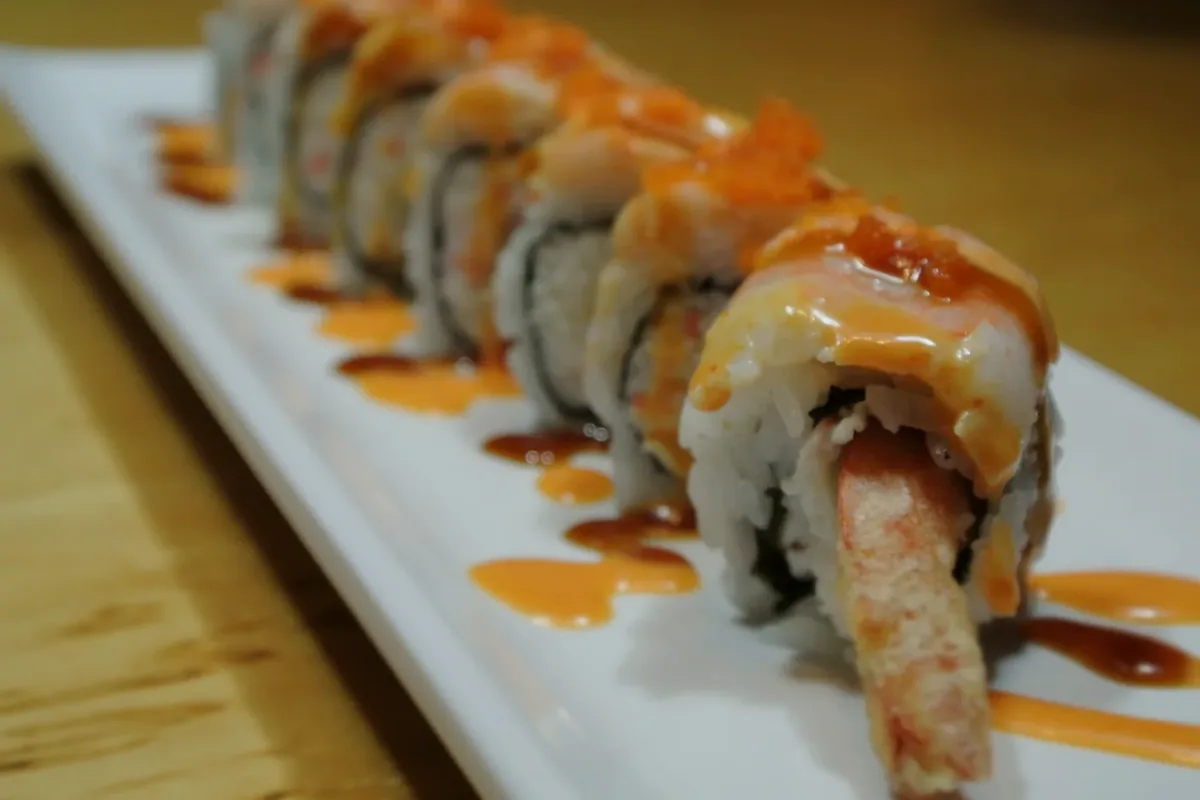
Double Dragon is the clearest illustration of its range: cooked shrimp laid over a shrimp tempura roll. Two preparations of the same animal, and they taste nothing alike.
The one that goes both ways
Scallop is the most interesting shellfish on a sushi menu because it is the only one served both raw and cooked, and the two versions have almost nothing in common.
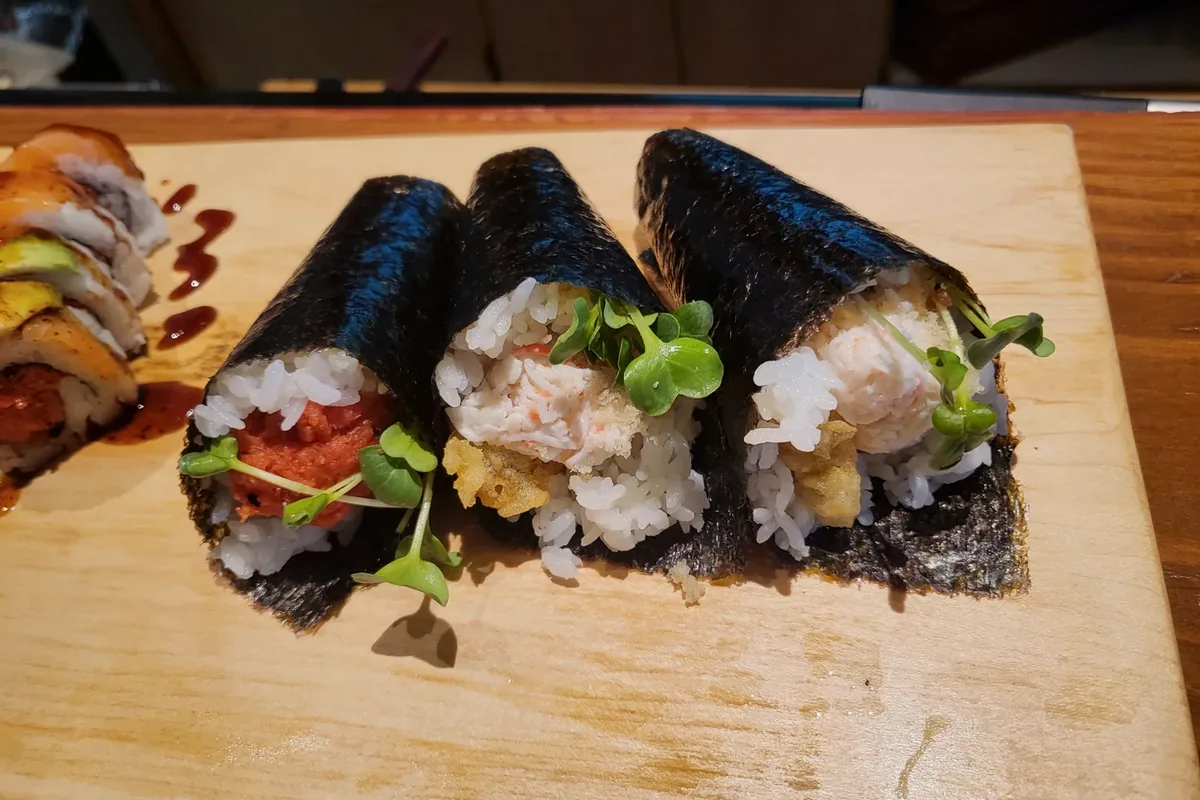
Raw, it is sweet, soft and clean — closer to a delicate white fish than to anything you would recognise from a seared scallop. Chopped and dressed as spicy scallop, it becomes creamy and mild, and it is one of the best fillings for a hand roll because the cone holds it.
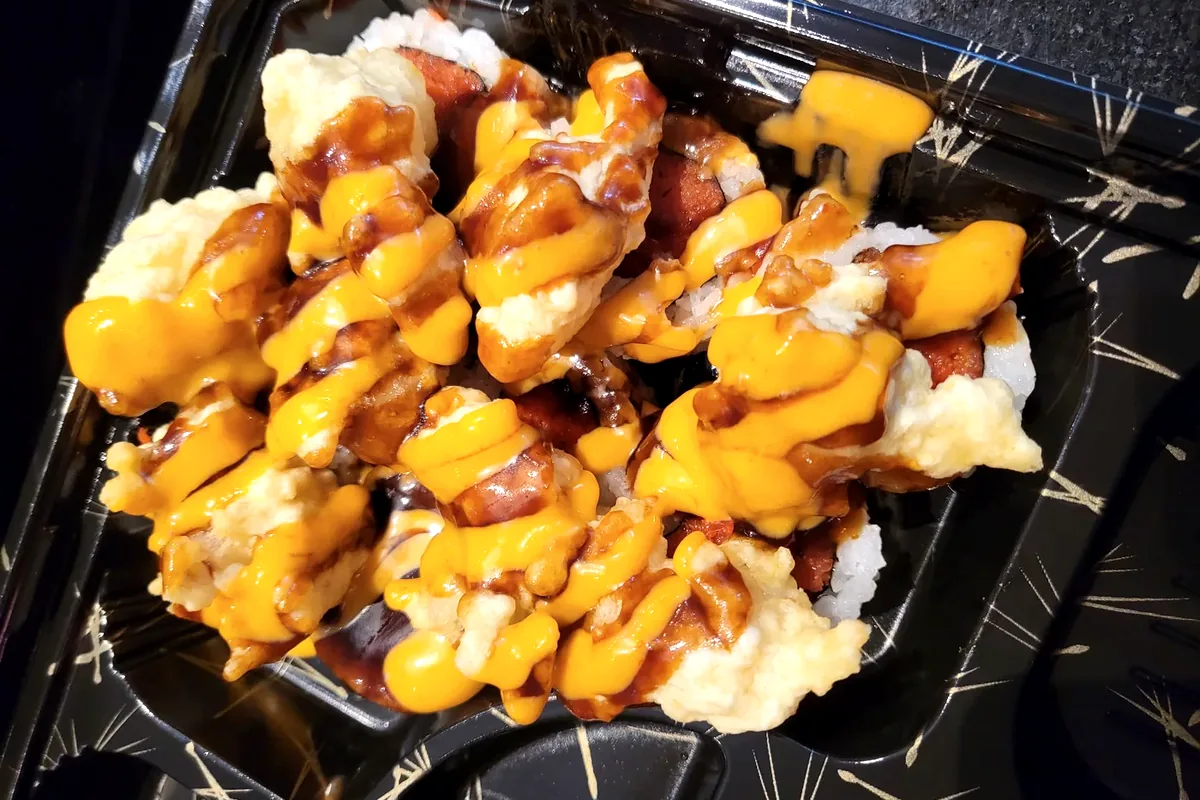
Baked, it changes completely. Scallop mixed with sauce and finished under heat turns rich and savoury, and it goes on top of a roll rather than inside it. Fried as popcorn scallop, it becomes a crunchy topping with a soft centre.
Crawfish and mussel
Two that people rarely order deliberately and often enjoy most.
Crawfish is small, sweet and firm, and it is always cooked. Baked, it goes over a California roll as Rock ’N Roll. Deep fried, it becomes the Popcorn Roll over spicy tuna.
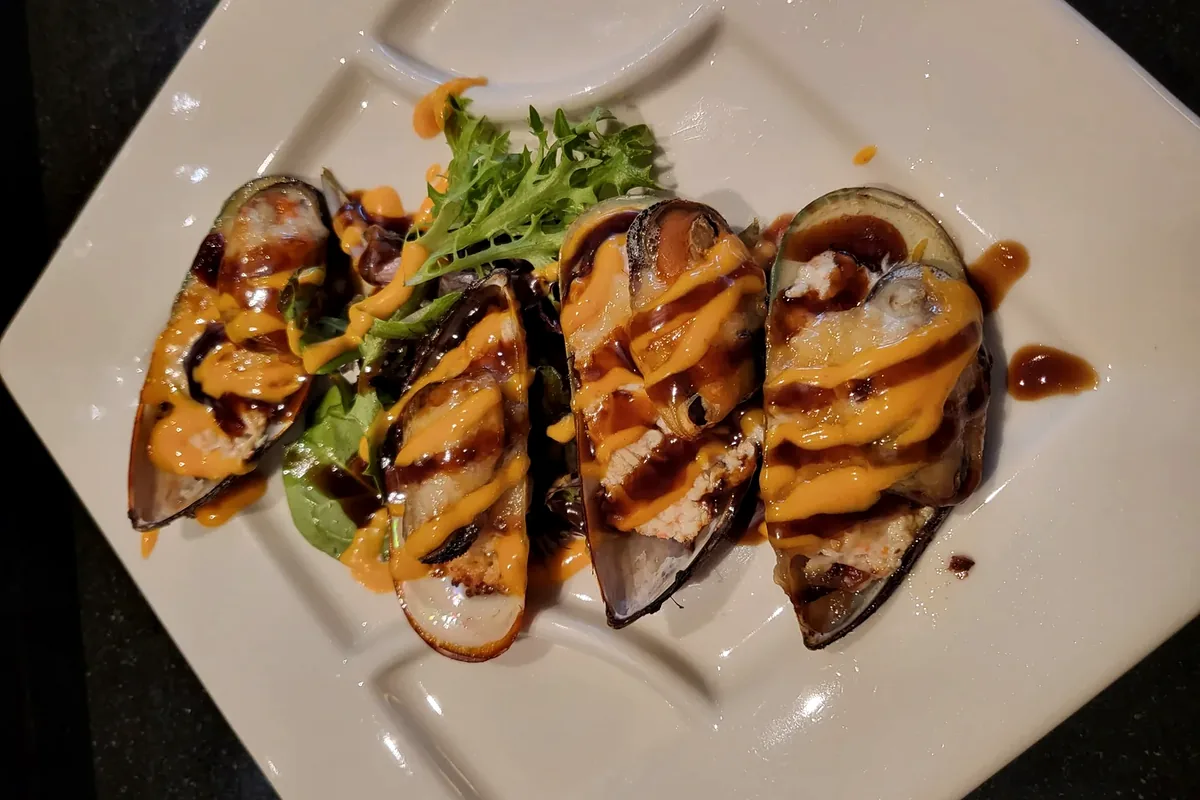
Green mussel is served baked, in the half shell, with crab, eel sauce and spicy mayo. It is closer to a rich appetiser than to seafood in the plain sense, and it is the sort of thing to order alongside something clean rather than on its own.
Raw or cooked, at a glance
| Shellfish | How it is served | Raw or cooked |
|---|---|---|
| Imitation crab | In rolls, plain or spicy | Cooked |
| Soft shell crab | Fried, whole | Cooked |
| Shrimp | Boiled, tempura or popcorn | Cooked |
| Crawfish | Baked or deep fried | Cooked |
| Green mussel | Baked in the shell | Cooked |
| Calamari | Tempura, or in stir-fried noodles | Cooked |
| Scallop | Sliced or chopped spicy | Raw |
| Scallop | Baked, or fried as popcorn | Cooked |
Ordering tip
Shellfish allergies are common and serious, and shellfish runs through more of a Japanese menu than it looks like it does — including imitation crab, which is a fish product rather than crab but is not allergen-free. If anyone at the table has an allergy, tell the restaurant directly rather than working it out from dish names.
Why so much of it is cooked
Partly practicality: shrimp, crab and mussel are all better cooked, and always have been. Partly texture — a menu made entirely of soft raw fish would be monotonous, and shellfish is where the crunch, the warmth and the richness come from.
It also means the shellfish section is the most accessible part of a sushi menu. If you are eating with someone who does not want raw fish, this is where you look first — and our guide to ordering without it leans heavily on exactly these ingredients.
How to build a shellfish order
- Take one baked and one fried. They are the two richest treatments, and they are rich in different directions.
- Put scallop in twice. Once spicy in a hand roll, once baked on a roll. It is the clearest demonstration of what cooking does to shellfish.
- Use shrimp as the safe order. Cooked, familiar and mild — the one nobody at the table will object to.
- Do not stack the sauces. Baked shellfish already arrives sauced; adding a second sauced roll flattens both.
- Balance with something plain. A cucumber or avocado roll resets the palate between rich items.
Frequently asked questions
Is imitation crab real crab?
No. It is a cooked fish paste product, usually made from white fish, shaped and coloured to resemble crab leg. It contains fish, so it is not suitable for anyone avoiding seafood.
Is scallop safe to eat raw?
Scallop is commonly served raw at sushi bars. As with any raw seafood, if you have concerns about raw items for health reasons, ask the restaurant or order one of the cooked versions instead.
What is the difference between spicy crab and spicy tuna?
The same treatment applied to different ingredients. Spicy crab uses imitation crab and is cooked; spicy tuna uses raw tuna. They look similar in a description and are not interchangeable.
Which shellfish roll is best for a beginner?
Anything built on a California roll, or anything with shrimp tempura in it. Both are entirely cooked and mild.
Can I get shellfish in something other than sushi?
Yes. The seafood stir-fried noodles are made with calamari, scallop, shrimp and mussels, and there are shrimp and mussel dishes on the appetiser list.
The short version
Crab is usually imitation and always cooked. Shrimp is the most versatile thing on the menu. Scallop is the only one served both ways, and it is worth ordering twice to see why.
The whole list is on the menu, spread across the appetisers, the basic rolls and the specialty section.