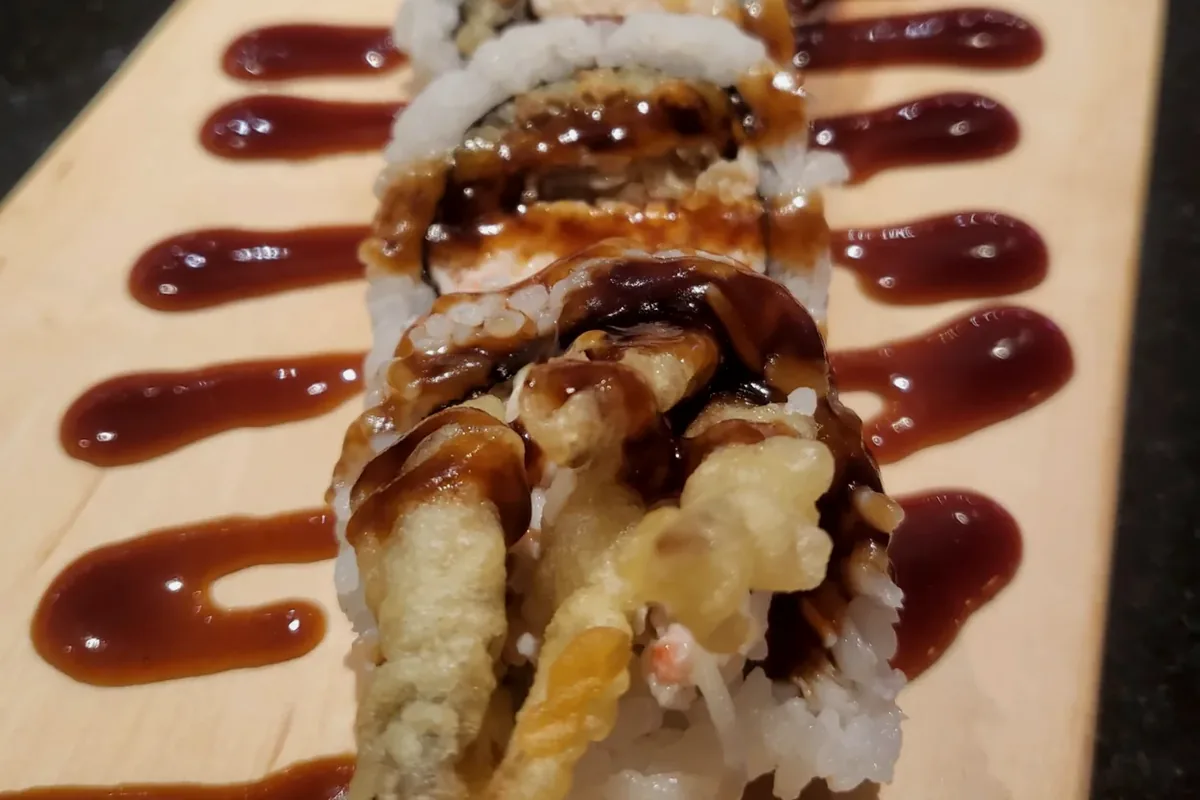
The short answer
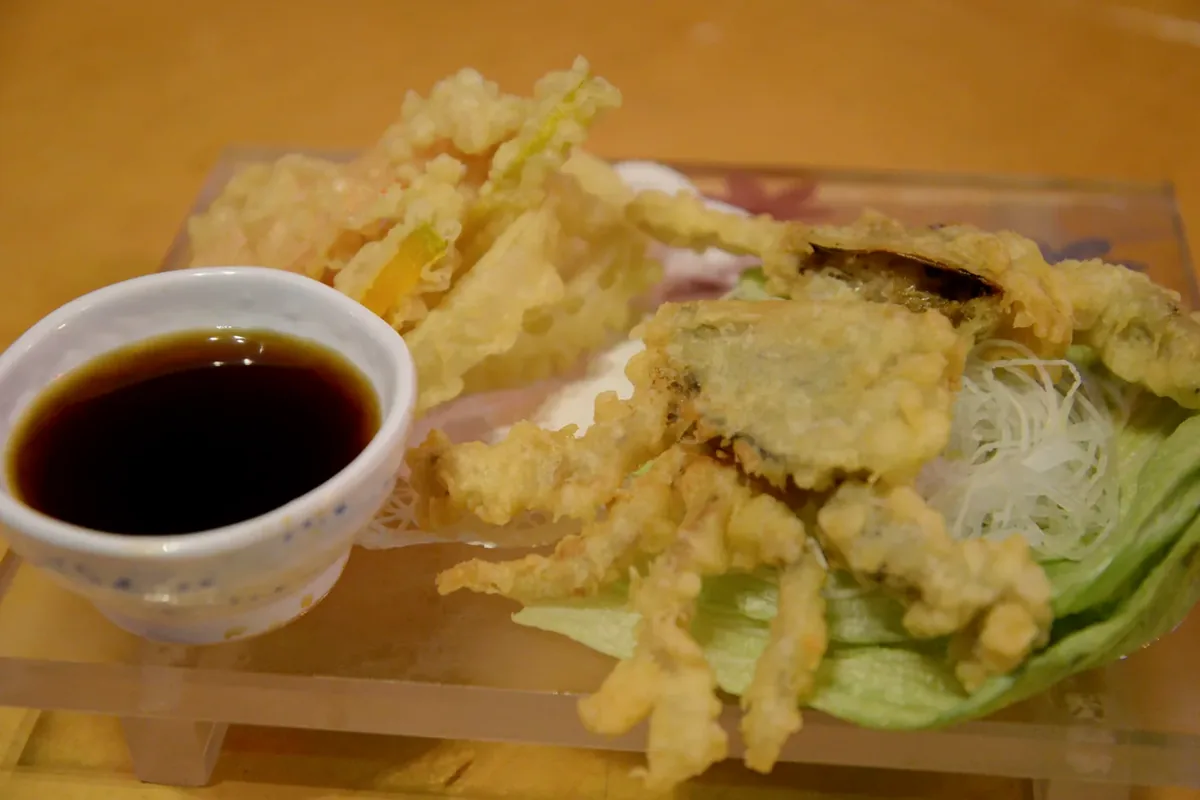
Tempuraa thin wet batter, lacy and light
Pankoa coarse dry crumb, properly crunchy
And a third case: no coating at all, where a finished roll goes into the fryer whole. Three techniques, three completely different textures.
A Japanese menu will tell you something is fried in at least four different ways, and the words are not interchangeable. Each one produces a specific texture, and knowing which is which saves you from ordering three things that turn out to be the same.
01 — TempuraA batter, not a breading
Tempura is a wet batter: flour, egg and very cold water, mixed briefly and badly on purpose. Lumps are correct. Overwork it and the gluten develops, the coating turns bready, and you have lost the thing you were making.
Fried properly it goes lacy and pale rather than golden brown, with a shell thin enough to see the shape of what is underneath. Shrimp keeps its curve. Vegetables stay recognisably themselves. The batter is a wrapper, not a layer.
Because the coating is thin, tempura goes soft faster than anything else on the menu. This is why a good kitchen sends it out the moment it comes out of the oil, and why shrimp tempura udon is served with the tempura on the side rather than in the broth.
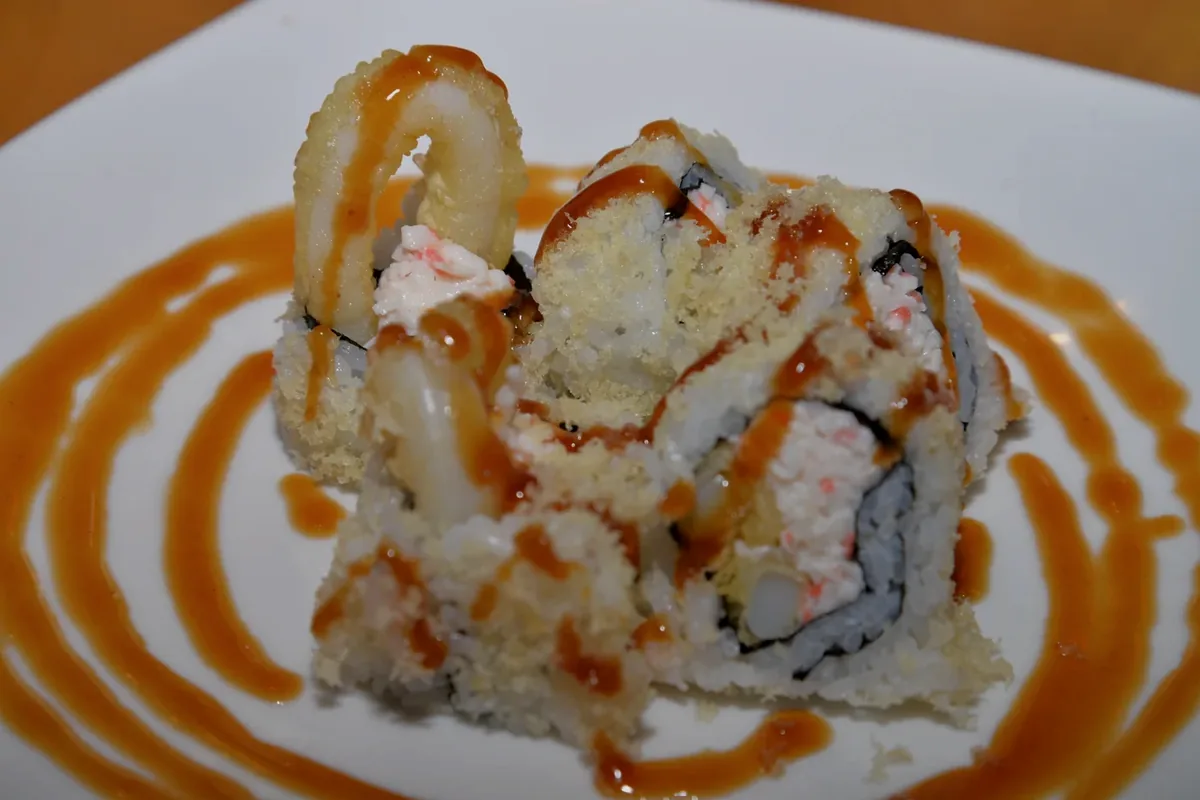
Where tempura shows up
It appears in three places on most Japanese menus, and it is worth recognising all three:
- As an appetiser. Mixed tempura of shrimp and vegetables, or calamari tempura, served with a dipping sauce.
- Inside a roll. Shrimp tempura is the single most common filling on any specialty list. Squid and tilapia turn up too.
- Beside a noodle bowl. Shrimp tempura udon puts the tempura on a separate plate, because dropping it into broth would ruin it within a minute.
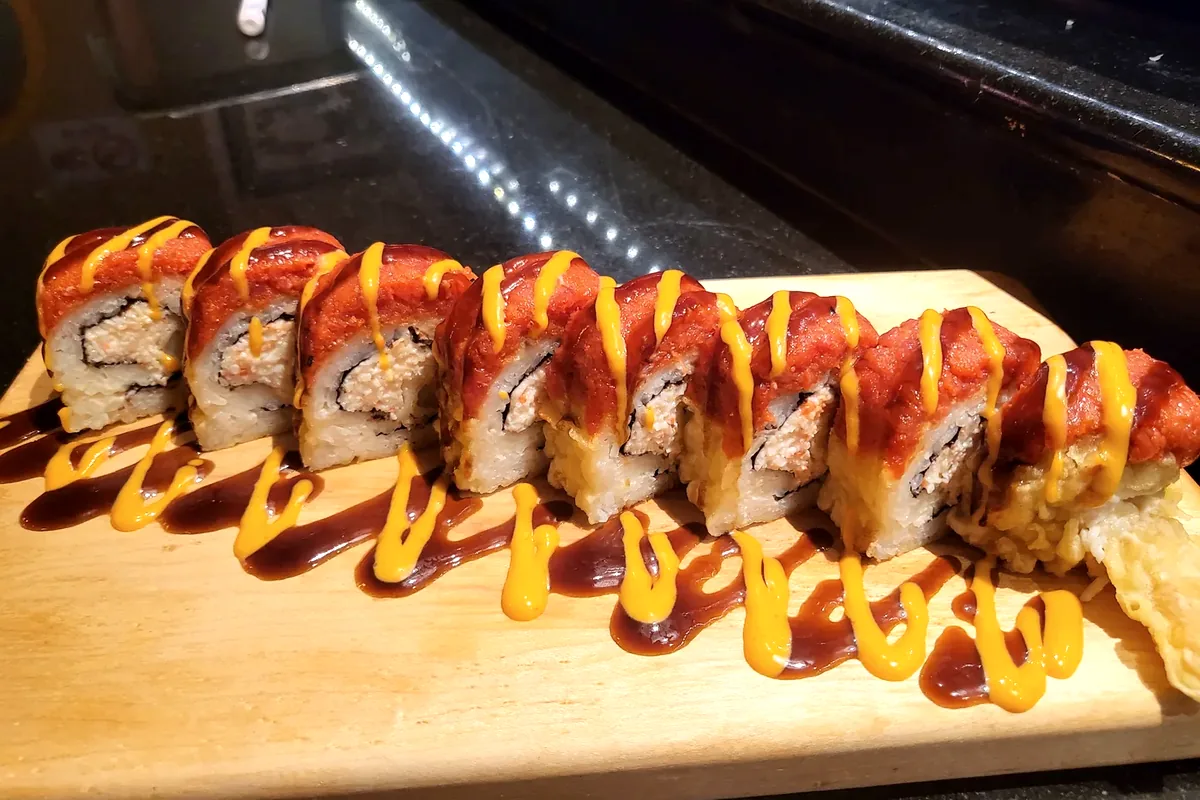
The crumb that behaves differently
Panko is a Japanese breadcrumb, and it is not like the fine dry crumb sold everywhere else. It is made from bread baked without crusts, then torn rather than ground, which produces large flat flakes instead of round grains.
Those flakes absorb less oil and hold their shape, so panko fries into something genuinely crunchy that stays crunchy. It is a coating with structure, where tempura is a coating with none.
The classic panko dish is katsu — a cutlet dredged in flour, dipped in egg, pressed into panko and fried, then sliced across. We compared it with the other great chicken dish in katsu versus teriyaki.
Good to know
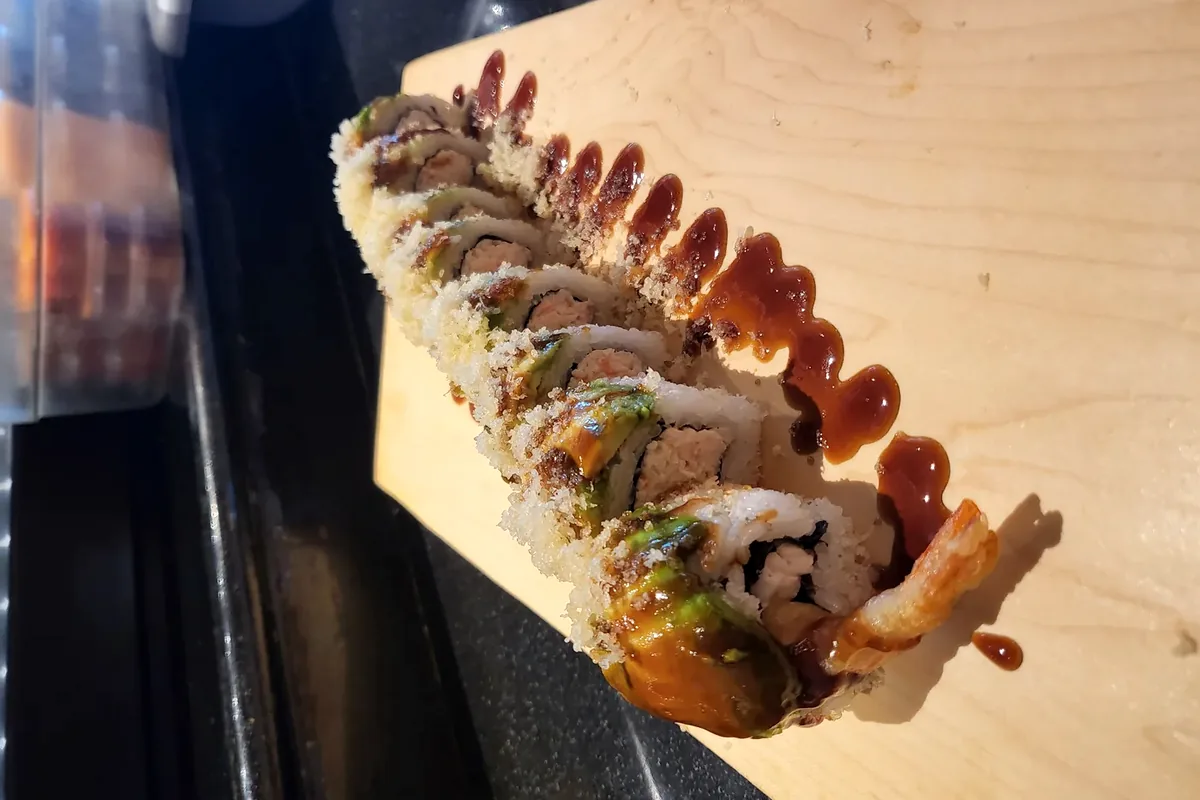
If a description says crunch rather than crunchy, it means something specific: fried tempura crumb scattered over the top of a roll. It is a topping in its own right, added to rolls that are otherwise not fried at all, and it is how a fresh roll gets texture without going near the fryer.
Frying the whole thing
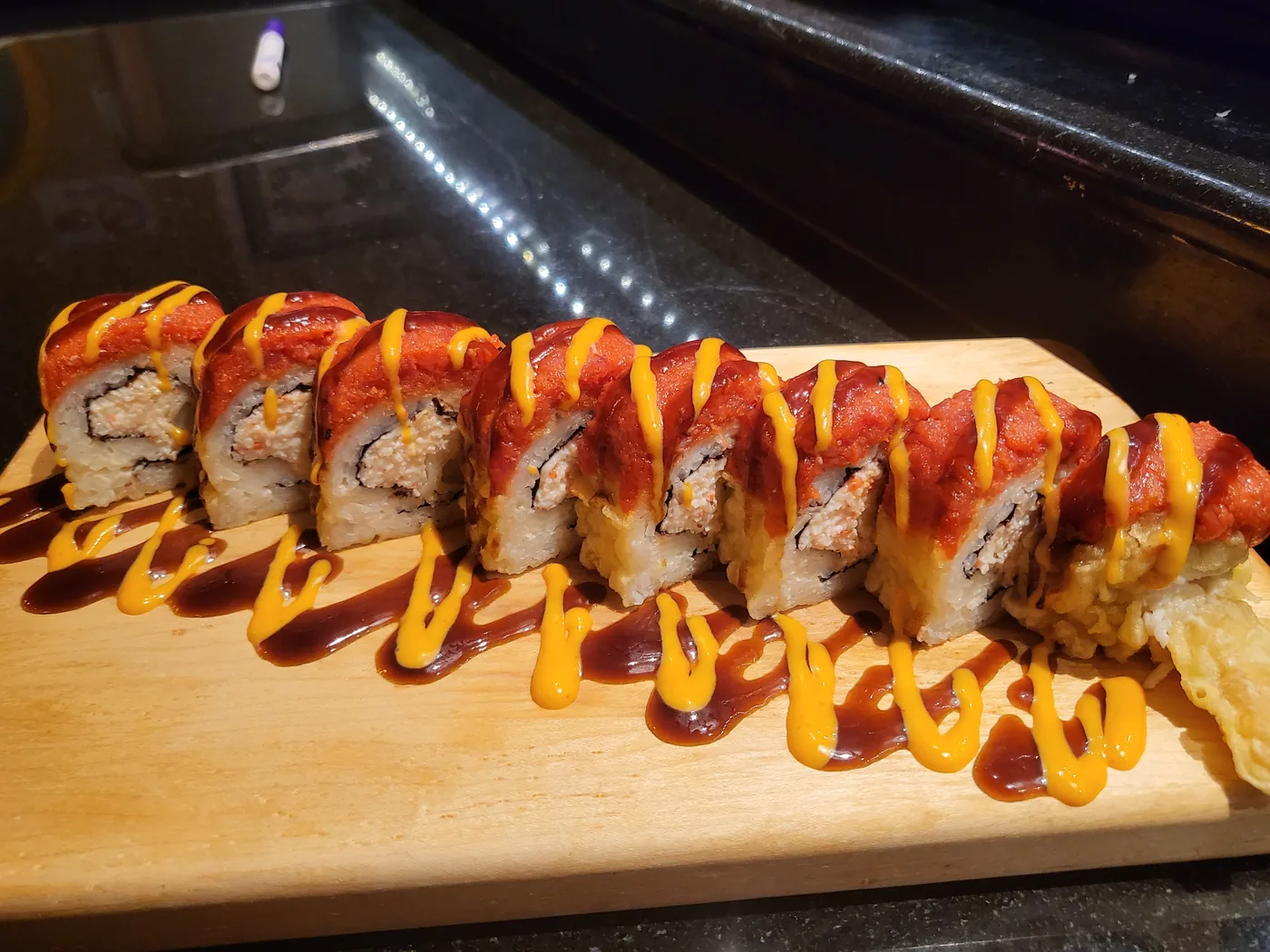
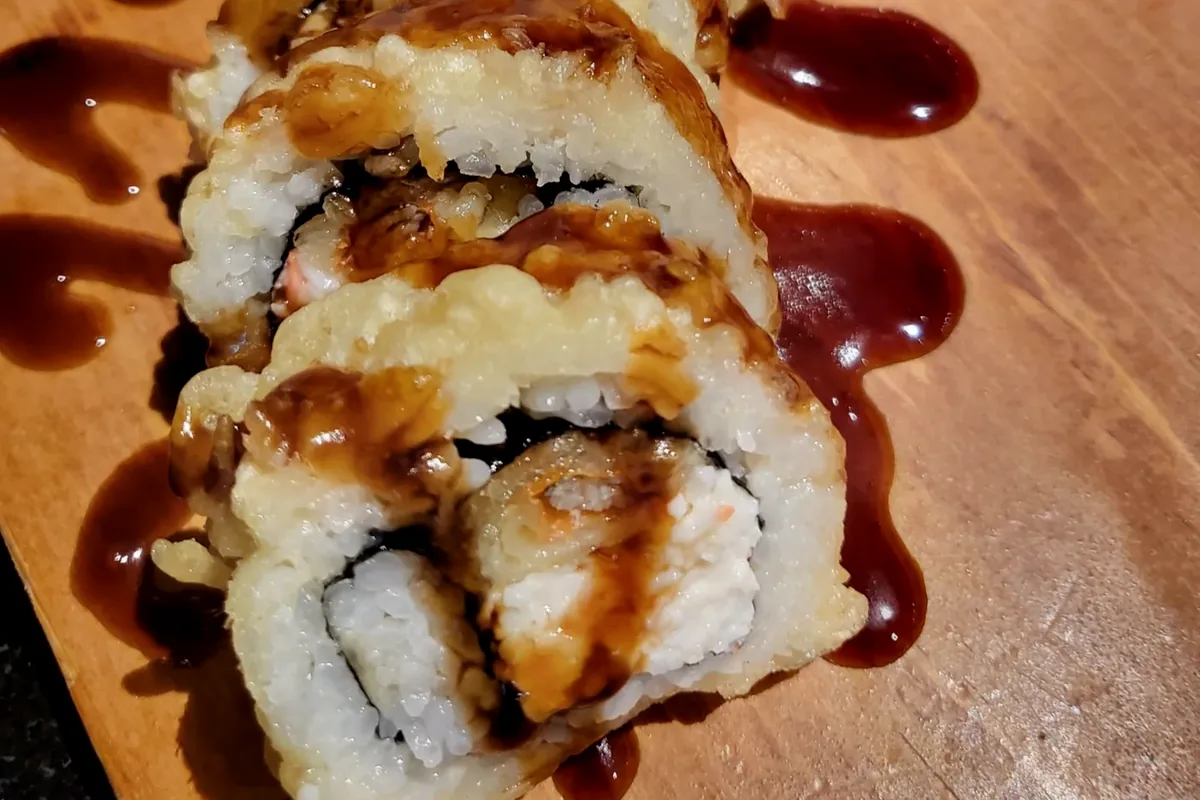
The third technique is the one that surprises people: an entire finished roll, rice and all, battered and dropped into the fryer. The outside crisps, the rice inside heats through, and the roll is sliced and sauced while it is still hot.
On our list these are the ones with Golden in the name, plus a few others. Golden California is a fried California roll. Golden Spicy Tuna is a fried spicy tuna roll. Las Vegas and the Crazy rolls work the same way.
You will also see lightly fried, which is a shorter time in the oil. The roll sets and warms without developing a hard shell — softer, less dramatic, and easier to eat a lot of.
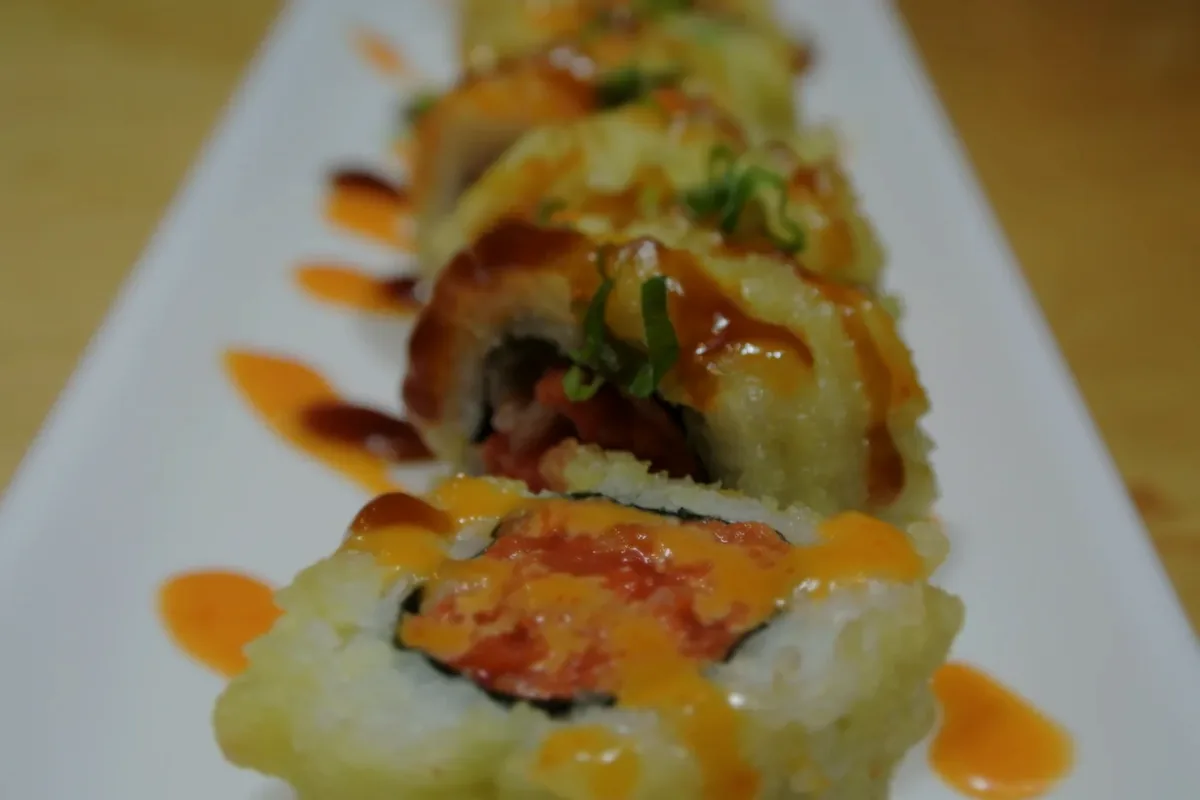
The four techniques compared
| Technique | Coating | Texture | Holds up? |
|---|---|---|---|
| Tempura | Thin wet batter | Lacy, delicate, pale | Poorly — eat at once |
| Panko | Coarse dry flakes | Properly crunchy | Well |
| Deep fried whole | Batter over the finished roll | Crisp shell, warm centre | Moderately |
| Lightly fried | Batter, shorter fry | Set and warm, little crunch | Well |
| Crunch topping | Loose fried crumb, scattered | Crunchy specks | Well |
Soft shell crab is its own case
Soft shell crab is a crab caught after it has moulted and before its new shell hardens, which means the whole animal is edible — shell, legs and all. Fried, it is one of the few things where the crunch and the filling are the same object.
It turns up as an appetiser on its own, and rolled into a Spider roll, where the legs are left sticking out past the rice on purpose. Jumbo Spider is the lightly fried version of the same idea.
How to order fried food well
- One fried thing per course. Two tempura dishes together is a lot of the same texture.
- Eat tempura first. It is the only item on the table with a real deadline.
- Pair fried with cold. A fried roll next to sashimi or a salad works far better than two fried rolls.
- For takeout, prefer panko. Katsu survives a drive home; tempura does not.
- Watch for double-frying. A roll described as deep fried with shrimp tempura inside is fried twice, which is very rich.
Frequently asked questions
Is tempura the same as batter-fried?
It is a specific kind of batter — cold, thin and deliberately undermixed. A heavier batter produces something closer to a fish-and-chips coating, which is a different dish entirely.
Why is panko crunchier than normal breadcrumbs?
The flakes are larger and flatter, so they absorb less oil and keep more air between them. That is the whole reason panko has been adopted well beyond Japanese cooking.
Does tempura contain egg or wheat?
A traditional tempura batter is made with wheat flour and usually egg, and panko is made from bread. If you need to avoid either, ask the restaurant about the specific dish rather than assuming from a menu description.
Is a deep fried roll still sushi?
Yes. Sushi is defined by the seasoned rice, not by temperature or technique. A fried roll is sushi in exactly the same sense a fresh one is.
Which fried dish travels best?
Panko-breaded katsu, comfortably. Deep fried rolls hold up reasonably. Tempura is the one to eat in the restaurant.
The short version
Tempura is a thin wet batter and it is fragile. Panko is a coarse dry flake and it is sturdy. A whole roll in the fryer is a third thing again, and crunch is a topping rather than a technique.
All four are on the menu — and if you are reading the specialty list, the words that signal each one are worth learning first.