The short answer
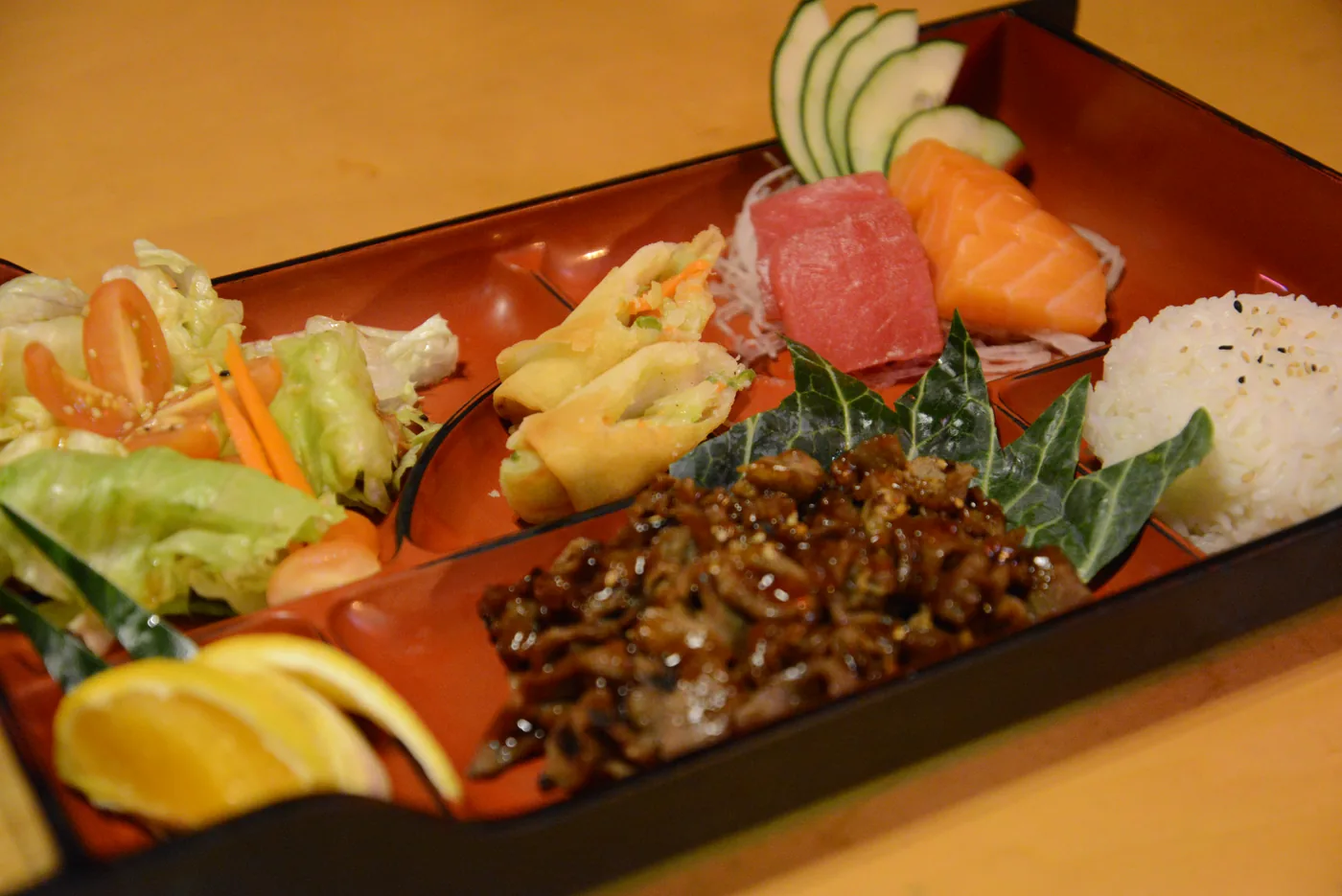
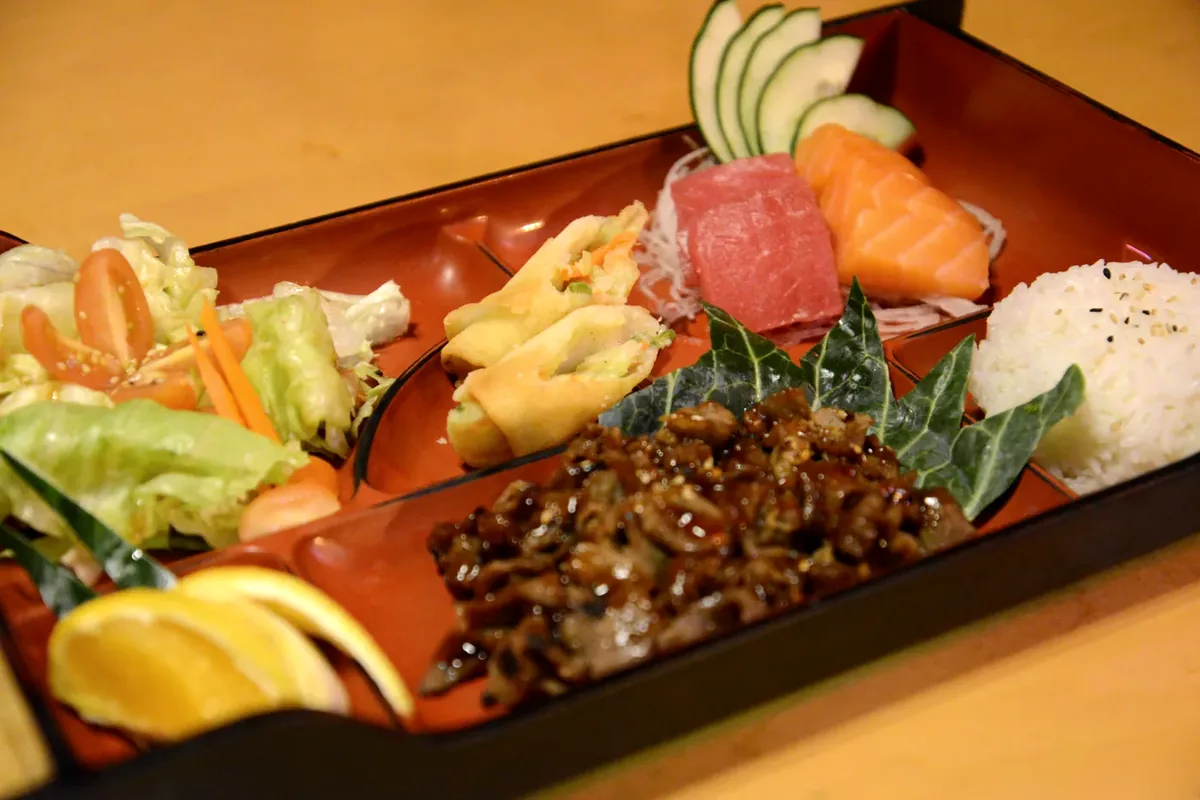
A bentoa full meal in one divided tray
At a restaurantyour choice of items, plus set sides
The compartments are the whole idea. Nothing touches, nothing goes soggy, and you get several dishes without ordering several dishes.
It is the order to make when you cannot decide, and the one most people default to on a first visit. Worth knowing what you are actually getting, and why it is built the way it is.
01 — The ideaA bento is a container before it is a meal
Bento is the box. The word describes a single-portion meal packed into a divided container, and it has been a part of Japanese life for centuries — carried to work, to school, onto trains, and sold on station platforms.
What makes it a bento rather than a plate with sections is the intent behind the divisions. Each compartment holds something different, and the point is that they stay different: the fried thing stays crisp, the salad stays cold, the rice does not absorb anyone else’s sauce.
A restaurant bento borrows that structure. It is a way of putting three or four separate dishes in front of one person without any of them arriving as a compromise.
What is usually in one
Bento contents vary enormously, but the architecture is consistent. Almost every one is built from four kinds of thing:
- A staple. Rice, nearly always. It is the anchor, and the portion is calibrated to the rest of the box.
- A main. Something grilled, glazed or fried — the item you would have ordered on its own.
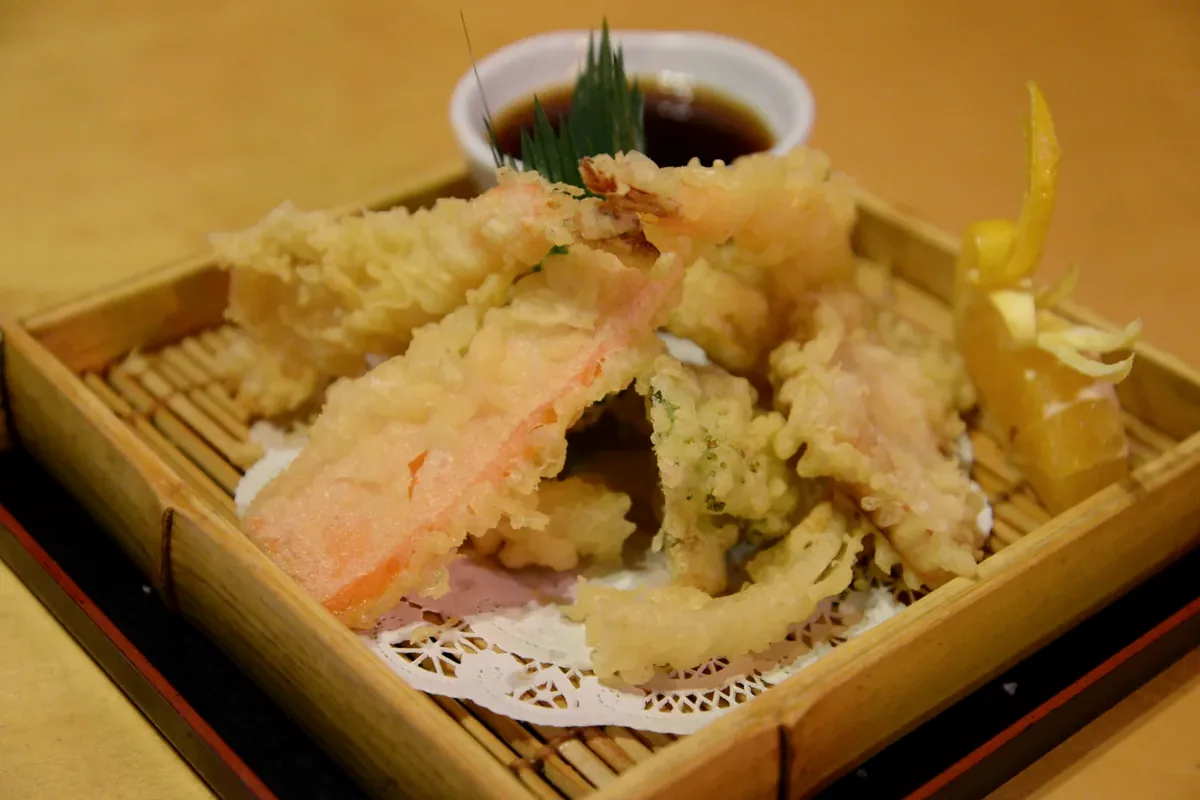
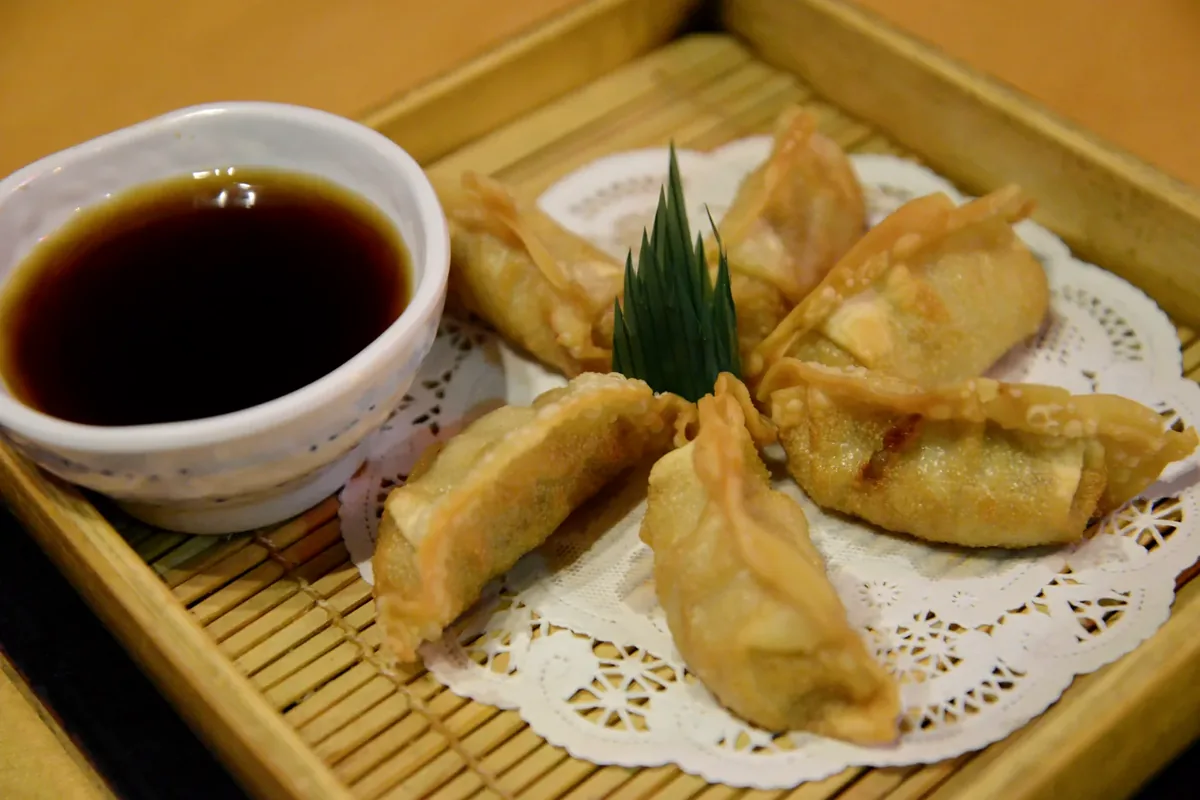
- A second, smaller dish. Often fried, often shared duty as an appetiser: tempura, gyoza, a few pieces of sushi.
- Something cold or sharp. Salad, pickles, or in a restaurant setting a bowl of soup alongside.
That last category is the one people overlook, and it is what stops a box of fried food from becoming heavy. Take it out and the whole thing reads differently.
How a restaurant bento works
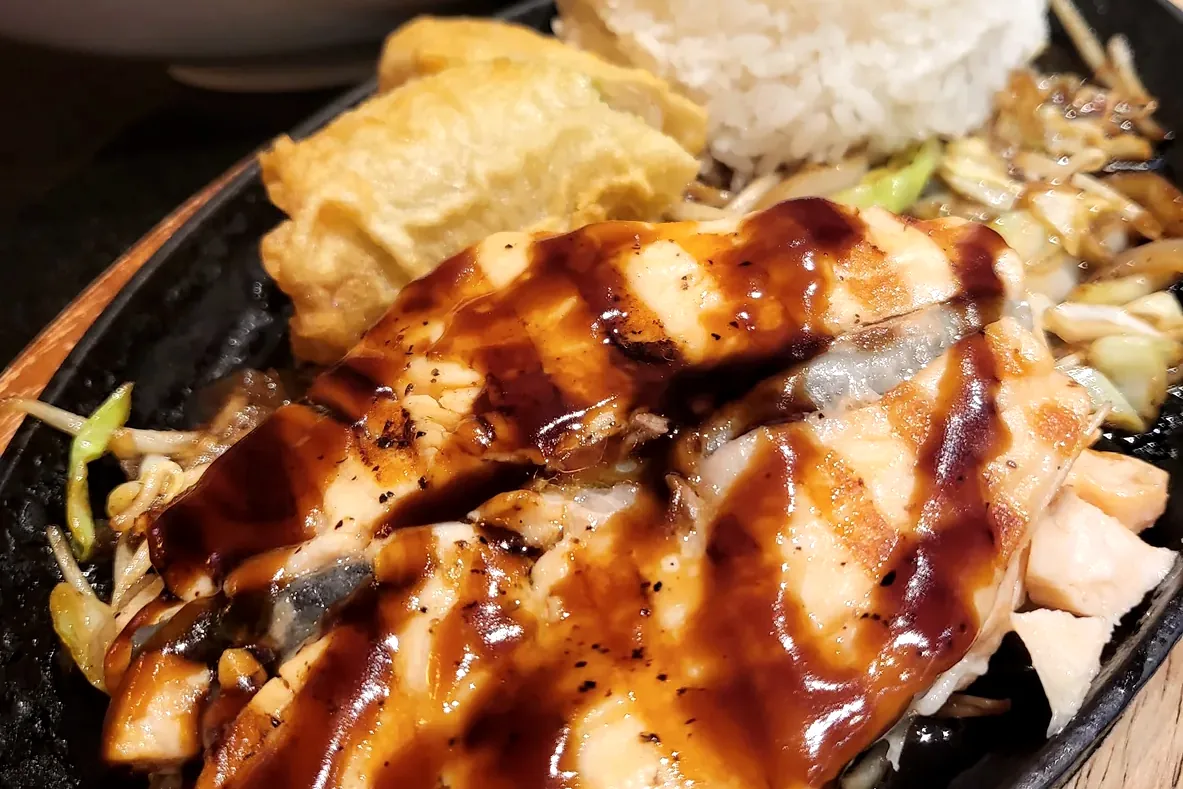
Ours is a combination rather than a fixed box: you choose any two items, or any three, and they arrive together with salad, miso soup and steamed rice. The sides are the same either way, so the only decision is how many mains you want and which ones.
Two items is a normal lunch. Three is a large meal, and worth ordering when you want to try something unfamiliar alongside something you already know you like — the low-risk way to work through a menu.
Because the choices come from the wider menu, a bento is also the answer to the most common ordering problem at a Japanese restaurant: wanting both the sushi bar and the hot kitchen in the same meal.
| Part of the box | What it does | What to look for |
|---|---|---|
| Steamed rice | Anchors the meal | Comes with the combination |
| Miso soup | Something warm and savoury to start | Comes with the combination |
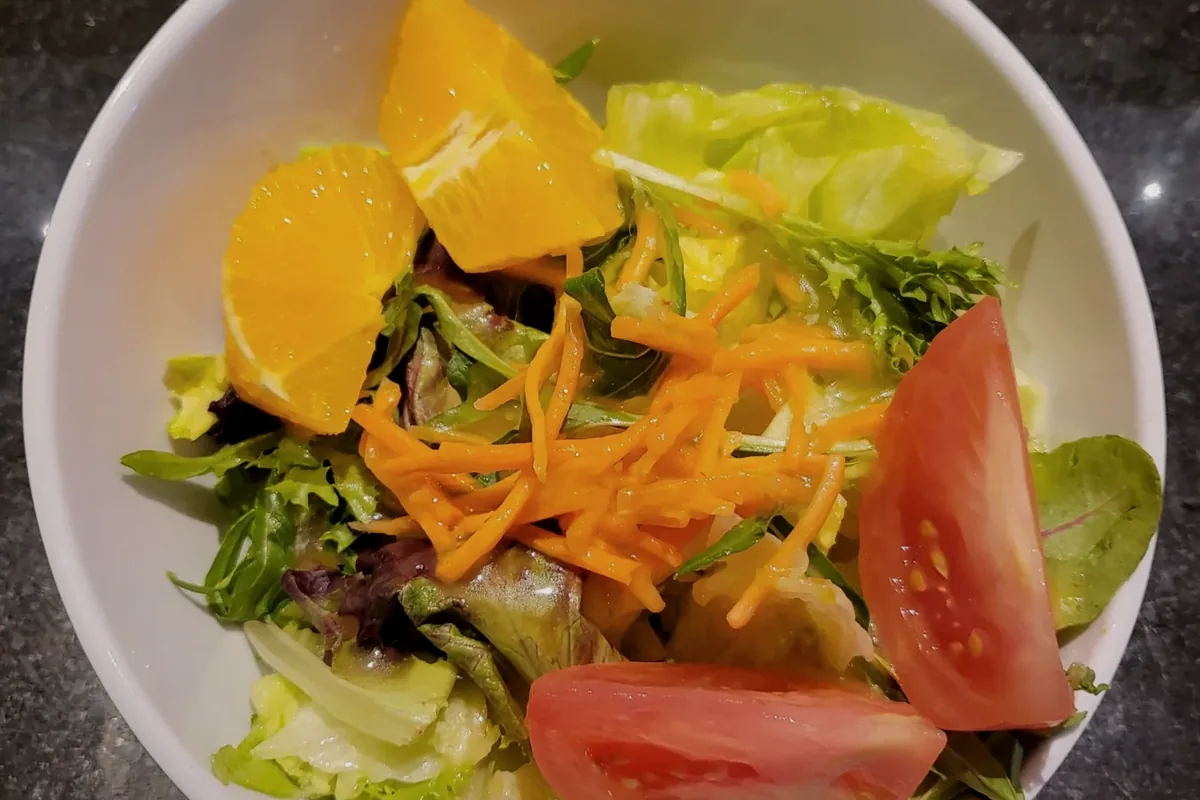
| Salad | Cold and sharp against fried food | Ours is dressed with mango |
| First item | The main event | Grilled, glazed or breaded |
| Second item | Contrast in texture | Pick something fried if the first is not |
| Third item | Optional, on the larger combination | A good place to try something new |
Ordering tip
Choose for contrast rather than preference. Two fried items make a heavy tray; one grilled and one fried gives you somewhere to go between mouthfuls. The same logic applies to the sushi bar — pairing a roll with a hot dish works better than two rolls.
Why bento travels better than almost anything
The format was designed to be carried, and that has not stopped being true. Compartments keep fried items away from wet ones, which is the single biggest reason takeout arrives disappointing.
Compare it with a noodle soup, where the noodles start softening the moment the lid goes on. A bento has no such clock — the only item on a timer is anything fried, and even that holds far better in its own compartment than it would sharing a container.
If you are ordering for a group with mixed tastes, several bentos will nearly always land better than one large shared order. Everyone gets their own combination and nobody negotiates.
When to order a bento instead of a plate
- It is your first visit. Two or three items tells you more about a kitchen than one does.
- You want sushi and something hot. A bento is the only order that does both without doubling the meal.
- You are eating alone. Variety without ordering three dishes for one person.
- You are taking it home. The compartments do the work that packaging usually fails at.
- You want a fixed portion. A combination is a defined amount of food, unlike a table of shared plates.
Bento for children
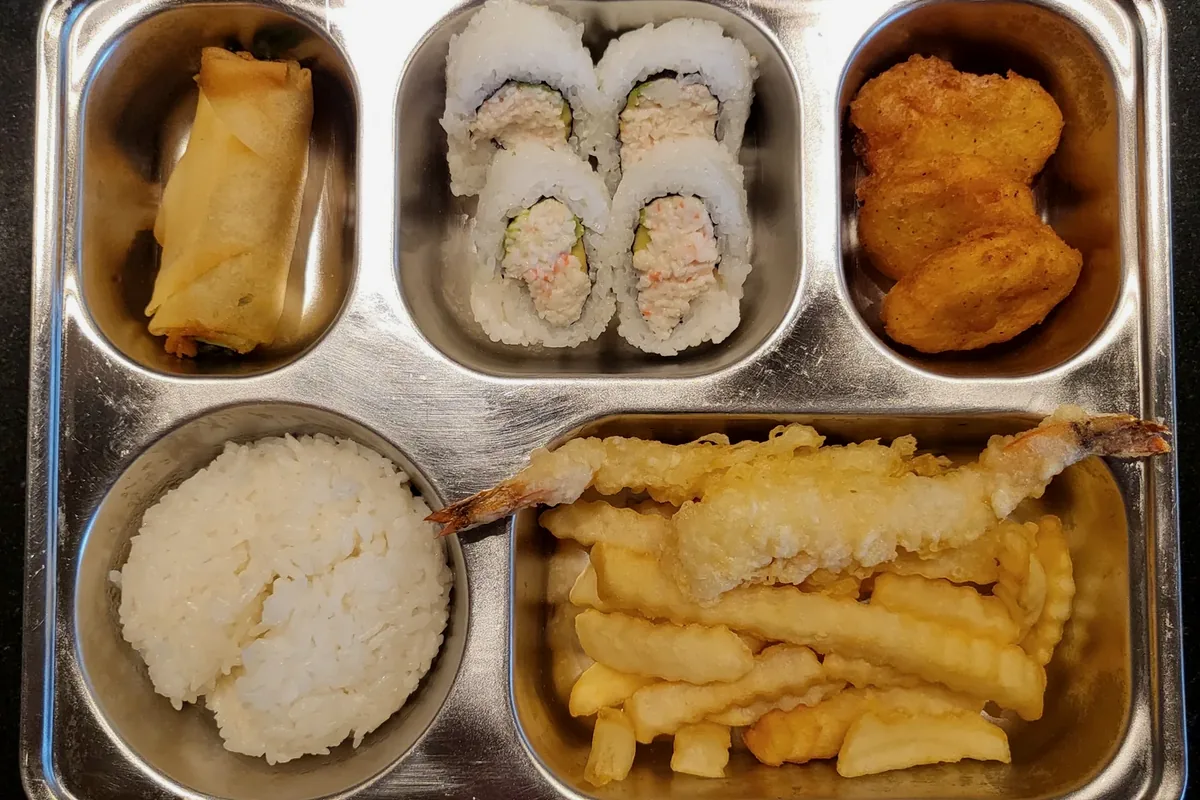
The divided-tray format works particularly well for children, which is not an accident — generations of Japanese schoolchildren have eaten from one. Nothing touches, portions are visible, and an unfamiliar item sits next to a familiar one rather than replacing it.
We list a kids’ meal separately, served with miso soup or salad. It follows the same principle at a smaller scale.
What comes alongside
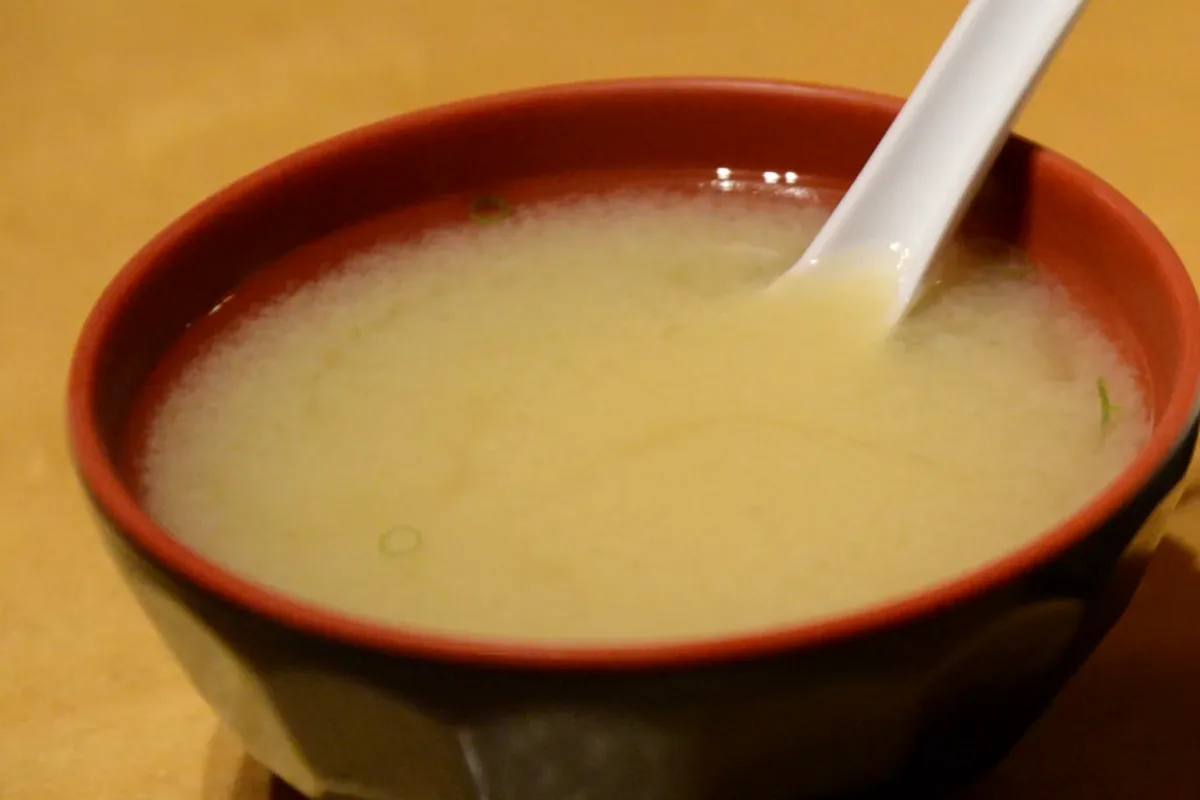
Miso soup is served with the combination rather than as a separate course, and it is meant to be drunk from the bowl between mouthfuls rather than spooned through at the start. There is no wrong moment for it.
The salad arrives at the same time for the same reason. Japanese meals are not sequenced the way Western ones are — everything lands together and you move between the parts as you like. If that ordering feels unfamiliar, our guide to eating across a Japanese menu covers it in more detail.
Frequently asked questions
Is a bento box always Japanese?
The word and the format are Japanese. Divided lunch containers exist across East Asia under other names, but bento specifically refers to the Japanese tradition.
Is a bento box enough food for a meal?
Yes. A two-item combination with rice, soup and salad is a full meal for most people; three items is a large one.
Can I choose what goes in it?
Yes — the combination is built around your choice of two or three items. The available choices are listed on the menu, so it is worth reading that section before you decide.
Is bento good for takeout?
It is one of the best things on a Japanese menu to take home, because the compartments keep fried items away from anything wet. A noodle soup does not survive the same journey.
Can a bento be made without seafood, or without meat?
It depends which items you choose. Tell the restaurant what you are avoiding when you order rather than assuming from a dish name, particularly if it is an allergy.
The short version
A bento is a full meal in a divided tray, and the divisions are the point. Choose two or three items for contrast rather than preference, and you get the widest read on a kitchen that a single order can give you.
Ours come with salad, miso soup and steamed rice. Have a look at the full menu to see what you would put in one.