The short answer
RamuneJapanese soda in a marble-sealed bottle
To openpush the marble down, firmly, once
The marble is not a toy and it is not a gimmick. It was the bottle cap, and it stayed after better caps were invented.
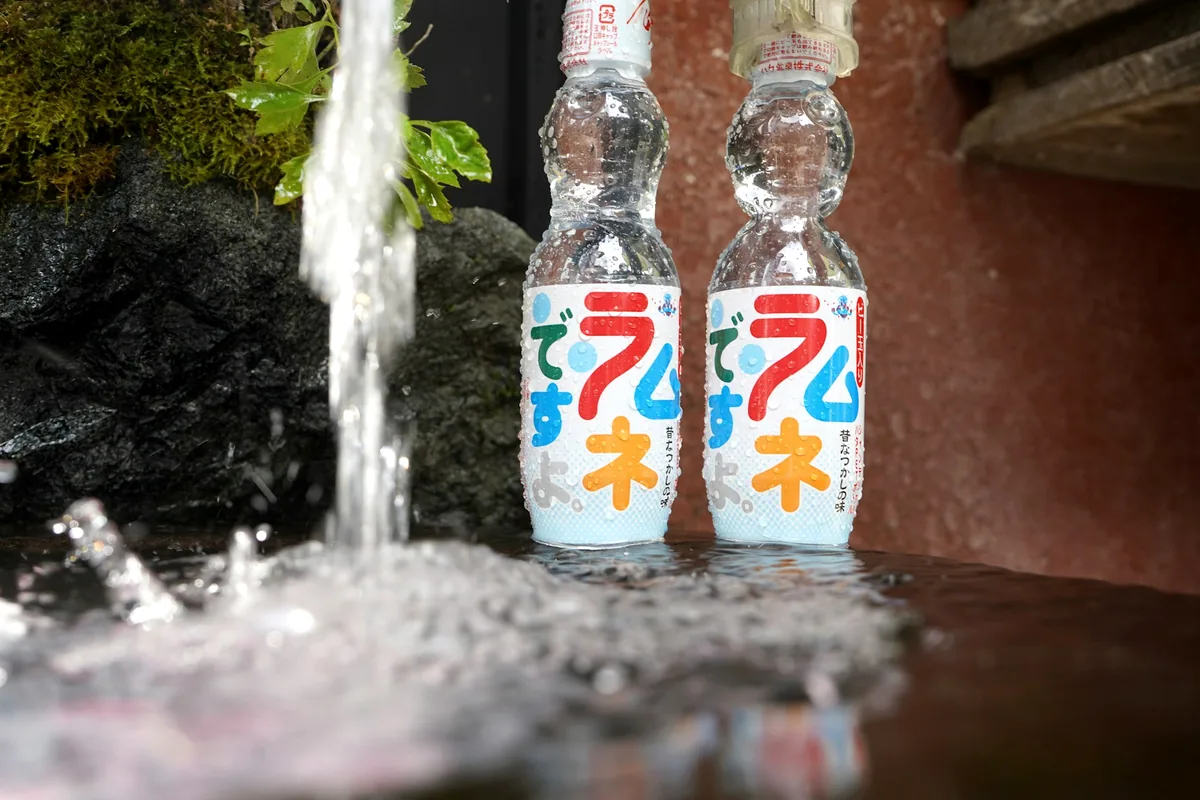
There is a glass ball inside the bottle. Everyone notices it, most people are briefly unsure whether they are allowed to drink it, and almost nobody knows why it is there.
01 — The marbleIt used to be the cap
The bottle is older than the drink, and it was invented to solve a problem that no longer exists.
In 1872 an English engineer named Hiram Codd patented a bottle for carbonated drinks. Sealing fizzy liquid was genuinely difficult at the time: cork dried out, leaked and let the gas escape. Codd’s idea was to let the drink seal itself. The bottle is filled upside down, and the pressure of the carbonation pushes a glass marble up against a rubber ring in the narrow neck. The tighter the fizz, the tighter the seal.
To open it you push the marble down and break the seal. The marble then falls into the neck, where a pinched section of glass catches it so it cannot block the flow while you drink.
The crown cap arrived in the 1890s and was cheaper and better in every way. Codd-neck bottles disappeared almost everywhere — except in Japan, where the drink inside had become popular enough that the bottle became part of its identity.
Where the name comes from
Ramune is the English word “lemonade”, passed through Japanese pronunciation and worn down.
Japanese has a fixed set of syllables and borrowed words get reshaped to fit. “Lemonade” becomes ra-mu-ne, and after a century of use the connection to the original word is barely visible. The same process gave Japanese pan for bread, from Portuguese, and terebi for television.
So the name is a fossil of when the drink arrived, in the second half of the nineteenth century, along with a great many other Western things.
02 — Opening itOne firm push, and mean it
This is where it goes wrong for people, and the failure mode is always the same: a tentative push.
- Take the plastic cap off the top. Inside it is a plunger — a small plastic piece that sits over the marble.
- Stand the bottle on the table. Do not hold it in the air; you want a firm surface underneath.
- Push straight down, hard, once. The marble drops with an audible pop and the drink fizzes up.
- Keep the bottle upright for a few seconds. This is the step people skip. It foams, and tilting it immediately is how you end up wearing it.
- Tilt so the marble rests in the pinched neck when you drink, and it stays out of the way.
A hesitant push is worse than a hard one. Half-breaking the seal lets gas out slowly around the marble, which produces more foam over a longer period and no satisfying pop at all.
Please don’t
The marble is sealed inside a glass bottle and it is meant to stay there. Do not break the bottle to get it out, and keep the empty bottle away from small children who might try. Ramune is also a sugary carbonated drink, so if that matters for you or for someone at your table, treat it the way you would any other soda.
What it tastes like
Original Ramune is the flavour people find hardest to describe, because it does not correspond to a fruit.
It is lemon-lime at its base, but sweeter and rounder than a Western lemonade, with a distinct candied note that most people place somewhere near bubblegum. It is very sweet, quite heavily carbonated, and unmistakably itself. Nobody drinks a Ramune and thinks of Sprite.
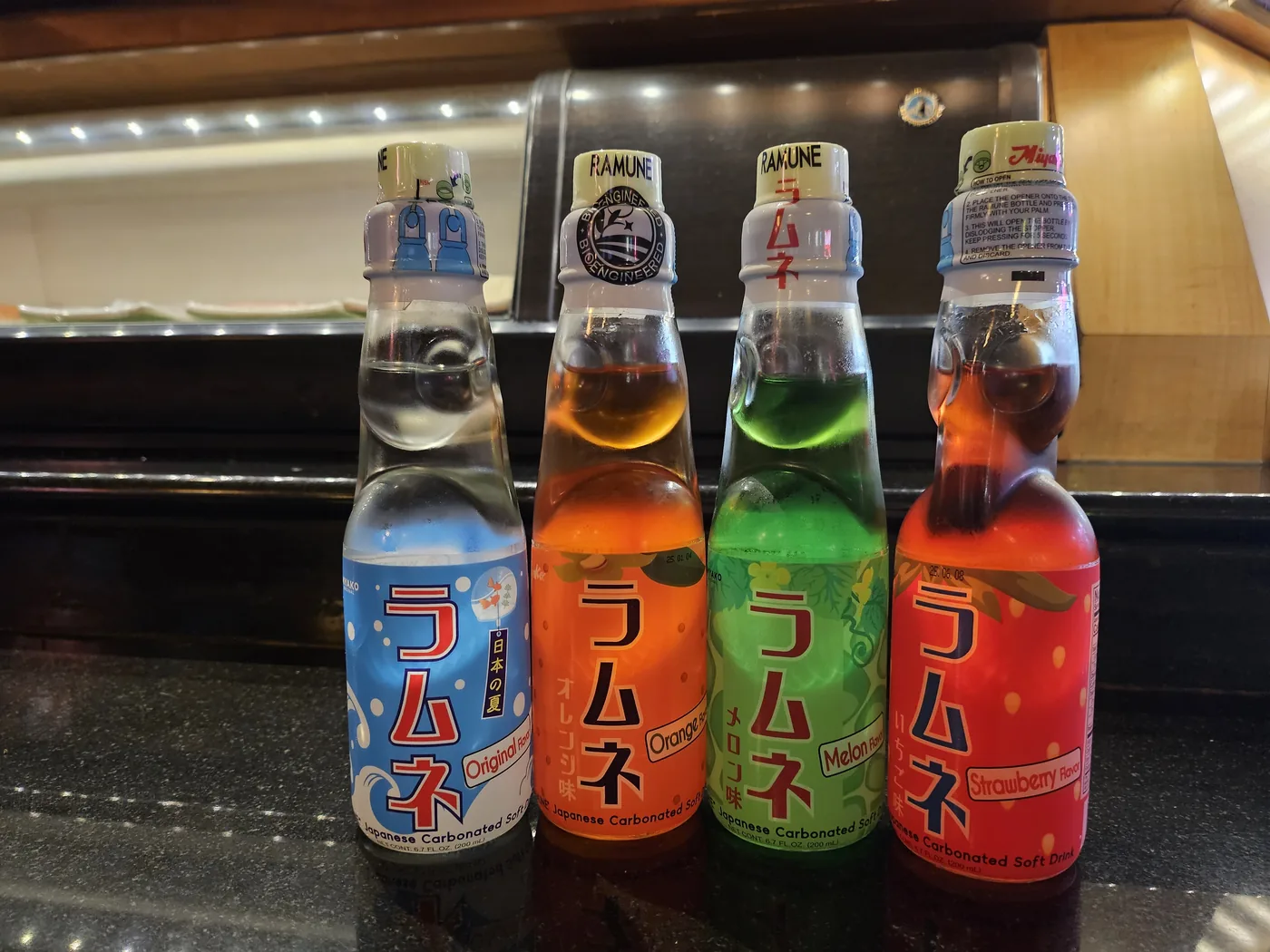
Our menu lists four: Original, Strawberry, Orange and Melon. The fruit flavours are more straightforward — sweet and clearly what they say they are — and melon is the one that surprises people, because melon soda is a genuinely popular Japanese flavour with no real Western equivalent.
| Flavour | What to expect |
|---|---|
| Original | Lemon-lime, sweet, with a candied edge |
| Strawberry | The most familiar of the four |
| Orange | Sweet rather than sharp |
| Melon | The distinctly Japanese one |
It is a summer festival drink
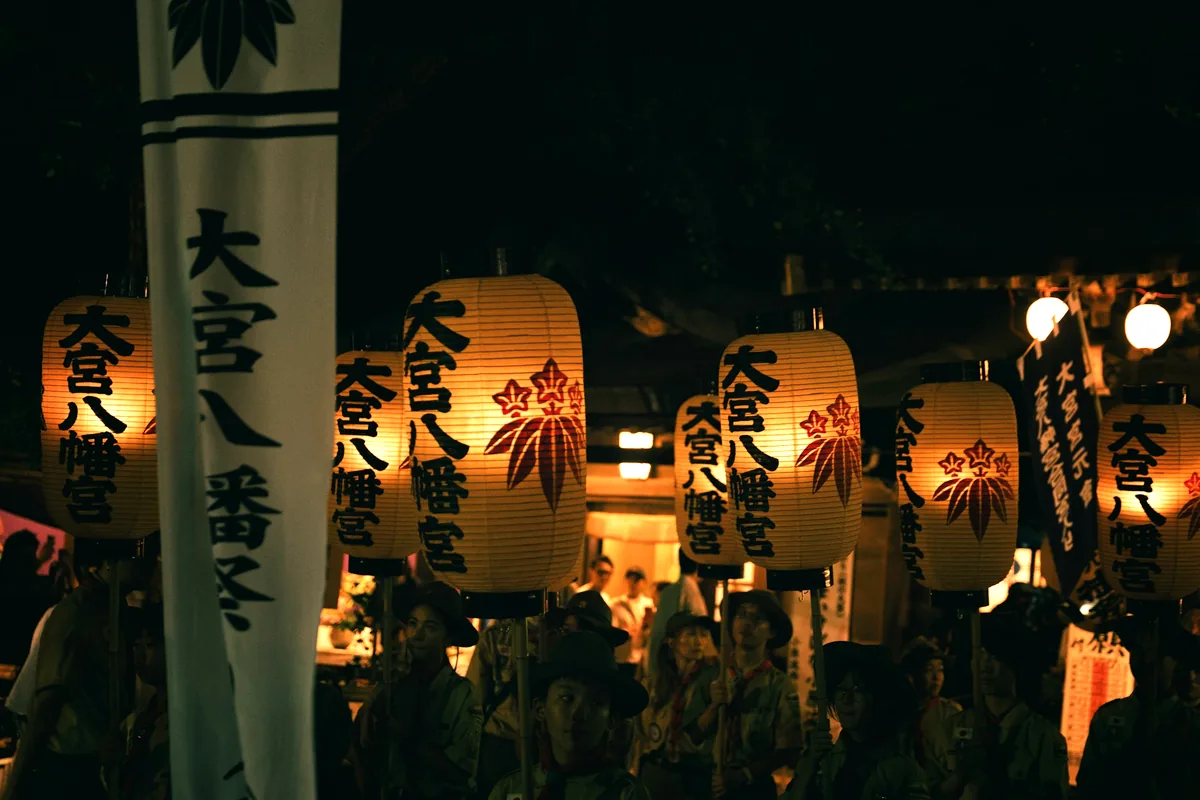
In Japan, Ramune is not really an everyday soda. It is tied to summer, and specifically to matsuri — the local festivals held through the hottest months.
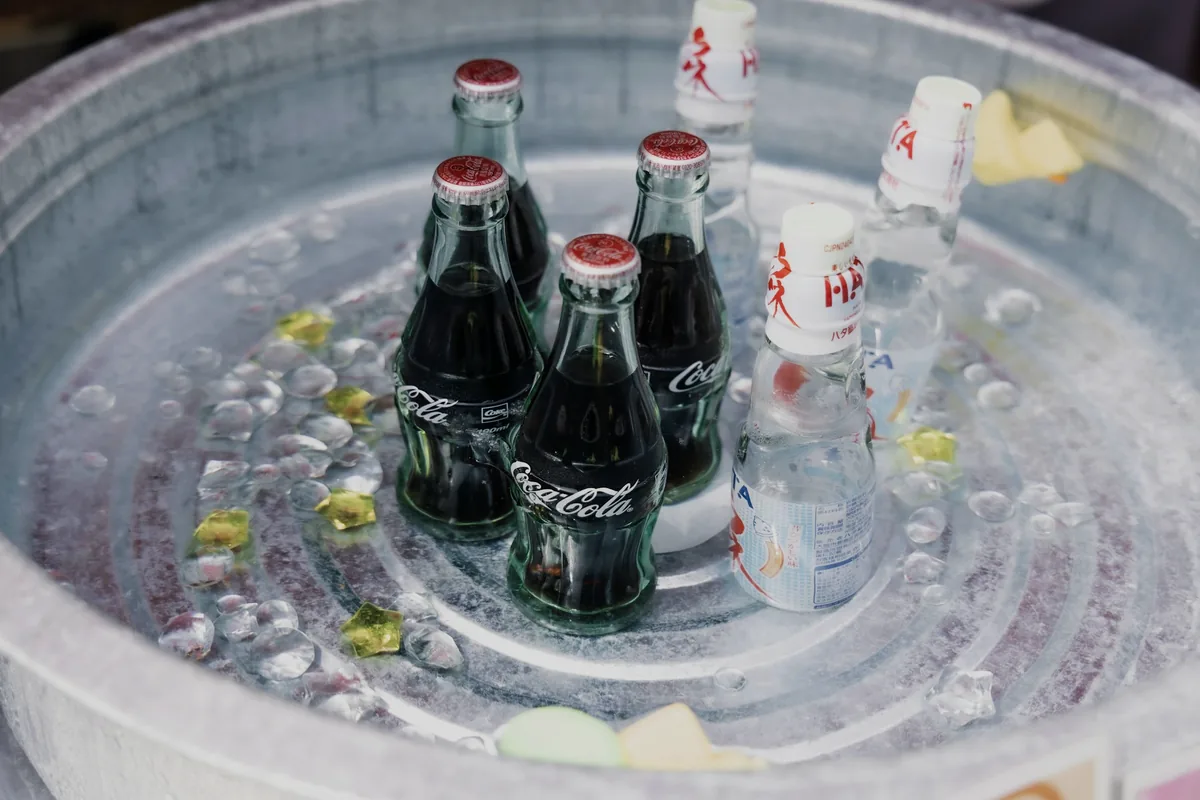
Stalls sell it out of tubs of ice alongside grilled squid, takoyaki and shaved ice. Part of the appeal is that the bottle is an event: the plunger, the push, the pop, the marble rattling as you drink. That is a much better thing to hand a child at a festival than a can.
Which is roughly the role it plays on a restaurant table too. It is the drink that gives a table something to do, and it is the reason it works so well for children — more on that in eating Japanese food with children.
Does it go with the food?
Honestly, not especially — and that is worth saying plainly rather than pretending otherwise.
Ramune is sweet and heavily carbonated, which is not what delicate raw fish wants next to it. Sugar coats the palate and carbonation is aggressive, and both work against tasting the difference between one piece of fish and the next. Green tea or water is the better pairing for a sushi-led meal, as covered in what to drink with Japanese food.
Where it does work is against strong, sweet-savoury, fried food. Next to takoyaki, katsu, gyoza or a fried roll, a cold sweet fizzy drink is doing the same job a soda does beside anything fried anywhere in the world. That is its natural home on the menu.
And there is the third case, which is the honest one: sometimes you order it because it is a bottle with a marble in it. That is a perfectly good reason.
Why the bottle survived
It is worth pausing on how strange this is. A sealing mechanism that was obsolete by 1900 is still in production, still being filled, still being shipped worldwide, purely because people like it.
The bottle is more expensive to make than a can. It is heavier to ship. It needs a separate plastic plunger. It has to be filled upside down. Every one of those is a reason to stop, and none of them won.
What kept it is that opening it is a small ceremony, and the drink is inseparable from the act. Take the marble out and put the same liquid in a can and it is an unremarkable soda. That is a rare thing in packaging, and a good argument for ordering one.
Frequently asked questions
How do you open a Ramune bottle?
Remove the cap, take out the plastic plunger inside it, stand the bottle on a table and push the marble straight down once, firmly. Then wait a few seconds before tilting it.
Why is there a marble in Ramune?
It was the seal. Carbonation pressure held the marble against a rubber ring in the neck, which kept the drink fizzy before crown caps existed.
Can you get the marble out?
Not without breaking the bottle, which is not a good idea. It is meant to stay inside.
What does Ramune taste like?
The original is a sweet lemon-lime with a candied, faintly bubblegum note. It is sweeter and rounder than a Western lemonade.
What does the word Ramune mean?
It is the English word “lemonade” adapted into Japanese pronunciation.
The short version
Ramune is Japanese soda in a Codd-neck bottle, where a glass marble held the seal before bottle caps were invented. The name is “lemonade” worn down by Japanese pronunciation, and the bottle survived obsolescence because opening it is half the point.
Push once and firmly, keep it upright for a moment, and order it next to something fried rather than next to the sashimi.