The short answer
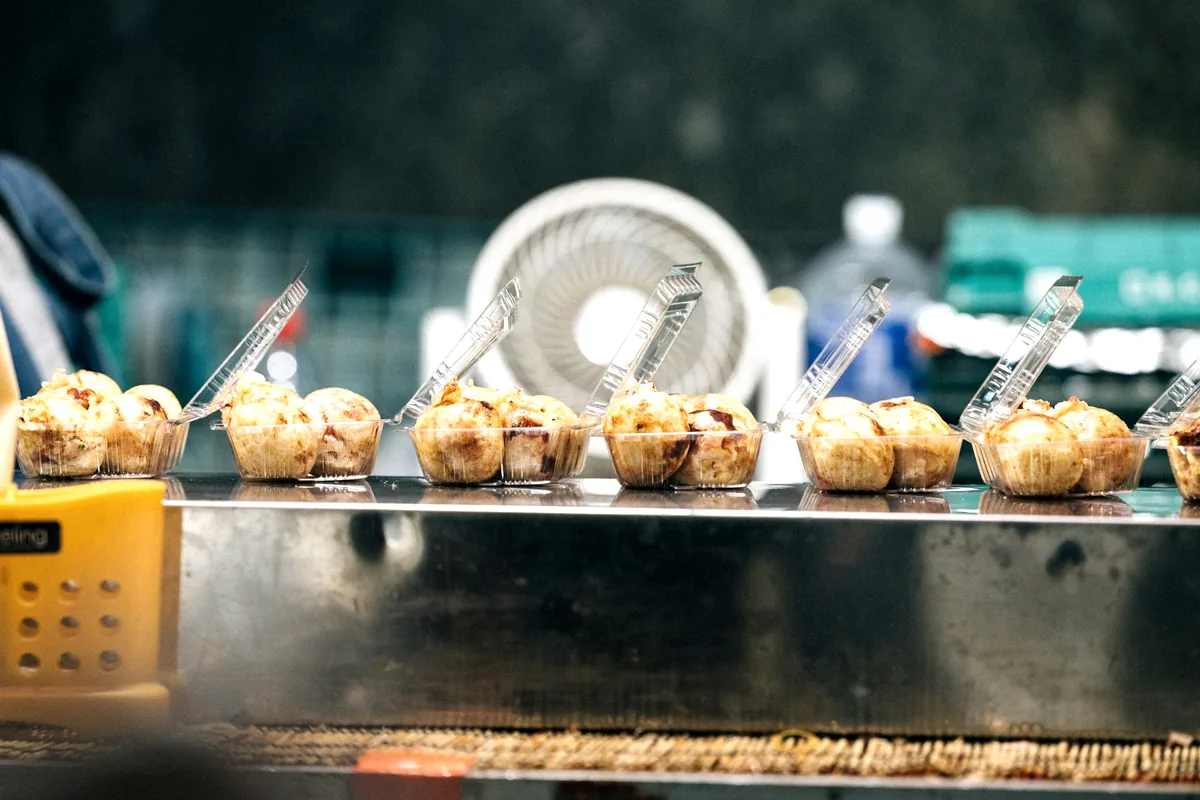
Takoyakioctopus in batter, cooked in a moulded pan
The texturecrisp shell, almost liquid inside
That molten centre is not undercooking. It is the point, and it is why takoyaki is the one dish on the menu that will genuinely burn you.
Round, sauced, covered in mayonnaise and something that appears to be moving. Takoyaki is the most alarming thing on a Japanese appetiser list and one of the best.
01 — The panA dish defined by its equipment
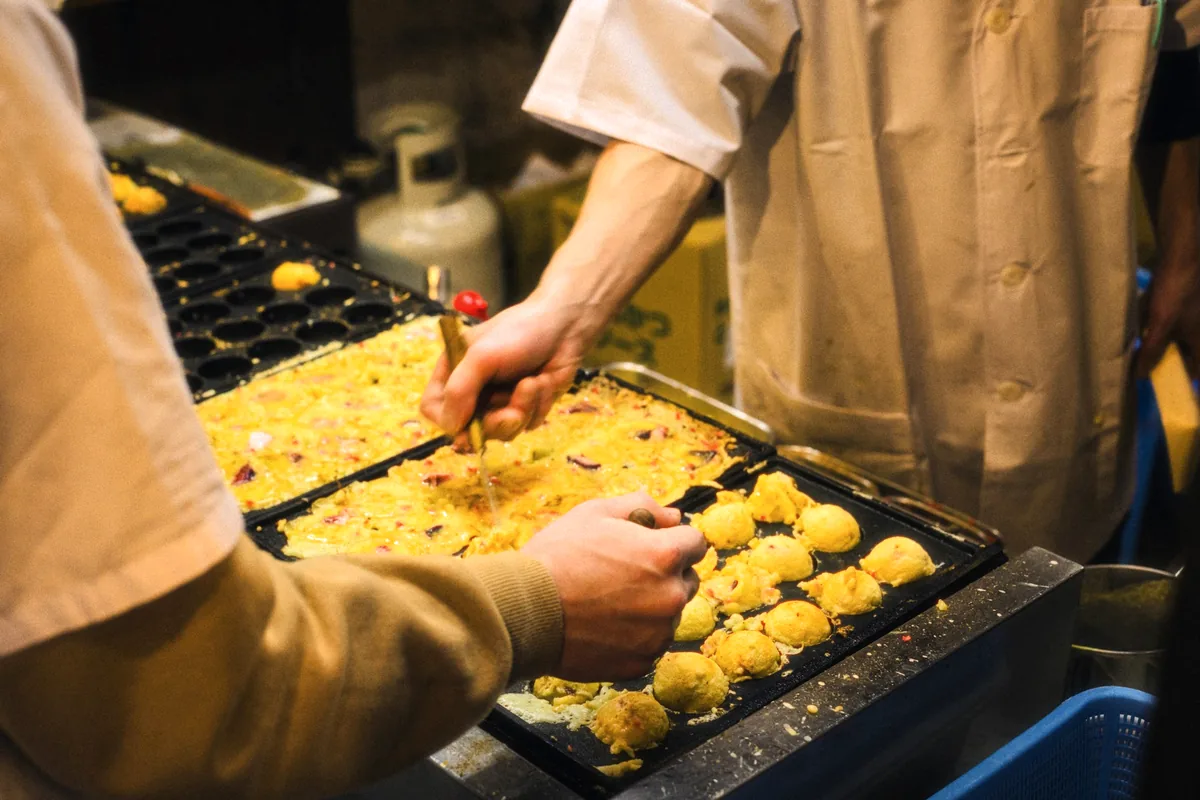
Takoyaki cannot be made without a takoyaki pan: a heavy plate of hemispherical moulds, usually cast iron, heated from below.
A thin batter is poured across the whole surface, flooding the moulds and the flat metal between them. Pieces of octopus, pickled ginger and green onion go in. Then, as the bottoms set, the cook uses metal picks to cut through the webbing between moulds and rotate each ball ninety degrees — folding the loose batter from the surface underneath into the sphere.
That turn happens several times per ball. Each rotation adds a layer of set batter to the outside while the centre stays loose, and it is why the finished thing has a shell and a liquid middle rather than being cooked evenly through.
Why the middle stays liquid
The batter is deliberately thin — closer to a crepe batter than a pancake one — and usually made with dashi rather than milk. It is seasoned stock with flour in it.
A thin batter in a very hot mould sets fast on the outside and has nowhere near enough time to firm up in the centre before the outside would burn. Rather than fight that, the dish embraces it. The inside stays at the consistency of a loose custard.
Which is the practical warning: a takoyaki straight off the griddle holds heat like nothing else on the table. Wait longer than you think you need to, and take the first one apart before committing to a whole one.
02 — What goes on topFour things, in order
The toppings are as fixed as the cooking method, and each does a specific job.
- Okonomiyaki sauce. Thick, dark and sweet-savoury, in the same family as tonkatsu sauce. Brushed on first.
- Japanese mayonnaise. Drizzled in lines over the sauce. Richer and more egg-forward than Western mayonnaise, and slightly tangy.
- Green onion. Sliced raw, for something sharp against two sweet, rich layers.
- Bonito flakes. Shaved dried fish, scattered last — and the reason the whole thing appears to move.
Ours is listed as battered octopus over egg tartar, topped with mayo, okonomiyaki sauce and green onion.
The flakes really do move
This catches people out and it is worth explaining, because the first reaction is usually alarm.
Katsuobushi — bonito shaved into paper-thin flakes — is extremely light and extremely dry. Heat rising from a hot takoyaki curls and lifts the flakes, so they writhe and wave for as long as the dish is steaming.
It is convection, not life. And it is a reasonable doneness signal: if the flakes are still dancing, the inside is still too hot to eat whole.
Good to know
Takoyaki contains octopus, wheat flour, egg and usually a dashi made with dried fish, and the mayonnaise adds more egg. That is four common allergens in one small ball, none of which the name signals. If any of them matter to you, ask — see allergens on a Japanese menu.
Osaka street food
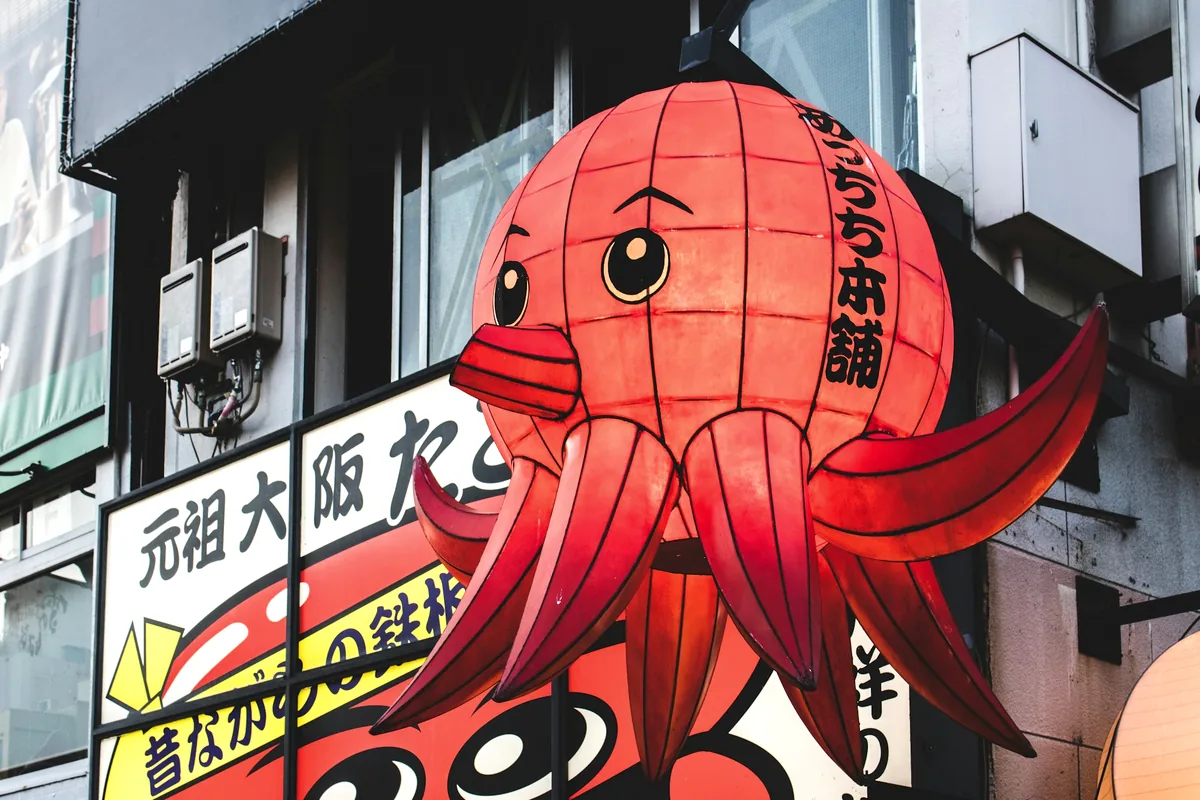
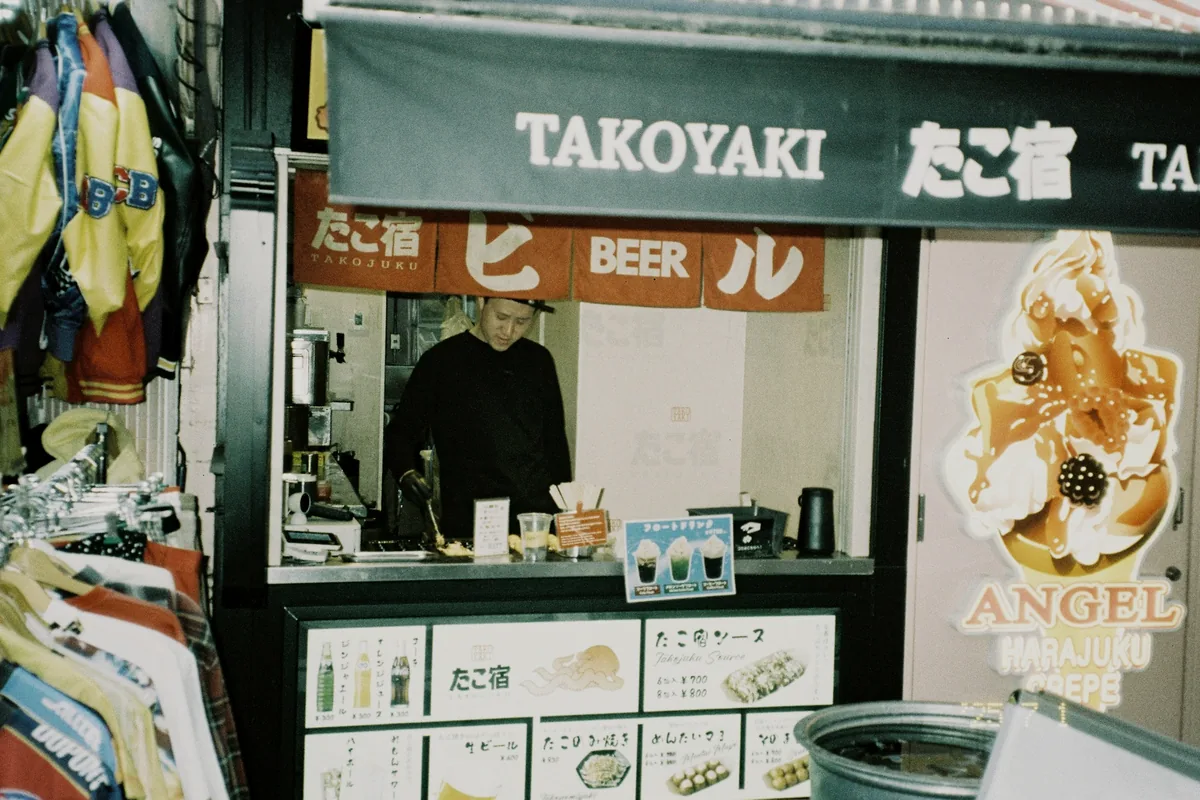
Takoyaki is strongly associated with Osaka, where it developed in the 1930s and where it is still sold from stalls and small shopfronts across the city. The giant octopus signs on those shops are a local visual convention rather than a novelty.
It belongs to konamono — flour-based dishes — alongside okonomiyaki, and both are Osaka specialities built on cheap batter, cabbage or octopus, and a sweet brown sauce. They share the sauce for that reason.
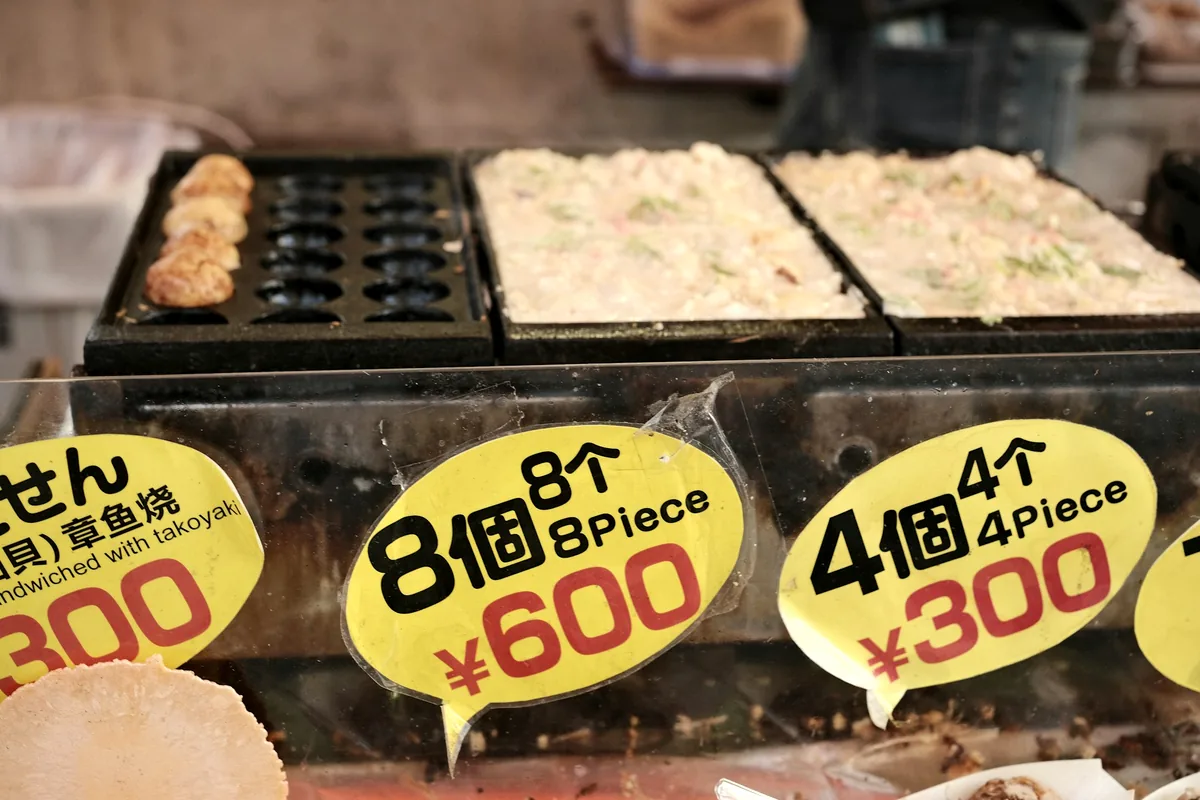
What that history explains is the format. It is eaten standing up, from a tray, with a small pick, within a minute of being made. On a restaurant menu it is a street food dish brought indoors, which is why it arrives fast and wants to be eaten faster.
How to eat it
- Wait. Longer than feels necessary. Two minutes is not excessive.
- Break the first one open. It releases steam and tells you how hot the rest are.
- Eat it in one or two bites after that. Half a takoyaki collapses.
- Order it early. It is at its best hot, so it should not wait behind a sushi order.
- Do not take it home. The shell softens and the centre sets. It is the wrong dish for a box.
That last point puts it in the same category as tempura and hand rolls — excellent in the room, disappointing in a car. The full list is in what actually travels.

Is the octopus the point?
Partly. Tako means octopus and yaki means grilled, so the name says what it is. But the octopus is one small piece in the centre, and the dish is really about the batter, the sauce and the temperature.
If you have not eaten octopus before, this is a gentle introduction — a single chewy, mild piece inside something soft and heavily sauced, rather than a plate of it. Octopus itself is closer to a firm scallop than to anything strongly fishy — there is more on it, and on its cousin the squid, in squid and octopus explained.
Frequently asked questions
What is takoyaki?
Batter cooked into balls in a moulded pan, with a piece of octopus in the centre, then sauced and topped. Tako is octopus, yaki is grilled.
Why is the inside so soft?
The batter is thin and the pan is hot, so the outside sets long before the centre could. That molten middle is the intended result rather than undercooking.
Why are the flakes on top moving?
Bonito flakes are paper-thin and very light, so rising heat lifts and curls them. It stops as the dish cools.
Is takoyaki very fishy?
Not especially. Octopus is mild and firm, and the sauce and mayonnaise are the dominant flavours. The bonito flakes add a savoury note rather than a fishy one.
Can I get it to take away?
You can, but it is the wrong dish for it. The shell softens and the centre firms up as it cools. Eat it where it is made.
The short version
Thin dashi batter turned repeatedly in a moulded pan until it has a shell and a liquid centre, with octopus inside and four fixed toppings on it. Wait before you eat one, break the first open, and do not take it home.
It is on the appetizer list.