The short answer
With sushigreen tea, or something dry
With fried foodsomething cold and carbonated
Japanese food is salty, savoury and often rich. Almost every good pairing is doing the same job: cutting through, rather than adding to.
Drinks get chosen last and thought about least, which is a shame — with a menu this savoury, what is in the glass changes the meal more than it does with most cuisines.
Before you read on
Our own drinks list is short: Ramune, in original, strawberry, orange and melon. This article is a general guide to what suits Japanese food rather than a list of what we pour — ask the restaurant what else is available on the day you visit.
The default, and the reason for it
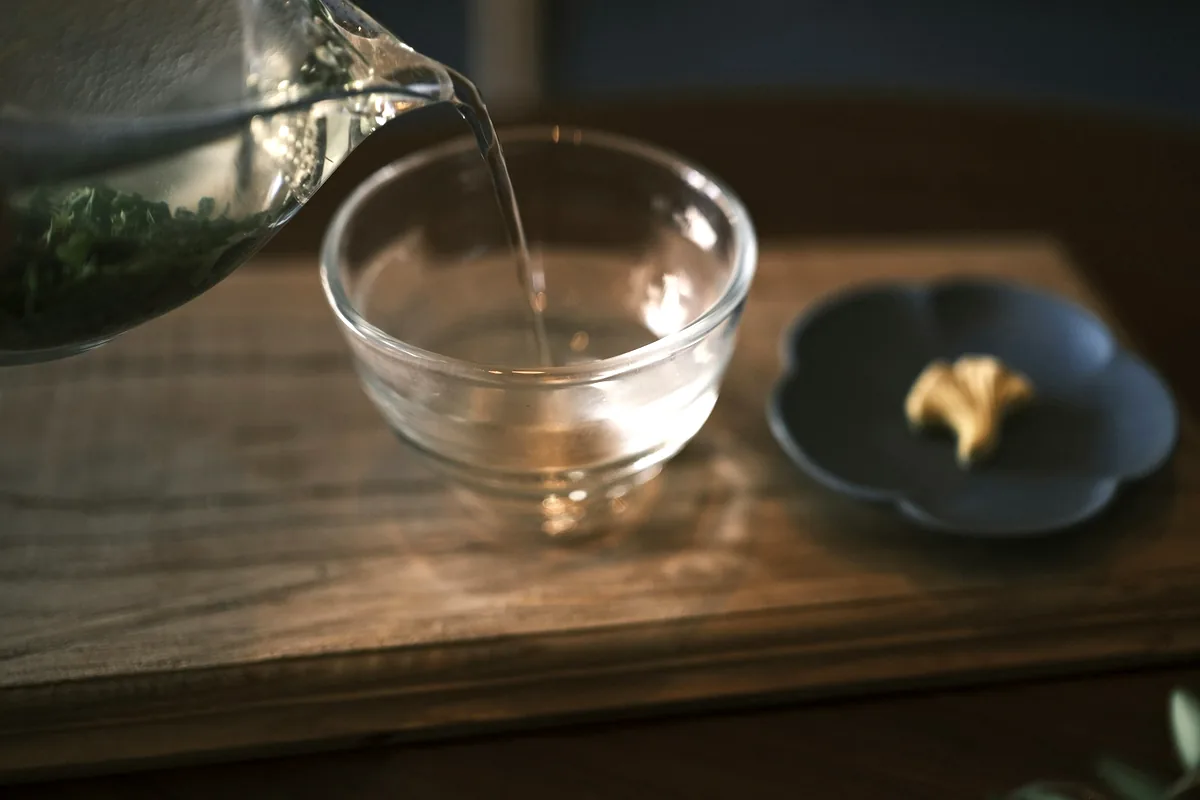
Green tea is the standard accompaniment to Japanese food, and it is not simply convention. It is astringent, which is the quality that scrubs oil and salt off the palate between mouthfuls, and it has almost no sweetness to compete with the food.
The one served with a meal is usually a simple everyday green tea rather than anything ceremonial. It is meant to be drunk throughout rather than at the end, and it is the reason a long sushi meal does not become heavy.
If you are eating a lot of raw fish in sequence, tea between different fish does the same job that pickled ginger does — it resets you so the next thing tastes like itself.
Which green tea is which
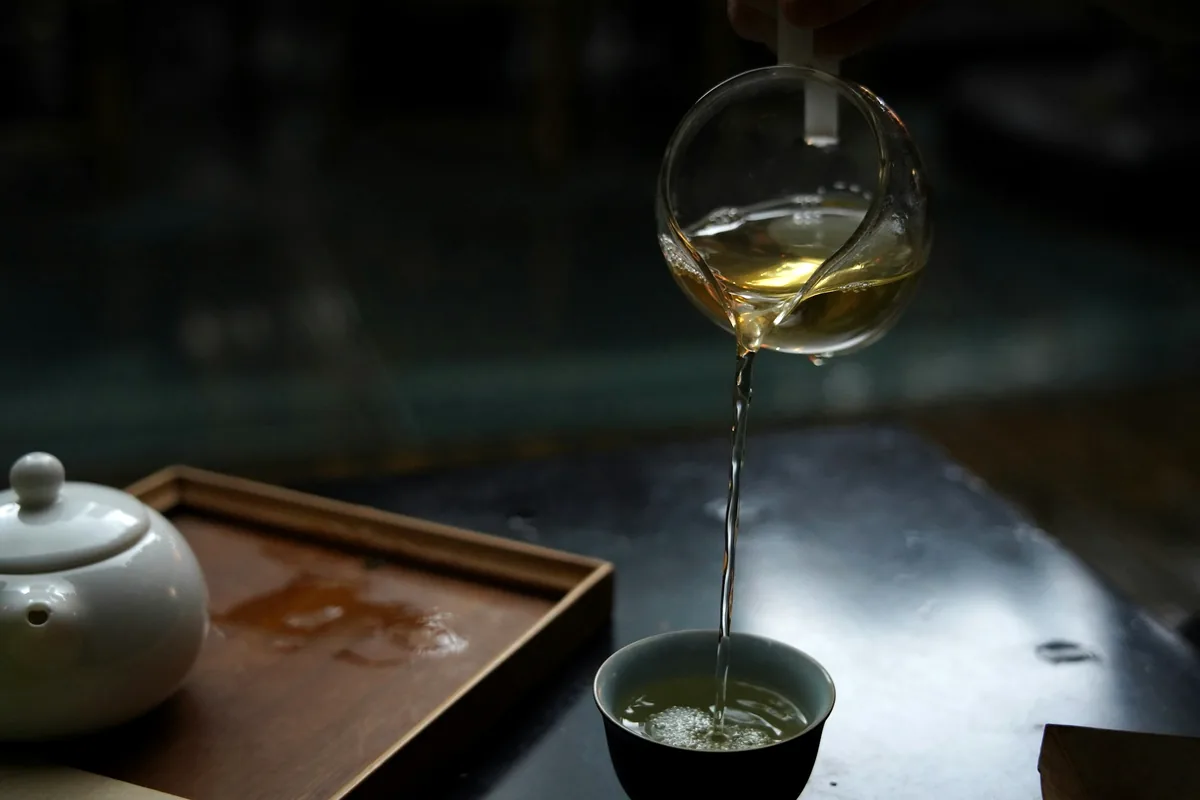
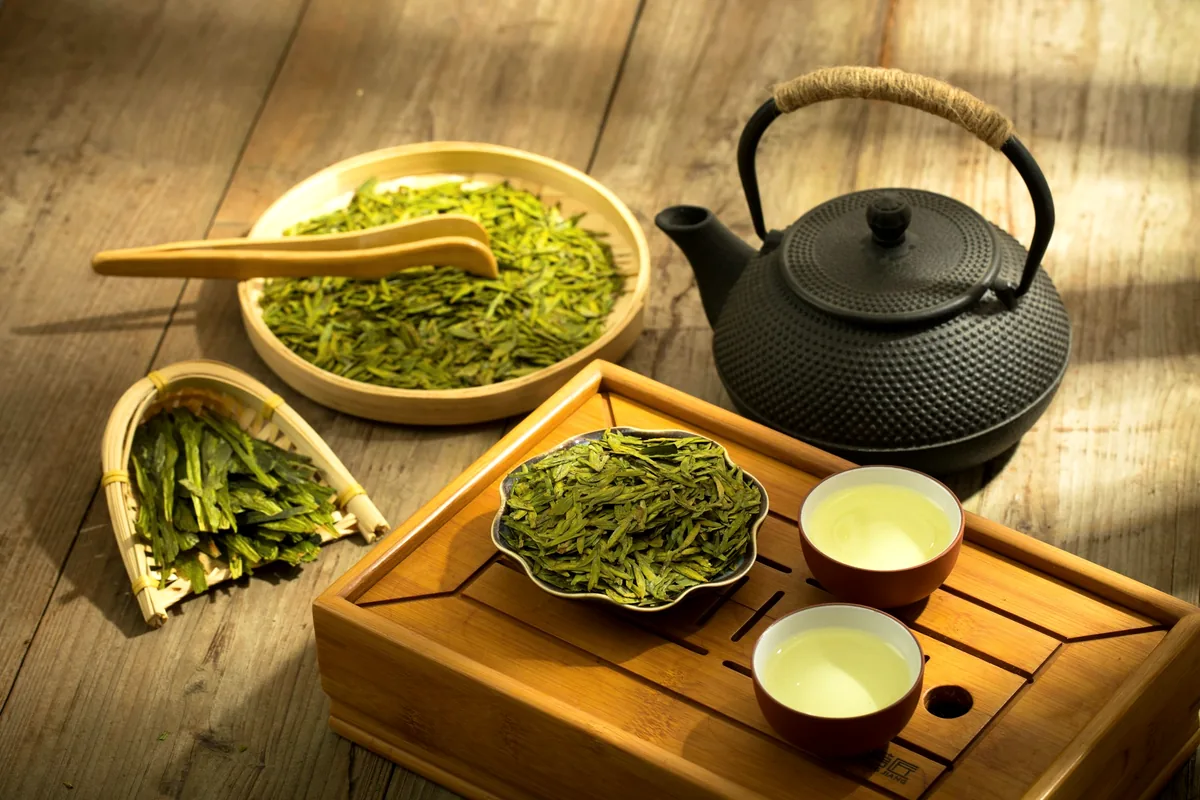
- Sencha. The everyday one. Grassy, slightly bitter, and what most Japanese restaurants pour by default.
- Genmaicha. Green tea with roasted brown rice in it. Nutty, toasty and much gentler — the easiest for anyone who finds green tea sharp.
- Hojicha. Roasted rather than steamed, so it is brown, low in caffeine and almost smoky. Good in the evening.
- Matcha. Powdered and whisked into the water rather than steeped. Intense, and more a dessert or ceremonial drink than a mealtime one.
If you are offered a choice, genmaicha is the one to try. It is the most food-friendly of the four and it converts people who thought they disliked green tea.
What bubbles do for fried food
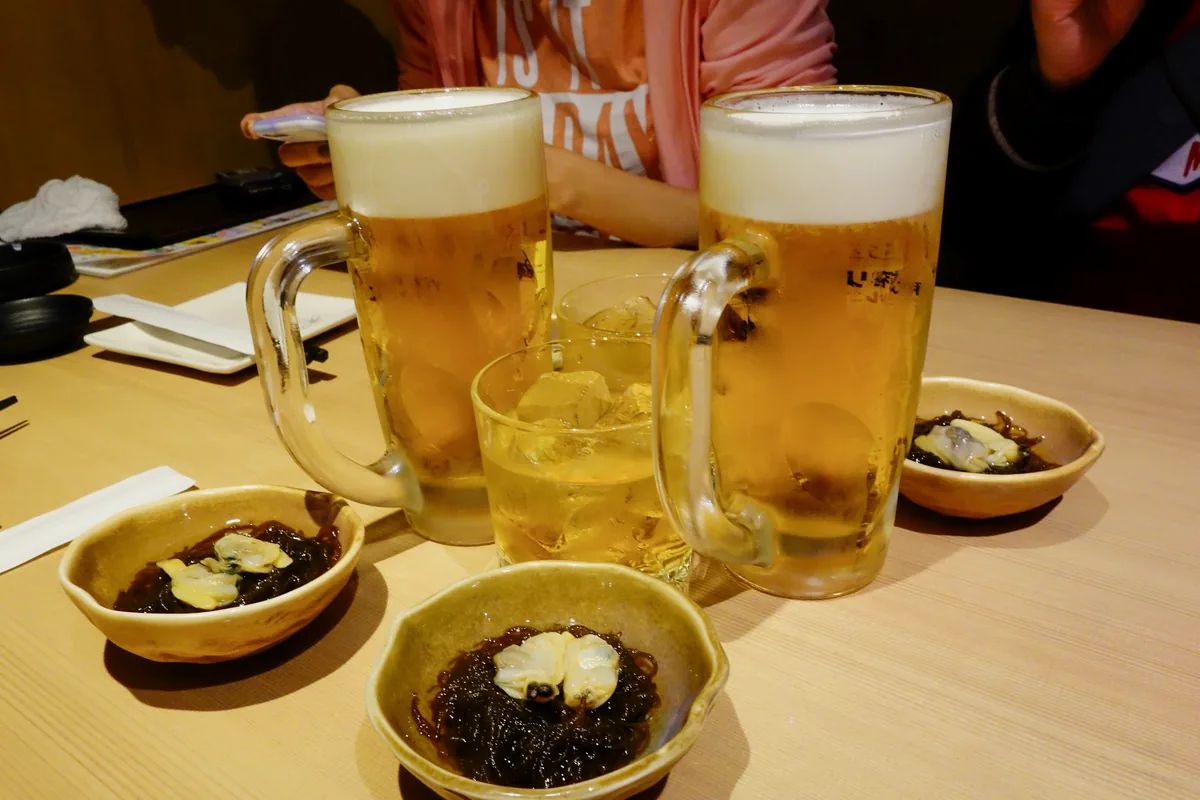
Carbonation is the other great palate cleanser. It scours fat in a way still drinks cannot, which is why beer and fried food is a pairing that turns up in every food culture that has both.
Japanese lagers are built for this. They are dry, crisp and deliberately light on flavour — not because they lack ambition but because the food is the point and the beer is there to reset between bites.
Anything tempura, katsu or deep fried is the moment for something cold and carbonated. A sweet drink here works against you, because sweetness plus fat is heavy going after three or four pieces.
Ramune
The soda in the glass bottle sealed with a marble. You push the marble down into the neck with a plastic plunger, it drops into a chamber below, and the bottle is open — a design from the nineteenth century that has outlived every practical reason for existing.
It is sweet and lightly carbonated, and it comes in original, strawberry, orange and melon. As a pairing it is a children’s drink and it is honest about that, which is covered further in eating Japanese food with children.
For an adult eating fried food, the carbonation still does its job even if the sugar works against it.
03 — SakeThe one everybody gets wrong
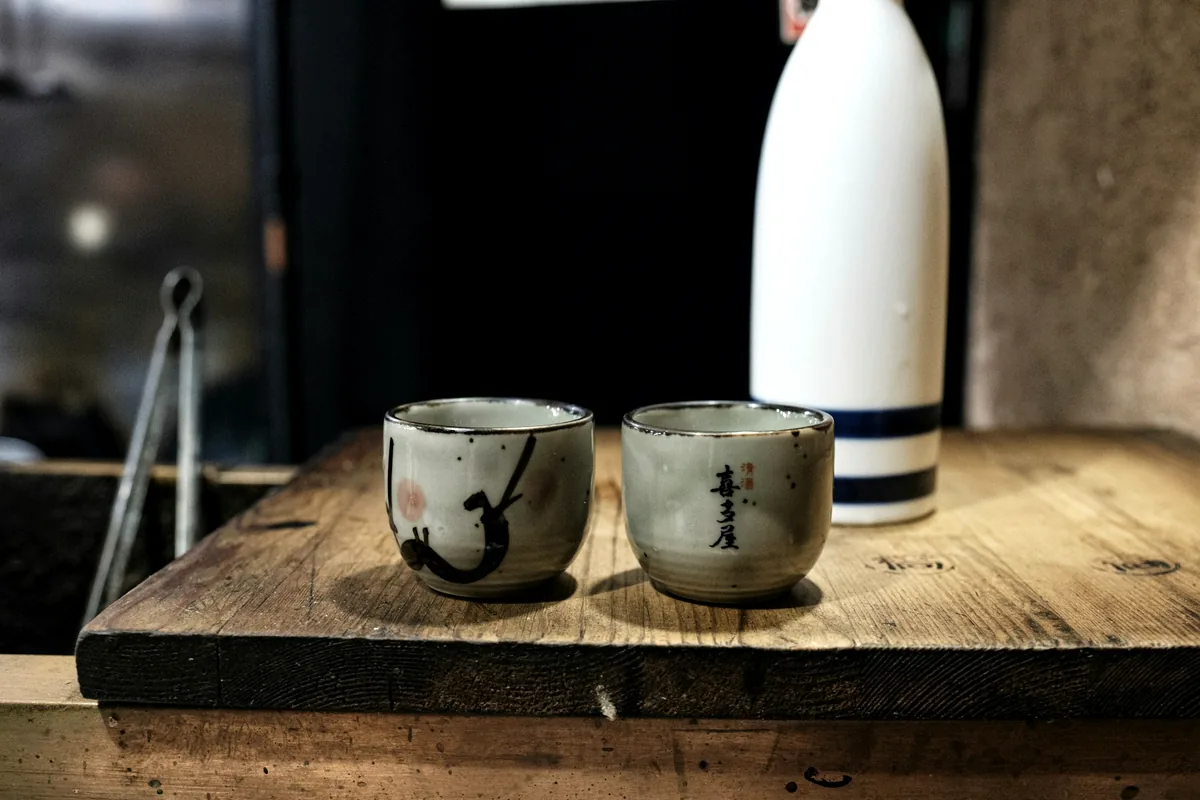
Two things worth clearing up. Sake is brewed from rice rather than distilled, which makes it closer to beer than to spirits in how it is made, and it is usually around fifteen percent alcohol — stronger than wine, weaker than anything you would take as a shot.
And it is not necessarily served hot. Warming sake was historically a way of making rough sake more palatable; good sake is generally served chilled or at room temperature, and heating it flattens the aromatics it was made for.
With food, a dry sake works the way a dry white wine would — against fatty fish, against anything fried, and it has the advantage of being made from rice, which is already on the plate.
Matching drink to dish
| What you are eating | What works | Why |
|---|---|---|
| Sashimi and nigiri | Green tea, dry sake | Nothing sweet to bury the fish |
| Specialty rolls | Green tea, beer | Sauces are already sweet |
| Tempura and fried rolls | Anything cold and carbonated | Bubbles cut fat |
| Ramen | Water, beer | The broth is doing enough |
| Katsu and teriyaki | Beer, hojicha | Sweet glaze needs a dry partner |
| A long, mixed meal | Green tea throughout | Resets between courses |
| With children at the table | Ramune | The bottle is the attraction |
Good to know
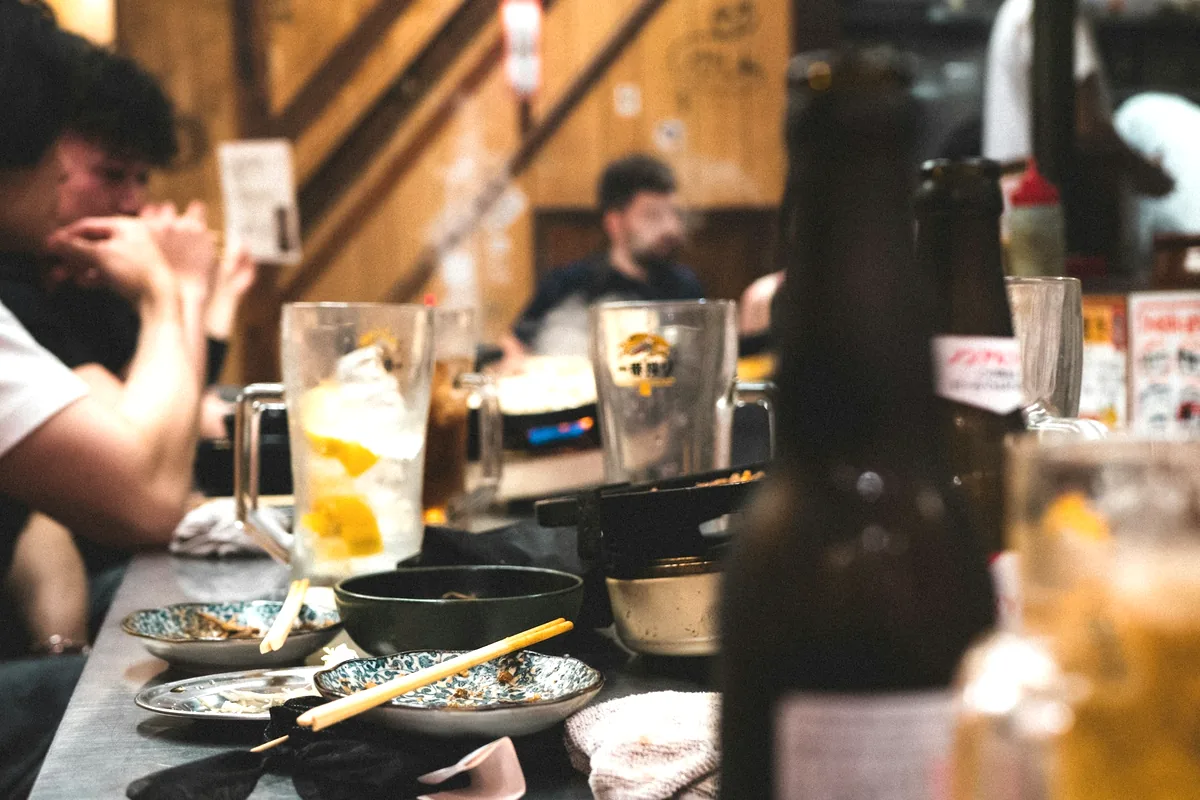
Water deserves more credit than it gets with ramen. A rich pork broth is very salty by design, and alternating between broth and water is what lets you finish a bowl comfortably. Ordering a drink alongside a big bowl is optional; water is not.
One rule that covers most of it
Japanese food is savoury and salty far more often than it is sweet, and the sweet notes it does have — eel sauce, teriyaki glaze, mirin — are already accounted for on the plate.
So the drink should be dry, cold, or astringent. Adding more sweetness is the only way to actually get the pairing wrong, and it is the most common thing people do.
Frequently asked questions
Is sake a spirit?
No. It is brewed from rice, so it is closer to beer in production, and it is typically around fifteen percent alcohol rather than forty.
Should sake be served warm?
Not necessarily. Warming was a way to improve rough sake. Good sake is usually served chilled or at room temperature.
What tea is served at Japanese restaurants?
Usually a simple green tea such as sencha, sometimes genmaicha or hojicha. It is meant to be drunk throughout the meal rather than after it.
What is the marble in a Ramune bottle for?
It is the seal. Carbonation pressure holds the marble against a rubber ring in the neck; pushing it down opens the bottle.
What should I drink with ramen?
Water, mostly. The broth is intensely savoury and salty, and water is what makes a whole bowl comfortable to finish.
The short version
Dry, cold or astringent. Green tea across a long meal, something carbonated with anything fried, water with ramen, and nothing sweet with raw fish. Our list runs to Ramune in four flavours — ask about the rest.
The food it goes with is on the menu.