The short answer
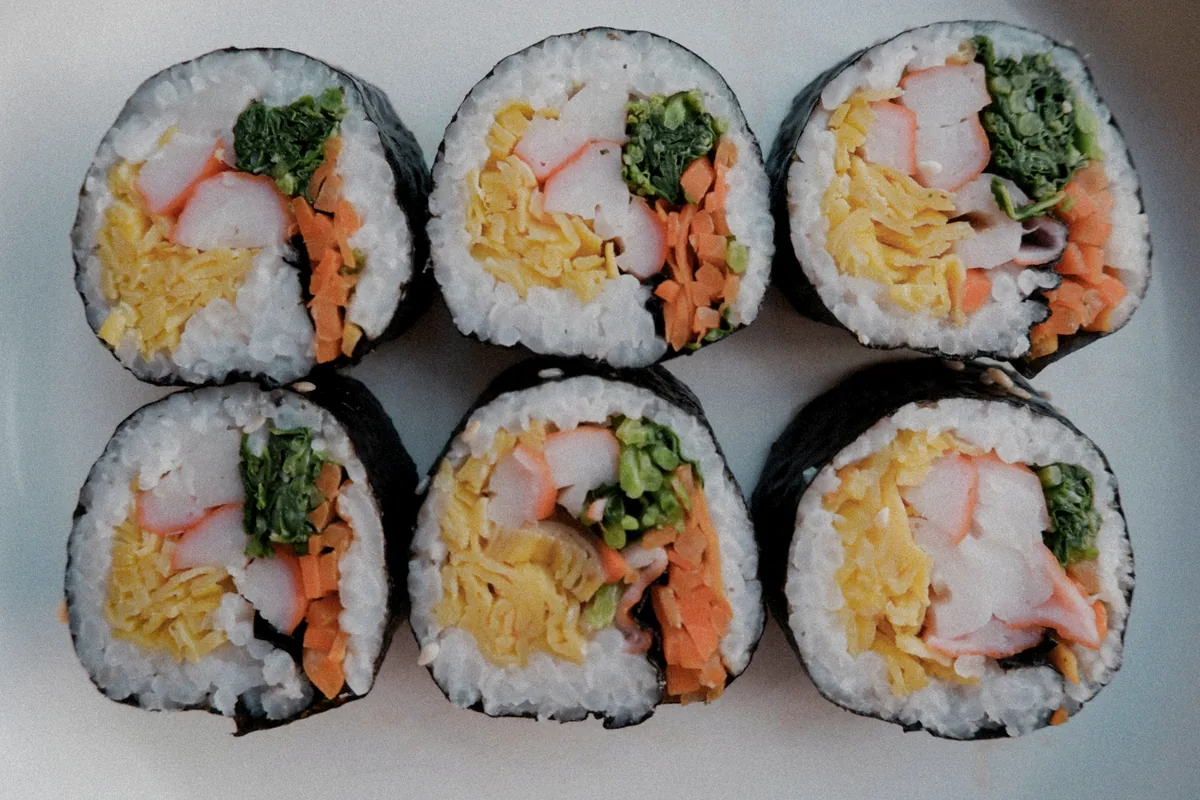
Six or eightone roll, halved and halved again
Fivea denser roll, cut fewer times
Piece counts are not arbitrary. They come from how a cylinder is divided, and they tell you something about the roll before you order it.
Every menu lists piece counts and almost nobody asks why they land where they do. The answer is geometry, and it turns out to be genuinely useful when you are ordering.
01 — The cutHalve, halve, halve
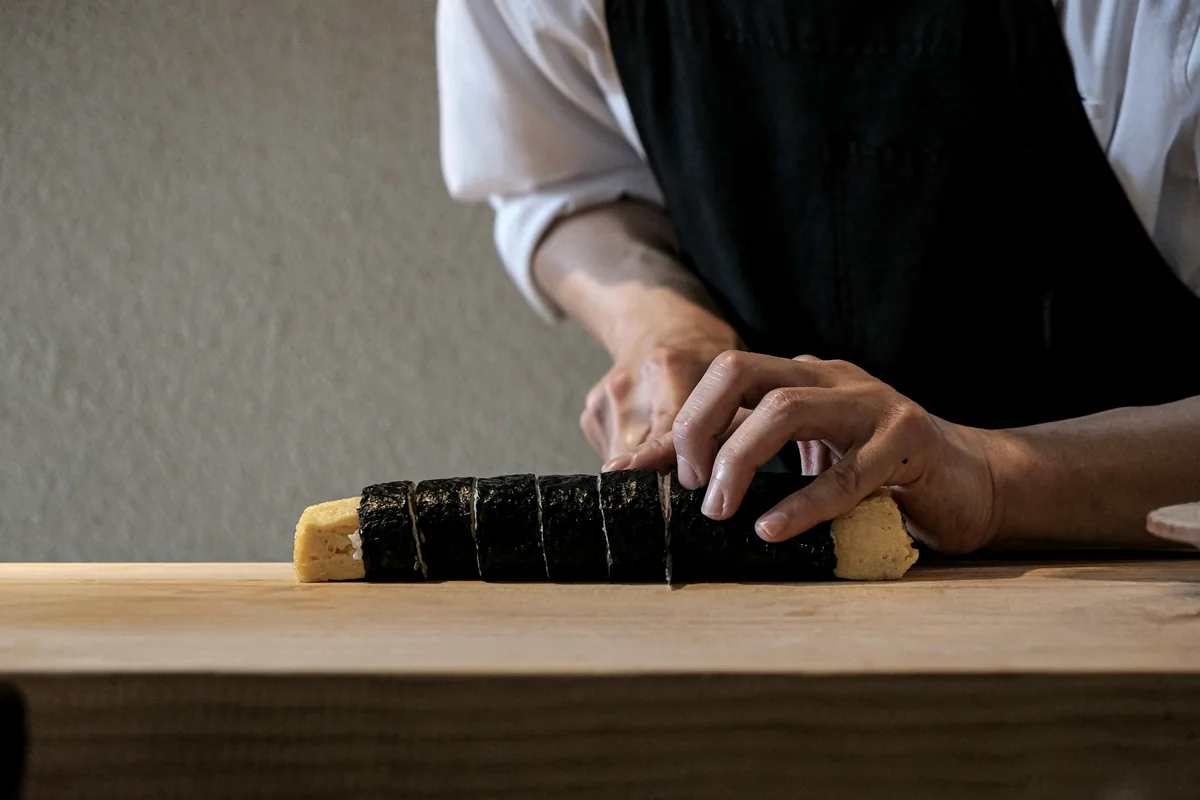
A roll is made from one sheet of nori and cut on a board in a specific sequence. The chef cuts the cylinder in half, puts the two halves side by side, and cuts again — and again.
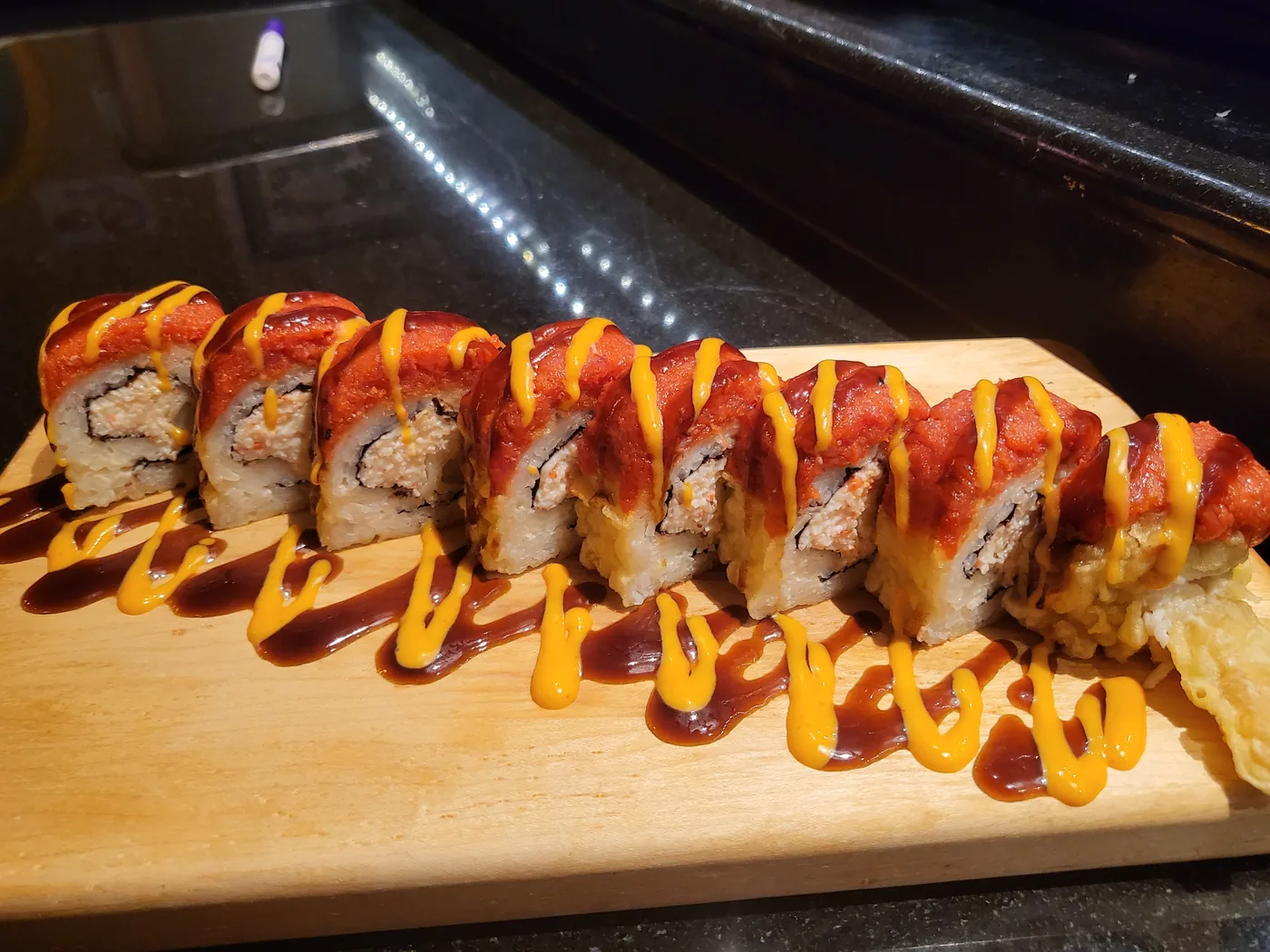
Two cuts gives four pieces. Three gives eight. That is where eight comes from: it is the natural result of halving three times, and it produces pieces of identical size with no measuring at all.
Six requires a different move — halving, then cutting each half into three — and produces slightly larger pieces. It is the traditional count for a thinner roll where eight would leave the pieces too small to hold together.
Why the knife is wiped between cuts
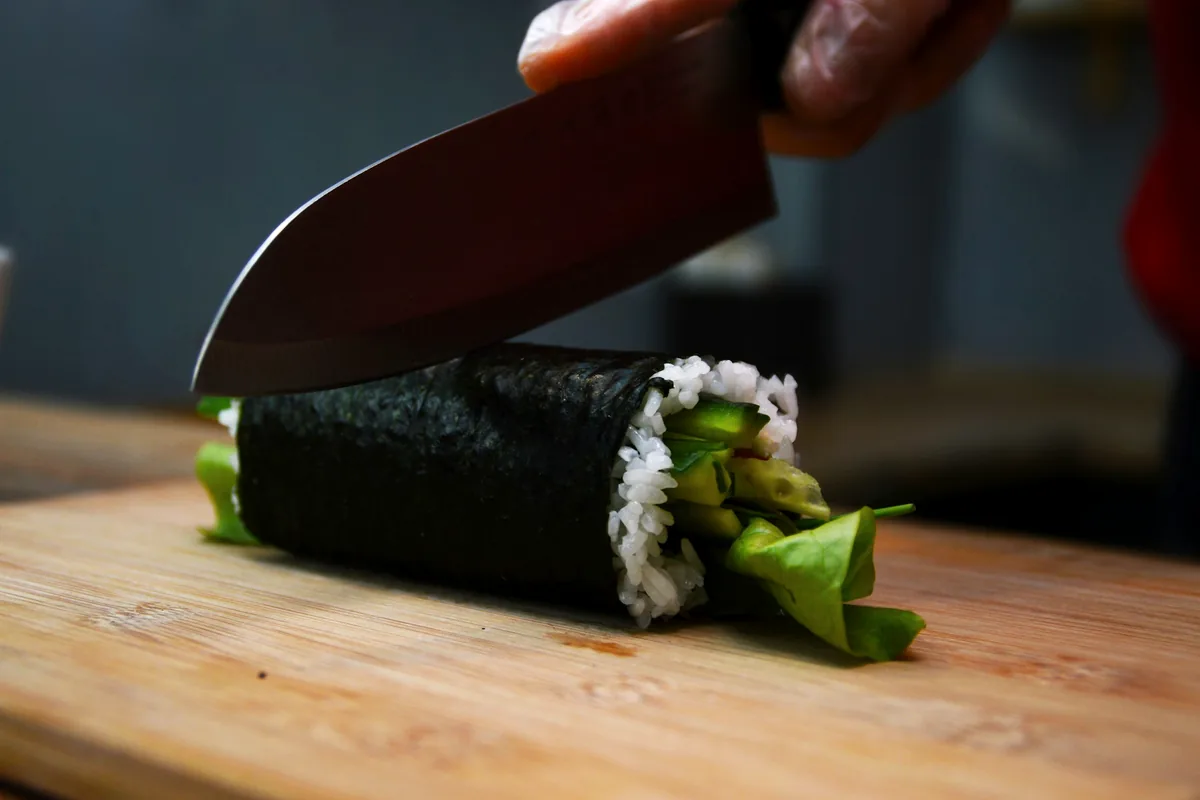
Watch a sushi chef cut a roll and there is a small ritual: the blade is wiped, and often dampened, between passes.
Sushi rice is sticky and it drags. A dry blade tears the nori and pulls filling out of the cut face, which is why a badly cut roll looks smeared at the ends. A damp, clean blade slices rather than drags, and each face stays defined.
It is a small thing, and it is one of the visible signals worth noticing — along with the others in how to read a sushi restaurant.
Why a roll is one sheet of nori
The piece count starts further back than the knife. It starts with the wrapper, because a standard nori sheet is a fixed size and a roll is built on one of them.
A full sheet makes a standard cut roll. Half a sheet makes a hand roll, which is why a cone is the size it is. That fixed starting point is what makes piece counts consistent between restaurants at all — everybody is dividing the same length.
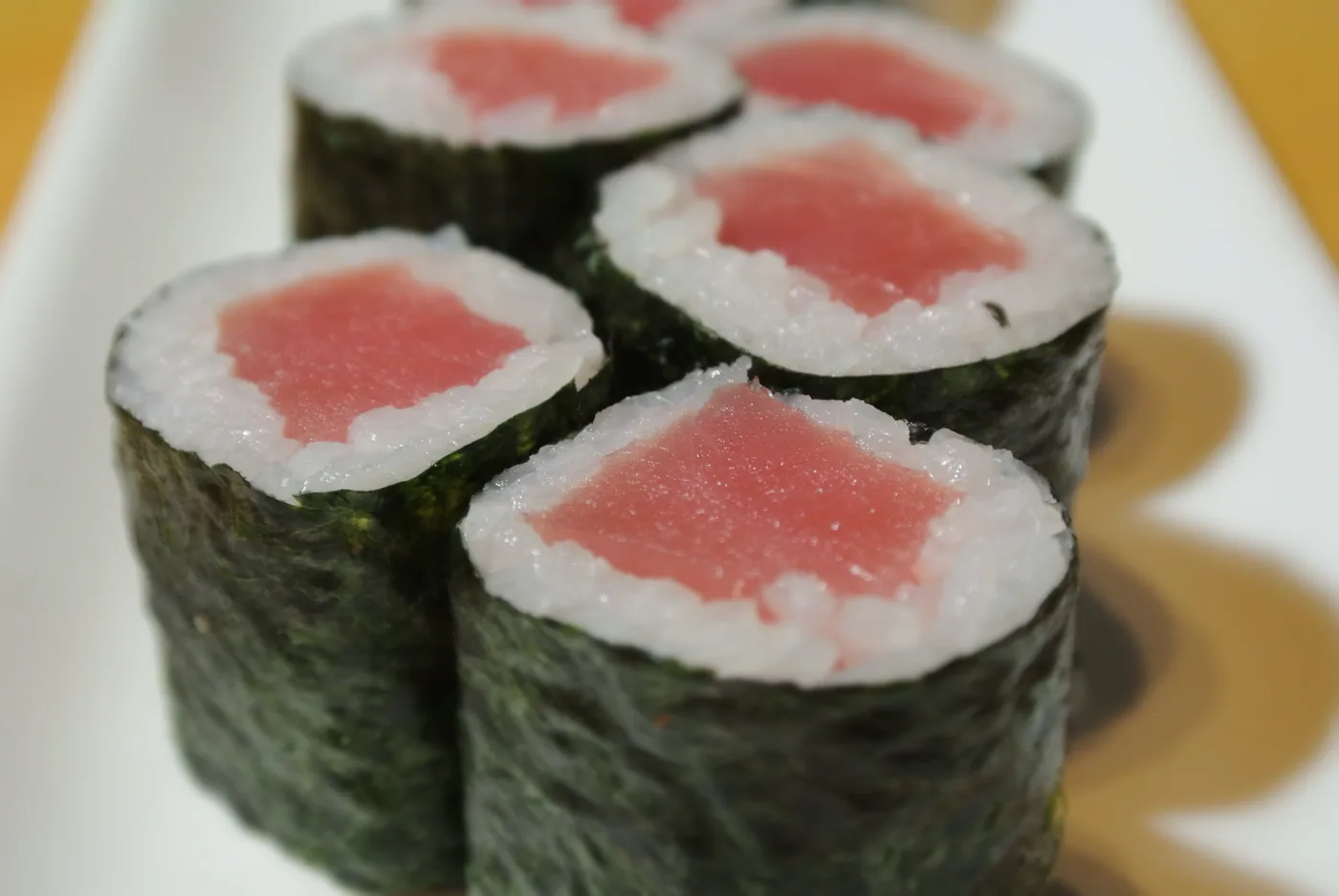
It also explains the thin traditional rolls with a single filling. Those are made on half a sheet and cut into six, which is where the six-piece convention comes from in the first place. The thick American specialty roll came later, needed the full sheet, and brought eight with it.
So a piece count is really telling you about the wrapper and what went inside it. More on the sheet itself in nori, soy paper and what wraps a roll.
02 — What the number tells youReading a piece count
| Count | Usually means | Expect |
|---|---|---|
| 8 pieces | A standard specialty roll | Rice-forward, easy to share, halved three times |
| 6 pieces | A slimmer, more traditional roll | Slightly larger pieces, one or two fillings |
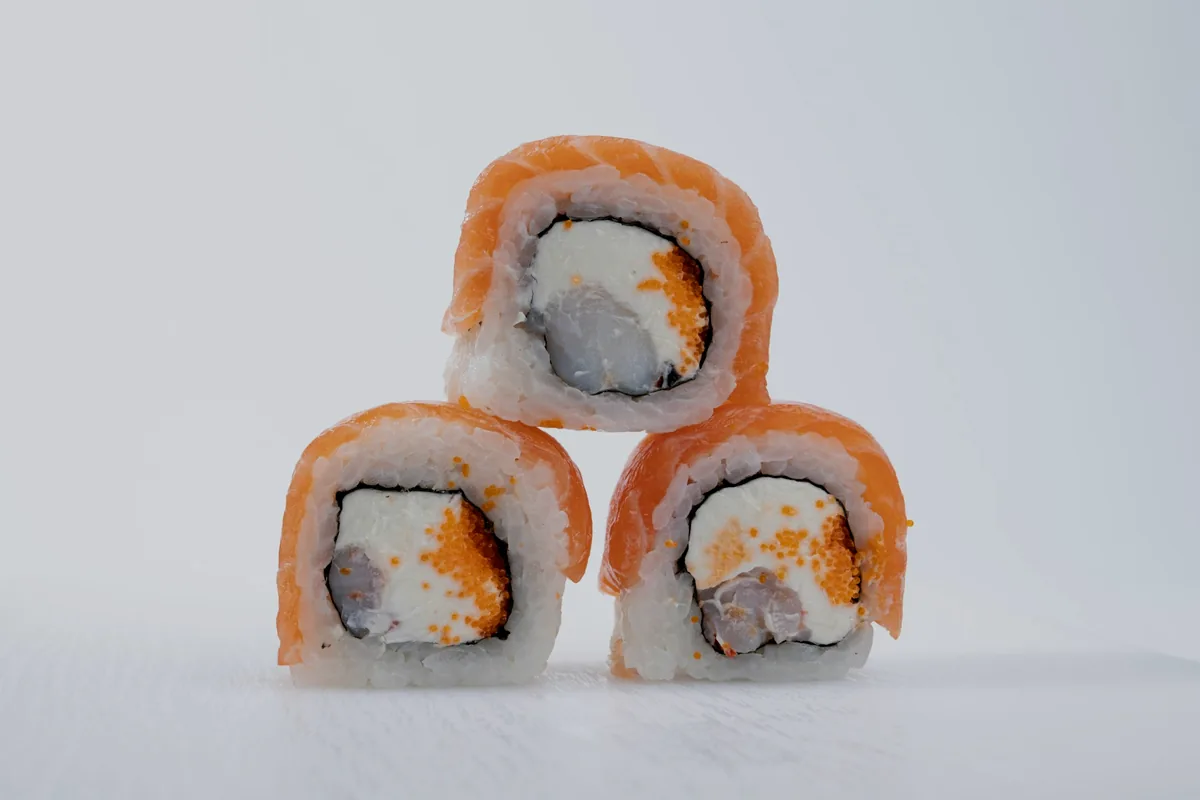
| 5 pieces | No rice, or a very dense filling | Fish-forward, richer per piece |
| 4 pieces | A composed item rather than a cylinder | Built individually, not cut from a roll |
| 2 pieces | Nigiri | One fish, served as a pair |
| 1 piece | A hand roll | A cone, not cut at all |
The five-piece row is the informative one. It nearly always signals a roll made without rice — wrapped in fish or cucumber instead — which is denser and eats closer to sashimi. If you find eight-piece rolls too filling, five-piece is the number to look for.
Why nigiri comes in twos
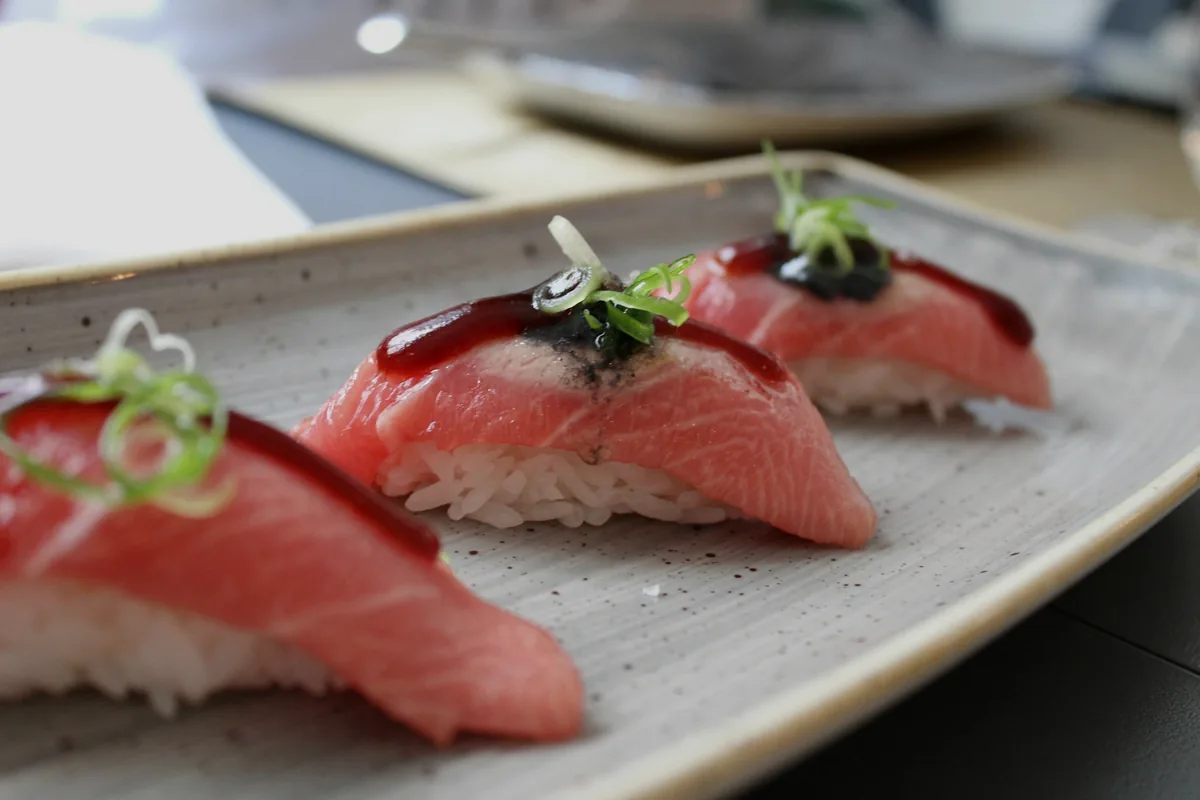
Order a single fish as nigiri almost anywhere and two pieces arrive. There is no cutting involved — each piece is formed by hand — so this one is convention rather than geometry.
The usual explanations are practical. Two lets you taste a fish twice, which is more informative than once. It suits two people sharing. And at a counter it gives the chef a sensible unit of work: forming two takes barely longer than forming one.
The exception is a high-end counter serving a set sequence, where single pieces arrive one at a time in a deliberate order. That is a different format with a different logic.
Good to know
Count pieces rather than rolls when you are ordering for a group. Three eight-piece rolls and three five-piece rolls sound like the same order and differ by nine pieces — which is more than one person’s share. The arithmetic is in how much sushi to order for a party.
Two people, an odd number
Eight divides by two and four. Six divides by two and three. Five divides by nobody, which is the small social problem at the heart of a five-piece roll.
For a table of two it is worth knowing before you order. Two five-piece rolls solve it; one five-piece roll and one eight-piece roll do not, and somebody ends up doing arithmetic over the last piece.
For a table of three, six-piece rolls are the neat answer and eight-piece rolls are not. None of this matters much, and all of it is noticeable at the end of a meal.
Why platters are sold by the piece
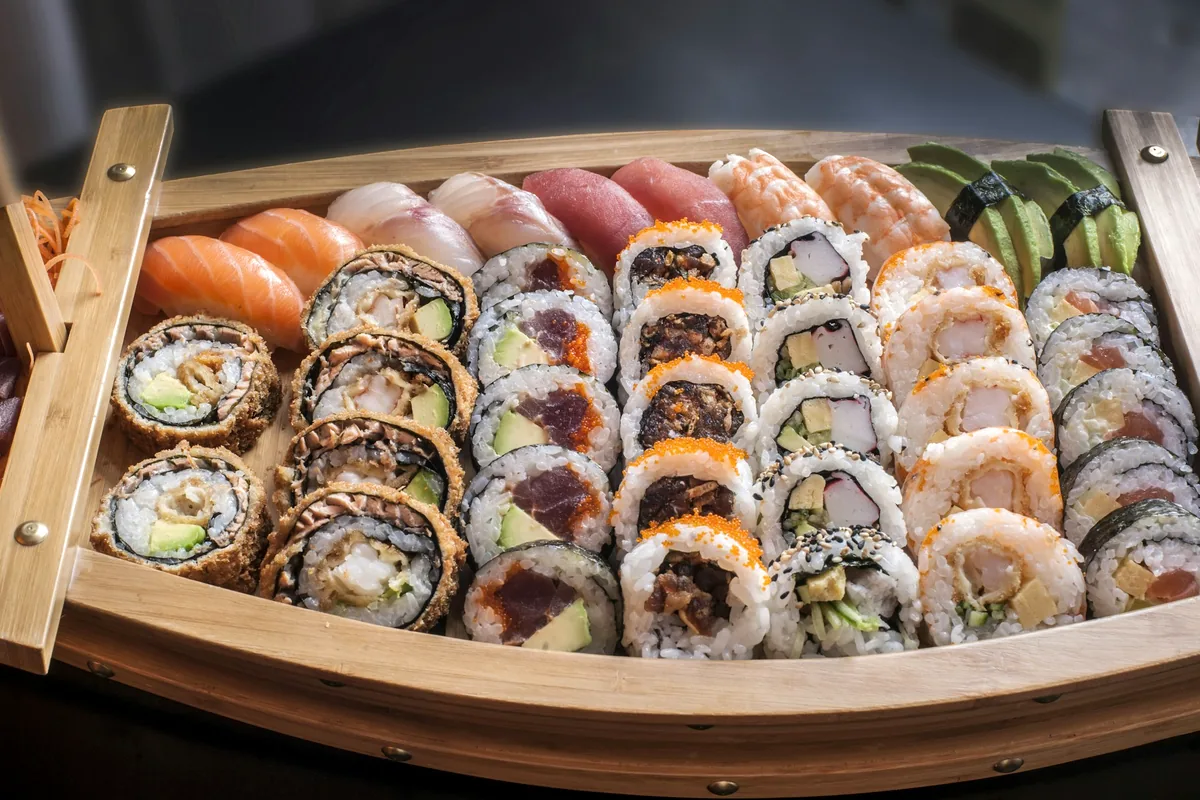
Ours come at 42 and 64 pieces rather than as a number of rolls, and that is the sensible way to sell them. A platter of eight rolls could be anything between forty and sixty-four pieces depending on what went into it.
Piece count is the only figure that lets you divide by the number of people and get a useful answer. When you are ordering for a group, it is the number to ask for.
Frequently asked questions
Why are most rolls eight pieces?
Because a cylinder halved three times gives eight identical pieces with no measuring. It is the natural result of the cutting method.
What does a five-piece roll mean?
Usually that it is made without rice, or with a very dense filling. Fewer, larger, richer pieces that eat closer to sashimi.
Why does nigiri come in pairs?
Convention rather than cutting. Two pieces let you taste a fish properly, suit sharing, and are a sensible unit of work for the chef.
Can I ask for a roll cut into more pieces?
You can ask. Be aware that smaller pieces from a thick roll tend to fall apart, which is why the counts are what they are.
How many pieces should I order per person?
Ten to twelve if sushi is the whole meal, four to six if it is one dish among several. Count pieces, not rolls.
The short version
Eight is a cylinder halved three times. Six is a slimmer roll cut differently. Five means no rice and a denser piece. Two means nigiri, and one means a cone. Count pieces rather than rolls and the maths works.
Every count on the menu follows those rules.