The short answer
The orange beadsmasago or tobiko, fish roe
The seedssesame, toasted for aroma
Nothing on a Japanese plate is there purely to look at. Every scattered thing is doing a job — usually crunch, sharpness or aroma.
The small things get eaten without being noticed, which is a shame, because they are where a lot of the texture on a plate comes from. Here is what they are and what each one is doing.
01 — The roeMasago, tobiko and ikura
Three different fish roes turn up on sushi menus and they are not interchangeable, though the first two are constantly confused.
- Masago. Capelin roe. Very small, orange, slightly softer, and the one most often rolled around the outside of a roll. Mild and faintly sweet.
- Tobiko. Flying fish roe. Slightly larger than masago and noticeably crunchier, with a cleaner pop. Sometimes coloured — black with squid ink, green with wasabi, red with beet.
- Ikura. Salmon roe. Much larger, deep orange, translucent, and it bursts rather than crunches. Rich and strongly flavoured.
On our menu the Philadelphia roll is listed with masago, which is the classic use of it — a fine layer rolled onto the outside so every bite gets a little texture without any one bite getting much.
Why roe goes on the outside
An inside-out roll has rice on the surface, and rice is sticky and soft. Left plain it is pleasant but monotonous, and it also sticks to fingers and plates.
Rolling that surface in masago, tobiko or sesame does three things at once: it adds a fine crunch, it stops the roll adhering to everything, and it turns the outside from white to something worth looking at. That is a lot of work for one ingredient.
It is also a direct consequence of the inside-out roll existing at all, which is a story covered in how the American sushi roll happened.
02 — The seedsSesame is doing more than it looks
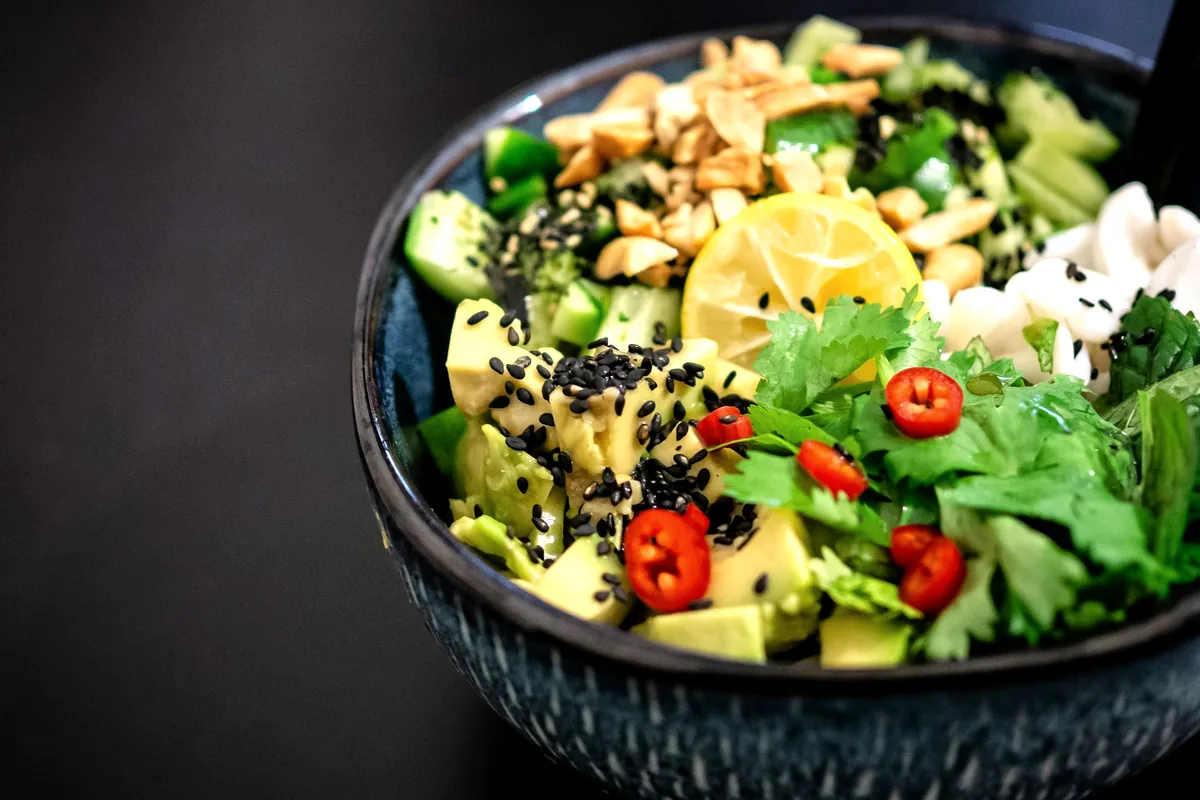
Sesame seeds appear on rolls, in ramen, over salads and through dressings, and they are almost always toasted first. Raw sesame is bland; toasted sesame is nutty and aromatic, and the difference is not subtle.
White and black sesame are different seeds rather than the same one at different roasts. Black is slightly more bitter and more assertive, white is sweeter and milder, and a plate that uses both is usually doing it for contrast rather than decoration.
The reason it turns up everywhere is that it is one of the few finishing touches that survives heat. Sesame on a hot bowl of ramen still tastes of sesame; most delicate garnishes do not.
The green things
Green onion, sliced thin and scattered raw, is the sharpness in a bowl of ramen and the reason a spicy yellowtail roll is not simply rich. It goes on last because heat wilts it.
Shiso is a leaf in the mint family, used under sashimi and occasionally in rolls. It tastes of nothing else — somewhere between basil, mint and anise — and it is worth eating rather than pushing aside.
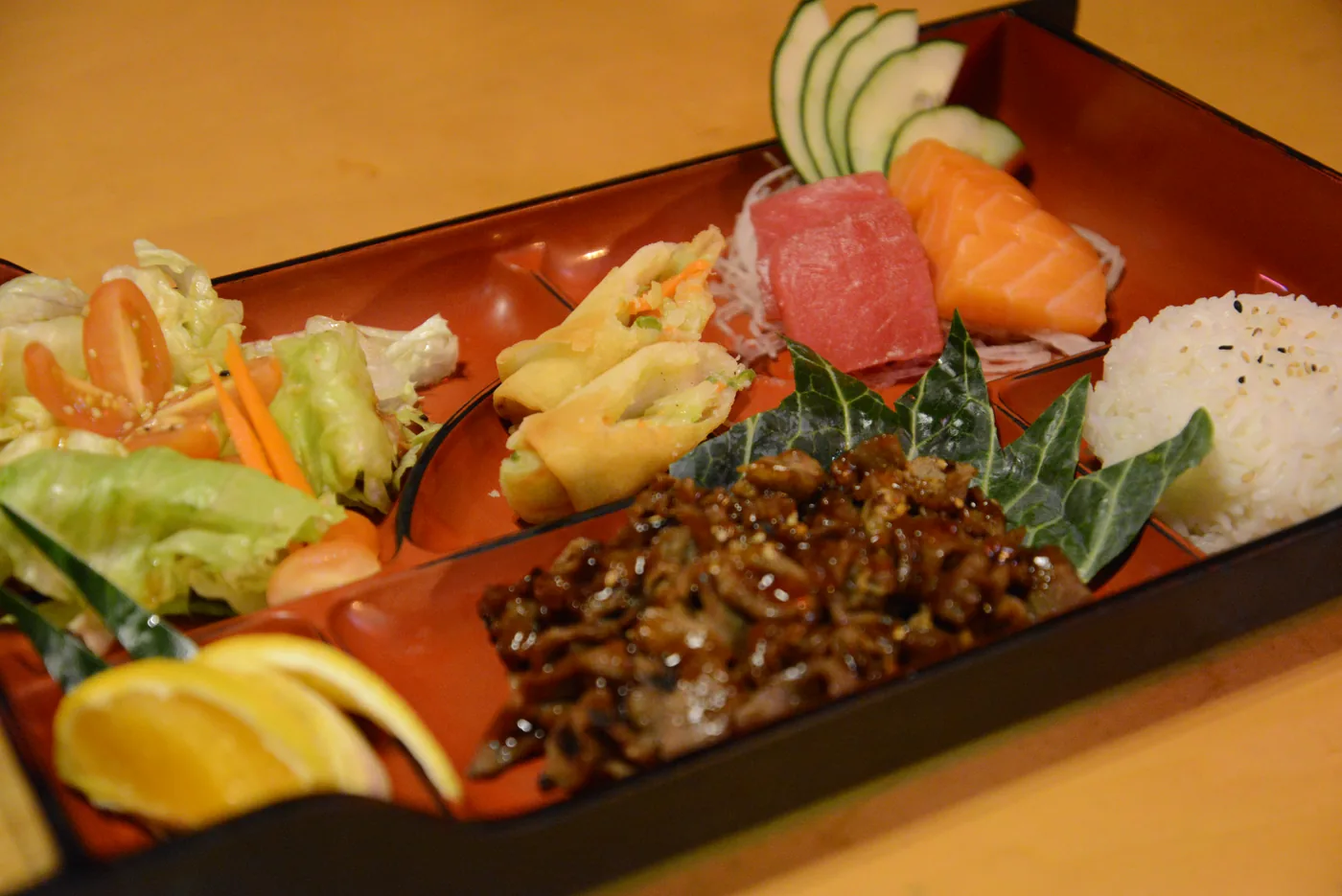
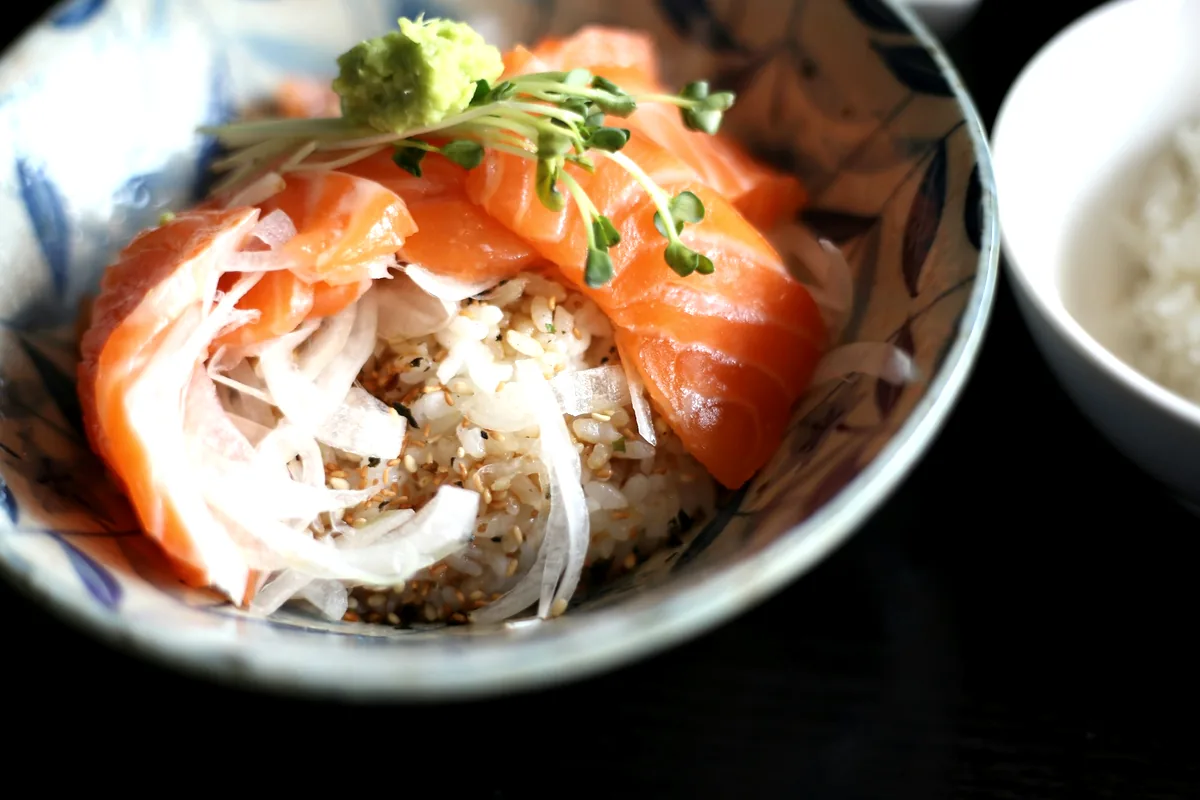
Shredded daikon, the fine white threads under a sashimi plate, is not packing material. It is a mild, crisp radish, and eating a little between slices resets the palate in the same way pickled ginger does.
Good to know
The plastic green leaf that sometimes appears between pieces of sushi is not one of these. It is baran, a divider descended from a real leaf once used to separate items and slow spoilage. The plastic version is decorative only — that one really is not food.
What “crunch” is on a menu
When a roll description says crunch, it means fried tempura crumb scattered over the top. Not a fried roll, not a tempura filling — loose crumb, added at the end.
It exists to give a fresh roll texture without putting it anywhere near a fryer, which is a genuinely clever solution. A roll with raw fish on top cannot be fried; a roll with crunch scattered over it gets most of the same effect.
Fried garlic and crispy onion do the same job with more flavour attached. All three are covered alongside the actual frying techniques in the three kinds of fried.
Every garnish, and its job
| Garnish | What it is | What it is for |
|---|---|---|
| Masago | Capelin roe, very fine | Fine crunch across the whole roll |
| Tobiko | Flying fish roe, larger | A cleaner pop, and colour |
| Ikura | Salmon roe, large | Richness, in small amounts |
| Sesame | Toasted seed, white or black | Nutty aroma that survives heat |
| Green onion | Sliced raw | Sharpness against richness |
| Shiso | A mint-family leaf | An aromatic note nothing else gives |
| Shredded daikon | Fine radish threads | Crisp palate reset under sashimi |
| Crunch | Fried tempura crumb | Texture without frying the roll |
| Fried garlic | Thin crisp slices | Crunch plus a strong savoury note |
| Baran | A plastic divider | Nothing — do not eat it |
Reading a roll by its outside
Once you know the vocabulary, the surface of a roll tells you something before you read the description.
- Orange beads all over. Masago or tobiko rolled onto the outside. Expect a fine crunch throughout.
- Sesame all over. A plainer roll, finished for aroma rather than texture.
- Golden crumb scattered on top. Crunch. The roll itself is not fried.
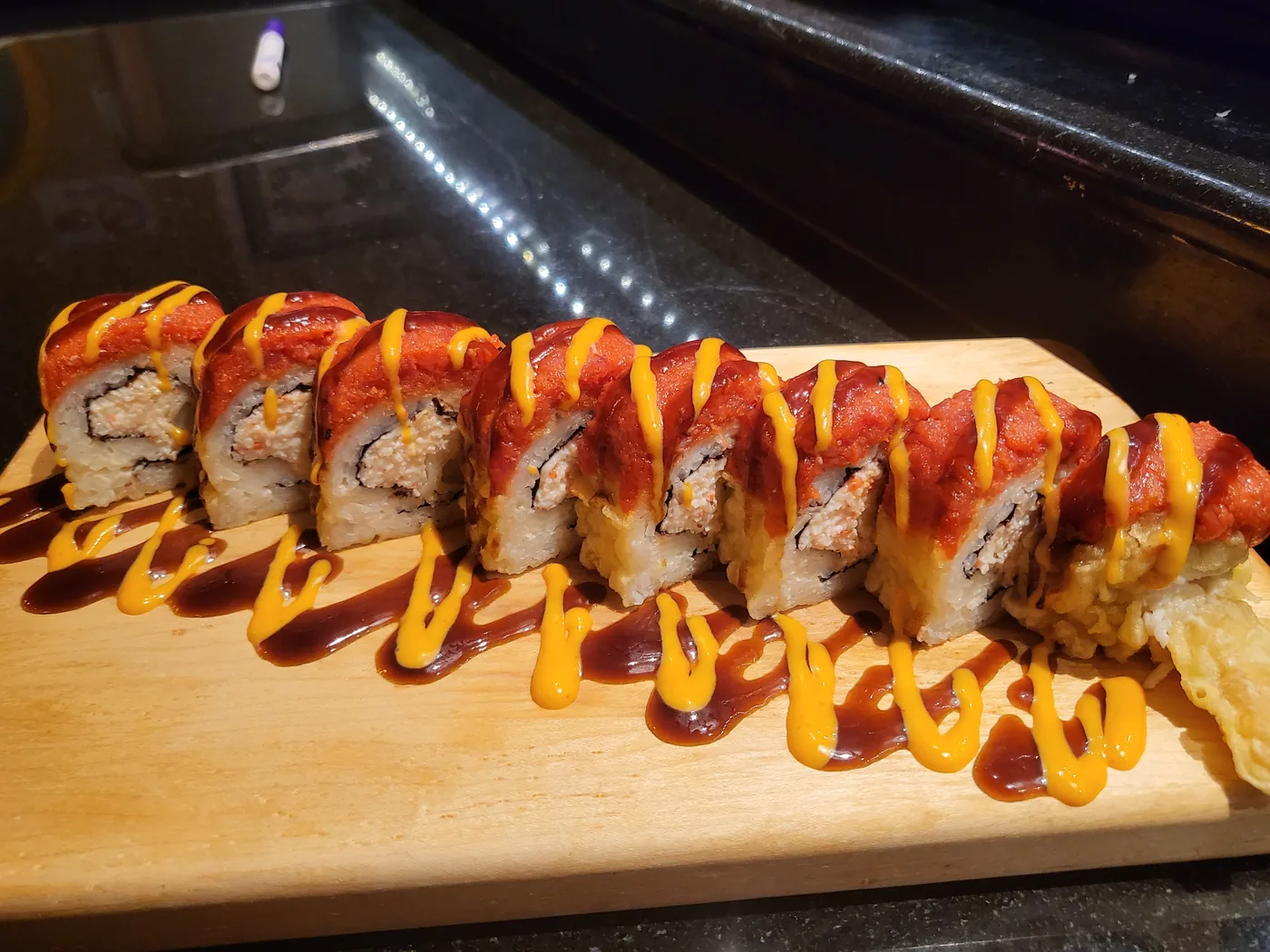
- A dark zigzag. Eel sauce. Sweet, and already seasoned — no soy needed.
- Orange drizzle. Spicy mayonnaise. Creamy rather than hot.
- Green flecks. Green onion or chive, added last for sharpness.
Between those six you can predict most of what a plated roll will taste like from across the table, which is a genuinely useful party trick on a long specialty list.
Frequently asked questions
What are the little orange balls on sushi?
Fish roe — usually masago, which is capelin roe, or tobiko, which is flying fish roe and slightly larger and crunchier.
What is the difference between masago and tobiko?
Size and texture, mainly. Tobiko is larger with a cleaner pop; masago is finer and softer. Tobiko is also the one sometimes coloured black, green or red.
Should I eat the white shredded stuff under sashimi?
Yes — it is shredded daikon radish, and it works as a palate cleanser between different fish.
Is the green plastic leaf edible?
No. That is baran, a plastic divider descended from a real leaf. It is the one thing on the plate that is not food.
Does roe contain allergens?
Fish roe is a fish product, and colourings and seasonings vary between suppliers. If you are avoiding fish or have an allergy, ask the restaurant rather than assuming from a roll description.
The short version
Orange beads are roe and they are there for crunch. Sesame is toasted and there for aroma. Green onion is there for sharpness, daikon for a reset, and crunch is fried crumb rather than a fried roll. Only the plastic leaf is decoration.
You can read most of a plated roll from its surface — the rest of the vocabulary is in how to decode a roll description.