The short answer
For sharingplatters, one all-cooked
For individualsbento boxes, one each
Feeding a room at work is a different problem from feeding a dinner table. The food has to survive a drive, sit for twenty minutes, and suit people who did not choose it.
Ordering lunch for a team looks like ordering a big dinner and is not. Three constraints apply that never come up at a restaurant table, and they decide most of what you should order.
01 — The constraintsWhat makes it different
It has to travel and then wait. Food ordered for a meeting is collected, carried, and then sits while people finish a call. Anything crisp is finished before the first person eats. That rules out tempura and hand rolls immediately.
You are ordering for people who did not choose. Somebody will not eat raw fish, somebody will have an allergy, and somebody will be vegetarian. You need range rather than your own preferences.
It has to be eaten without a table setting. Standing up, on a lap, next to a laptop. Anything requiring a knife or careful assembly is the wrong order.
Sushi happens to be unusually good at all three, which is why it turns up at so many working lunches. It is served cool by design, it comes in pieces, and it is finger food.

Platters or boxes
There are really only two ways to do this and they suit different situations.
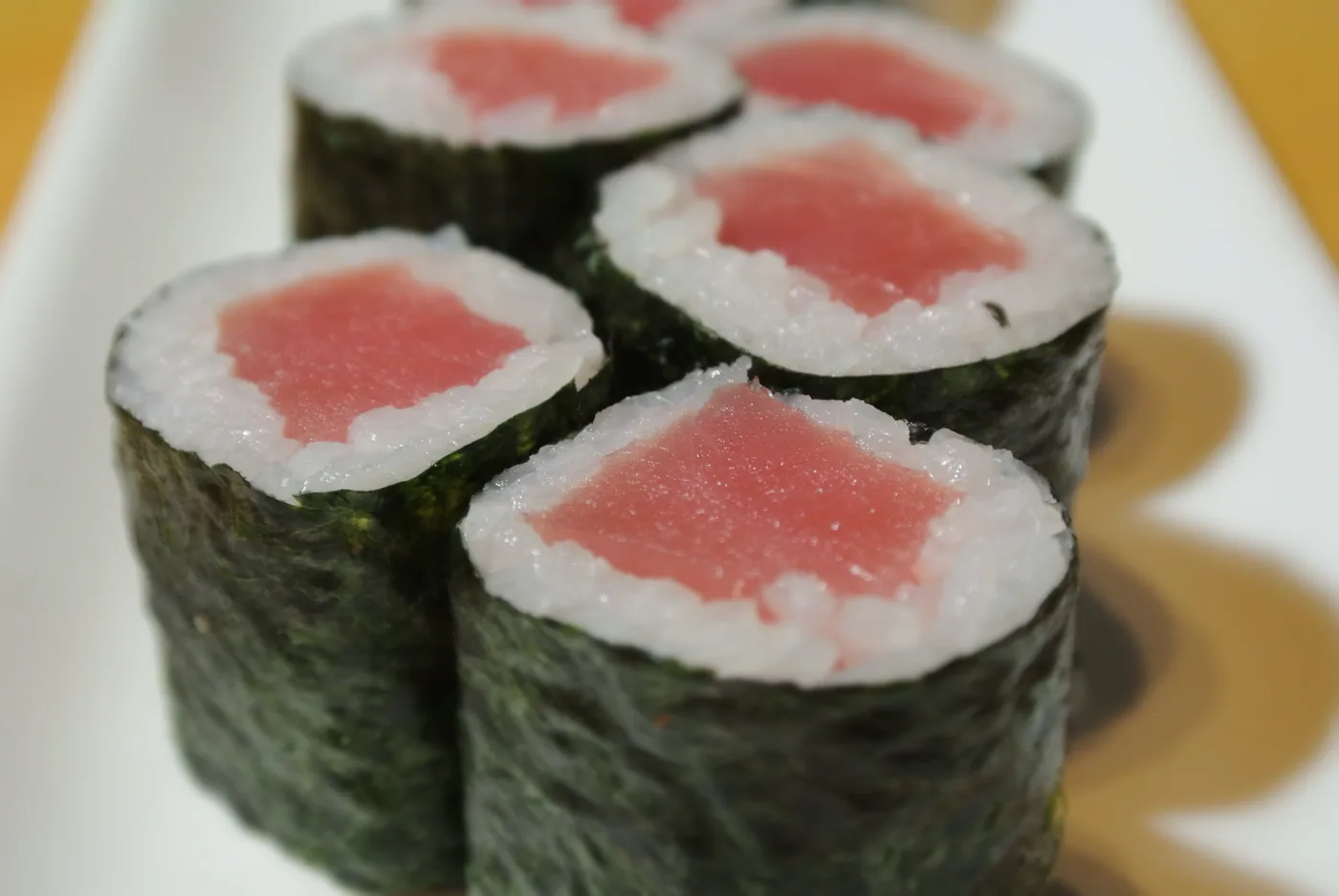
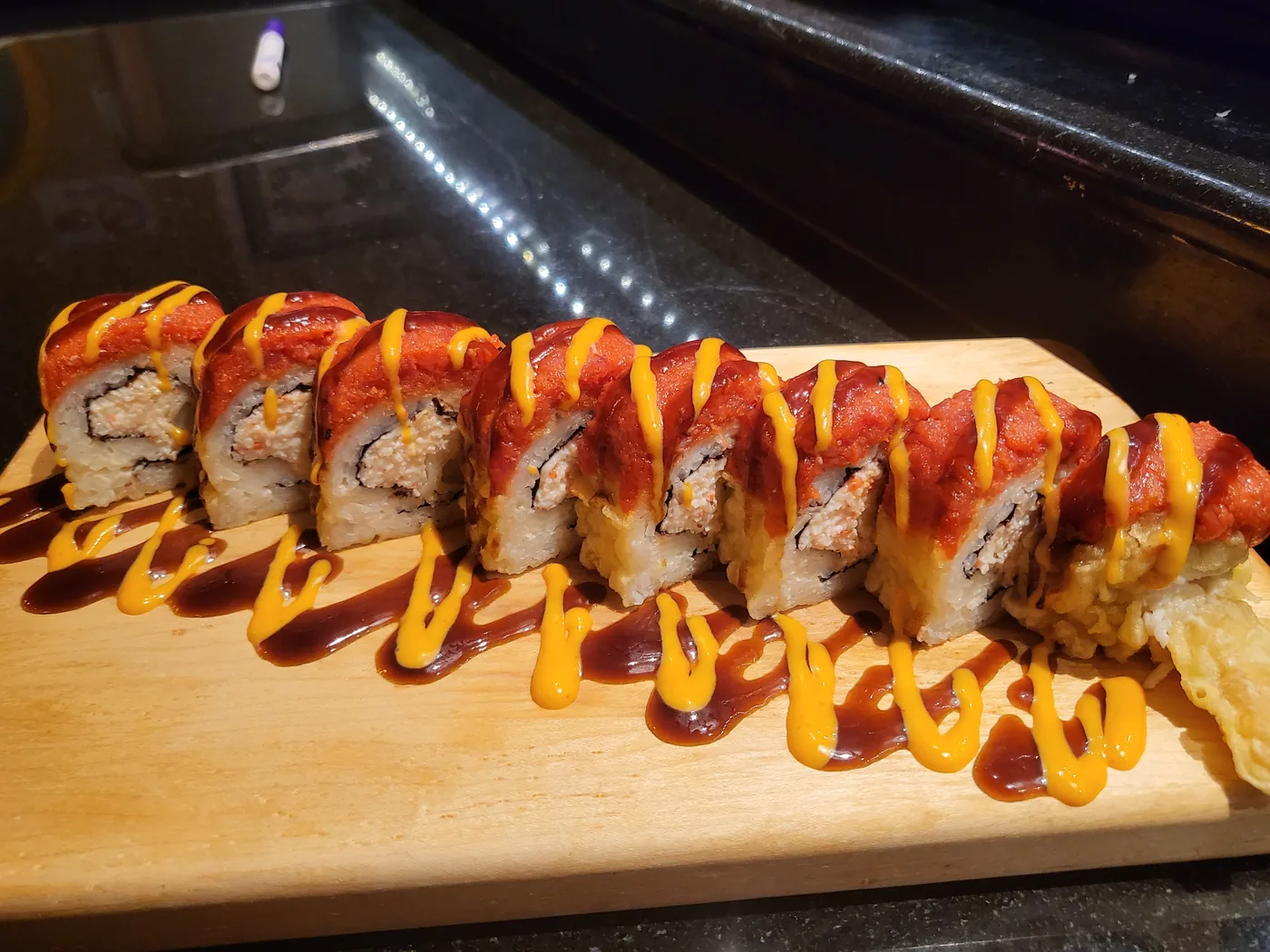
Party platters are the shared approach. Ours come at 42 and 64 pieces, and the sensible move for a group is to order at least one that contains nothing raw. The Kid’s Land platter is built entirely from cooked rolls, which makes it the practical solution to the raw fish question for a whole room rather than person by person.
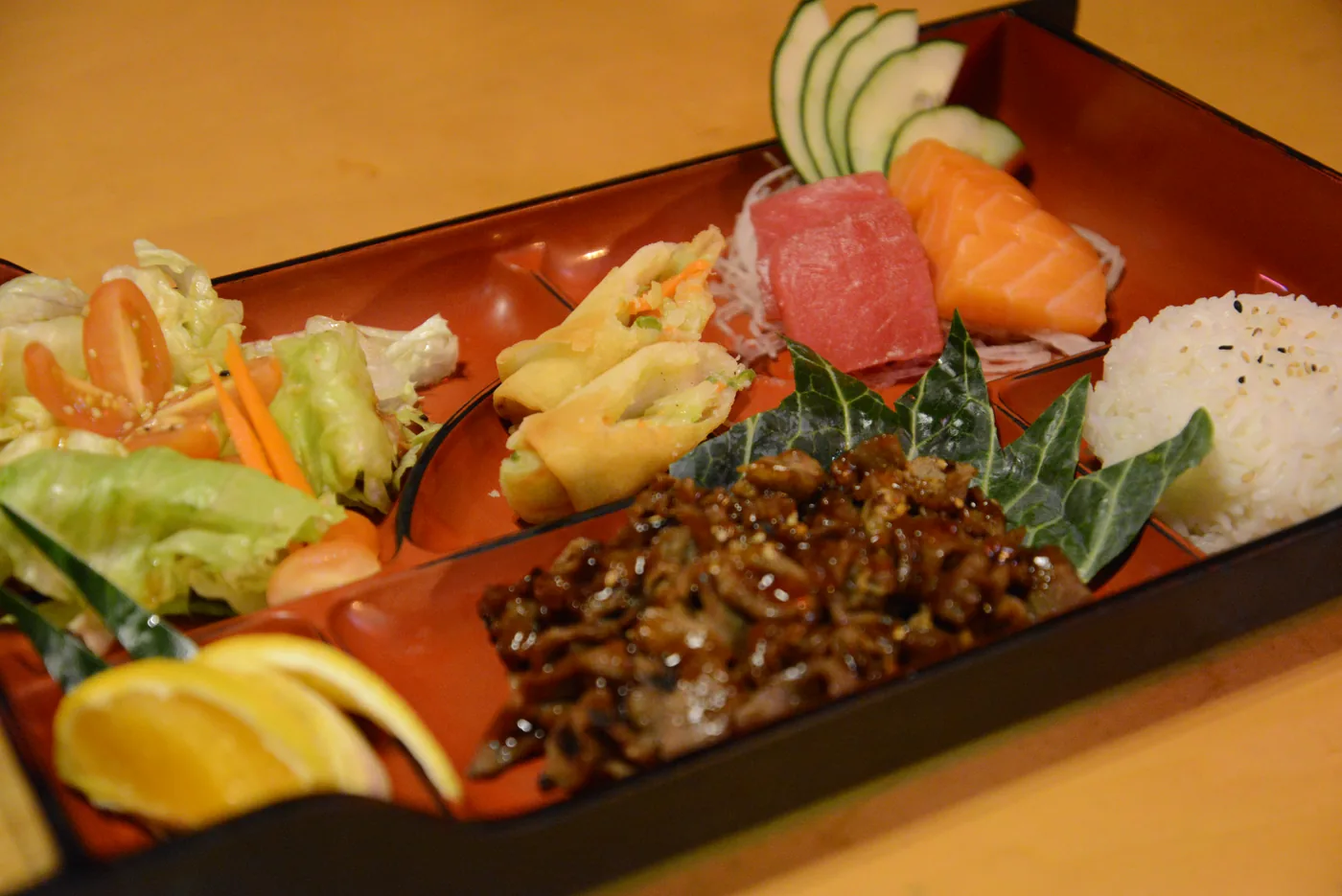
Bento combinations are the individual approach. Each is one person’s meal in a divided tray with salad, miso soup and steamed rice, and each can hold a different pair or trio of items. Nobody has to negotiate, nothing gets picked over, and dietary requirements are handled by ordering a different box rather than by hoping.
Platters are better value and better for a room where people are moving around. Boxes are better when people are seated, when the group is small, or when requirements differ enough that sharing would not work.

How much to order
| People | If sushi is the meal | If there is other food |
|---|---|---|
| 4 | One 42-piece platter | Half of one, or four bento |
| 6 | One 64-piece platter | One 42-piece |
| 10 | Two 64-piece platters | One 64-piece plus appetisers |
| 15 | Three 64-piece, one all-cooked | Two 64-piece |
| Any size | Add rice and edamame | They stretch a platter further than more rolls do |
Count pieces rather than platters, since roll sizes vary. The fuller arithmetic, including how much people actually eat when sushi is one item among several, is in how much sushi to order for a party.
Ordering tip
Order one all-cooked platter regardless of the group size. It costs nothing extra to choose it over another assorted one, and it removes the single most common problem — someone standing over a table of raw fish with nothing to eat. It also covers anyone who is pregnant or unsure without them having to explain why.

Timing is the part people get wrong
A large platter is a lot of cutting, and it competes with a dining room that is also being served. Two things follow.
First, give notice. Call and ask what lead time is needed for the size you want on the day you want it, rather than assuming an hour is enough. A sixty-four piece platter is not something a kitchen can produce between two lunch tickets.
Second, think about when you collect. Our services run 12:00 to 3:00 and 5:00 to 10:00, closed Tuesday. A collection right at the start of lunch service is the smoothest moment; one at the peak means waiting behind a full room. There is more on how the two services differ in lunch or dinner.

A checklist for the person ordering
- Ask about requirements first. One message to the group beats guessing, and allergies need to be passed to the restaurant rather than worked around by you.
- Call, do not just click. For anything large, a conversation catches problems an online order will not.
- Order one all-cooked platter. Always.
- Add rice, edamame and a salad. They fill people up, they cost less than more rolls, and they suit anyone who is being careful.
- Skip anything fried. It will not be crisp by the time it is eaten.
- Ask for sauces on the side. Undressed food holds better and lets people manage their own.
- Get napkins and extra chopsticks. More than you think. There is never a right number.
On allergies specifically: pass them to the restaurant directly rather than filtering them yourself. You cannot tell from a roll name what is in it, and neither can we from a description — that is the whole argument of allergens on a Japanese menu.

What travels, in one line each
Cut rolls: excellent. Baked rolls: excellent. Bento boxes: excellent, and self-contained. Teriyaki and katsu: good, and the only substantial hot option worth carrying. Edamame and salads: unaffected by anything. Tempura, hand rolls and noodle soup: leave them for a visit.
The reasoning behind each of those is in what actually travels, and it applies to an office at midday exactly as it does to a drive home at nine.
Frequently asked questions
How much notice do you need for a large order?
It depends on the size and the day. Call and ask rather than assuming — a 64-piece platter is a lot of cutting and cannot be produced at short notice during a service.
Platters or individual boxes?
Platters for a room where people move around and for better value. Boxes when people are seated, the group is small, or requirements differ a lot.
What if some of the group will not eat raw fish?
Order one all-cooked platter alongside the assorted ones. It is the simplest fix and it covers several situations at once without anyone having to explain themselves.
Will it still be good after twenty minutes?
Cut rolls, baked rolls and bento boxes, yes. Anything fried, no. Order accordingly and it holds up fine.
Can you handle allergies for a group order?
Tell us when you order and we will talk it through. Pass allergies to the restaurant directly rather than trying to work them out from the menu yourself.
The short version
Platters for a moving room, boxes for a seated one, and one all-cooked platter either way. Add rice and edamame, skip anything fried, ask for sauces on the side, give the kitchen notice, and collect at the start of a service rather than the middle.
The platter sizes are on the menu and the number to call is on the contact page.