The short answer
“Spicy” herechopped fish in a creamy dressing
Heat levelmild, for almost everyone
Spicy tuna is a preparation, not a heat rating. It describes how the fish was treated more than how hot it is.
People avoid “spicy” on a sushi menu because they think it means heat, and people who want heat order it and are disappointed. Both groups have misread the same word.
01 — What the word marksA preparation, not a heat level
On a sushi menu, “spicy” in front of a fish name is shorthand for a specific way of handling that fish.
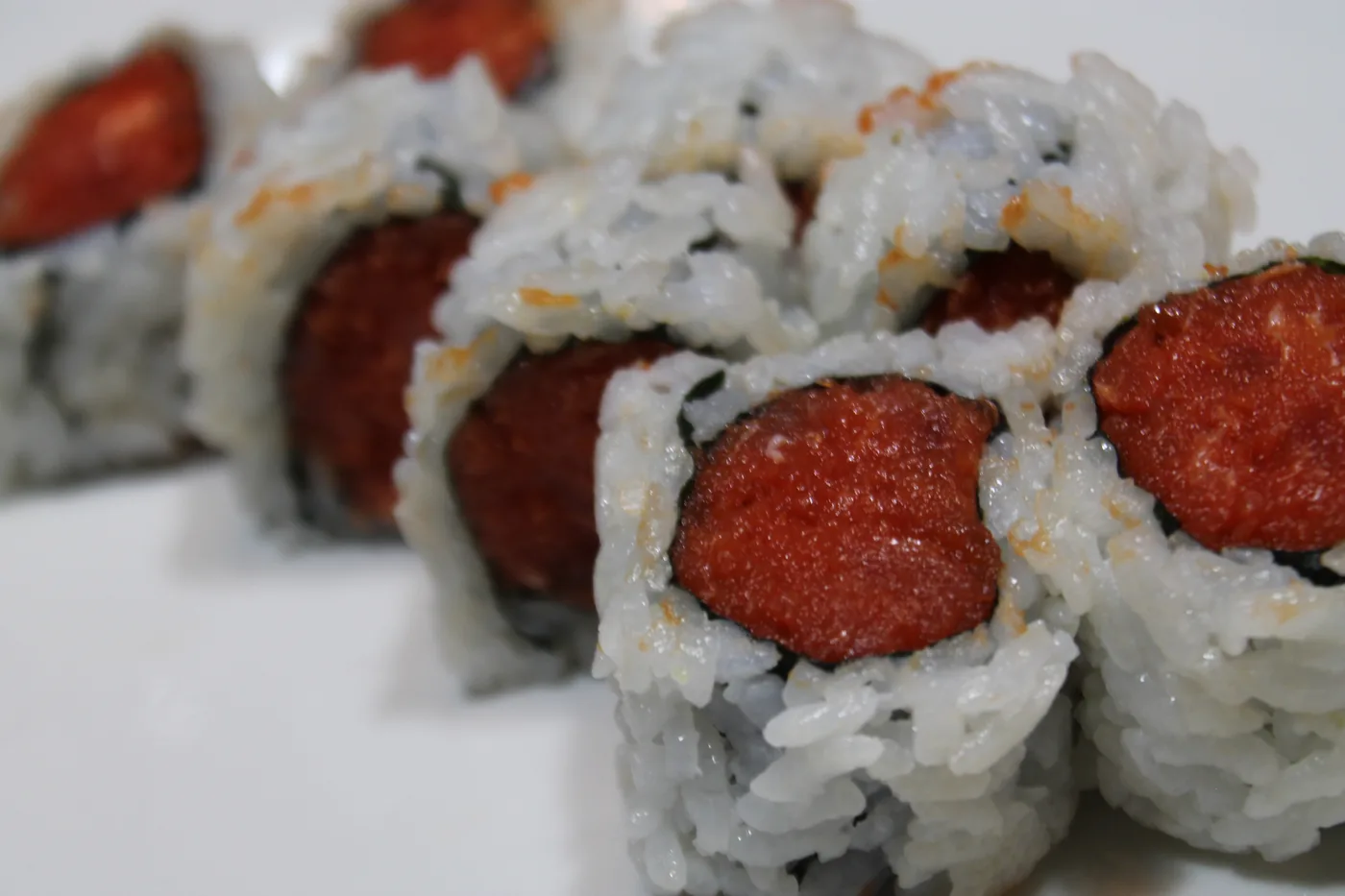
The fish is chopped rather than sliced, then folded together with a creamy dressing — a mayonnaise base with chilli in it, usually called spicy mayo. The result is a soft, bound mixture rather than a clean piece of fish.
That is the actual difference, and it is a bigger one than the heat. A slice of tuna and a spoonful of spicy tuna are two genuinely different things to eat: one is firm, cool and clean, the other is soft, rich and dressed. If you have ever wondered why spicy tuna does not taste much like tuna, that is why — the dressing is doing most of the talking.
How hot is it, really
Mild. Reliably, almost universally mild.
There is a structural reason for that beyond kitchens playing it safe. The dressing is fat-based, and fat coats the tongue and blunts capsaicin — the same principle behind drinking milk after something hot. A chilli sauce stirred into mayonnaise is a substantially gentler thing than the same sauce on its own.
So if you actively want heat, spicy tuna is the wrong order. You want fresh jalapeño, or hot sauce added at the table, or a ramen built around a spicy broth. And if you have been avoiding the word, you can almost certainly stop.
02 — Four kinds of heatThey are not on a single scale
A Japanese menu can deliver heat from four unrelated sources, and they do not stack into one number. Knowing which is which is more useful than any chilli rating.
| Source | Where you feel it | How long it lasts |
|---|---|---|
| Wasabi | Nose and sinuses | Seconds — it clears fast |
| Spicy mayo | Mouth, gentle and diffuse | Mild, fades quickly |
| Fresh jalapeño | Mouth, sharp and immediate | Depends entirely on the slice |
| Hot sauce or a spicy broth | Mouth, building | Accumulates over a bowl |
Wasabi is the outlier and the one that surprises people most. Its compounds are volatile, so the sensation travels upward rather than sitting on the tongue, and it disappears within seconds instead of building. It is the only heat on the list you can undo by waiting — there is more in wasabi, real and imitation.
Fresh jalapeño is the genuinely unpredictable one, because heat varies from pepper to pepper and even along a single pepper. Two slices from the same jalapeño will not necessarily match.
Good to know
Spicy mayo is a mayonnaise, so anything marked spicy on the roll list normally involves egg. It is one of the most common ingredients on an American sushi menu and one of the least visible in a dish name. If egg matters to you, “spicy” is a word to ask about — see allergens on a Japanese menu.
The fish still matters
Dressing does not erase the fish underneath, and the four spicy options on a basic roll list eat differently from each other.
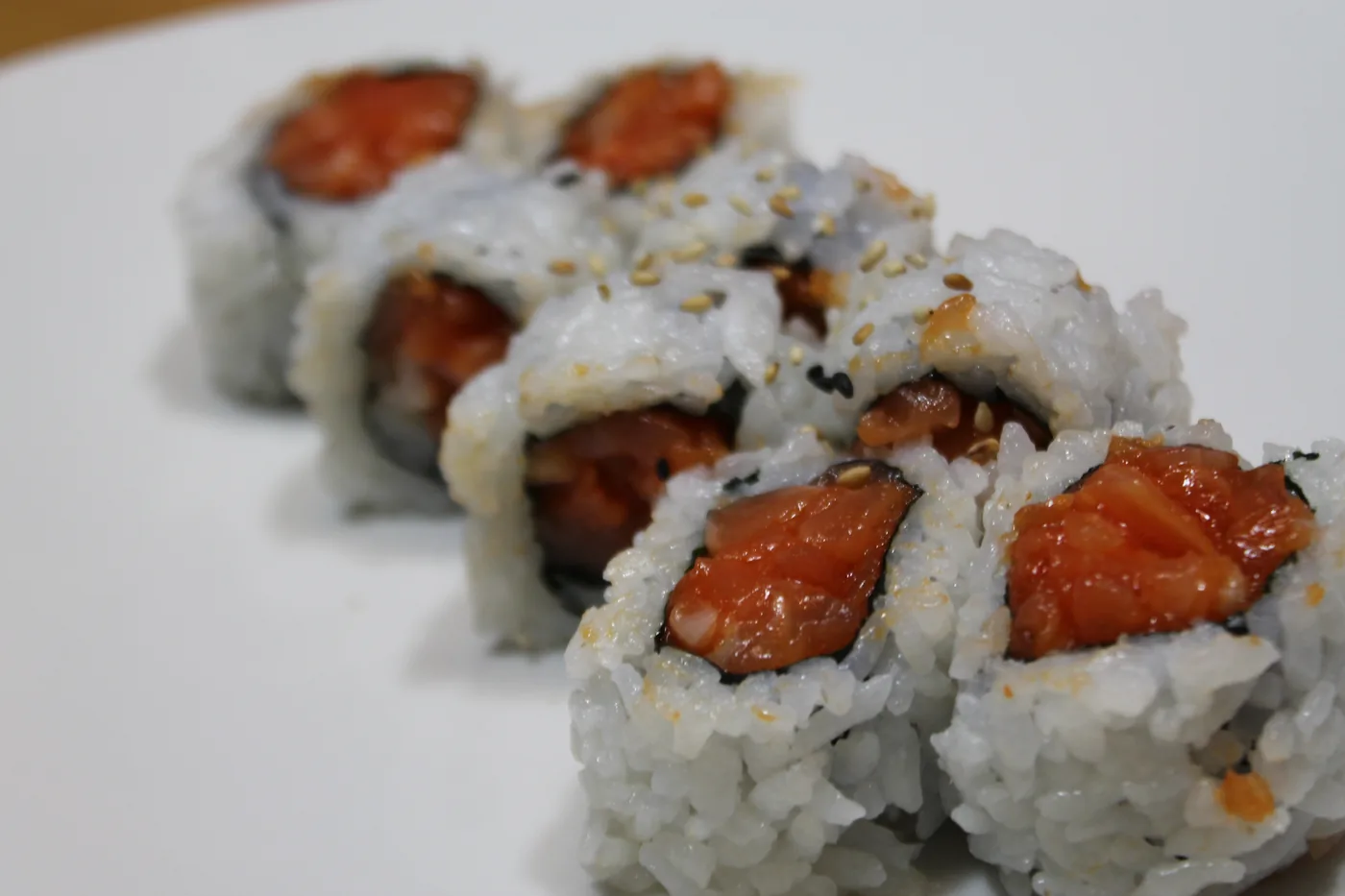
- Spicy tuna. The default, and the firmest. Tuna holds its texture in the mix better than the others, so you still get some chew.
- Spicy salmon. Softer and richer. Salmon’s own fat compounds the fat in the dressing, so this is the most indulgent of them.
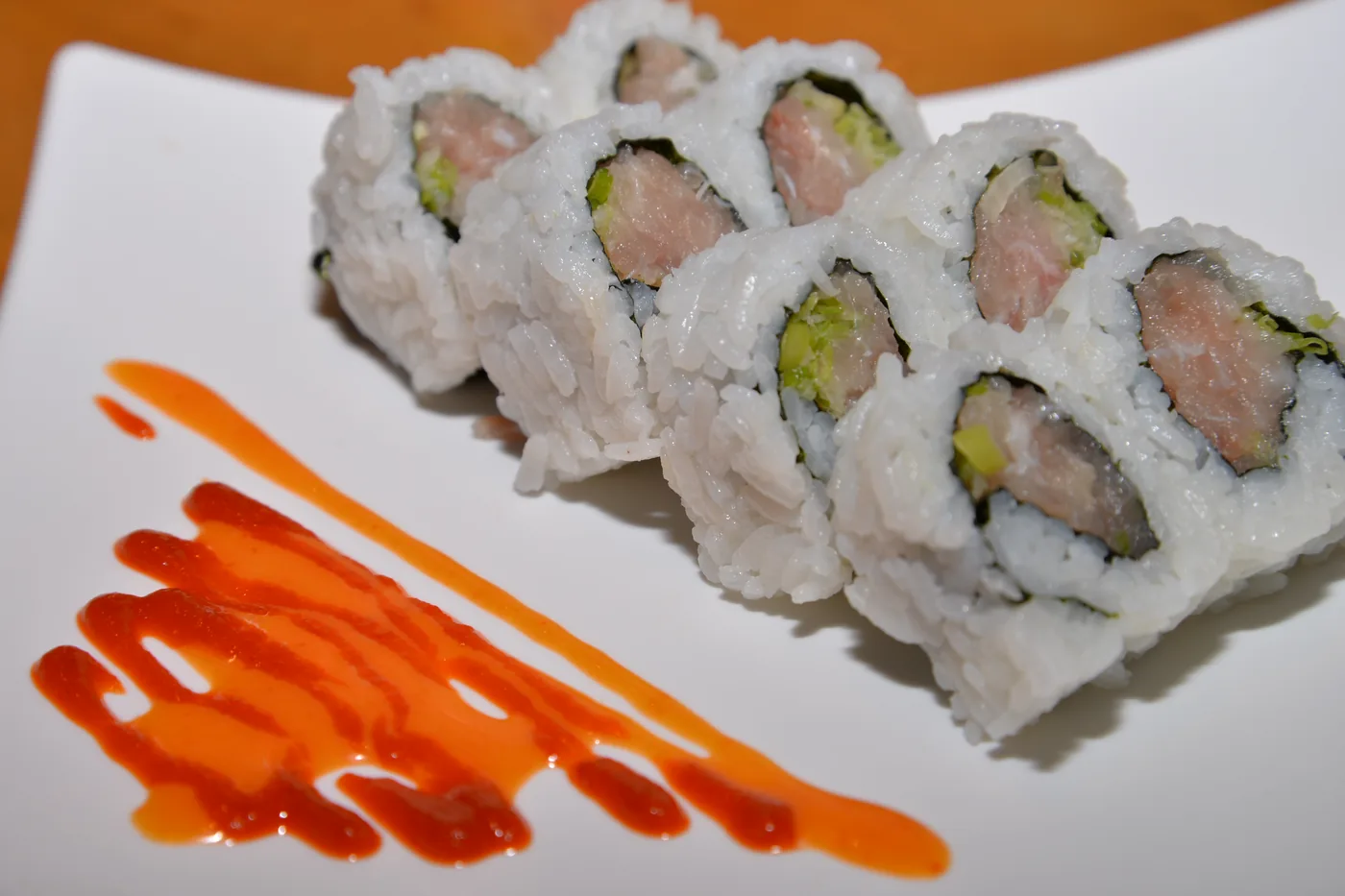
- Spicy yellowtail. Cleaner and slightly sharper. The one that keeps the most of its own character.
- Spicy albacore. Mildest of the four, and the most dressing-forward as a result.
- Spicy scallop. Sweet and very soft — closer in texture to the dressing itself than the fish options are.
If you are ordering more than one, do not order two spicy rolls. They will taste more alike than the fish names suggest, because the shared dressing is the loudest thing in both. Pick one spicy and one plain — the difference between the two is the point.
When spicy is stacked on spicy
Specialty rolls sometimes use the mixture twice, and the names tend to warn you.
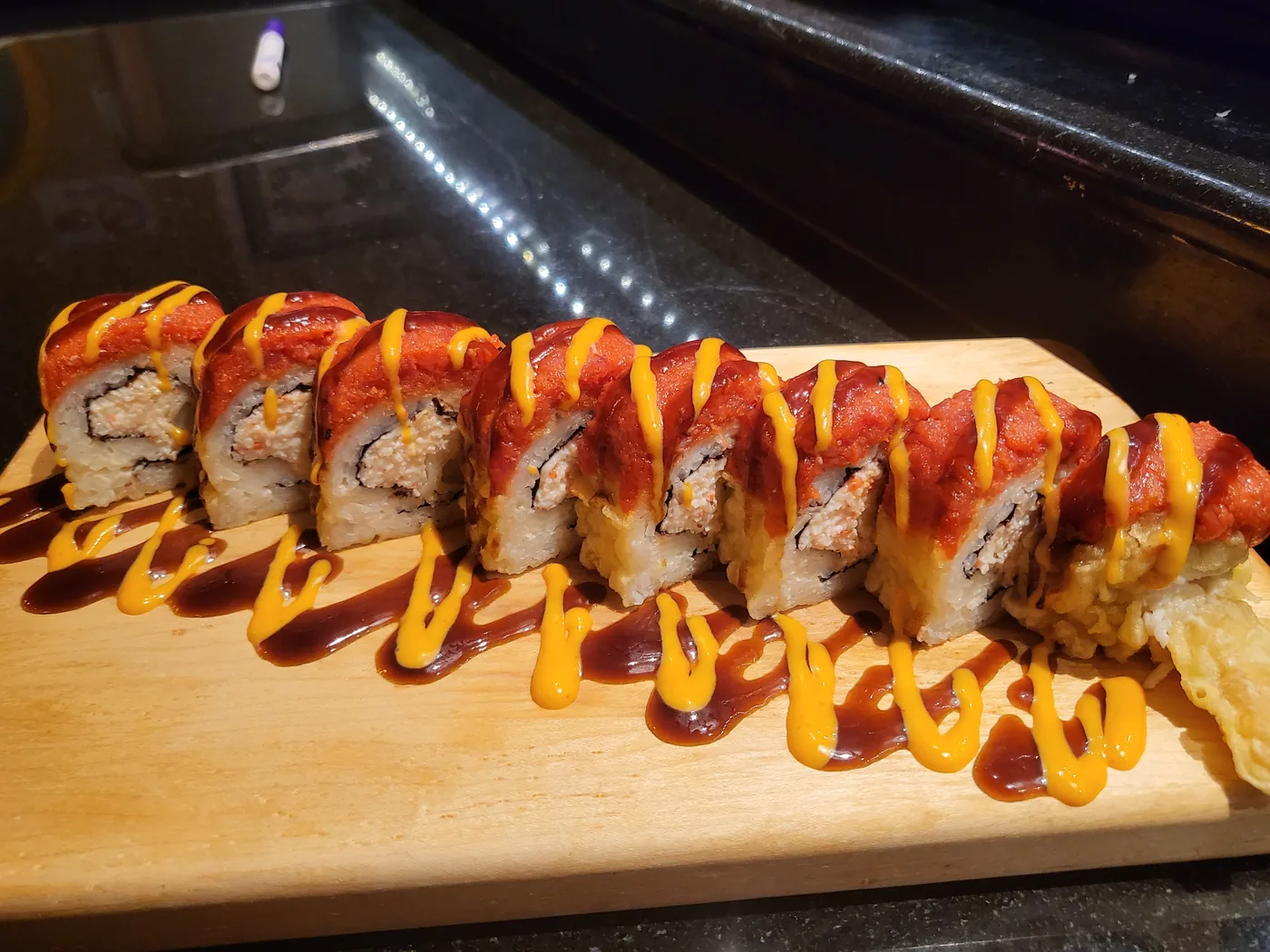
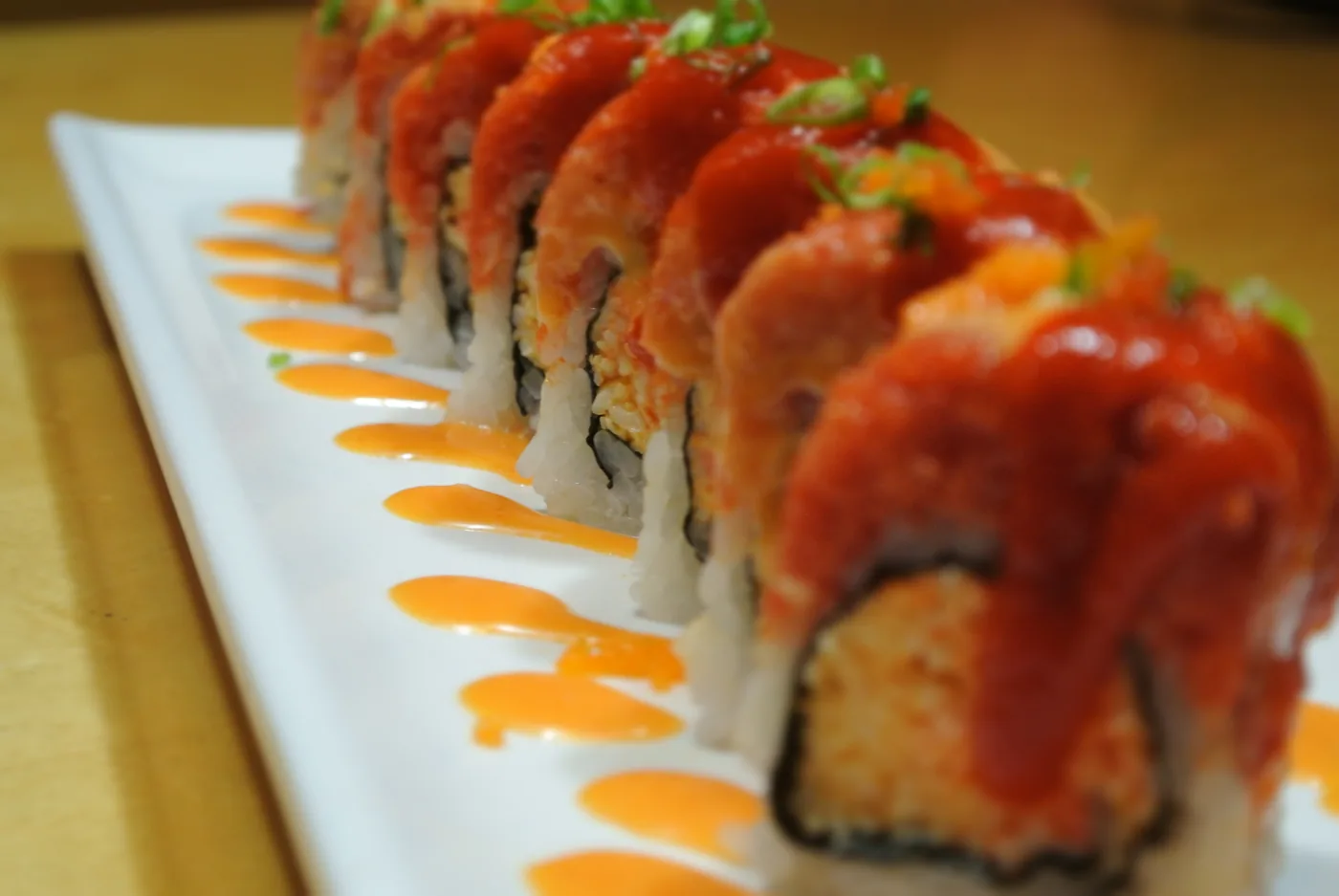
Our 911 is listed as spicy tuna over a spicy crab roll — a spicy base with a spicy topping. That is not double the heat, because two mild things are still mild. What it doubles is the richness: two layers of the same creamy dressing in one piece.
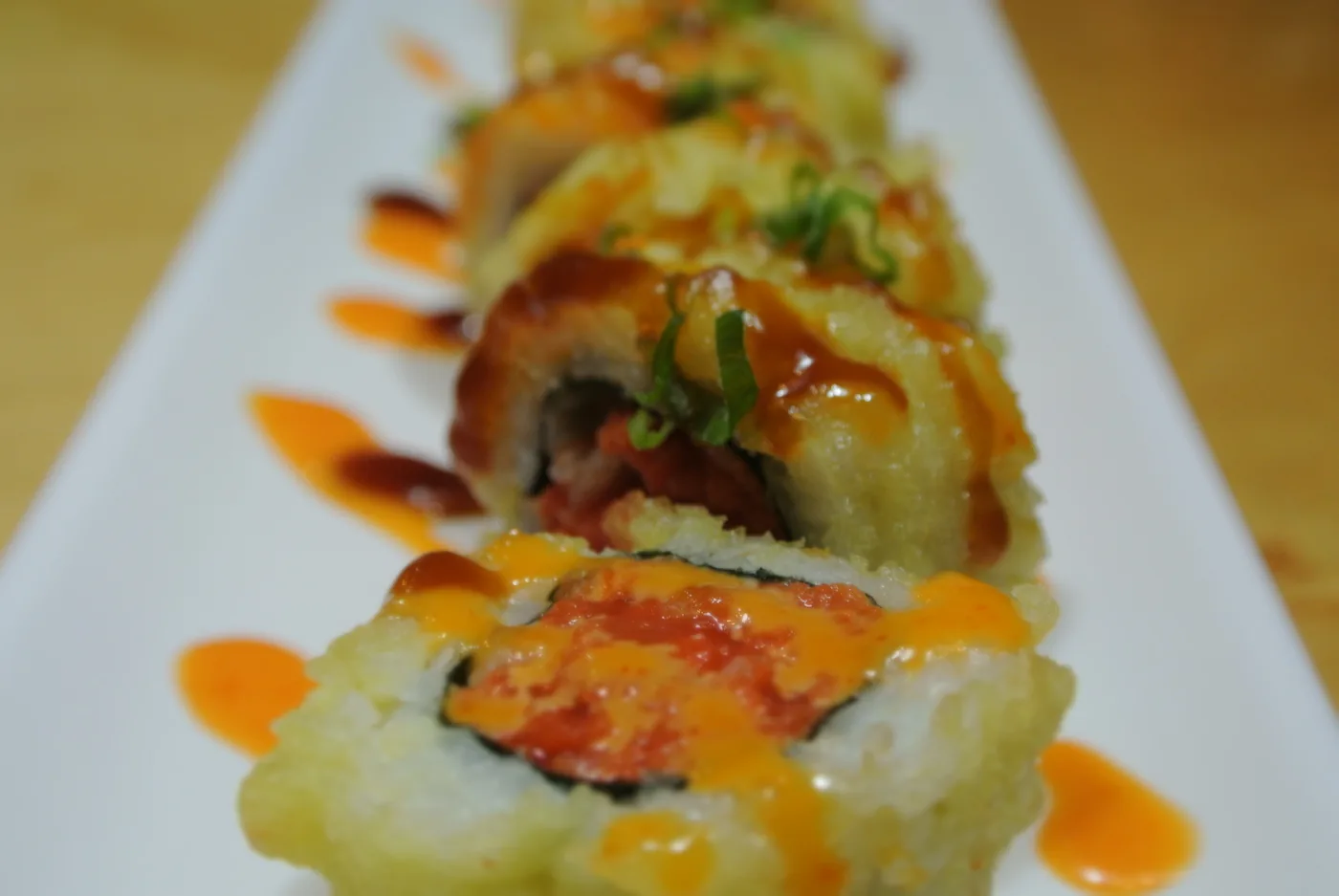
The same logic applies to a deep-fried spicy roll. Our Golden Spicy Tuna is a spicy tuna roll that has been fried, which adds a hot crisp exterior to something already soft and rich inside. It is one of the heavier things on the roll list, and it is best shared — the same caution applies to the baked rolls.
Spicy off the roll list
The word appears in three other places on our menu, and it means something different in each.
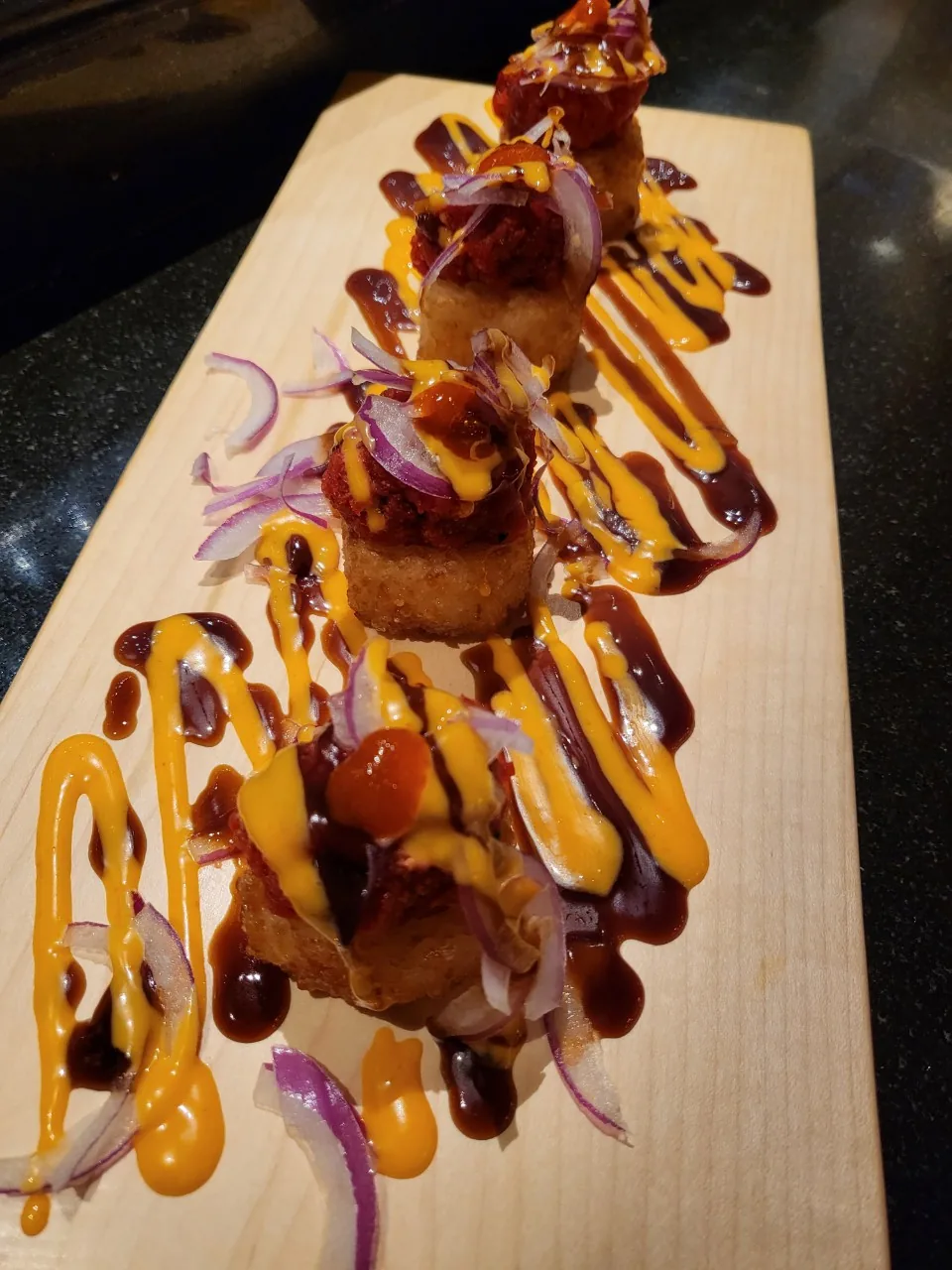
- Crispy Rice on Spicy Tuna. The same mixture, served on a fried rice cake instead of in a roll. Crisp underneath, soft on top.
- Spicy Miso ramen. Heat built into a broth, which behaves completely differently — it accumulates as you work through the bowl rather than arriving all at once.
- Hot sauce. Listed among the extra sauces, alongside spicy mayo, eel sauce and ponzu. This is the one to ask for if you genuinely want the dish hotter, because it lets you set the level yourself.
That last point is the practical one. Adding heat at the table always works better than hoping a menu word will deliver it, and it means the kitchen does not have to guess what “spicy” means to you. More on the bottles in the sauces explained.
Frequently asked questions
Is spicy tuna actually spicy?
Only mildly. The chilli is carried in a mayonnaise-based dressing, and the fat in it blunts the heat considerably.
What is spicy tuna made of?
Chopped tuna folded together with a spicy mayonnaise dressing. The chopping is as much a part of the definition as the chilli.
What should I order if I want it genuinely hot?
Ask for hot sauce at the table, look for fresh jalapeño, or order a spicy broth. Those are the three that actually deliver heat.
Is spicy mayo the same as sriracha?
No. Spicy mayo is a mayonnaise with chilli mixed into it, so it is creamy and mild. A chilli sauce on its own is neither.
Can children eat spicy tuna?
Many can, since the heat is low, but it does contain raw fish and a creamy dressing. Judge it on those rather than on the word spicy — see eating Japanese food with children.
The short version
“Spicy” on a sushi menu means chopped fish in a creamy chilli dressing. It is mild, it is rich, and it changes the texture of the fish far more than it changes the temperature of your mouth.
Order one spicy roll and one plain one, and the contrast will tell you more about both than either would alone. If you want real heat, ask for it at the table.