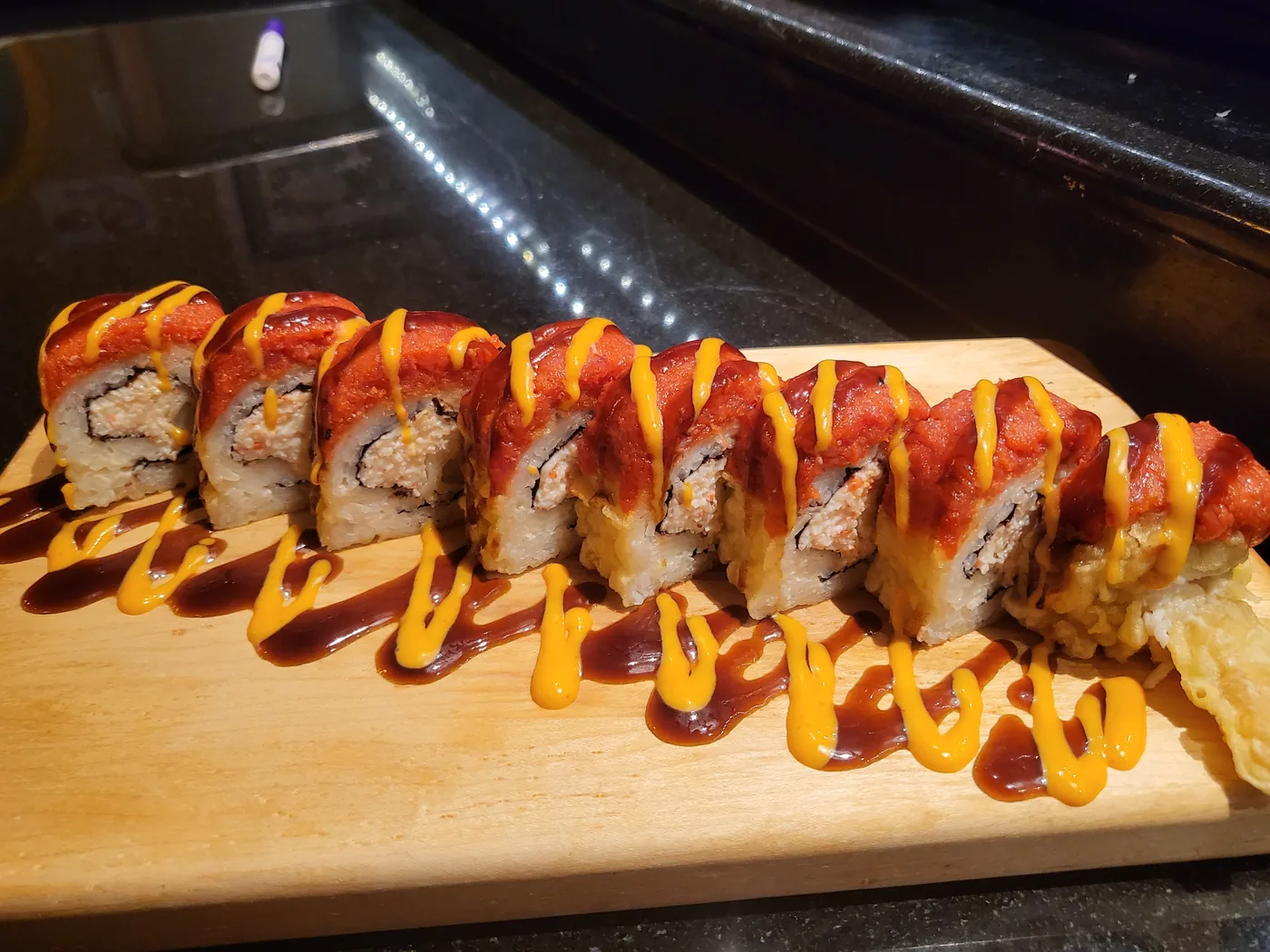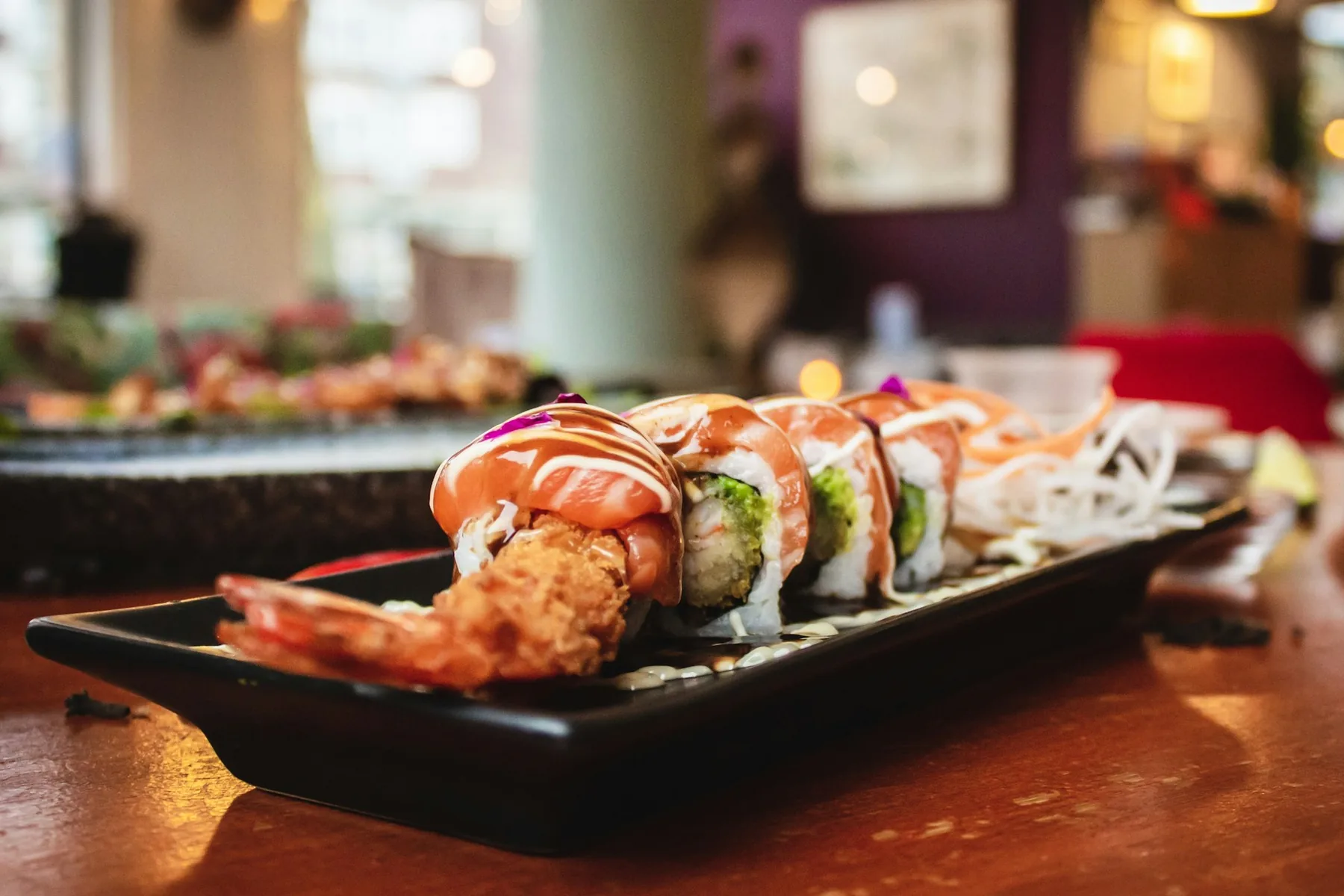
A specialty roll is really three decisions stacked on top of each other: what goes inside, what goes on top, and what happens to it after it is rolled. Change any one and you get a different dish.
Take the baked rolls. A Baked Alaskan is salmon baked onto a California roll; a Baked Scallop swaps in scallop. The heat firms the topping and concentrates it, which is why baked rolls taste richer than their cold counterparts even when the fillings are similar.
Fried rolls work the other way around. A Golden California is a California roll taken whole into the fryer, so the contrast is textural: crisp outside, cool inside. The Crazy Boy and Crazy Girl are built on the same idea with cream cheese carrying the heat.
Then there are the rolls that skip rice on the outside entirely. The Albacore Lover, Eskimo, Red Skin and Salmon Lover are wrapped in fish rather than rice, which makes them lighter and pushes the fish to the front.
The Crunch Rainbow sits at the busy end of the list: shrimp, crab, tuna, salmon, albacore and tilapia layered over a crunch roll. It is a good example of the house approach – a lot going on, but each element still readable.
See the full menu for everything described here.
Rolls are only one part of the sushi bar. If you are weighing them against the pieces served without rice, we set out how nigiri and sashimi differ and which one suits a first visit.