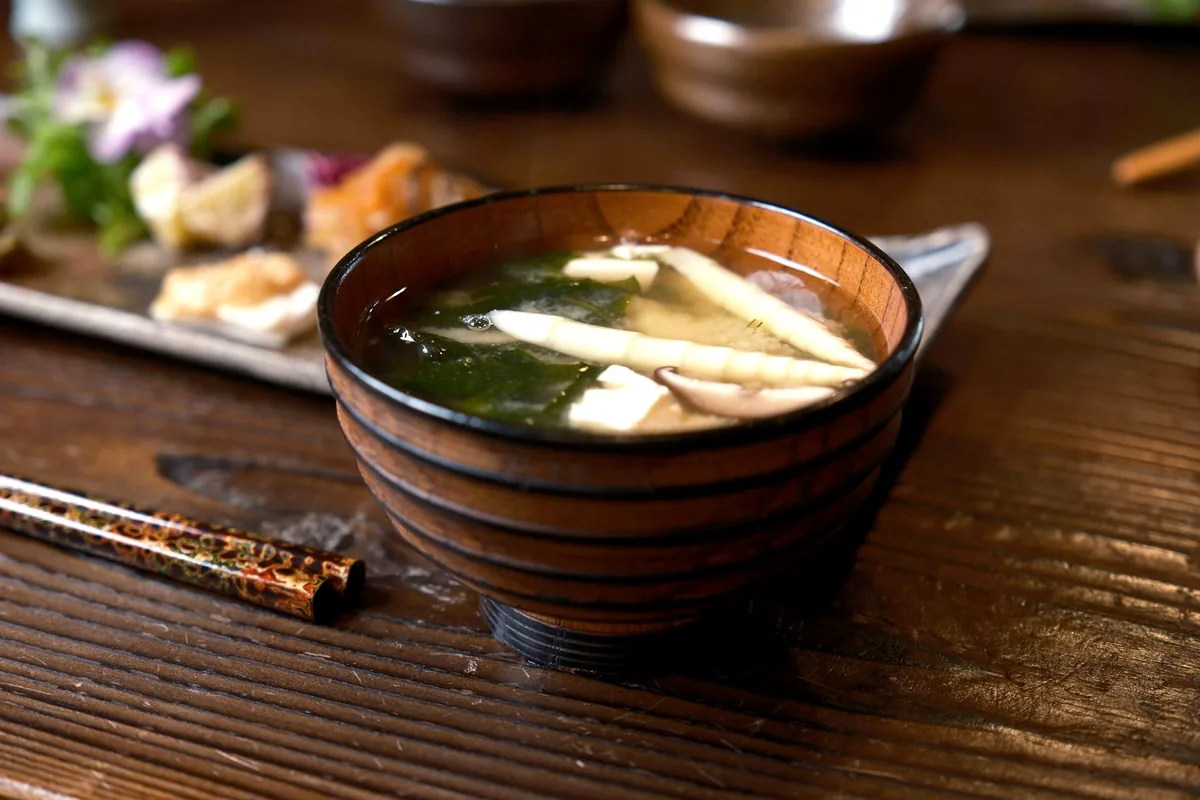
The short answer
Dashithe stock, kelp and dried fish
Misofermented soybean paste, stirred in
Two ingredients and two garnishes. It is the simplest thing on a Japanese menu and the one most people have never thought about.
It arrives with almost everything, gets drunk without comment, and is over in six mouthfuls. It also happens to be built on the foundation that most of Japanese cooking rests on.
01 — The stockDashi, which is under everything
Dashi is the base. In its standard form it is two ingredients steeped briefly in hot water: kombu, a thick dried kelp, and katsuobushi, which is bonito that has been simmered, smoked, fermented and dried until it is hard enough to be shaved into flakes.
What makes it unusual is how fast it is. A French or Italian stock takes hours of simmering; a dashi takes about twenty minutes and is actively harmed by boiling — kombu turns slimy and bitter if it is taken past a simmer.
It is also the reason Japanese food tastes the way it does. That deep savoury quality running under miso soup, noodle broths and dipping sauces is dashi, and it is doing the work that a long meat stock does elsewhere.
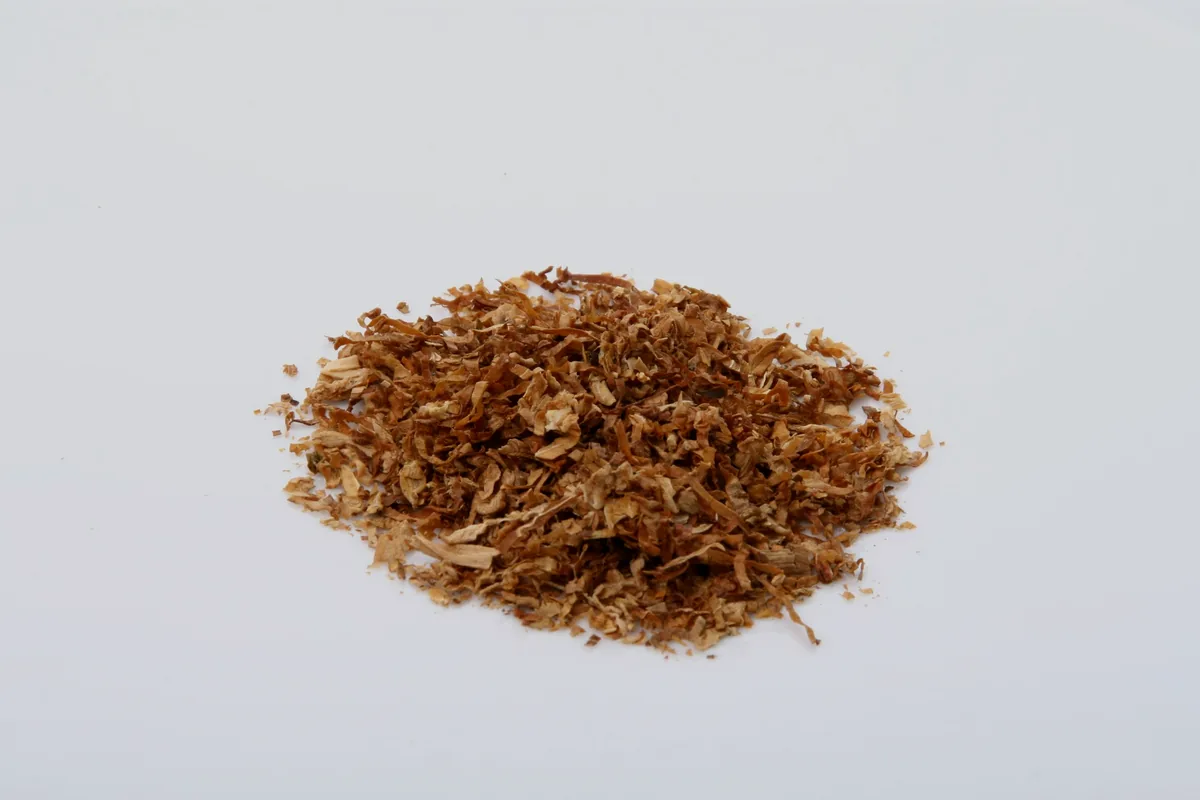
Kombu, and the discovery that came from it
Kombu is a large brown kelp, harvested, dried and cut into sheets. It is not eaten in the soup — it goes into the water, gives up its flavour and comes out.
It has a place in food history that is out of proportion to its profile. In 1908 a Japanese chemist working on kombu dashi isolated glutamate and identified the savoury quality it produces as a distinct basic taste, separate from sweet, sour, salt and bitter. He named it umami.
So the bowl that arrives free with your bento is, in a small way, where an entire category of taste was first pinned down.
Miso is a fermented food
Miso is soybeans, salt and koji — a cultured grain, usually rice — left to ferment for anywhere between a few weeks and several years. The result is a thick, intensely savoury paste.
The length of that fermentation is what produces the different kinds:
- White miso (shiro). Short fermentation, pale, mild and slightly sweet. The most common in restaurant miso soup.
- Red miso (aka). Long fermentation, dark, salty and much stronger.
- Mixed miso (awase). A blend of the two, which is where most everyday cooking sits.
The paste is stirred into the hot dashi at the very end and the pot is never boiled afterwards. Boiling miso kills the aroma and, since it is a living fermented food, some of what is in it. That is why the soup is often cloudy and why it separates if it sits — the miso is suspended rather than dissolved.
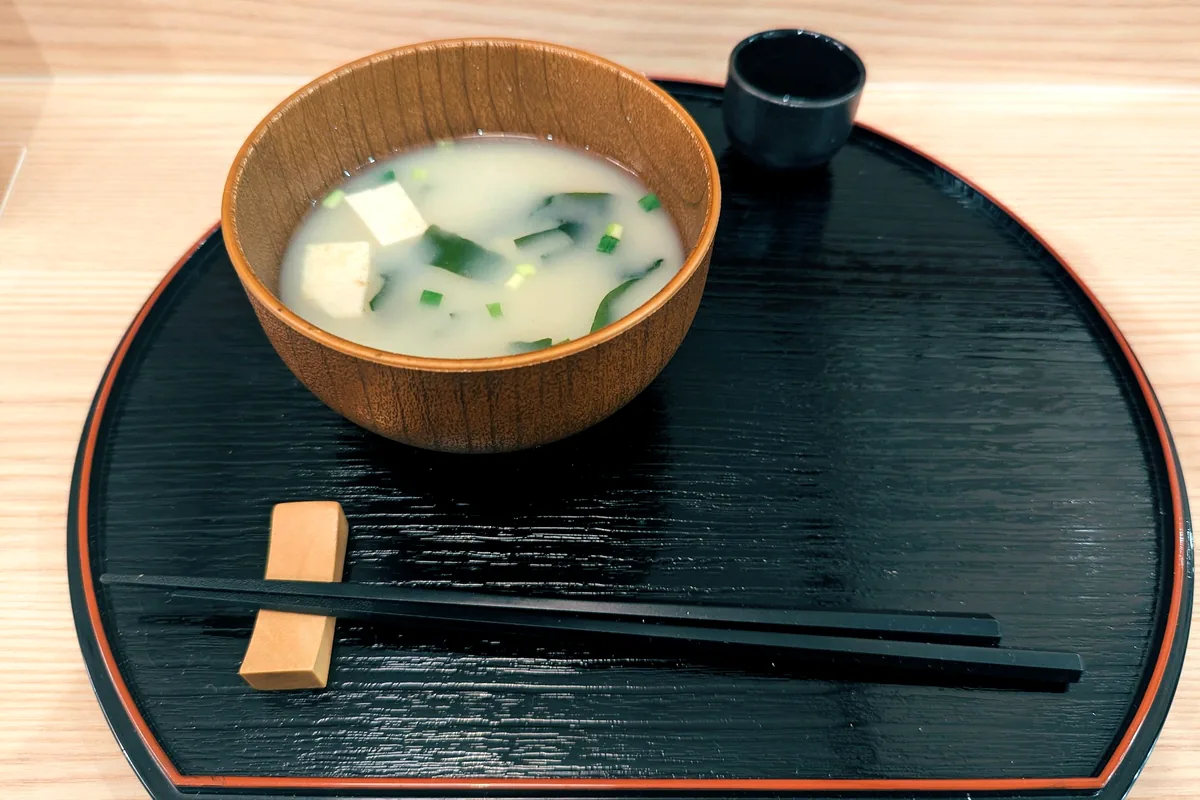
The three usual garnishes
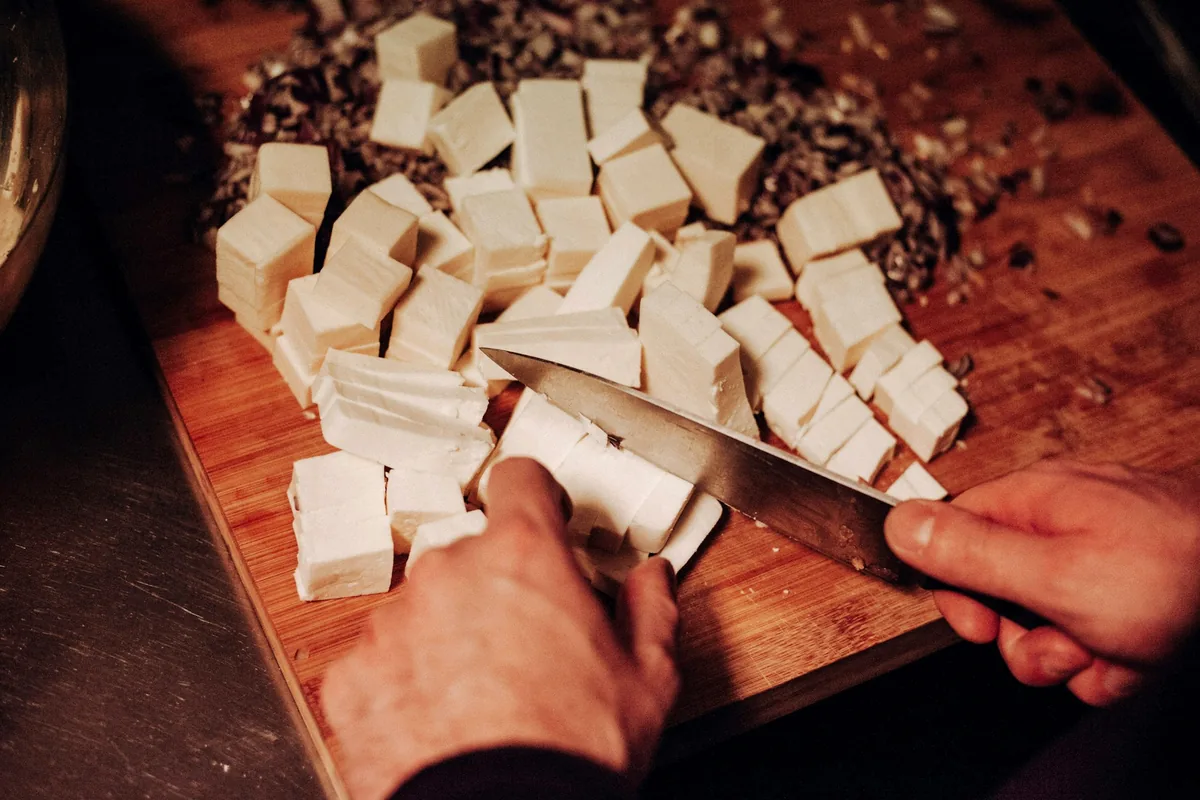
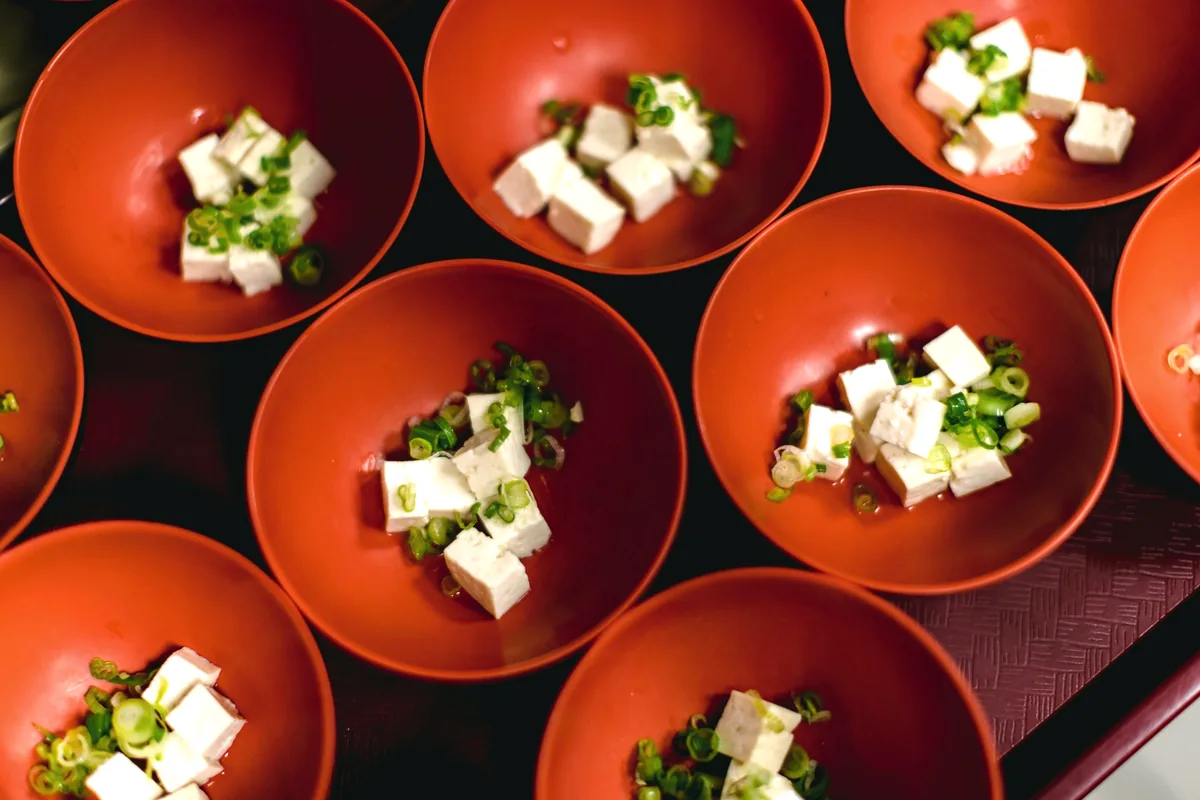
Tofu. Cut small, added at the end, and there for texture rather than flavour. Soft tofu in a hot liquid is one of the more pleasant textures in any cuisine, and it is why the soup feels more substantial than it is.
Wakame. The soft green seaweed. It is added dried and rehydrates in the bowl, expanding considerably in the process. It is a different plant from the nori wrapped around a roll, and much milder.
Green onion. Sliced raw and scattered on top, for a sharpness that cuts the salt in the last few mouthfuls.
Beyond those three, miso soup takes almost anything — clams, mushrooms, potato, fried tofu. In a restaurant setting the standard three are what you will see, and there is more on tofu itself here.
How to actually drink it
From the bowl, not with a spoon. The bowl is lightweight and shaped to be lifted, and the chopsticks are for the tofu and the wakame — you drink the liquid and eat the solids.
It is also not a first course. It arrives with the rest of the meal and is meant to be returned to between mouthfuls of other things, which is the same logic that governs the whole table — more on that in ordering across a Japanese menu.
And give it a swirl before you start. If it has been sitting, the miso will have settled to the bottom and the first mouthful will be much weaker than the last.
Good to know
Miso soup is usually not vegetarian, because the dashi it is built on typically contains dried fish. A kelp-only dashi exists and is used in vegetarian Japanese cooking, but you cannot tell which one a bowl uses by looking at it. If it matters, ask — there is more on this in vegetarian and vegan at a Japanese restaurant.
What is in the bowl, at a glance
| Component | What it is | What it does |
|---|---|---|
| Kombu | Dried kelp | The savoury base of the stock |
| Katsuobushi | Dried, fermented bonito | Depth and a faint smokiness |
| Miso | Fermented soybean paste | Salt, body and the flavour it is named for |
| Tofu | Soft bean curd, cubed | Texture |
| Wakame | Soft seaweed, rehydrated | A mild marine note |
| Green onion | Sliced raw | Sharpness at the finish |
Where it turns up on our menu
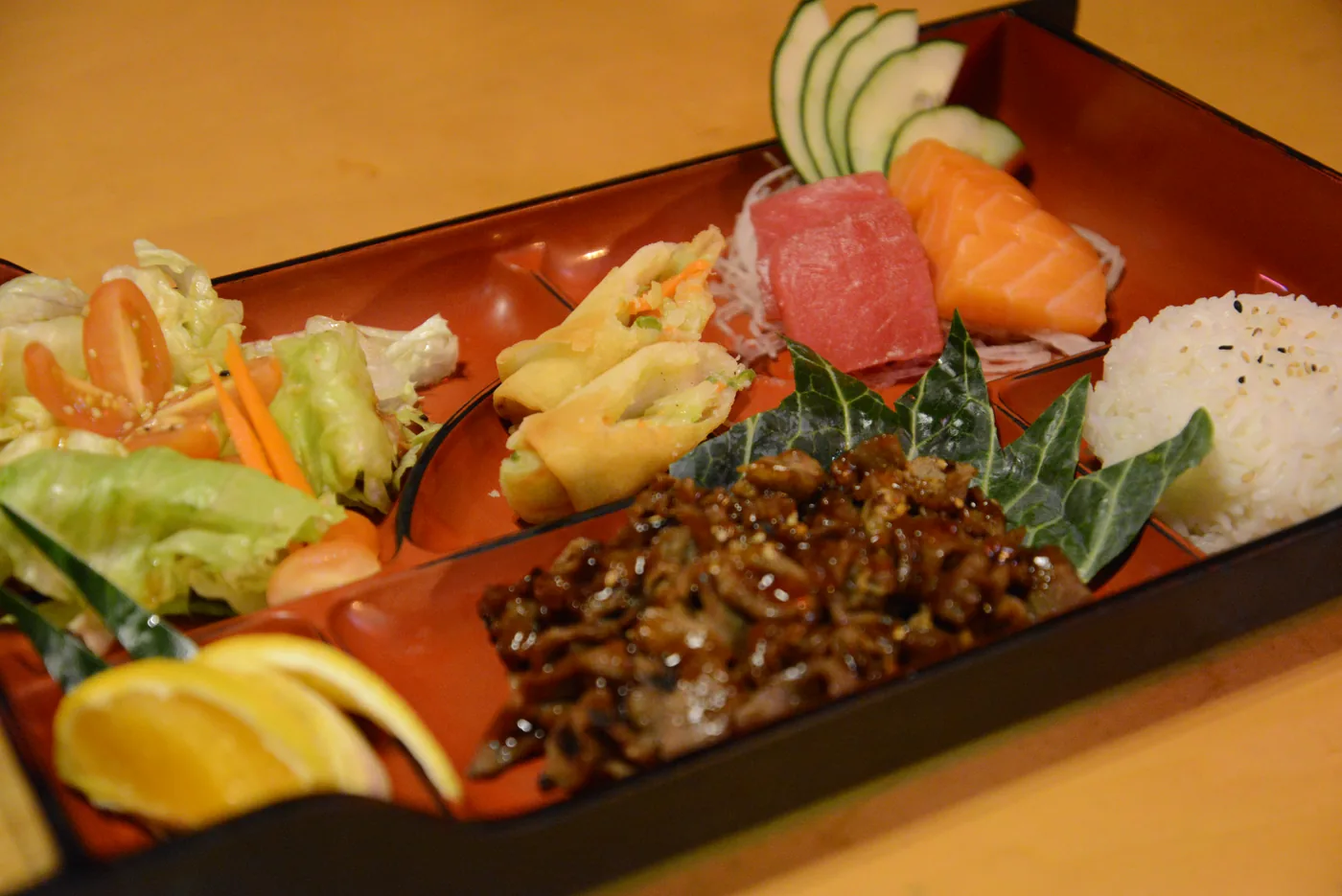
Miso soup is on the side order list, and it also comes as standard with the bento combinations and the teriyaki plates. The kids’ meal is served with either miso soup or salad.
Ordering it separately alongside a sushi meal is worth doing. Sushi is cool and clean and a bowl of something hot and savoury alongside it changes the whole meal — which is presumably why it became the default accompaniment in the first place.
Frequently asked questions
Is miso soup vegetarian?
Usually not, because the dashi typically contains dried bonito. A kelp-only version exists but you cannot identify it by sight. Ask if it matters.
Should I use a spoon?
The bowl is made to be lifted and drunk from, with chopsticks for the tofu and seaweed. A spoon is not wrong, just not what the bowl is designed for.
Why is my miso soup cloudy?
Because it should be. Miso is suspended in the dashi rather than dissolved into it, which is also why it settles if the bowl stands.
Is miso soup salty?
Yes — miso is a salted, fermented paste and salt is part of what preserves it. We do not publish nutrition figures, so treat any specific claim with caution.
What is the green seaweed in it?
Wakame. It goes in dried and rehydrates in the bowl. It is a different seaweed from the nori used to wrap sushi.
The short version
Kelp and dried fish make the stock. Fermented soybean paste is stirred in at the end and never boiled. Tofu, wakame and green onion go in the bowl. Drink it from the bowl, swirl it first, and come back to it through the meal rather than finishing it at the start.
It is on the menu as a side, and included with most of the plates.