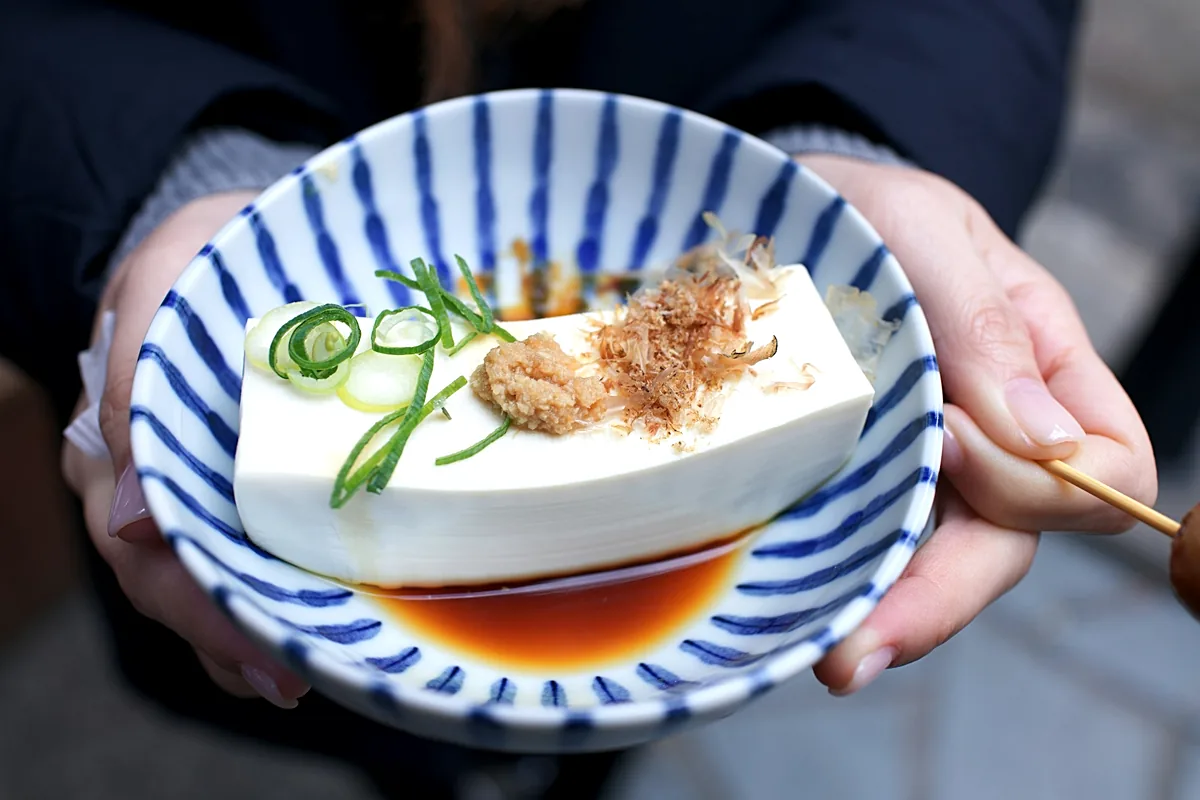
The short answer
Tofusoy milk set into a curd, like cheese
The variablehow much water was pressed out
Silken and firm are not different products. They are the same curd at different pressures, and that one difference decides everything a kitchen can do with it.
It turns up in the soup, in the udon, as an appetiser and occasionally as a wrapper, and it is a different thing each time. Worth understanding, because tofu is the one ingredient people write off before tasting.
01 — What it isCheese-making, with soybeans
The process is closer to dairy than most people realise. Soybeans are soaked, ground and boiled, and the liquid strained off is soy milk. A coagulant — traditionally nigari, the mineral residue left after salt is taken from seawater — is stirred in, and the milk separates into curds and whey.
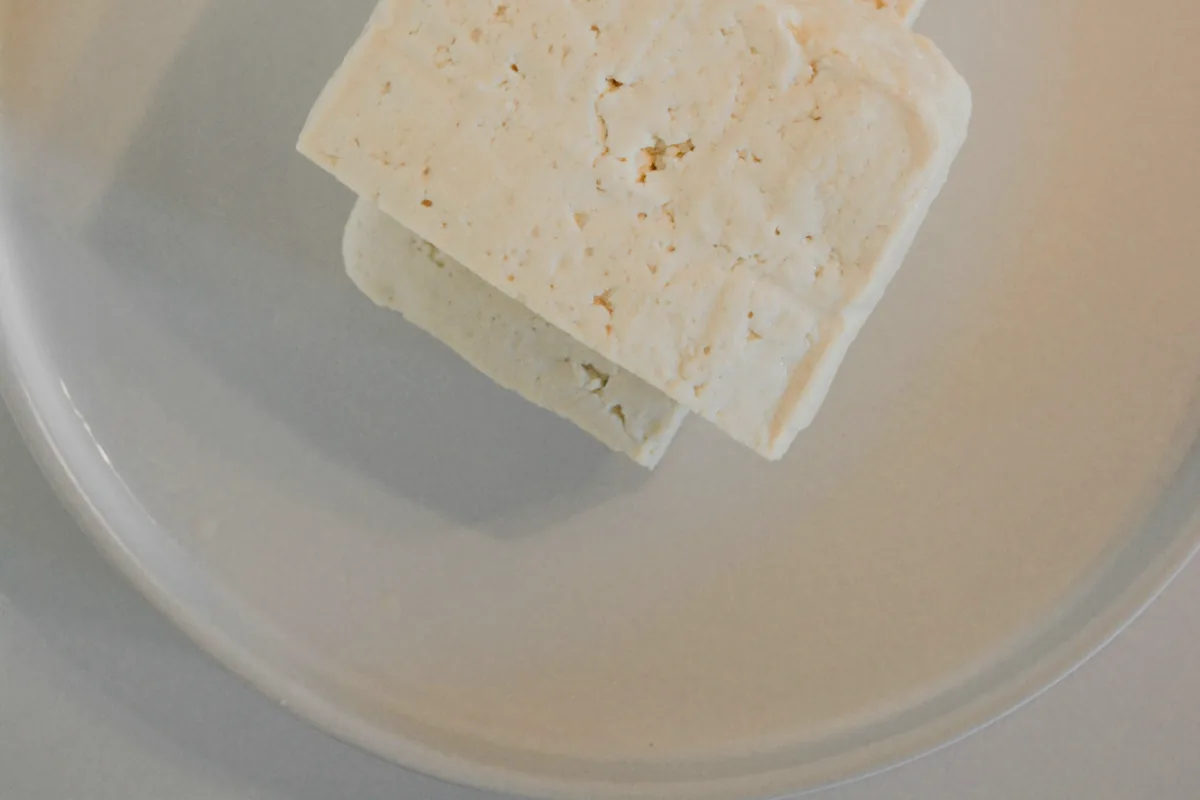
From that point everything depends on what happens to the curd. Leave it barely disturbed and you get silken tofu. Press it in a cloth-lined mould and water runs out, the curd compacts, and you get firm tofu. Press harder and longer and you get extra firm.
So the difference between the silken tofu in a miso soup and the firm block that gets fried is not the recipe. It is the pressing.
Why it tastes of almost nothing
This is treated as a criticism and it is really a job description. Tofu is mild because the process strips flavour out along with the water — and mildness is what makes it useful.
In a bowl of miso soup, tofu is not there to taste of anything. It is there to give the spoon something to find, and to carry the broth. In agedashi tofu it is a neutral centre inside a fried shell sitting in a seasoned liquid. In both cases it is the medium rather than the message.
Which is why the complaint that tofu is bland usually means it was served without anything to do. Well-handled tofu is always in a sauce, a broth or a coating.
Which tofu is where
| Type | How it is made | Where you meet it |
|---|---|---|
| Silken | Set and not pressed | Miso soup, chilled tofu |
| Firm | Pressed until it holds a shape | Agedashi, stir-fries, grilling |
| Extra firm | Pressed hard | Anything that needs to survive a pan |
| Aburaage | Thin slices deep fried until hollow | Udon, and as a pouch for rice |
| Atsuage | Thick blocks fried on the outside only | Simmered dishes |
Aburaage is the one worth knowing about, because it does not look like tofu at all. Thin sheets fried at high heat puff up and become hollow, which turns them into a pocket — and that pocket is what floats in a bowl of udon, soaking up broth like a sponge.
Our plain udon and shrimp tempura udon are both listed with fried tofu in them, and that is what it is.
03 — AgedashiThe one to order
Agedashi tofu is the best argument for tofu on any Japanese menu, and it is the version most likely to convert somebody.
Blocks of firm tofu are dusted in potato starch and deep fried until the outside is set and lightly crisp, then placed in a warm, seasoned broth. The starch coating holds for a minute or two and then begins absorbing the liquid, which means the dish changes while you eat it — crisp at first, then soft and soaked.
The contrast between a fried surface and a soft interior sitting in something savoury is the entire appeal. It is also why it has to be eaten promptly: five minutes in and the coating has gone.
The starch coating is the same technique used for karaage, and it behaves the same way — the comparison is in karaage, katsu and popcorn chicken.
Please ask rather than assume
Tofu itself is made from soybeans, but the dishes around it often are not as simple. The broth under agedashi tofu is usually a dashi containing dried fish, and miso soup normally is too. If you are vegetarian or vegan, the tofu is rarely the problem — the liquid it is sitting in is. There is more in vegetarian and vegan at a Japanese restaurant.
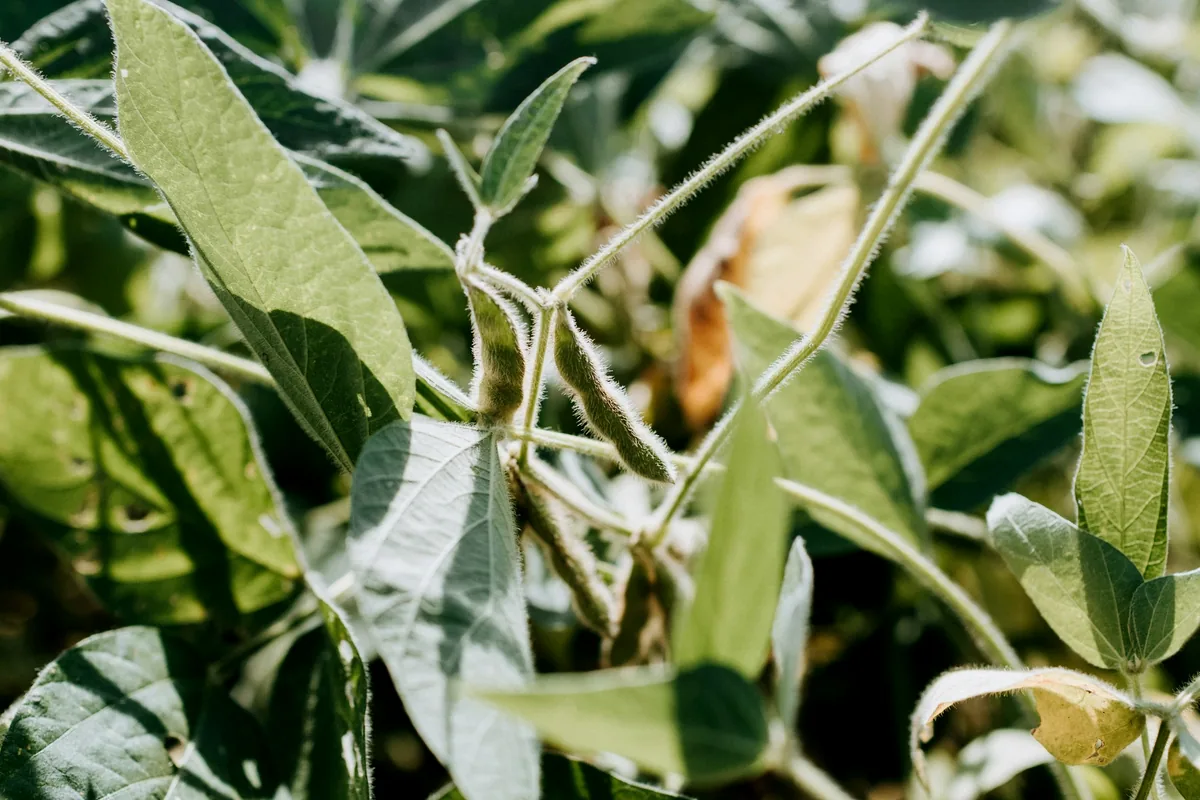
The soybean does a lot of work
It is worth pausing on how much of a Japanese menu comes from one plant. Tofu, soy sauce, miso, edamame and soy paper are all soybeans processed differently — fresh, fermented, curdled, dried, pressed.
Order miso soup, edamame and agedashi tofu with soy sauce on the table and you are eating four preparations of the same crop. That is not a coincidence; it is what a cuisine looks like when it is built on a plant that grows well and stores badly, so most of it has to be transformed to survive.
The fermented end of that is covered in soy sauce explained, and the fresh end in what edamame is.
If you think you dislike tofu
- Start with agedashi. Fried outside, soft inside, in a savoury broth. It has the most going on.
- Notice it in miso soup. You have almost certainly eaten it there without objecting.
- Avoid it plain and cold at first. Chilled silken tofu is excellent and it is the least forgiving introduction — it belongs with the cold side of the menu, which is a different way of eating.
- Do not judge it by texture alone. The complaint is usually about a firm block in a stir-fry, which is the least interesting thing done to it here.
Frequently asked questions
What is tofu made from?
Soy milk set with a coagulant into a curd, then drained or pressed. The process is closely analogous to making fresh cheese.
What is the difference between silken and firm tofu?
How much water was pressed out. Silken is barely pressed and falls apart easily; firm holds its shape and can be fried.
What is agedashi tofu?
Firm tofu dusted in starch, deep fried, and served in a warm seasoned broth. Crisp at first, then soaked, which is the point.
Is tofu on a Japanese menu vegetarian?
The tofu is. The broth it usually sits in often contains dried fish, so the dish may not be. Ask about the liquid rather than the tofu.
What is the fried tofu in udon?
Aburaage — thin slices of tofu fried until they puff hollow. It acts as a pocket and soaks up the broth.
The short version
Soy milk curdled and pressed, and the pressing is the only real variable. It is mild on purpose, because its job is to carry something else. Order agedashi if you are unconvinced, and ask about the broth rather than the tofu if you are avoiding fish.
It is in three places on the menu, and only one of them says tofu on the label.