The short answer
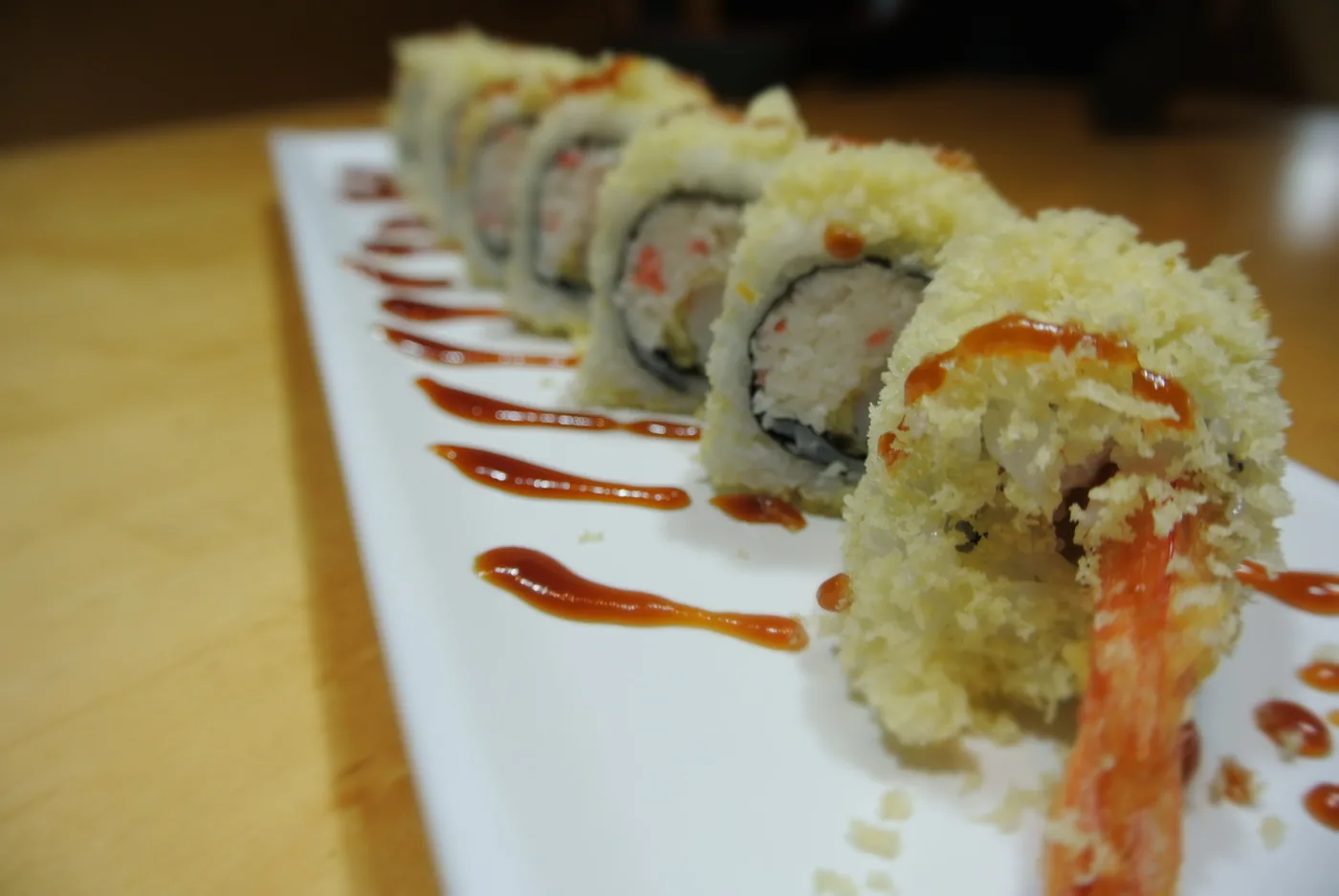
Crunchusually fried tempura batter bits
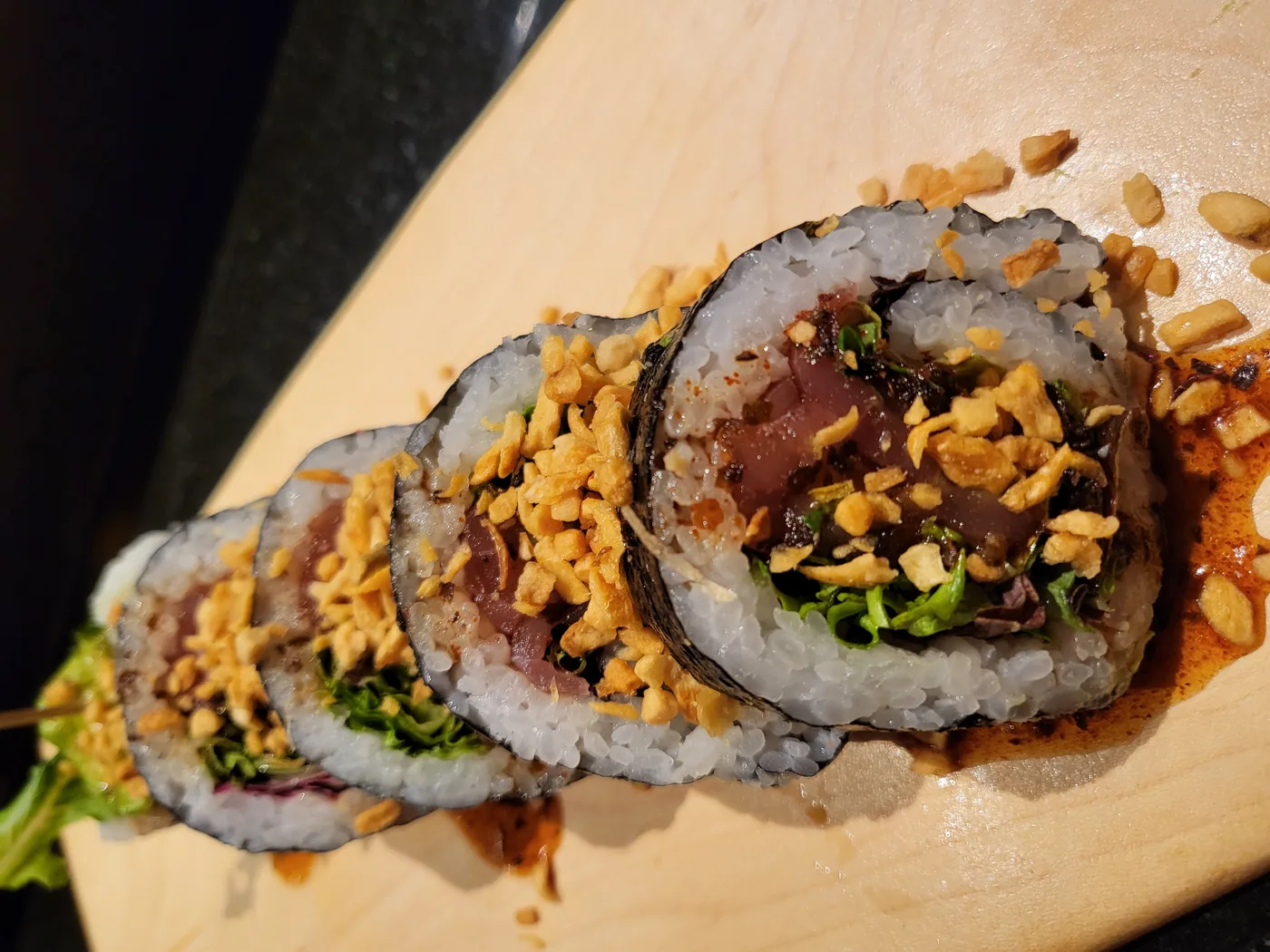
But alsofried garlic, or fried onion
The word appears on this menu three different ways. Reading which one you are getting is the difference between a texture and a flavour.
“Crunch” is one of the most common words on an American sushi menu and one of the least defined. It is worth ten seconds of attention, because it does not always mean the same thing.
01 — The default meaningCrunch is usually fried batter
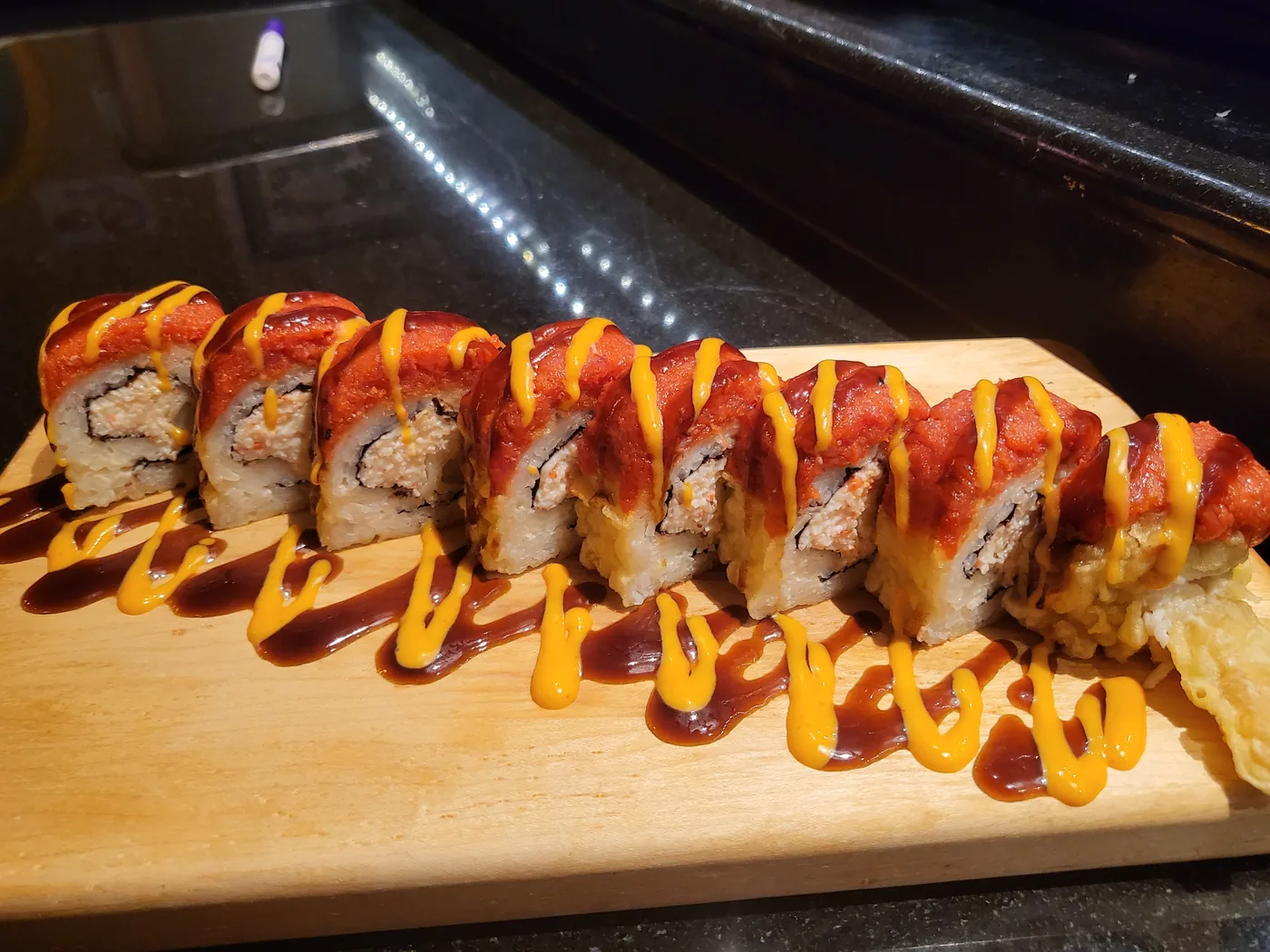
When a roll simply says “crunch” with nothing qualifying it, what lands on top is almost always tempura flakes.
In Japanese these are tenkasu, and the name is honest about where they come from: kasu means dregs. When something is fried in tempura batter, loose bits of that batter break away into the oil, puff, and cook into irregular golden nuggets. A busy fryer produces them constantly, and skimming them off is routine.
So the classic crunch topping is a by-product. It costs almost nothing, it is already there, and it happens to be one of the most useful textures in the kitchen. In Japan tenkasu goes into udon, onto okonomiyaki and into rice balls for exactly the same reason.
Why a roll needs it at all
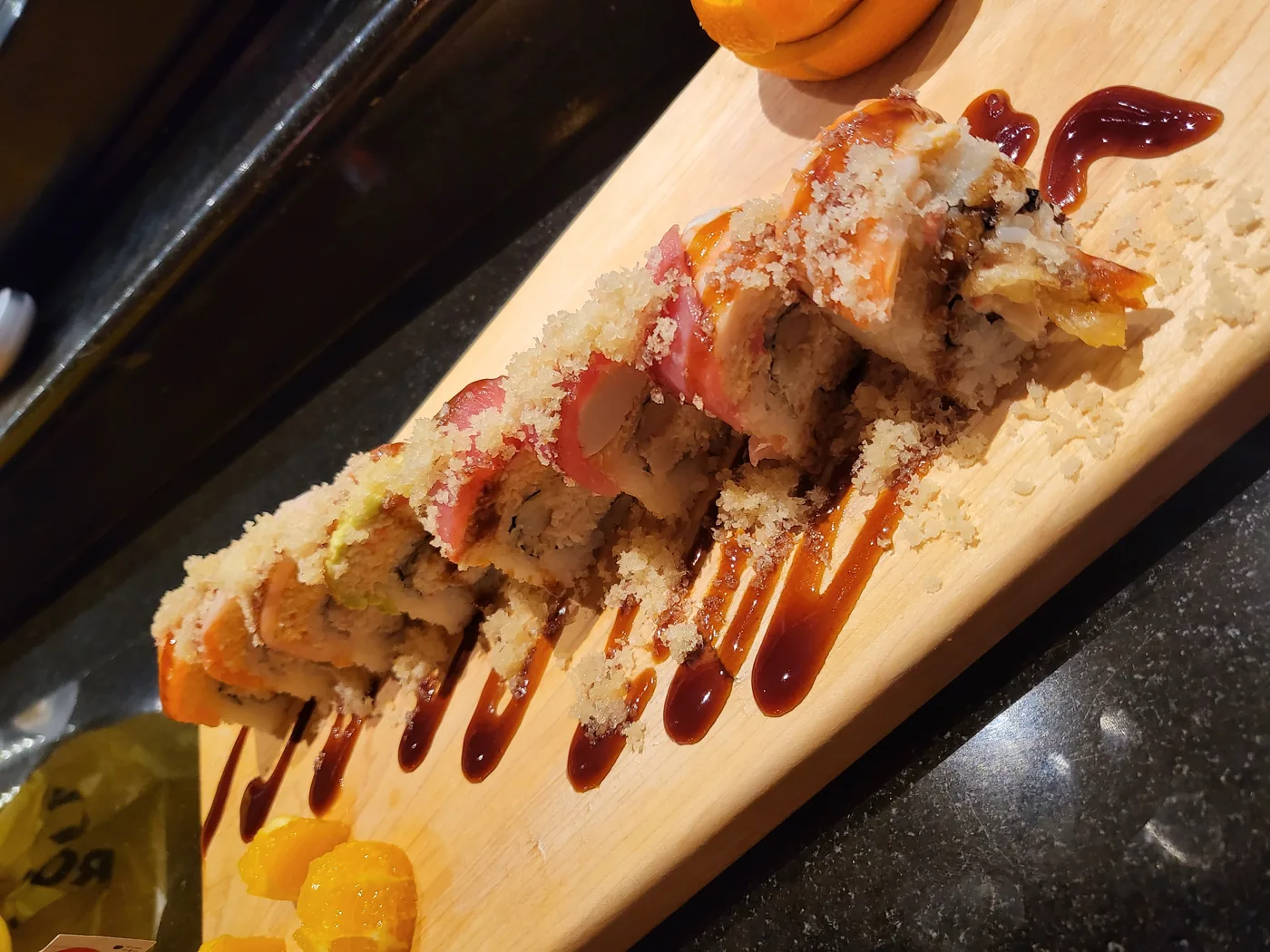
A sushi roll has a texture problem. Rice is soft. Fish is soft. Avocado is soft. Cream cheese is soft. Nori has a slight resistance and then gives way. Left alone, a roll can be four soft things in a row.
Crunch fixes that in the cheapest possible way. It contributes almost no flavour of its own — fried batter tastes mainly of fried — so it adds resistance without changing what the roll is about.
That is also why it is scattered on top rather than rolled inside. Inside, it would sit against moist rice and go soft within a minute. On top, it stays crisp for as long as the roll is on the table.
Which gives you one practical rule: eat the crunchy roll early. It is the item with the shortest useful life on the table, along with anything out of the fryer.
02 — The three crunchesRead the word before it
Here is the part most people miss. On our menu the word is qualified in three different ways, and each one is a different ingredient doing a different job.
| On the menu | What it is | What it adds |
|---|---|---|
| “crunch” | Fried tempura batter bits | Texture, almost no flavour |
| “garlic crunch” | Fried garlic | Texture and a strong savoury hit |
| “crunch onion” / “crispy onion” | Fried onion | Texture and sweetness |
The distinction matters more than it sounds. Plain crunch is neutral, so it goes on anything. Garlic crunch is not neutral at all — it will dominate a delicate fish, which is why it appears on a roll built around tuna rather than on something subtle. Fried onion sits in between, bringing a sweetness that changes the balance of whatever it is on.
If you are ordering two rolls and one of them has garlic crunch, eat the other one first.
Good to know
Tempura flakes are fried wheat batter, so anything described as crunch involves wheat and comes out of a shared fryer. Garlic crunch and fried onion are the same story. If you are avoiding gluten or have a fryer-related concern, “crunch” is a word worth flagging to your server — the name gives no clue on its own. More on allergens here.
Two ways to get texture into a roll
Scattered crunch is one route. The other is to put something fried inside the roll, which is a different technique with a different result.
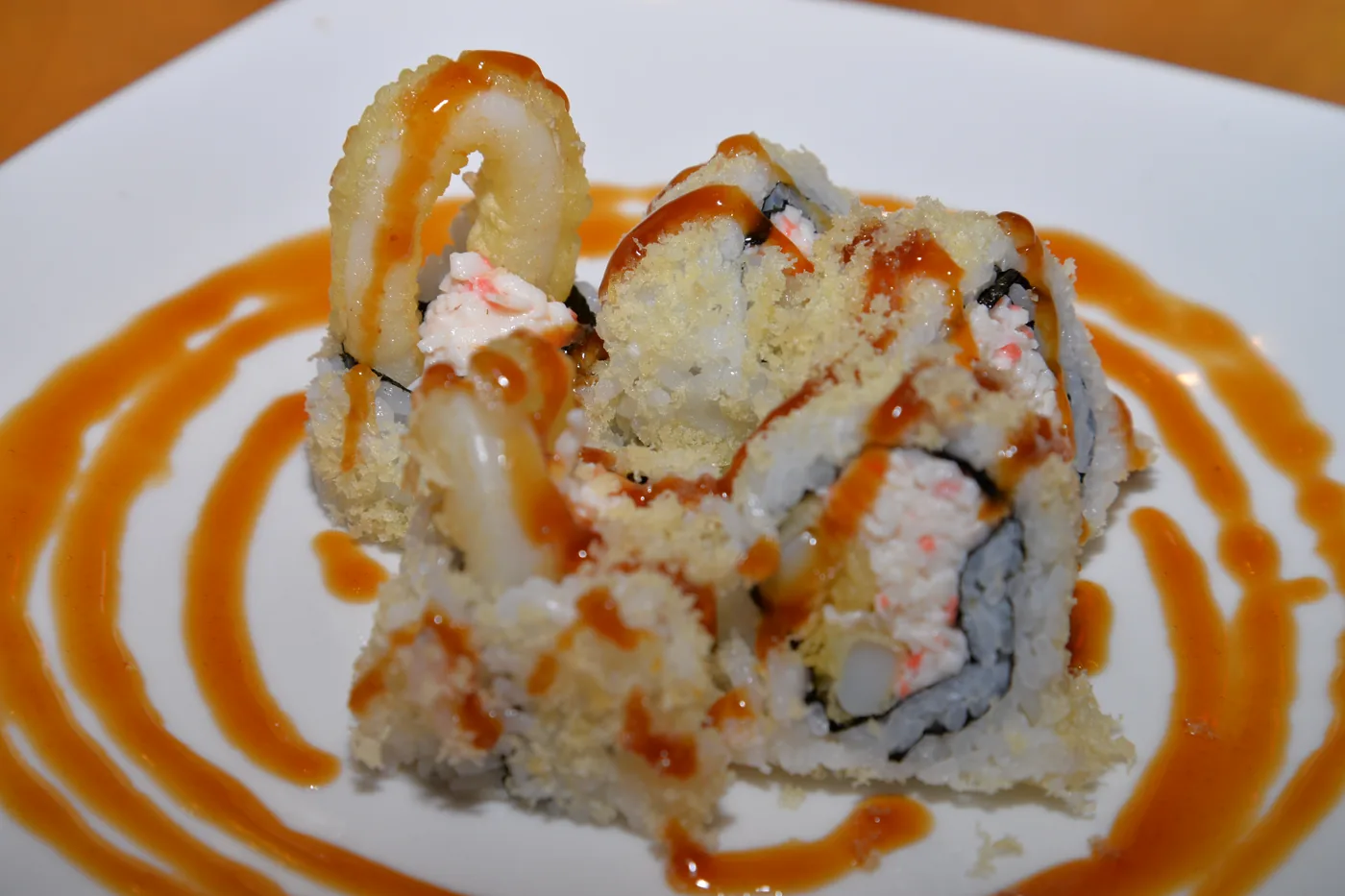
A shrimp tempura roll or a calamari tempura roll has a whole fried item running through the centre. That gives you a substantial bite of crisp coating rather than a scatter of small bits, and it lasts longer because the coating is thicker — though it will still soften eventually.
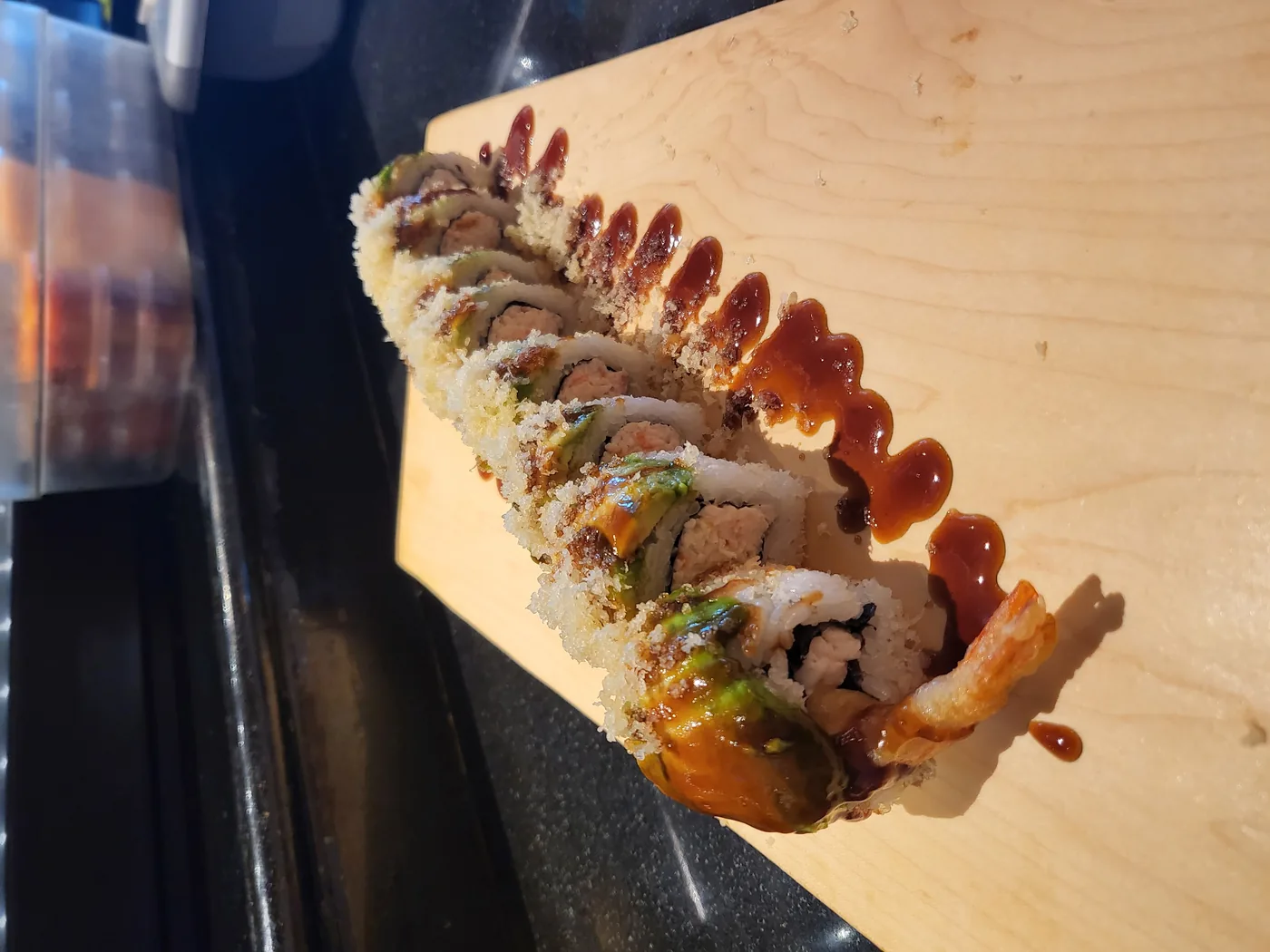
Plenty of rolls do both. Our Calamari Tempura roll is listed as squid tempura with crab and crunch, which is fried filling and scattered flakes in the same roll. Our Crunch roll is shrimp tempura, crab, and crunch on top — the same idea with a different fried centre.
When the name says crunch and the description does not
Worth knowing, because it looks like an inconsistency and is really just how menus get written.
Some rolls carry “Crunch” in the name as a family marker — it tells you which group of rolls it belongs to — while the description underneath lists whatever is distinctive about that particular one. Our Crunch Caterpillar is described as shrimp tempura and crab with avocado on top, because the avocado is the thing that separates it from the plain Crunch roll.
So the rule is the same one that works everywhere on a sushi menu: the name tells you the family, the description tells you the contents, and if the two seem to disagree, ask. Roll names are marketing before they are documentation — there is more on that in specialty roll names, decoded.
Crispy onion, separately
Fried onion deserves its own note because it behaves differently from the other two.
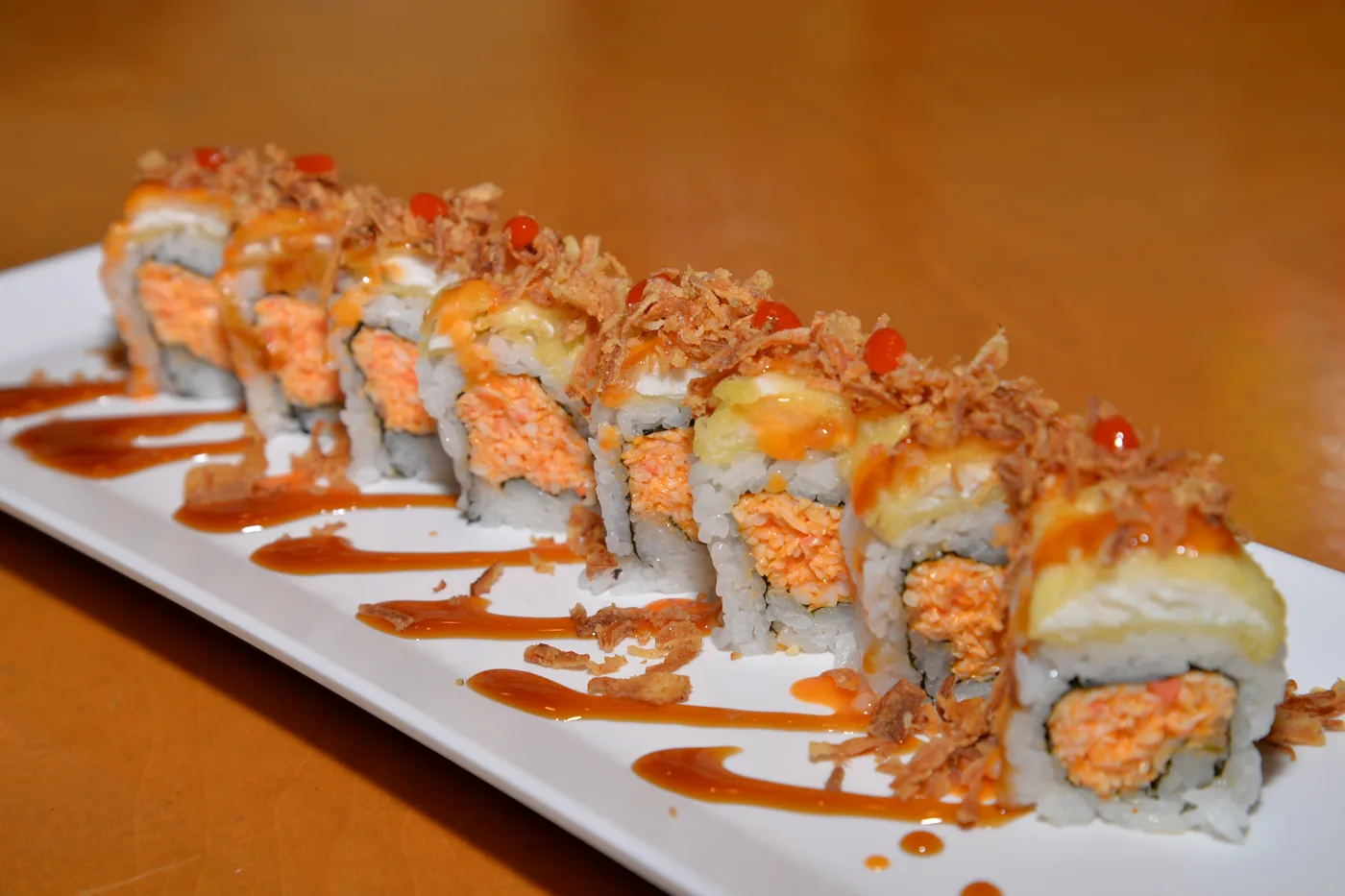
Onion sugars caramelise as they fry, so fried onion is sweet in a way that tempura flakes are not. Put it on a roll that already has a sweet sauce and you can push the whole thing too far. Put it on something spicy and it works, because the sweetness is a counterweight rather than a repetition.
Our Tokyo roll pairs it that way — the menu lists tilapia tempura and crispy onion over a spicy crab roll. Fried fish, fried onion, and a spicy base underneath.
Frequently asked questions
What is the crunch on a sushi roll?
Usually tempura flakes — small bits of fried batter, called tenkasu, skimmed out of the fryer. They add texture and very little flavour.
Is crunch the same as panko?
No. Panko is a breadcrumb used as a coating before frying. Crunch is loose fried batter scattered on afterwards.
Does crunch contain gluten?
Tempura batter is wheat-based, and it comes from a shared fryer. Raise it with your server rather than judging from the menu name.
Why does my crunchy roll go soggy?
Moisture from the rice and any sauce softens the flakes. It is unavoidable, which is why a crunchy roll should be eaten early rather than saved for last.
What is garlic crunch?
Fried garlic rather than fried batter. It brings a strong savoury flavour as well as texture, so it changes the roll rather than just adding to it.
The short version
Plain crunch is fried tempura batter, added for texture and almost nothing else. Garlic crunch and crispy onion are different ingredients that also bring flavour, so the qualifying word in front is the part to read.
Whichever one you get, eat it early — every crunch on a sushi menu is losing to the rice underneath from the moment it arrives. Then work out how many pieces you are actually getting.