The short answer
Karaagemarinated, starch-coated, in pieces
Katsua flat cutlet, panko-breaded, sliced
Three fried chicken dishes on one menu, and the differences are in the coating and the cut rather than in the bird.
A Japanese menu can carry three separate fried chicken dishes without repeating itself, because each one solves the problem differently. Here is what actually distinguishes them.
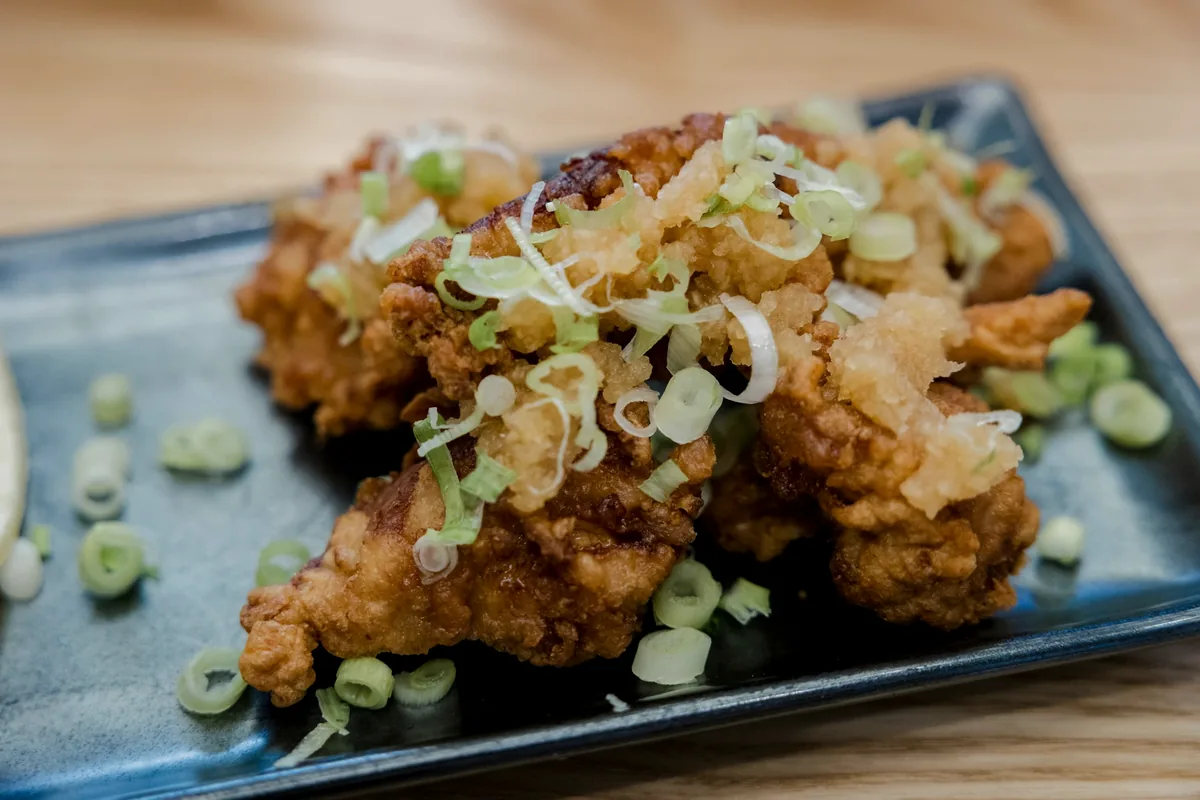
01 — KaraageMarinated first, coated lightly
Karaage describes a method rather than a specific dish: something marinated, dusted in starch and deep fried. Applied to chicken it produces bite-sized pieces with a thin, craggy, slightly translucent crust.
Two things make it what it is. The marinade — typically soy sauce, sake, ginger and garlic — seasons the meat all the way through rather than sitting on the surface. And the coating is potato or corn starch rather than flour or crumb, which fries into something lighter and crisper than breading.
Boneless thigh is the standard cut, and it matters. Thigh stays juicy through a hard fry in a way breast does not, which is why karaage is reliably moist and Western fried chicken breast so often is not. Ours is listed as marinated boneless thigh.
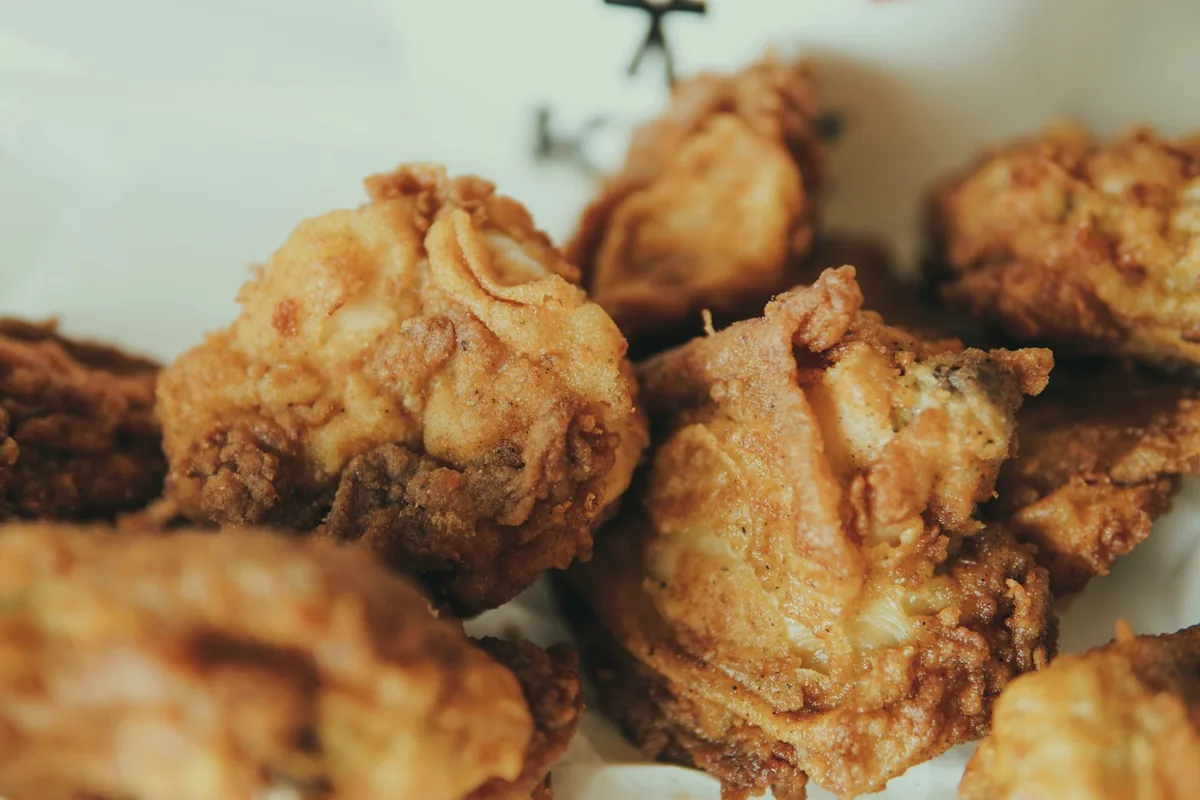
A cutlet, breaded in panko
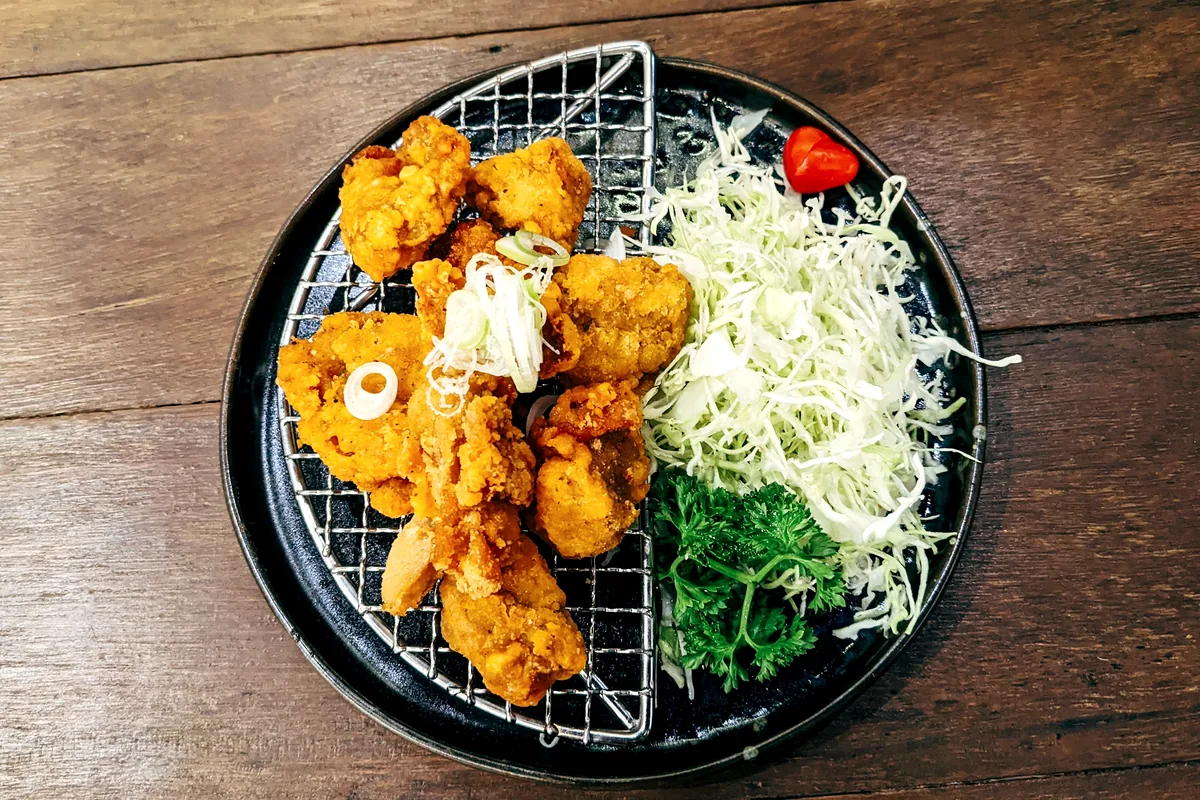
Katsu is a different shape and a different coating. The chicken is a flat cutlet rather than pieces, and it goes through flour, egg and panko before frying — a proper three-stage breading.
Panko is the reason it is crunchy rather than crisp. The flakes are large and irregular, they absorb less oil than a fine crumb, and the result has structure you can hear. That coating is thicker and sturdier than karaage’s, and it holds up considerably longer.
It also arrives sliced across into strips and unsauced, with tonkatsu sauce alongside. That is deliberate: sauce on the crust would soften it. We compared it with the other big chicken plate in katsu versus teriyaki, and the coating question in more depth in the three kinds of fried.
A topping rather than a dish
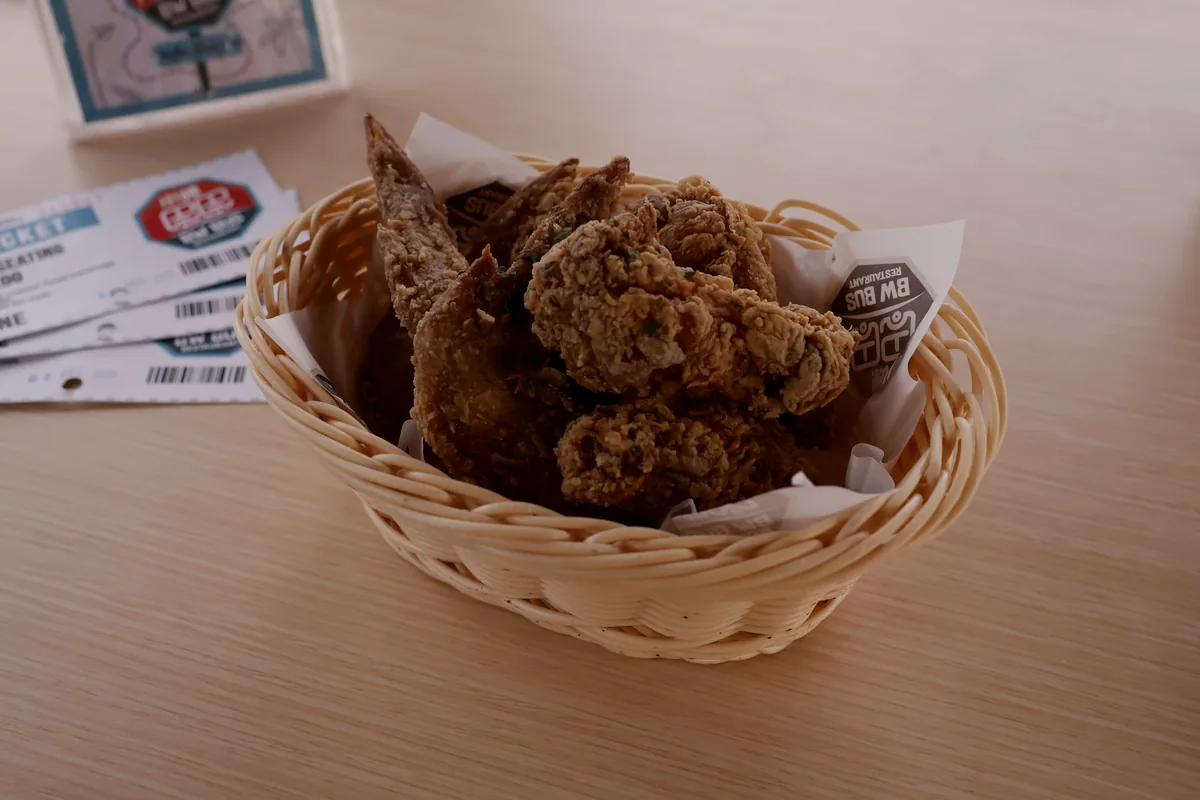
The third one is not a plate at all. Popcorn chicken on our menu is a roll — fried chicken pieces piled onto a California roll — which puts it in a different category entirely.
The pieces are smaller than karaage and the coating is heavier, because it has to survive being sauced and sitting on rice. It is engineered for a roll rather than for a plate.
It belongs to the broader tradition of putting non-Japanese things on sushi rice, which is a real culinary lineage rather than an accident — the story is in how the American sushi roll happened.
Why starch beats flour
The single technical detail that separates karaage from Western fried chicken is the coating powder, and it is worth a paragraph because it explains the texture completely.
Wheat flour contains protein as well as starch. In hot oil that protein browns and sets into a continuous, bready shell — substantial, absorbent, and thick enough to read as a separate layer from the meat inside.
Potato or corn starch is nearly pure starch. It does not form that continuous shell; it crisps into something thin, uneven and slightly glassy that clings to the surface rather than encasing it. Less oil is absorbed, and the coating shatters instead of yielding.
Which is also why karaage is the one that suffers most from waiting. A thin crust has nothing in reserve — once steam gets to it there is no thickness left to stay crisp. A panko crust has depth to lose before it matters.
The three side by side
| Karaage | Katsu | Popcorn chicken | |
|---|---|---|---|
| Shape | Bite-sized pieces | A flat cutlet, then sliced | Small pieces |
| Coating | Potato or corn starch | Flour, egg, panko | A heavier batter or crumb |
| Seasoned | Marinated through | On the surface, plus sauce | By the sauce on the roll |
| Texture | Light, craggy, crisp | Thick, structural, crunchy | Robust |
| Served | As an appetiser | As a plate with rice and salad | On a roll |
| Sauce | Often none, or mayonnaise | Tonkatsu sauce on the side | Applied in the kitchen |
| Holds up | Moderately | Well | Well |
Ordering tip
Do not order two of these in one meal. They are different techniques but they occupy the same slot — hot, fried, chicken — and a table with both karaage and a katsu plate on it has less variety than it looks. Pair one with something cold and sharp instead.
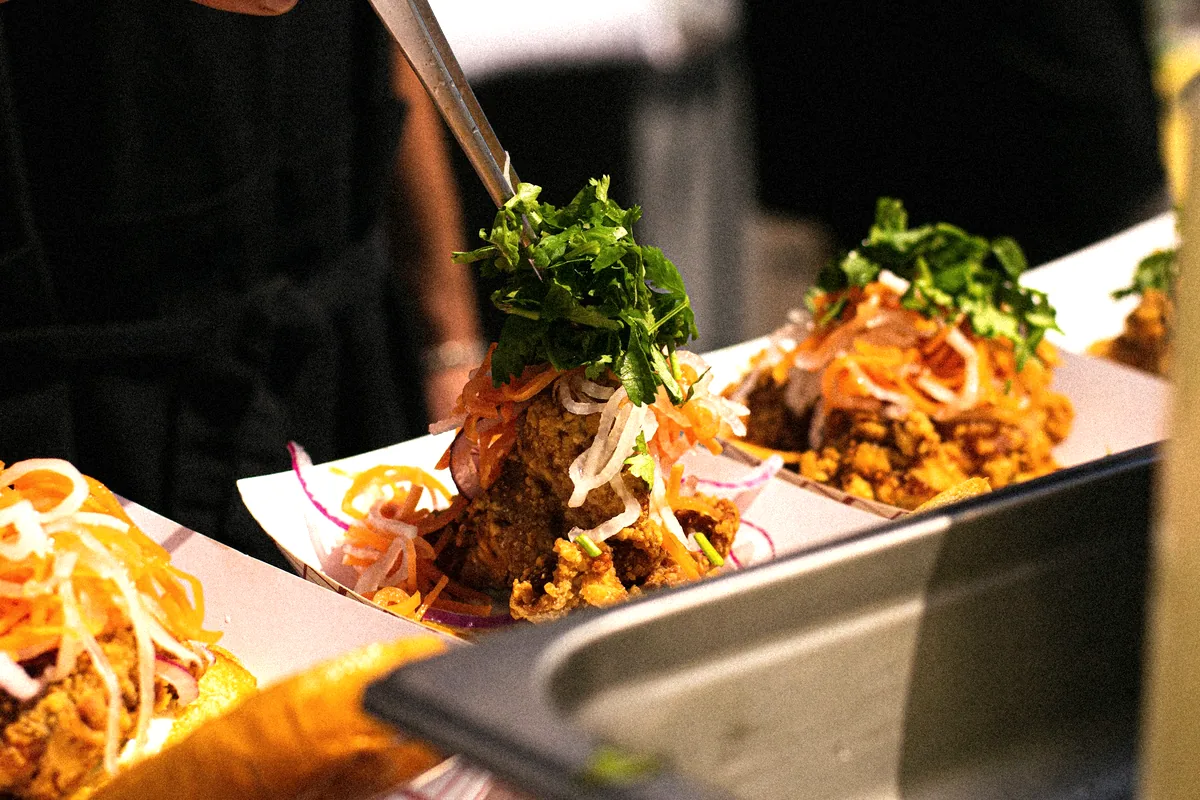
Which one to order
- To share at the start. Karaage. It is finger food, it comes in pieces, and it arrives fast.
- As a full meal. Katsu. It is a plate with rice and salad rather than a snack.
- For a child. Katsu, usually — sliced into strips and the least unfamiliar thing on the menu.
- To take home. Katsu. The panko coating survives a drive better than a starch one.
- If you want it inside sushi. The popcorn chicken roll, which is the only version that does that.
- Cold, the next day. Karaage, which is genuinely good cold and is eaten that way in Japan.
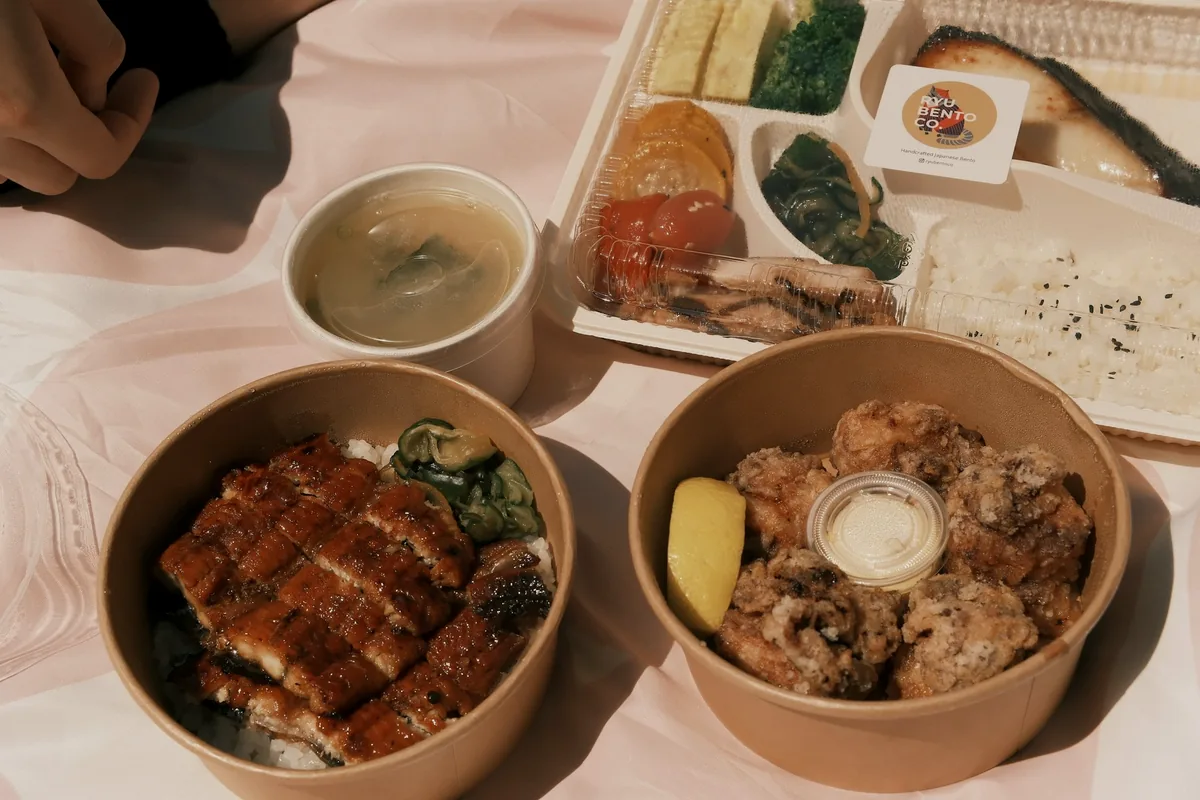
Why the cabbage is there
Finely shredded raw cabbage is the standard partner to katsu, and it is not garnish. It is cold, crisp, watery and almost flavourless, which makes it the exact opposite of what it sits next to.
Eating some between mouthfuls resets the palate and cuts the richness, which is the same job pickled ginger does at the sushi bar. A plate of fried food with nothing sharp on it becomes monotonous by the fourth bite.
Our katsu is listed as served with rice and house salad, and the house salad comes with a mango dressing — brighter than the ginger dressing most people expect, and a reasonable substitute for the cabbage in that role.
Frequently asked questions
What is the difference between karaage and katsu?
Karaage is marinated pieces coated in starch; katsu is a flat cutlet breaded in panko and sliced. Different shape, different coating, different texture.
Why is karaage so juicy?
Boneless thigh rather than breast, plus a marinade that seasons the meat through. Thigh tolerates a hard fry far better than breast.
Is karaage gluten free?
The coating is usually starch rather than wheat flour, but the marinade normally contains soy sauce, which typically contains wheat. Ask rather than assume — see allergens on a Japanese menu.
Can I eat karaage cold?
Yes, and it is genuinely good that way — it is a standard item in Japanese packed lunches for exactly that reason.
Which travels best for takeout?
Katsu. The panko crust holds far better than a thin starch coating. More on that in what actually travels.
The short version
Karaage is marinated pieces in starch, katsu is a breaded cutlet in panko, and popcorn chicken is a topping built for a roll. Order one, not two, and put something cold and sharp next to it.
All three are on the menu, in three different sections.