The short answer
Look for“(No rice)” on the roll list
What holds itthe fish, wrapped around the outside
A handful of rolls are built without rice at all. They are richer, they come in fewer pieces, and they are the most fish-forward thing on the list.
Tucked into a long specialty roll list, a few entries end with two words in brackets: (No rice). Most people read straight past them. They are among the more interesting things on the menu.
01 — What replaces the riceThe fish becomes the wrapper
Take rice out of a roll and you have removed the structure. Rice is what holds a cylinder together — it is sticky by design, and everything else is just sitting in it.
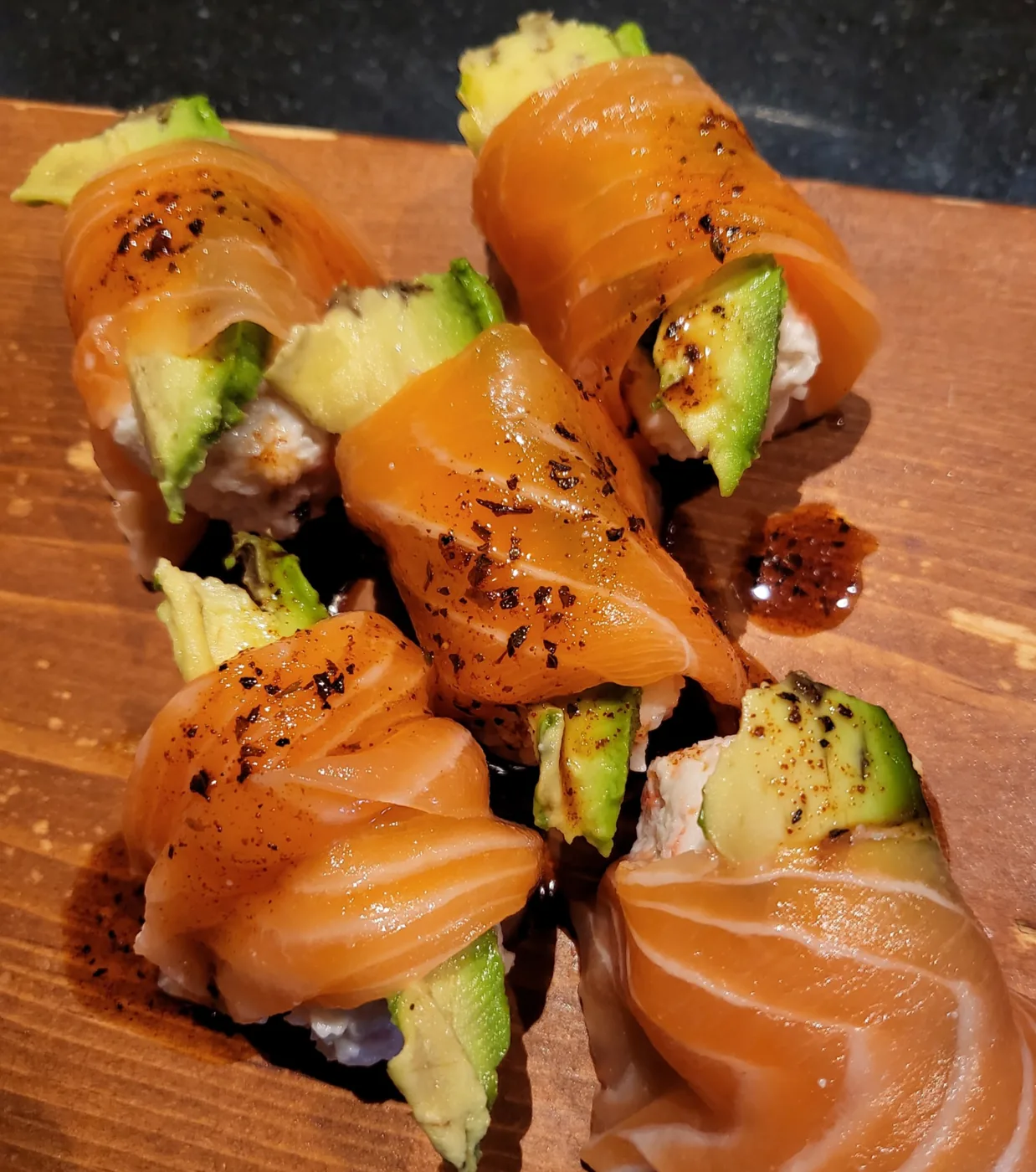
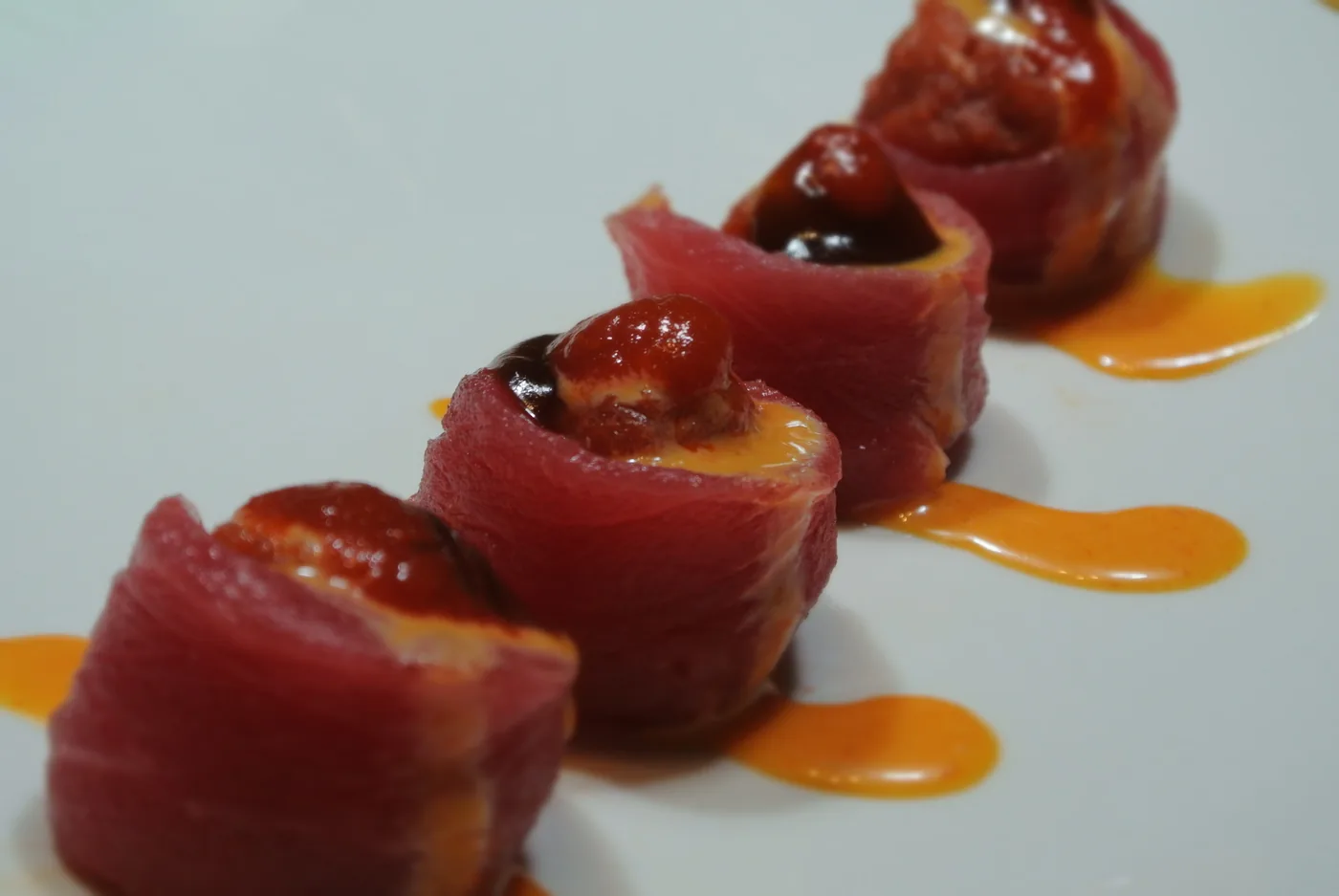
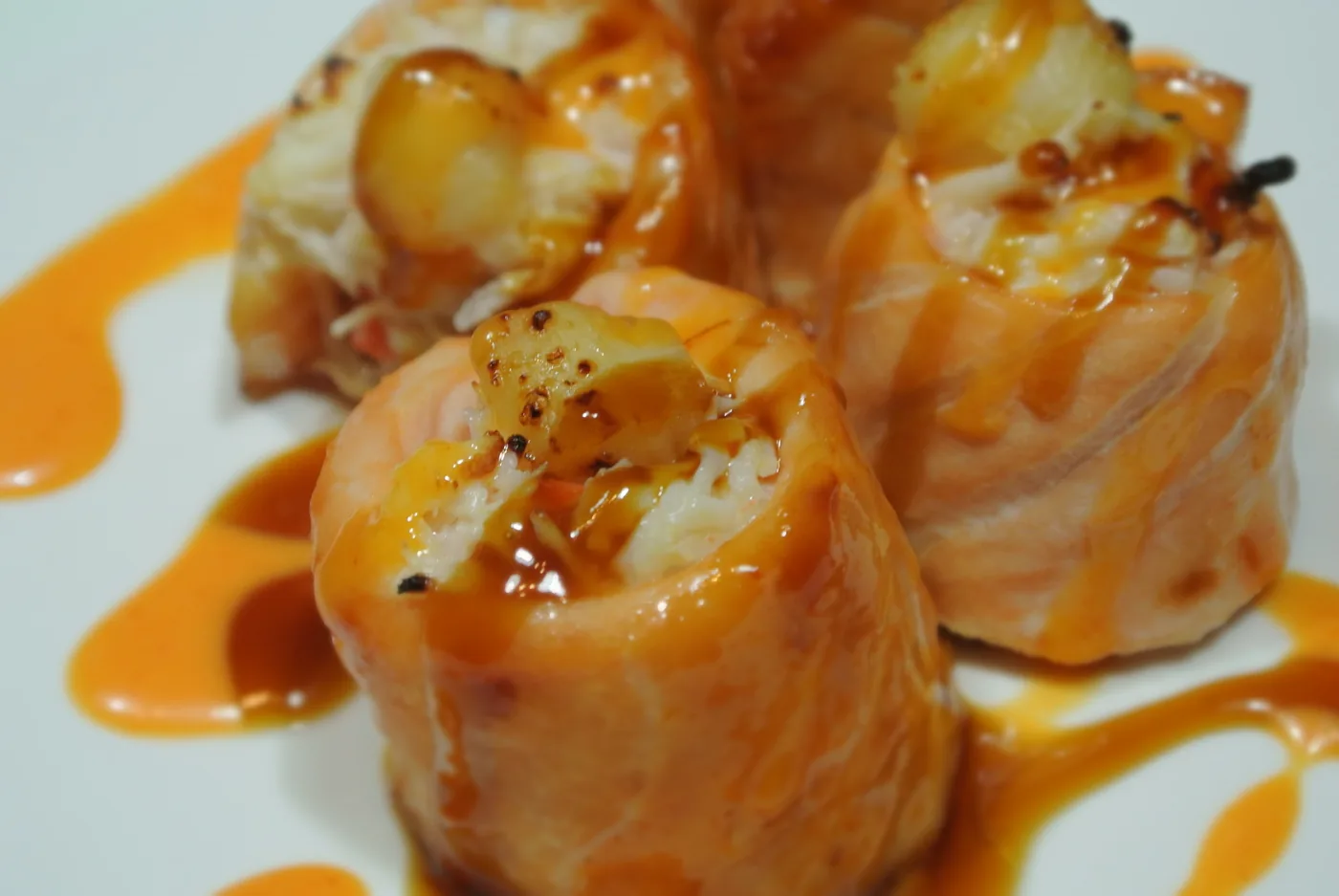
So a no-rice roll has to be held by something else, and the usual answer is the fish itself. Wide slices are laid out overlapping, the filling goes on, and the whole thing is rolled so the fish is on the outside doing the work the rice used to do.
Our menu is explicit about this on two of them. Albacore Lover is listed as spicy tuna and avocado wrapped with albacore. Salmon Lover is crabmeat and avocado with salmon wrapped around it. In both cases the fish named last is the exterior, not a topping.
Why they come in four or five pieces
Here is a small detail that turns out to explain itself neatly.
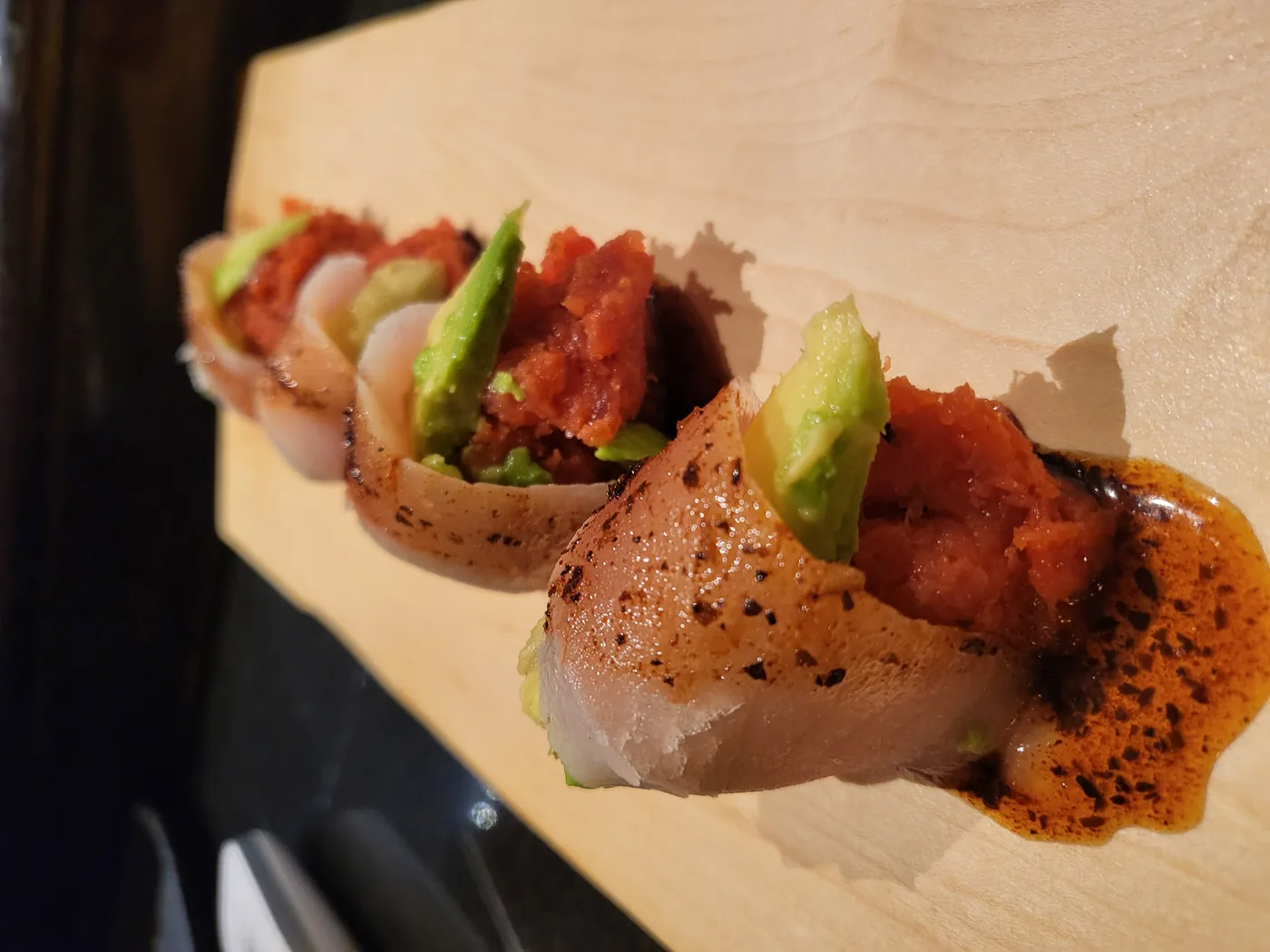
Standard rolls arrive in six or eight pieces, because a rice cylinder is long and gets halved and halved again. No-rice rolls on our menu come in four or five. Albacore Lover is four pieces; Eskimo, Red Skin, Salmon Lover and Tokyo 7 are five.
Without rice there is simply less bulk to distribute, so the roll is shorter and the pieces are cut thicker to hold together. Fewer, denser pieces — which is also why a four-piece no-rice roll is not the small order the number suggests. The wider logic of piece counts is in why sushi comes in six or eight pieces.
Louder, and less balanced
People assume removing rice makes a roll lighter. It makes it more intense, which is not the same thing.
Sushi rice is not filler. It is seasoned with vinegar, sugar and salt, and it is doing three jobs at once: adding acidity that cuts fatty fish, providing a neutral bulk that spaces out the strong flavours, and giving the bite something soft to land on. Take it away and all three disappear.
What is left is fish wrapped around more fish. That is excellent for one or two pieces and can become a lot by the fifth, especially with a rich filling. There is more on what the rice contributes in the part that makes it sushi.
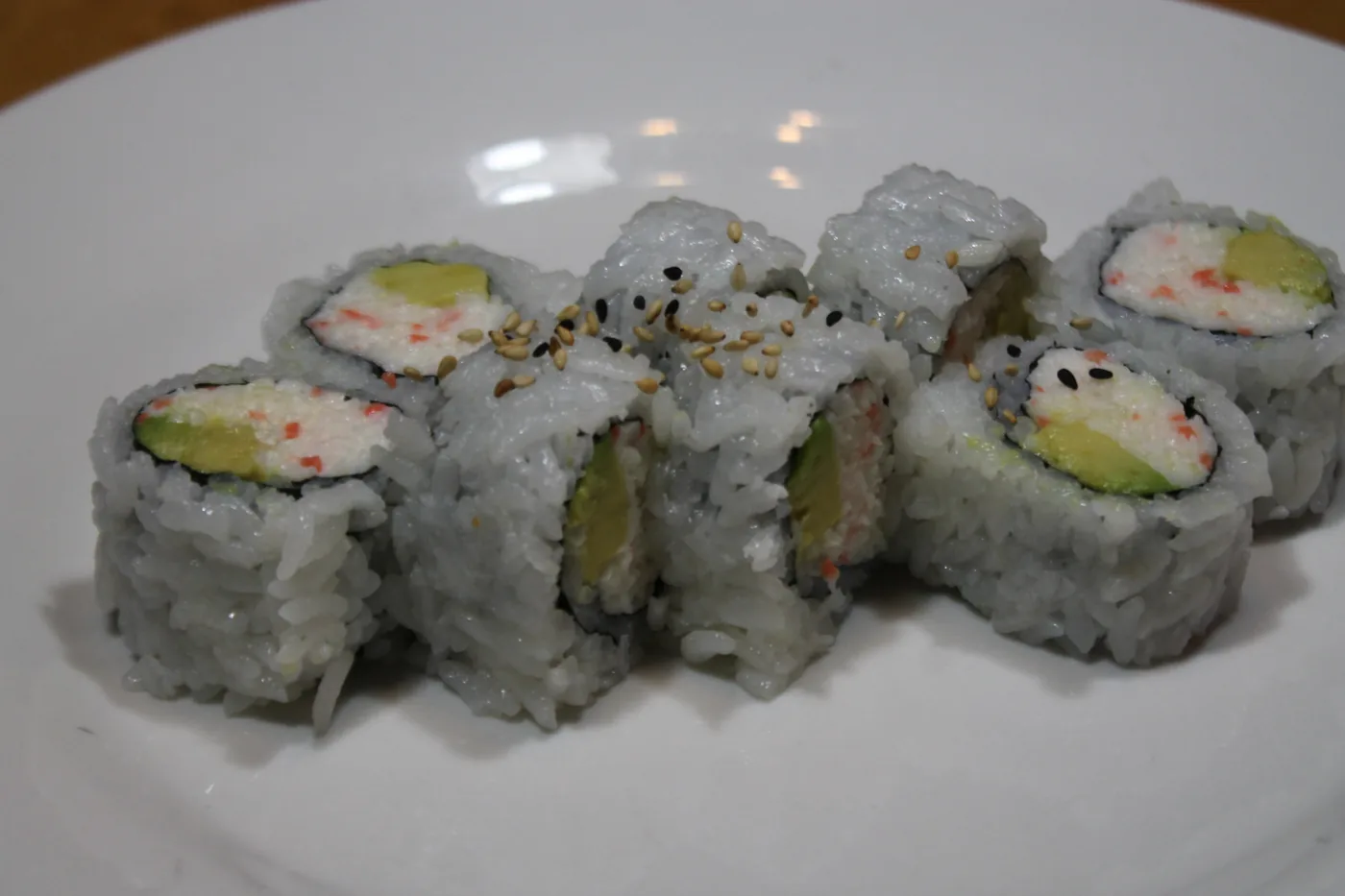
The practical consequence: a no-rice roll works far better alongside a conventional roll than as the whole order. You want something with rice in it on the same plate.
The five on our list
| Roll | Pieces | What the menu lists |
|---|---|---|
| Albacore Lover | 4 | Spicy tuna, avocado, wrapped with albacore |
| Eskimo | 5 | Salmon, spicy crab |
| Red Skin | 5 | Tuna, spicy tuna |
| Salmon Lover | 5 | Crabmeat, avocado, with salmon wrapped |
| Tokyo 7 | 5 | Baked salmon with crab |
Two things stand out from that list. Every one of them is built on salmon, tuna or albacore — fish that slices wide and thin enough to wrap. And Tokyo 7 is the outlier: the only one that is baked, which makes it the single no-rice roll that arrives warm.
If you want the most fish-forward version, Red Skin is tuna wrapped around tuna and has nothing else in it. If you want the gentlest, Salmon Lover has crab and avocado inside to soften it.
Cutting the carbohydrate
Most people who seek these out are doing it to avoid rice, and the no-rice rolls are the most direct answer on any sushi menu.
Worth saying plainly, though: this is a menu observation, not dietary advice, and we do not publish nutritional figures. If you are managing carbohydrate intake for a medical reason, work from your own guidance and ask us about specific ingredients rather than relying on a roll name.
Two things are worth knowing regardless. Sashimi is the other rice-free option and it is a plain one — slices of fish, nothing else, and it is on our menu as an assorted platter or as an individual order. And several no-rice rolls contain crab or a spicy dressing, so “no rice” does not mean “nothing but fish.”
Please ask rather than assume
“No rice” is the only thing those two words tell you. Several of these rolls contain imitation crab or a mayonnaise-based spicy mixture, and the menu marks them with letter codes that are a prompt to ask rather than a full ingredient list. If you are avoiding a specific ingredient, name the roll and the ingredient to your server — see allergens on a Japanese menu.
Soy paper is a different swap
This trips people up, so it is worth separating clearly.
Our menu lists an option to exchange seaweed for soy paper. That changes the wrapper — the thin sheet on the outside — and has nothing to do with the rice. A soy paper roll still has rice in it.
They solve different problems. Soy paper is for people who dislike the taste or texture of nori, or who want a milder, slightly sweet wrapper. No-rice is for people who want the rice gone. You can want one without wanting the other. More on wrappers in nori, soy paper and what wraps a roll.
How to order one well
- Pair it. One no-rice roll and one conventional roll is a better plate than two of either.
- Go easy on the soy. Without rice to absorb it, dipping a no-rice roll gets salty very fast. Touch the fish, not the whole piece.
- Use the ginger. These are the pieces that most benefit from a palate reset in between — see what gari is for.
- Eat them early. They are mostly raw fish and they are best cold.
Frequently asked questions
Can you get sushi without rice?
Yes. Look for rolls marked “(No rice)” on the specialty list, or order sashimi, which is fish with no rice at all.
What holds a no-rice roll together?
The fish. Wide slices are wrapped around the filling and take over the structural job the rice normally does.
Are no-rice rolls smaller?
Fewer pieces, but each piece is thicker and denser. A five-piece no-rice roll is not a light order.
Is soy paper the same as no rice?
No. Soy paper replaces the seaweed wrapper. A soy paper roll still contains rice.
Do no-rice rolls taste better?
More intense rather than better. Without the seasoned rice you lose the acidity and the neutral bulk that balance a roll, so they are best eaten alongside something conventional.
The short version
Five rolls on our list are built without rice, and the fish takes over as the wrapper. They come in four or five thick pieces, they are more intense rather than lighter, and the seasoned rice you are removing was doing more work than it looks like.
Order one beside a conventional roll, go gently on the soy, and check the ingredients rather than the bracket.