The short answer
Terishine, gloss
Yakigrilled
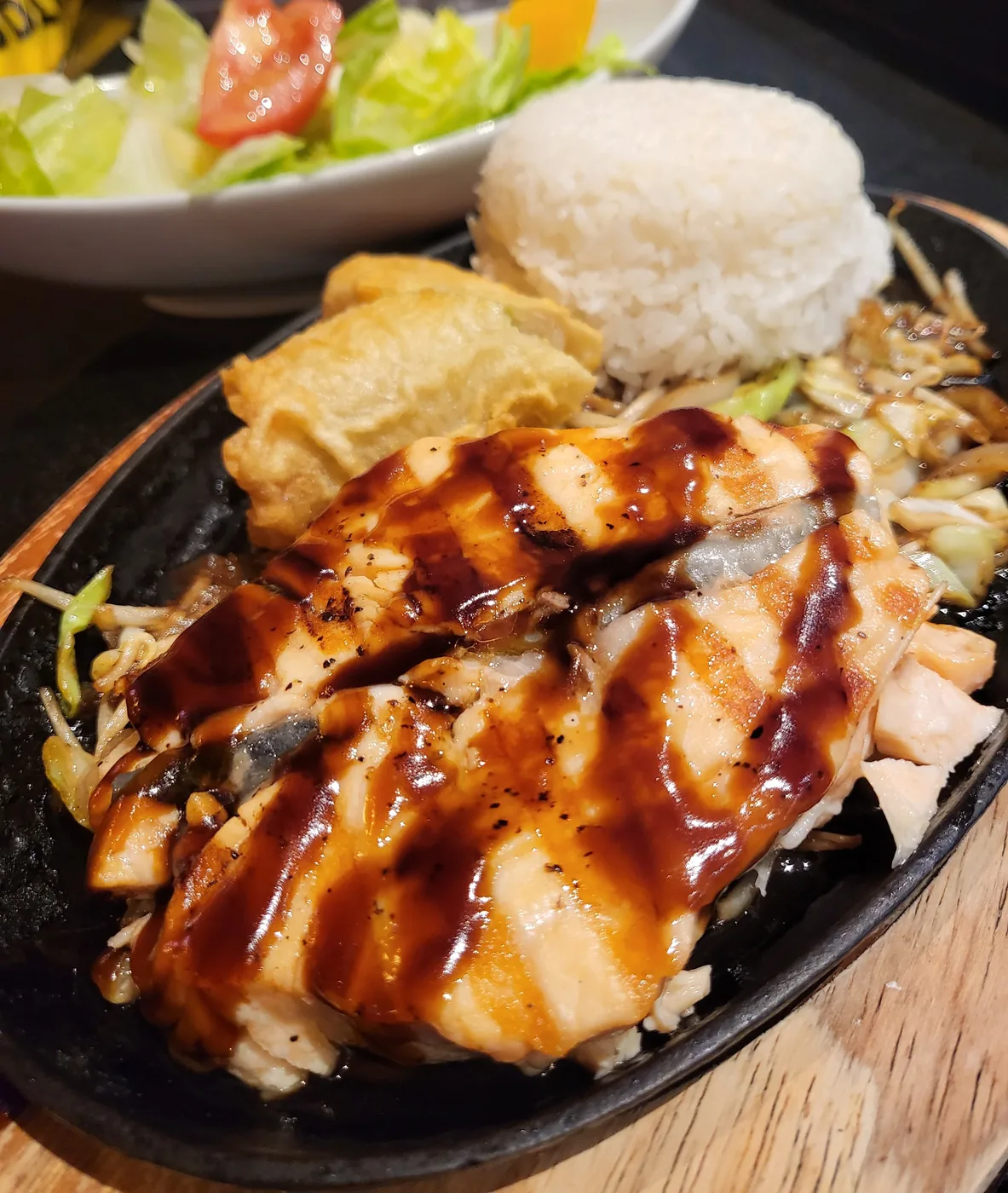
The word describes a finish, not a bottle. Teriyaki is what happens when a thin glaze is cooked onto something over heat until it shines.
Teriyaki is probably the most familiar Japanese word on any American menu, and the thing most people picture when they hear it — a bottle of thick brown sauce — is not really what it means.
01 — The wordIt describes the shine
Split the word and it explains itself. Teri means lustre or gloss. Yaki means grilled or broiled — the same yaki that turns up in yakisoba, yakitori and takoyaki.
So teriyaki is grilled-with-a-shine. The name is about the appearance of the finished surface, which tells you the technique is the point and the liquid is just the means.
That is a real difference from how the word is used in an American grocery aisle, where teriyaki is a product you pour. In Japanese cooking it is something you do, and doing it properly takes a few minutes of attention at the grill.
What the glaze is made of
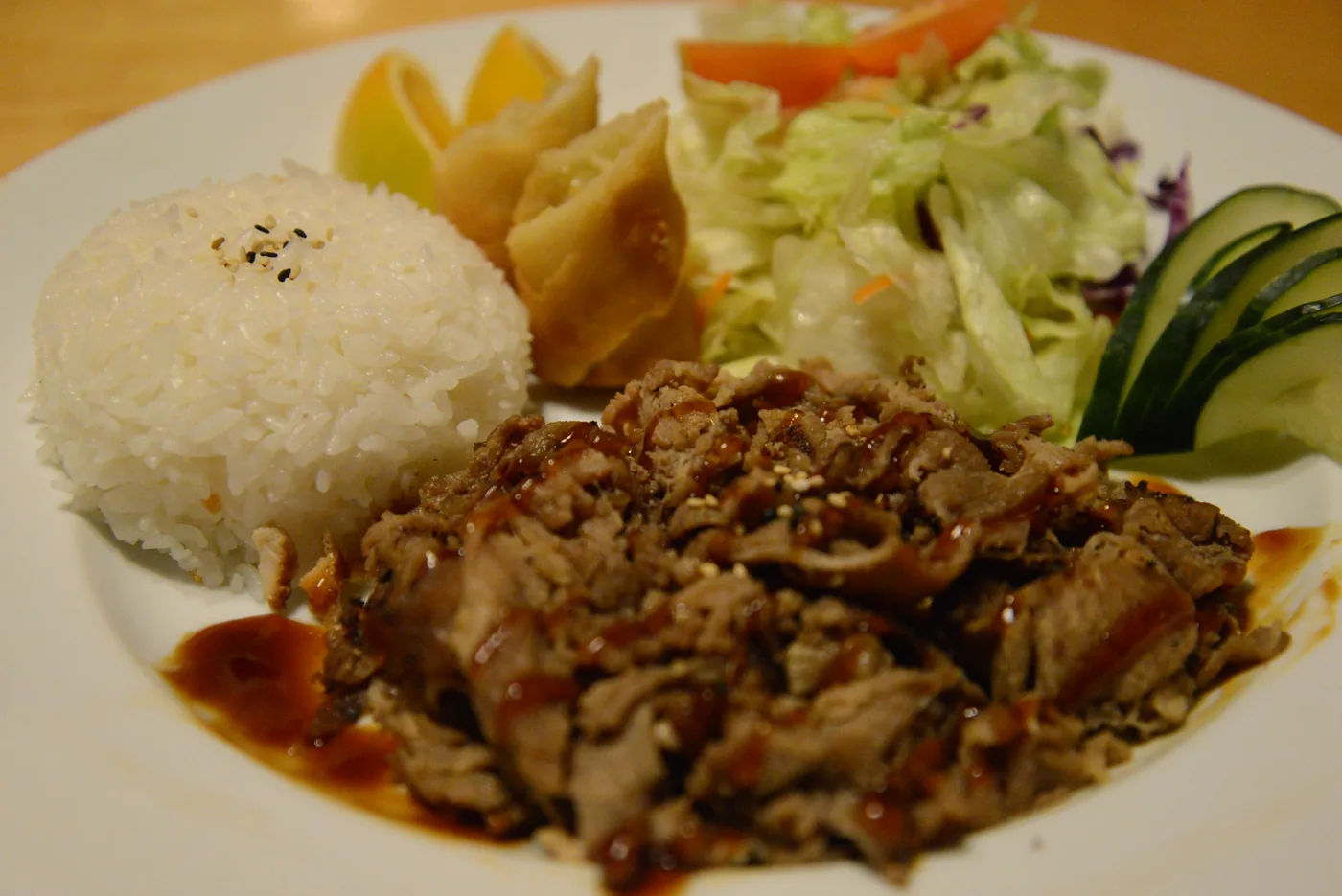
A traditional teriyaki glaze is short: soy sauce, mirin, sake and sugar. Four things, reduced together.
Each does something specific. Soy brings salt and the savoury depth that fermentation produces. Sake adds aroma and helps the mixture cling. Sugar is what allows the glaze to set rather than run. And mirin — a sweet rice wine used for cooking — is the one most people have never heard of and the one that produces the shine, because its sugars caramelise into a glossy film as the liquid cooks down.
Notice what is not in that list: no starch, no thickener. A proper glaze thickens by evaporation. That is why it is thin in the pan and tight on the food, and why it should coat rather than pool.
| Ingredient | What it contributes |
|---|---|
| Soy sauce | Salt and savoury depth |
| Mirin | Sweetness and the gloss |
| Sake | Aroma, and helps it cling |
| Sugar | Lets the glaze set instead of running |
Why it goes on at the end
This is the part that separates teriyaki done well from teriyaki done carelessly, and it comes down to sugar.
Sugar burns at a much lower temperature than protein needs to cook. Brush a sweet glaze onto raw chicken and put it over a hot grill, and the glaze is black long before the chicken is done. So the meat or fish is cooked most of the way through first, and the glaze goes on near the end, in thin coats, each one allowed to set before the next.
Those repeated thin coats are also where the depth of colour comes from. It is layered, not poured — which is the whole reason the surface looks lacquered rather than wet.
You are ordering a full meal
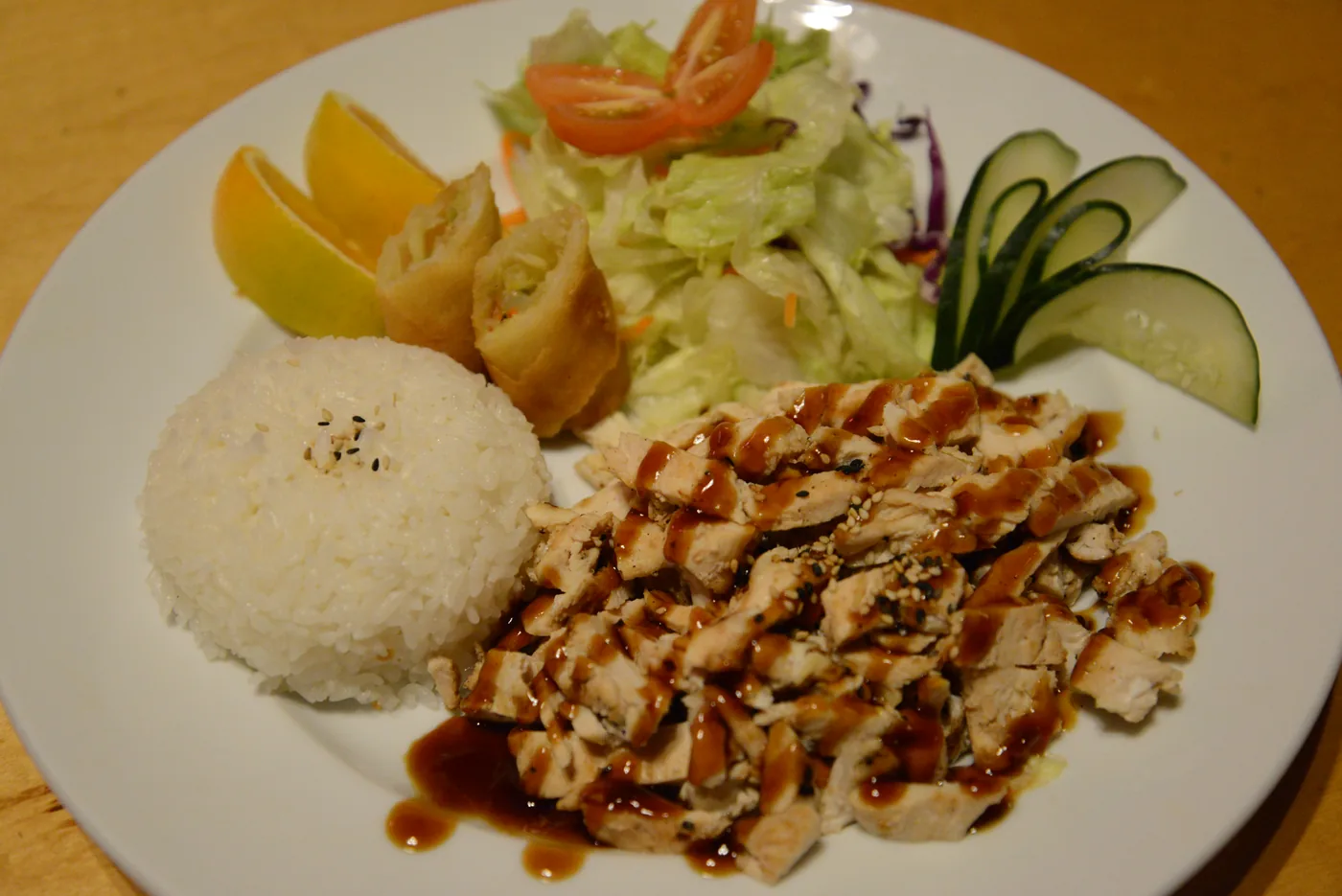
The word next to teriyaki on a menu matters as much as the word itself. A teriyaki plate is not a portion of glazed protein on its own — it is a complete meal built around one.
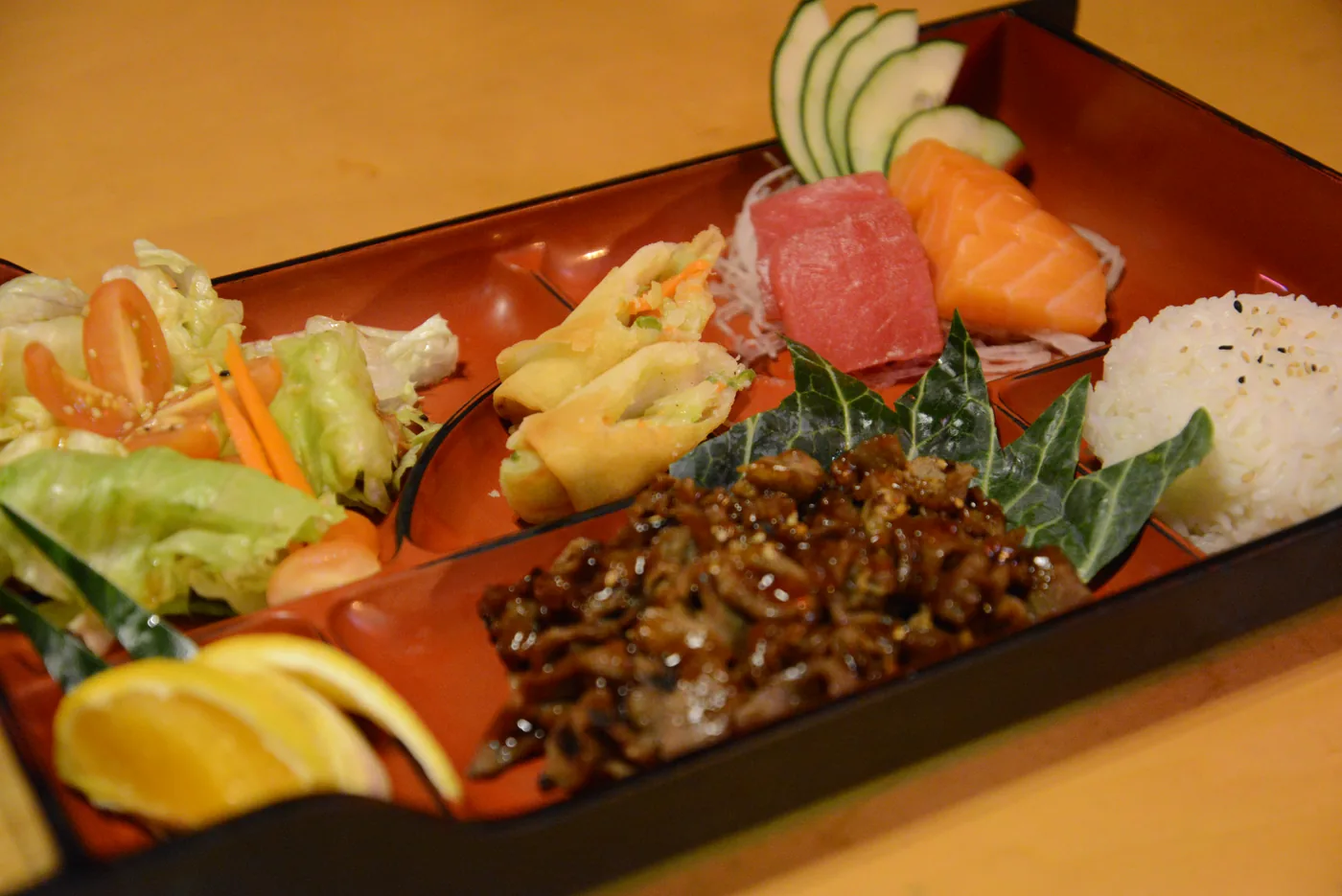
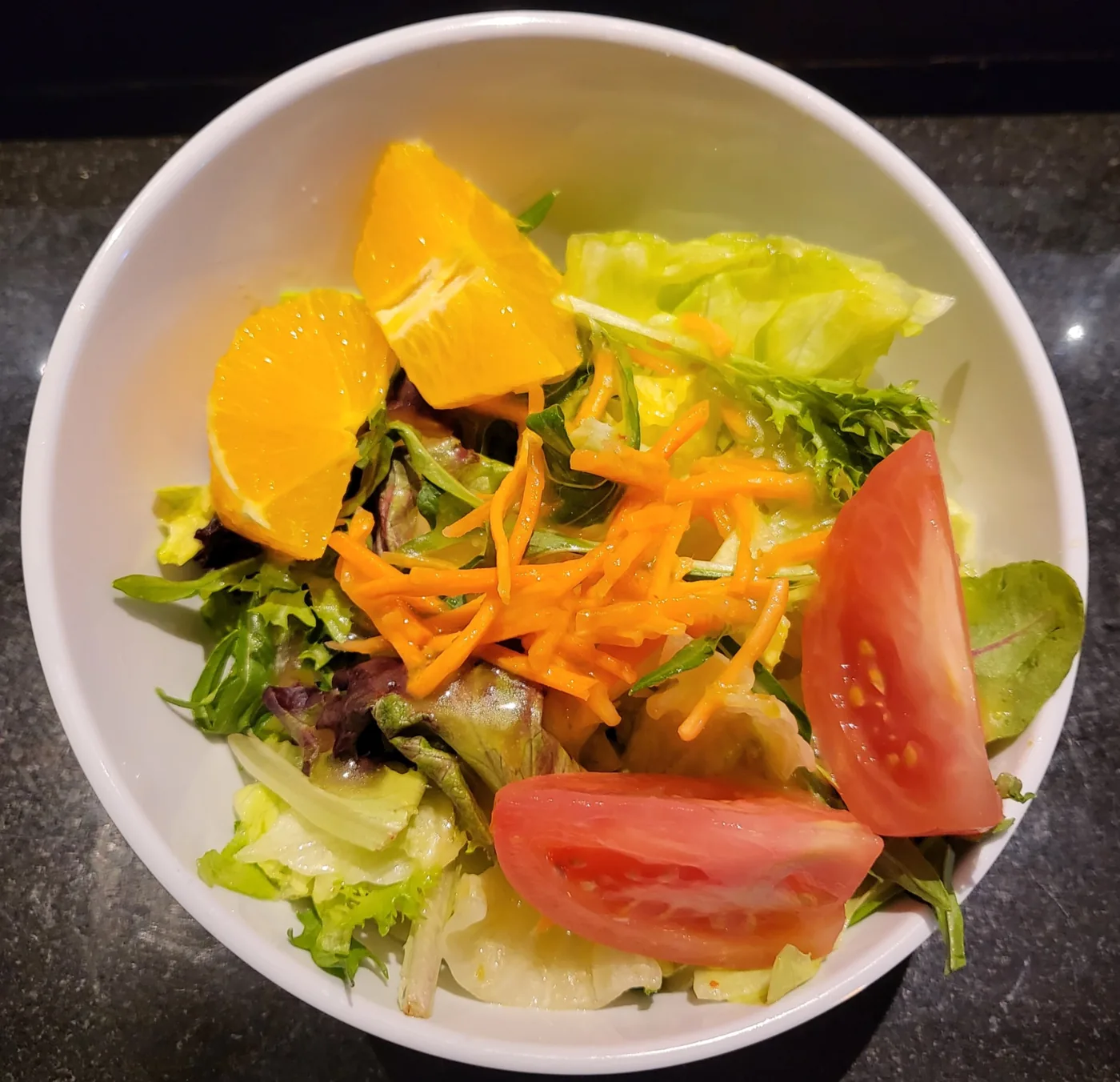
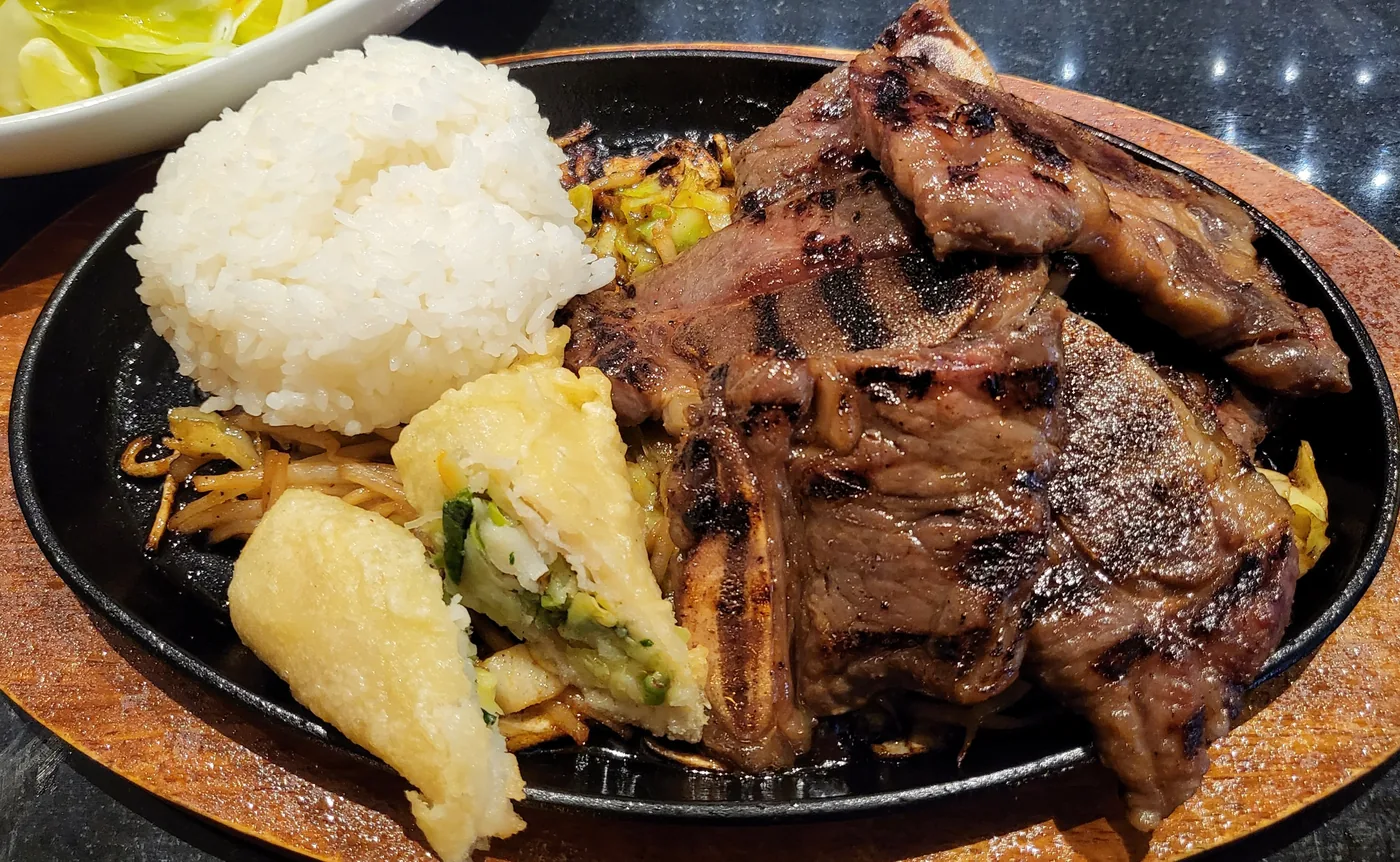
Our Beef Teriyaki and Salmon Teriyaki are both listed as served with salad, miso soup and steamed rice, and so is the BBQ Short Ribs that sits in the same section. That is a starter, a soup, a carbohydrate and a protein arriving together.
Which is why the teriyaki section is the most sensible thing on the menu for one person who is actually hungry. Ordering rolls for one means guessing at quantity; a plate removes the guesswork entirely. It is also why the plates and the roll list are usually a bad combination for a single diner — the plate already is the meal.
Good to know
A teriyaki glaze is built on soy sauce, so it contains soy and, in most soy sauces, wheat. Mirin and sake are cooking wines. None of that is visible in the words “chicken teriyaki”, so if you are avoiding soy, gluten or alcohol in cooking, ask about the glaze specifically rather than the dish. More on allergens here.
The glaze does not treat them equally
A sweet-salty glaze suits some things better than others, and the difference is mostly about fat.
- Chicken. The default for a reason. Mild enough that the glaze is the flavour, and forgiving on the grill.
- Beef. The most assertive pairing. Beef has enough of its own flavour to argue with the glaze rather than disappear under it.
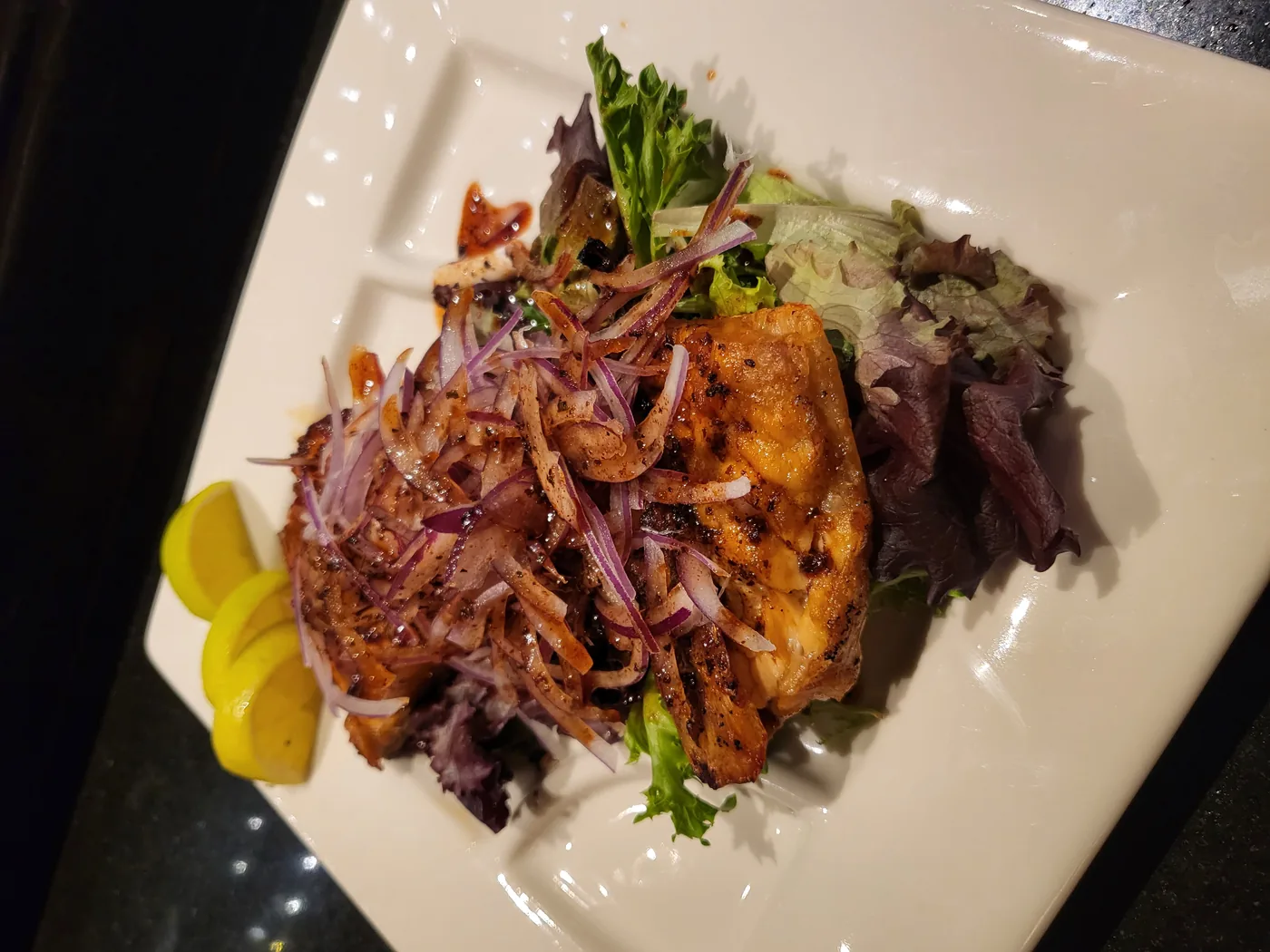
- Salmon. The most interesting one. Salmon’s fat plays against the sweetness and the skin side crisps, so you get more textures than the other two.
If you have only ever had chicken teriyaki, salmon is the one worth trying next. It is the version where the technique shows most clearly.
Teriyaki, katsu and the rest of the plate list
The plates sit in a small family, and the differences are worth a sentence each.
Katsu is a breaded, fried cutlet — a coating and a fryer rather than a glaze and a grill, and our Chicken Katsu is listed as served with rice and house salad. The full comparison is in chicken katsu vs chicken teriyaki, and the wider fried-chicken picture is in karaage, katsu and popcorn chicken.
BBQ Short Ribs shares the section and the accompaniments but is listed under its own name rather than as a teriyaki, so treat it as a separate dish rather than a glazed variant.
Why it is the safe order for a table
Teriyaki has a reputation for being the boring choice. It is more accurate to call it the reliable one, and there are situations where that is exactly what you want.
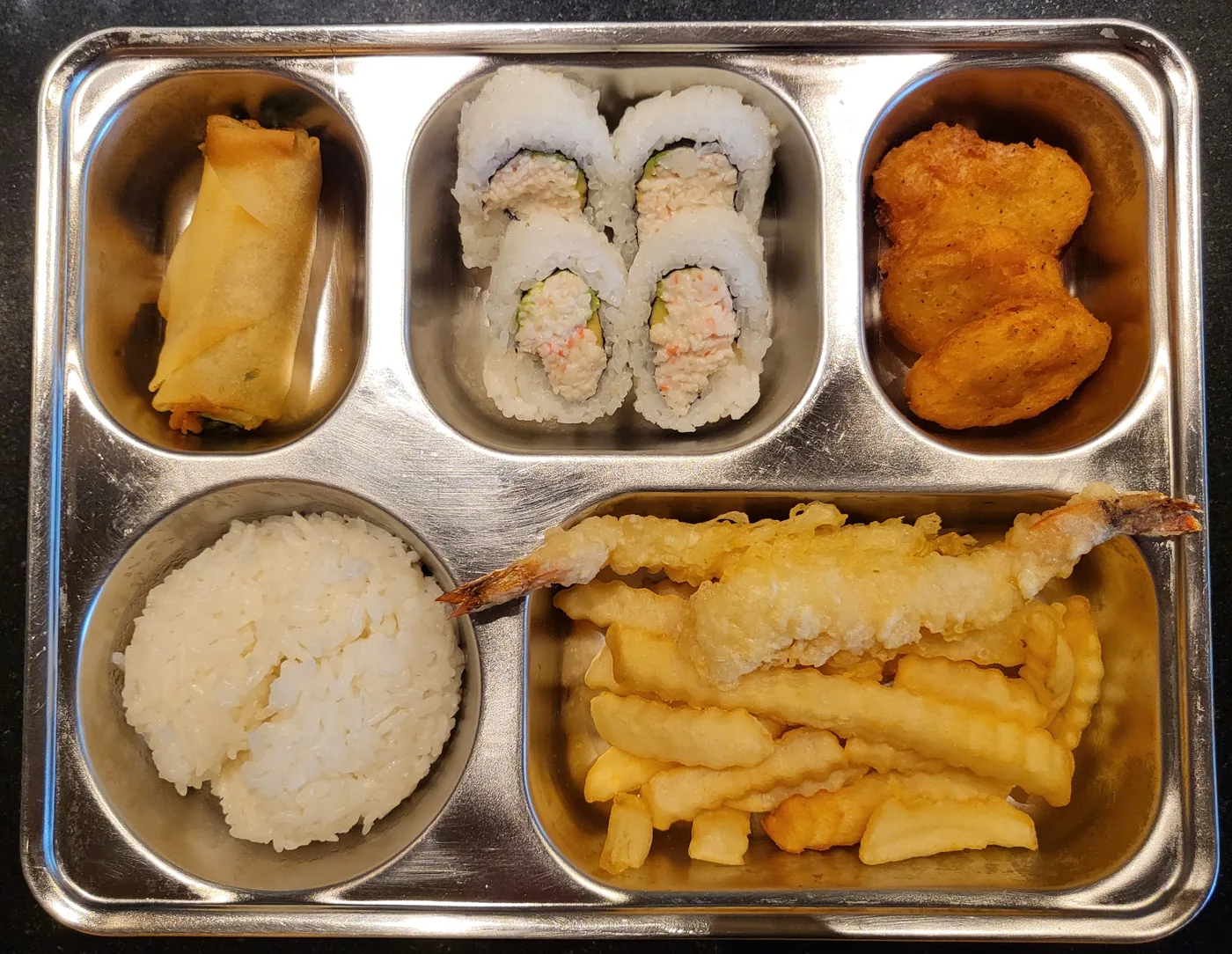
Nothing about it is challenging: no raw fish, no unfamiliar texture, no surprises in the seasoning. Sweet and salty is a combination almost everyone already likes. For a first visit, a cautious eater, or a child, it removes every obstacle at once — and the kids meal on our menu is listed as coming with miso soup or salad, so it works the same way at a smaller scale.
The trick is not to let it be the whole table’s order. One teriyaki plate anchors a meal; four of them is a missed opportunity when the rest of the menu is right there.
Frequently asked questions
What does teriyaki mean?
Teri is shine and yaki is grilled. It names the glossy finish a glaze leaves when it is cooked onto food over heat.
What is teriyaki sauce made of?
Traditionally soy sauce, mirin, sake and sugar, reduced together. It thickens by cooking down rather than with a starch.
Is teriyaki sweet?
Yes, but salty at the same time. The sugar and mirin sit against the soy, so it should read as savoury with sweetness rather than as a sweet sauce.
What comes with a teriyaki plate?
Our beef and salmon plates are listed as served with salad, miso soup and steamed rice. Accompaniments vary by dish, so check the line under the name.
Does teriyaki contain gluten?
Most soy sauce is brewed with wheat, and soy sauce is the base of the glaze. Ask before ordering if this matters — see soy sauce explained.
The short version
Teriyaki names a shine, not a bottle. A thin glaze of soy, mirin, sake and sugar is brushed on in layers near the end of grilling, and it reduces onto the surface instead of being poured over it.
Ordered as a plate it is a complete meal, which makes it the most straightforward thing on the menu for one person. Try the salmon if chicken is all you have had.